🇫🇷 Cet article est également disponible en français : Lire en français
The Alpine ELF Cup Series is not heading into 2026 as just another new season. Something deeper is changing.
By joining the grid of the French FFSA GT Championship, Alpine’s one-make series is changing its format, its rhythm, and perhaps above all its place within the French GT landscape.
A new era for the Alpine ELF Cup Series
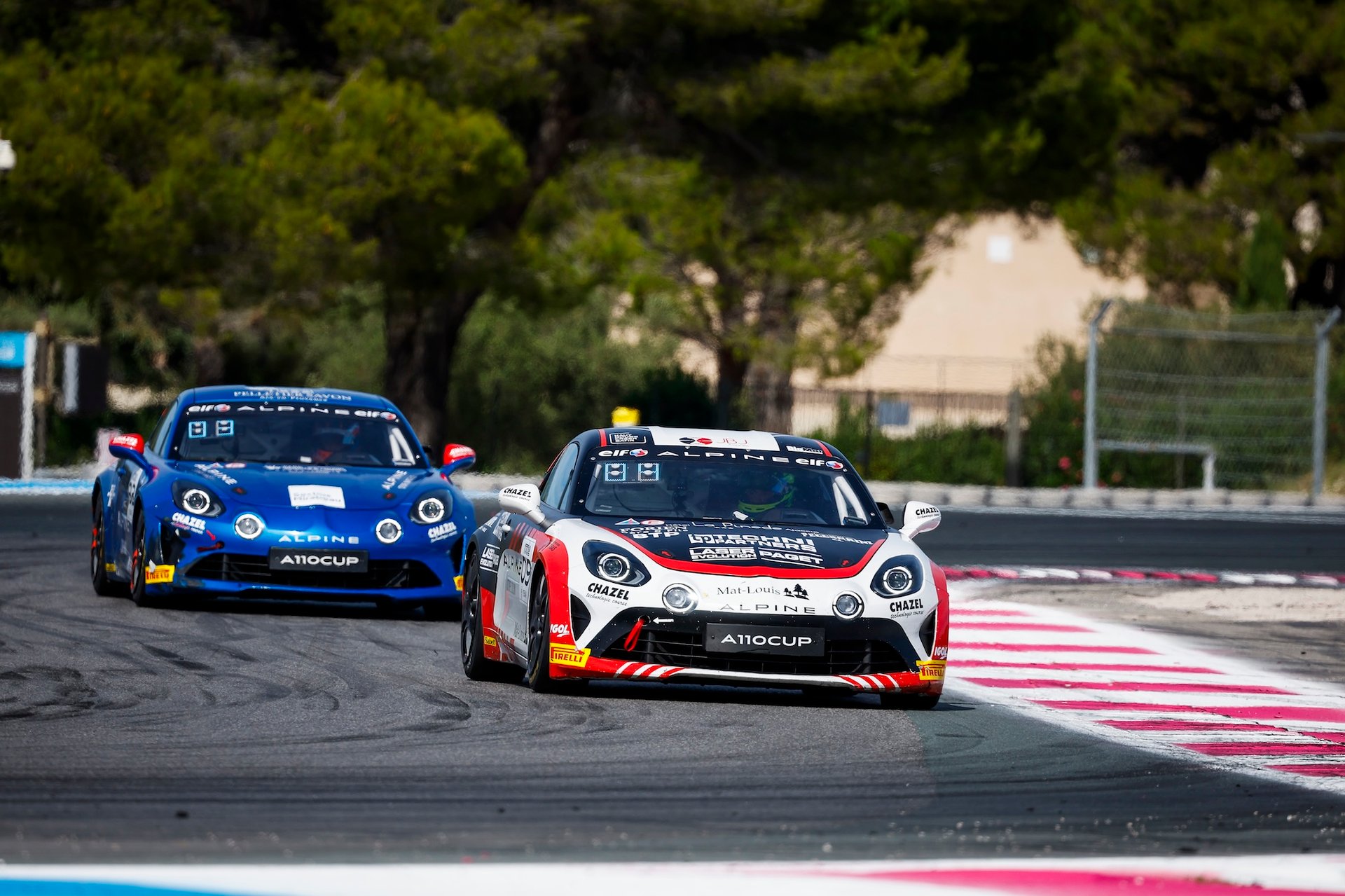
Since 2018, the Alpine ELF Cup Series has carved out a distinctive place in French motorsport. It is a serious, well-run formula that has been able to bring out promising talent in the Alpine A110 Cup, without ever losing sight of what defines the brand’s spirit: lightness, precision, and a certain idea of driving.
In 2026, the championship moves up a level. Its integration into the French FFSA GT Championship is not simply a matter of image or positioning. It is a change of stature. Alpine is no longer just offering a well-conceived promotional cup; it is giving it a clearer continuation, a more defined place within a sporting pathway that has become far easier to read.
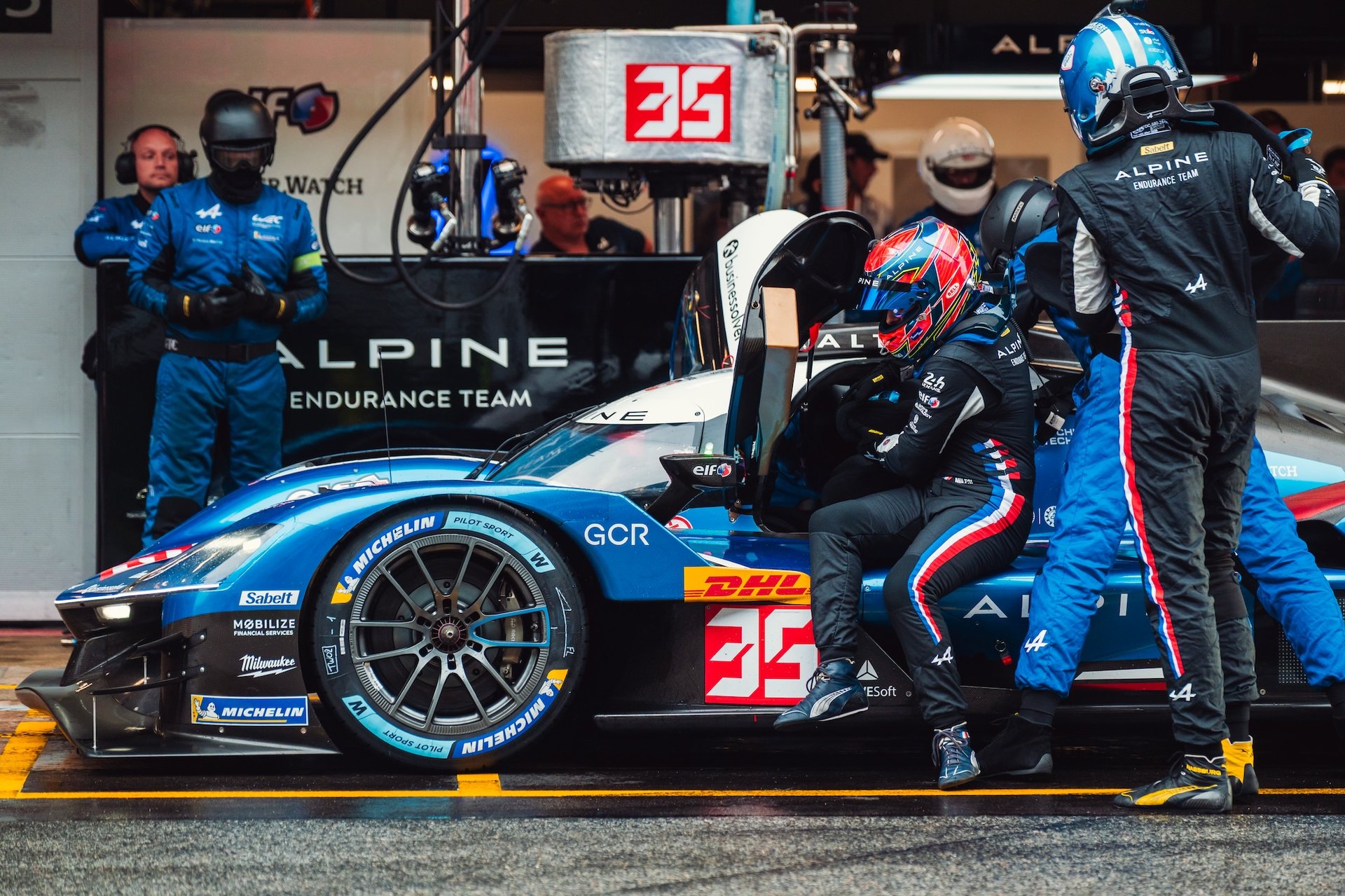
In the wake of the road-going Alpine A110 and the ambitions shown in endurance racing with the Alpine A424, despite this being its final year, the brand continues to structure its competition world. The idea is no longer simply to put drivers into a one-make series, but to offer them an environment in which they can progress, learn, and move upwards without a brutal break.
The season will get under way at the Nogaro Easter Cup meeting, at Circuit Paul Armagnac, with fourteen drivers spread across seven cars. It is a compact field, but one with enough depth to offer, from the opening round, a first sense of what this new formula might produce.
A more strategic semi-endurance format and the arrival of Pirelli
The most visible change is naturally the format itself. In 2026, drivers will compete in pairs, with two one-hour races at each meeting. That immediately changes the complexion of a race weekend. Where the series had until now been built around shorter, more intense formats, teams will now have to think over the longer term, build a stint, manage phases of the race, work as a pair, and accept that performance will also be shaped by things that are not obvious at first glance.
This is not simply a question of race duration. It changes the nature of the exercise itself. Drivers will need to read the race with greater subtlety, sense when to attack and when to preserve, understand how the car evolves over a stint, and work with their team-mate without ever breaking the car’s overall momentum. In that respect, the Cup moves much closer to what drivers will encounter later in GT4, with a far more tangible learning dimension than before.
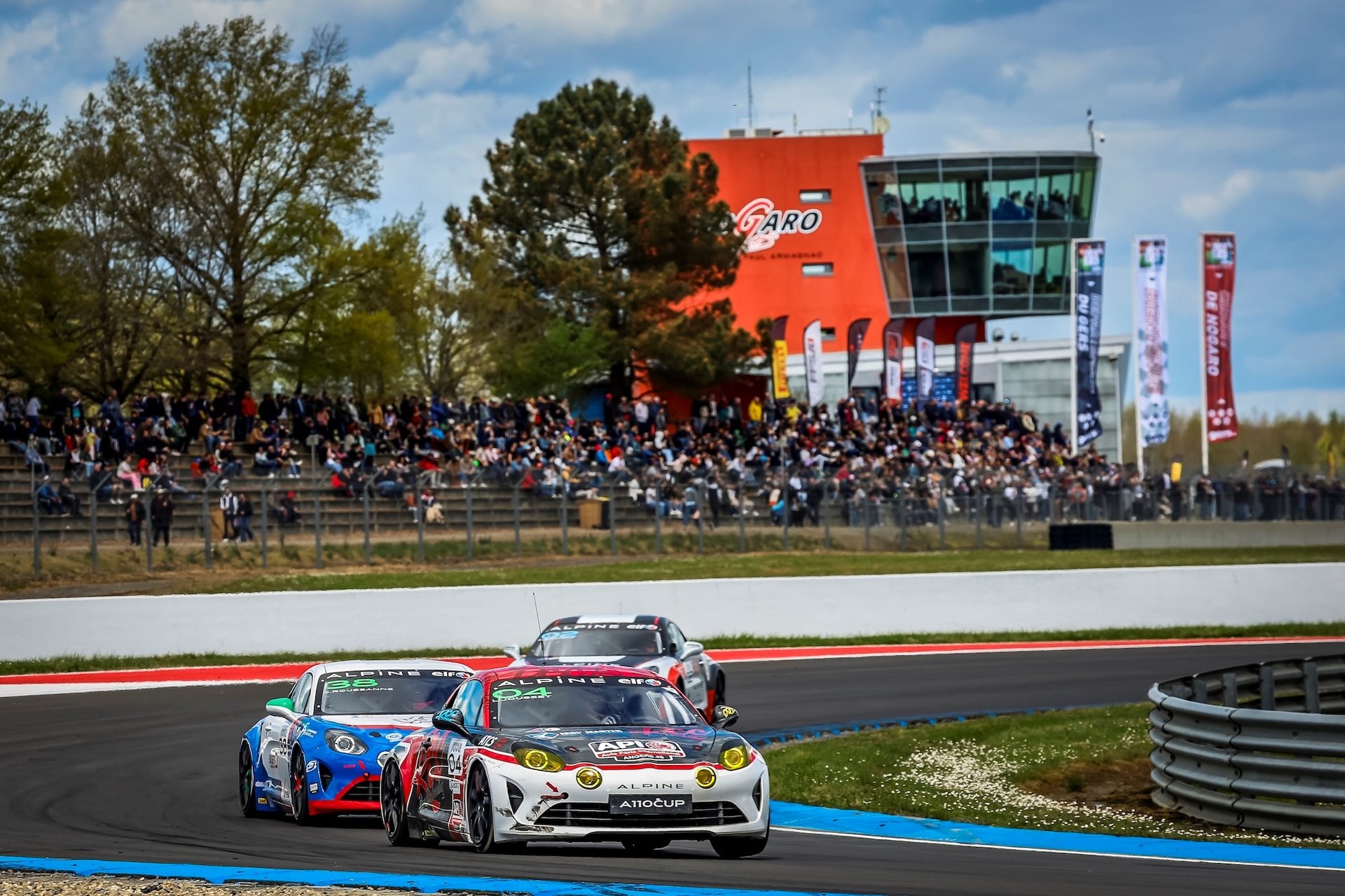
At the same time, the arrival of Pirelli brings another kind of novelty, less obvious on the surface, but far from insignificant. Changing tyre supplier means changing sensations, reference points, sometimes even confidence. Warm-up, degradation, the way the tyre supports or unsettles the balance of the car: all of this takes time, work, and often a degree of instinct. In a category where gaps can close up very quickly, that adaptation phase may be enough to swing an entire weekend.
This new framework makes the 2026 field particularly fascinating to assess. It brings together the mix that has long been a hallmark of the series: established drivers, experienced gentlemen racers and developing prospects. Race Cars Consulting, which won the title with Léo Jousset, will rely on a complementary pairing of Paul Roques and Anthony Fournier, while Chazel Technologie Course arrives with several crews capable of getting into the fight, notably Romain Monti and Rodolphe Wallgren. Herrero Racing and Schumacher GP complete a dense, balanced entry list in which the pecking order looks far less settled than it did in previous years.
That may well be the main appeal of this season: the very real sense that yesterday’s reference points will no longer be enough, and that everything could be reshaped far more quickly than expected.
The Cup’s DNA: a legacy revived in 2018
To understand what 2026 is really changing, it is worth going back to 2018. That is where this modern story begins to take shape again.
In the wake of Alpine’s return with the Alpine A110, the brand relaunched its one-make series as the Alpine Europa Cup. The move was far from trivial. There was something deeply faithful to the Alpine spirit in that revival: starting again from a simple, sound, readable base, with a car designed to put driving at the centre of everything.
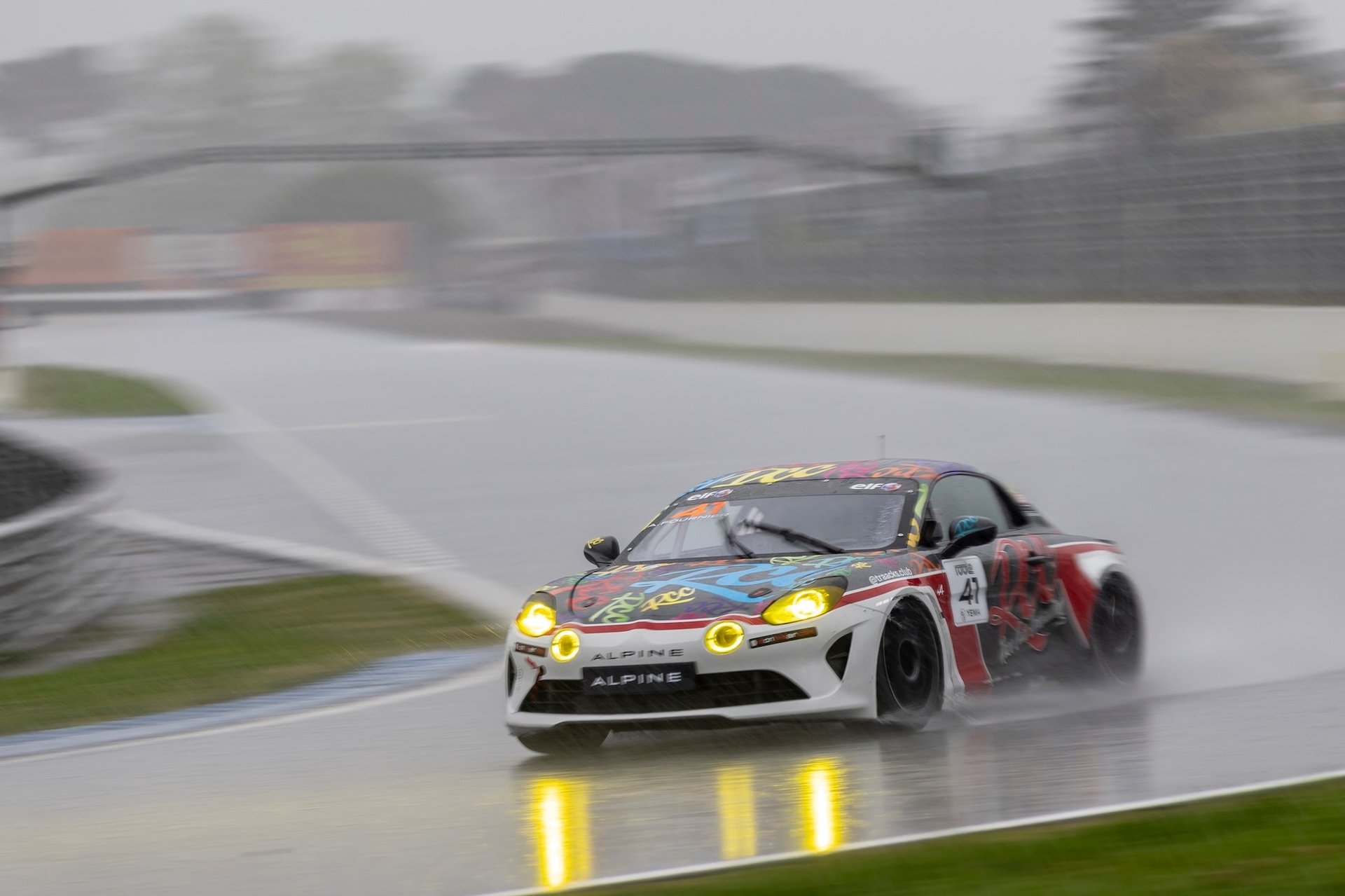
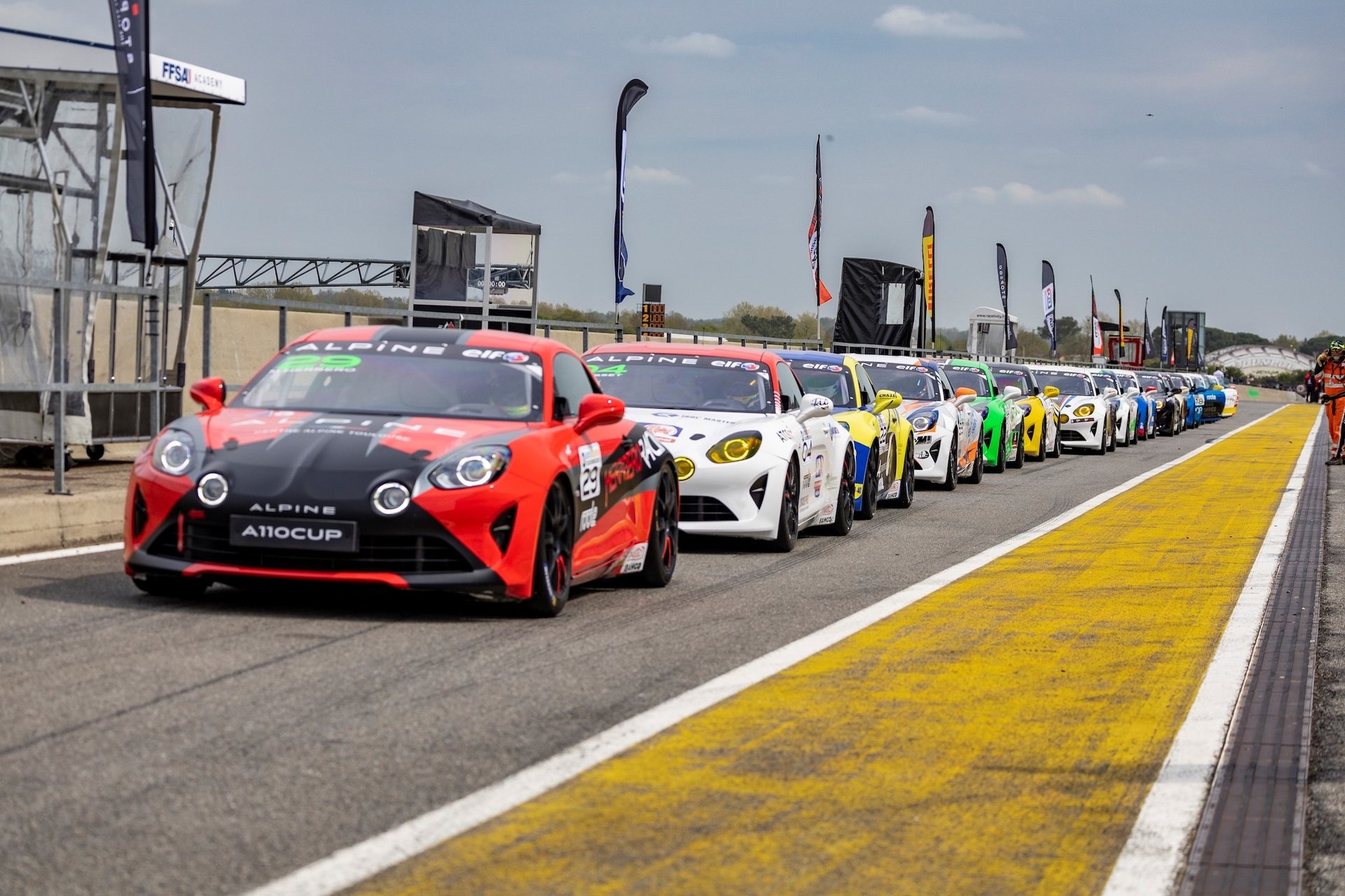
Developed by Signatech, the Alpine A110 Cup is built precisely around that idea. A light, lively car, close enough to the road version to retain a sense of authenticity, yet honed enough to demand genuine driver reference points. It does not flatter or disguise much, and that is also what made it compelling from the outset.
The series quickly found its place on major race weekends such as GT World Challenge Europe and FFSA GT, with a stable formula:
- 2 qualifying sessions
- 2 sprint races
- three classifications (Overall, Junior, Gentlemen)
An effective format that helped reveal several strong profiles:
- Jean-Baptiste Mela
- Lucas Frayssinet
- Lorens Lecertua
- Pierre Sancinéna
For several seasons, that stability was one of its strengths. It gave the Cup a clear identity. Until the point at which it became possible — perhaps even necessary — to ask more of it.
Why integration into FFSA GT is a turning point
Integration into the French FFSA GT Championship is about more than added visibility. It changes the way the Cup is viewed, and probably also the way drivers can project themselves through it.
Until now, the series played its role as a talent revealer very well, but without always offering an obvious next step. By joining FFSA GT, it now becomes part of a clearer progression: from Clio Cup to Alpine A110 Cup, then towards the Alpine A110 GT4+, before opening the door, for the very best or the best supported, to even more ambitious horizons.
What really changes is the coherence of the whole pathway. Each step begins to prepare the next. Technically, sportingly and financially too, the route becomes easier to read. And in a world where so many careers are built through improvisation or whatever opportunity happens to appear, that continuity carries real value.
Alpine is no longer simply organising a cup. Little by little, the brand is shaping a credible development ladder, with its stepping stones, its markers, and a promise that, this time, no longer feels merely theoretical.
What impact will this have on drivers and teams?
On track, that change is felt immediately. Performance is no longer defined solely by outright speed, but by the ability to understand a race as a whole, to feel how it is unfolding, to manage a stint, to preserve what needs preserving, and to work intelligently with a team-mate. These are subtler, broader demands, and much closer to the reality of modern GT racing.
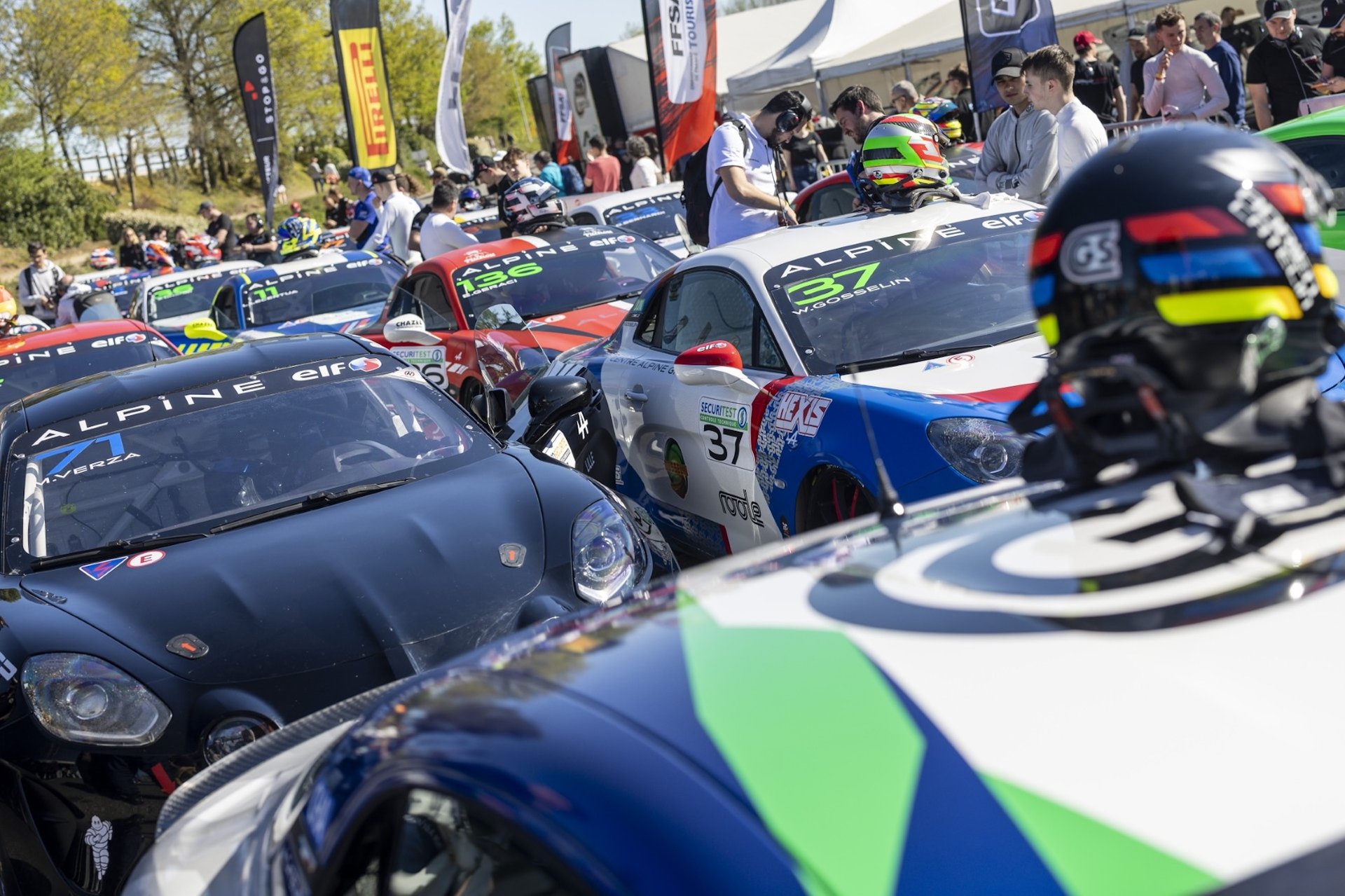
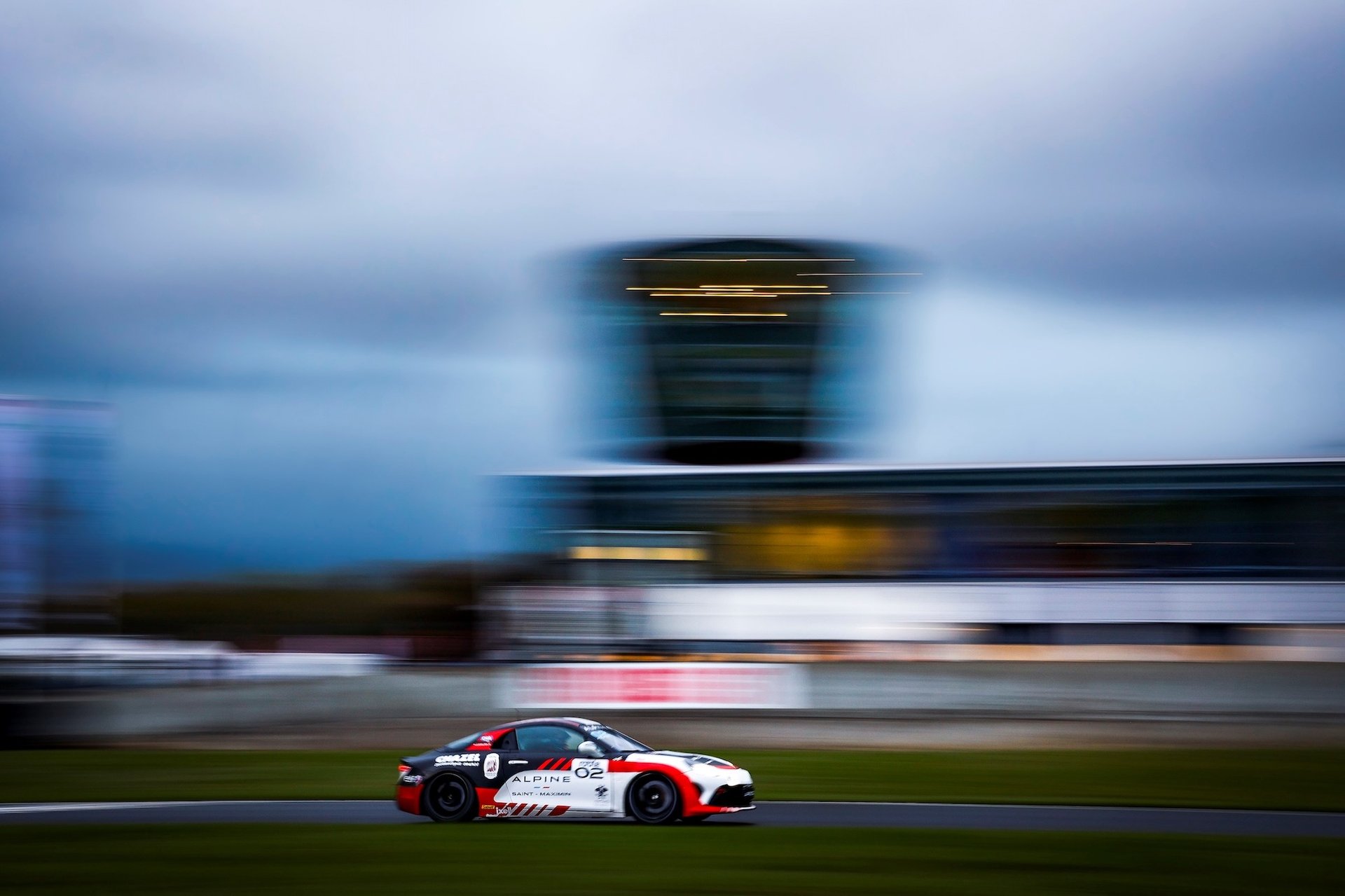
In that context, the visibility brought by the French FFSA GT Championship acts as an accelerator. Racing in that environment means operating within a framework that is more exposed, more structured and more formative as well. Every result carries a different weight there, because it becomes part of a pathway rather than simply the immediate reading of a one-make championship.
The prize funds take on a particular significance as a result. The €40,000 promised in Pro-Am or the €30,000 reserved for the best Junior are not mere end-of-season bonuses; they are genuine levers for going further. Léo Jousset’s example illustrates that perfectly. Crowned in the Cup, he steps up to FFSA GT in the Alpine A110 GT4+, with the SRO GT Academy firmly in his sights. That is something concrete: a title that truly opens a door.
👉 To understand what this new Cup really changes, it is also worth looking at the full ladder, from the A110 Cup to the A110 GT4+.
Nogaro, the first real indicator of 2026
Nogaro is bound to have a special role. Because it is the opener, of course, but also because a first event in such a renewed context often says more than it first appears to.
With a new format, new tyres and reference points still being built, some will strike the right note immediately, while others will need time to understand what this season really demands. It is often on weekends like this that confirmations emerge, but so do surprises.
The season will then continue on demanding circuits, from Dijon to Spa-Francorchamps, then Magny-Cours and Paul Ricard. Different, complementary tracks that should gradually reveal the true pecking order of the 2026 season.
In other words, Nogaro will provide an initial trend. The rest of the calendar will tell us whether it truly holds.
What to remember
The 2026 Alpine ELF Cup Series marks a genuine evolution. Not a cosmetic break, but a change in substance.
More demanding in format, more coherent in positioning, and better connected to what comes next, it goes beyond the simple framework of a one-make cup to become a far more credible gateway to GT racing.
On paper, it is probably its most mature version since 2018.
Now it remains to be seen how all of this comes to life on track.
Timetable and 2026 calendar: what you need to know
The start of this new era will come at Nogaro, as part of the traditional Easter Cup meeting. It is already a highly anticipated opening weekend, because it will immediately provide the first benchmark in a season that does not quite look like those that came before it.
Timetable – Nogaro (3–6 April 2026)
| Day | Session | Time |
|---|---|---|
| Saturday 4 April | Free Practice 1 | 10:15 – 11:15 |
| Saturday 4 April | Free Practice 2 | 16:05 – 17:05 |
| Sunday 5 April | Qualifying | 9:35 – 10:25 |
| Sunday 5 April | Race 1 | 13:55 – 14:55 |
| Monday 6 April | Race 2 | 15:00 – 16:00 |
2026 Alpine ELF Cup Series calendar
| Date | Circuit |
|---|---|
| 3–6 April | Circuit Paul Armagnac |
| 15–17 May | Circuit Dijon-Prenois |
| 19–21 June | Circuit de Spa-Francorchamps |
| 31 July–2 August | Circuit Nevers Magny-Cours |
| 9–11 October | Circuit Paul Ricard |
It is a compact but by no means easy calendar, mixing technical circuits with a few major European reference points that should prove very telling when it comes to judging the consistency of each crew.
2026 entry list
Seven crews will launch this new season, in a field that blends experience, youth and profiles already well known to long-time followers of the series:
- #03 Paul Alberto – Gosia Rdest (Chazel Technologie Course)
- #09 Anthony Pisano – Julien Paget (Chazel Technologie Course)
- #25 Matéo Herrero – David Barrere (Herrero Racing)
- #31 Lenny Kieffer – Jérôme Thiery (Schumacher GP)
- #33 Paul Roques – Anthony Fournier (Race Cars Consulting)
- #111 Romain Monti – Rodolphe Wallgren (Chazel Technologie Course)
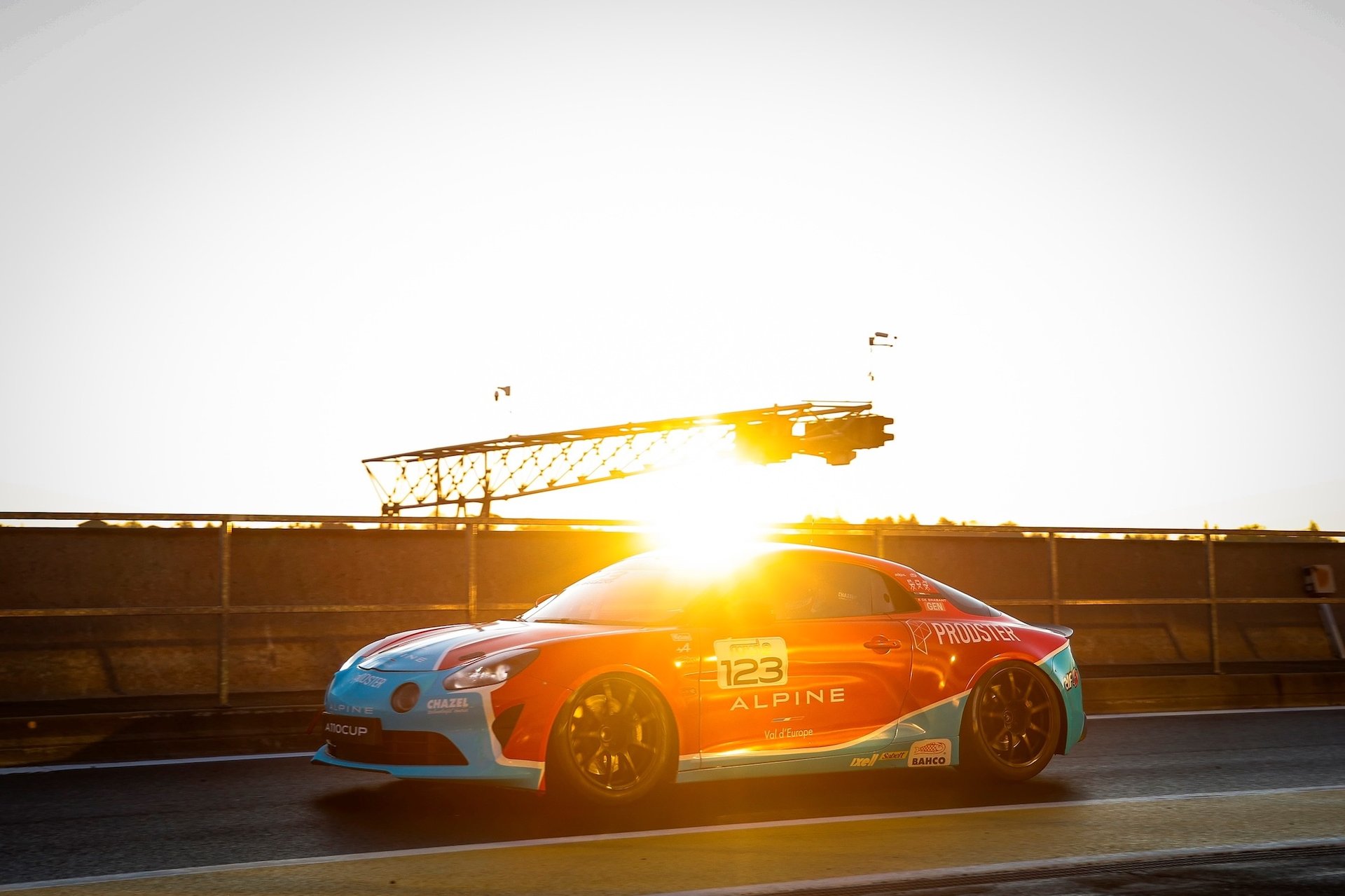
- #123 Alexandre Lopez – Frédéric de Brabant (Chazel Technologie Course)
The field is not huge, but it has enough depth to produce a tight season, especially in a year when so many parameters are changing at the same time.
FAQ
What is the new format in 2026?
The season adopts a paired-driver format with two one-hour races per meeting. It is a change that brings more strategy into play, particularly in stint management and in the complementarity between drivers.
Why does Pirelli change the game?
Because tyre behaviour has a direct influence on both driving and race management. With Pirelli, the reference points change: warm-up, degradation, consistency over a stint… all of which can make the difference in a very evenly matched field.
Where does the season begin?
At the Nogaro Easter Cup meeting, on Circuit Paul Armagnac, from 3 to 6 April 2026. It is a traditional fixture, and often a revealing one in such a renewed context.
What is Léo Jousset aiming for?
After winning the Alpine ELF Cup Series title, he is beginning his transition into the French FFSA GT Championship in an Alpine A110 GT4+, with the ambition of establishing himself within the ladder and targeting the SRO GT Academy.
Why is this season so important?
Because it turns the Cup into a genuine development step. By integrating into FFSA GT and adopting a more demanding format, it becomes a coherent bridge between training and GT categories.
Source: Alpine Cars