🇫🇷 Cet article est également disponible en français : Lire en français
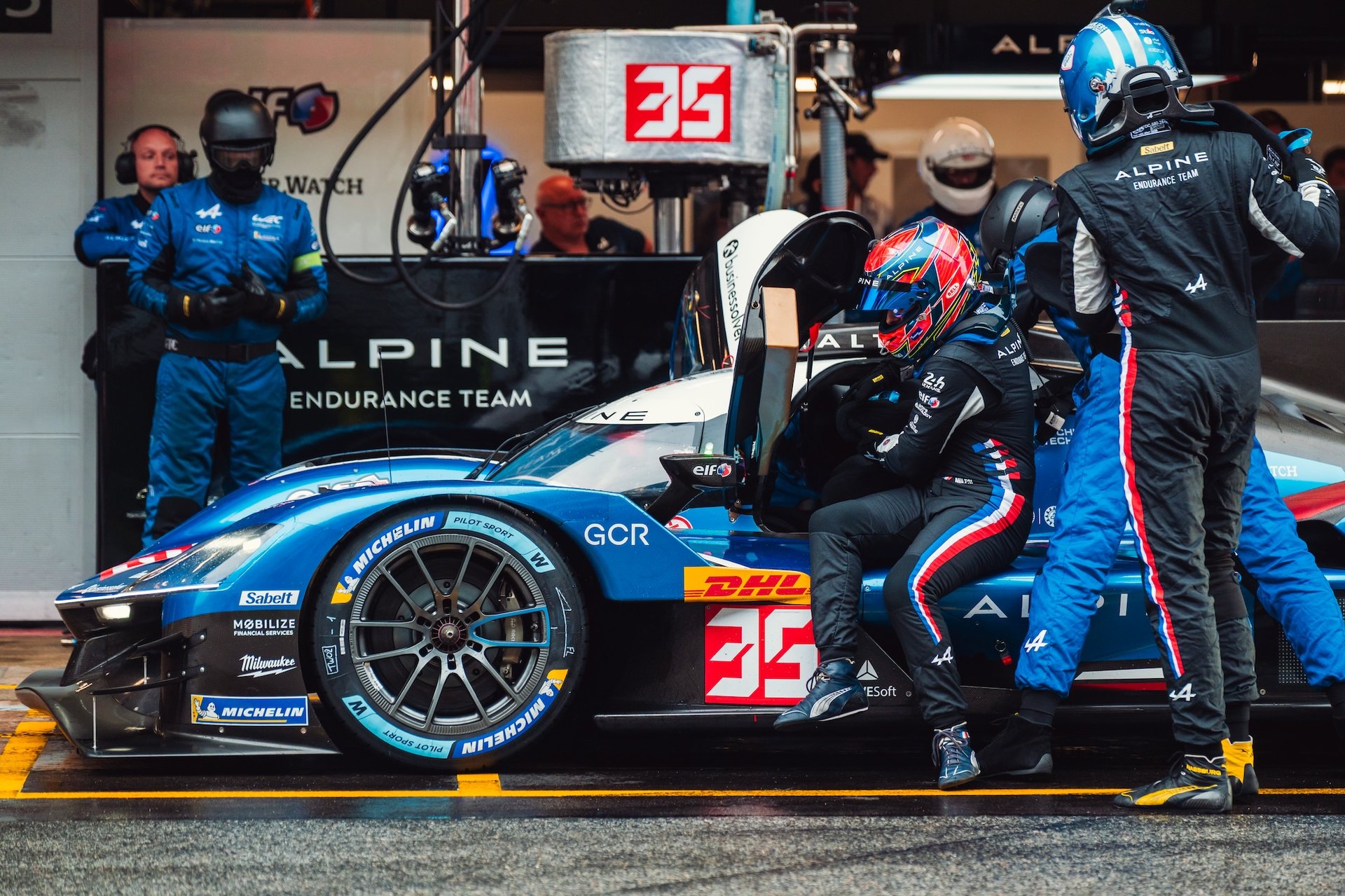
The opening round of the 2026 FIA World Endurance Championship, ultimately held at Imola after Qatar was postponed, did not deliver a podium for the Alpine Endurance Team. It did, however, establish something even more important: the Alpine A424 is now operating at the pace of the benchmark cars over a full six-hour race, without any drop-off.
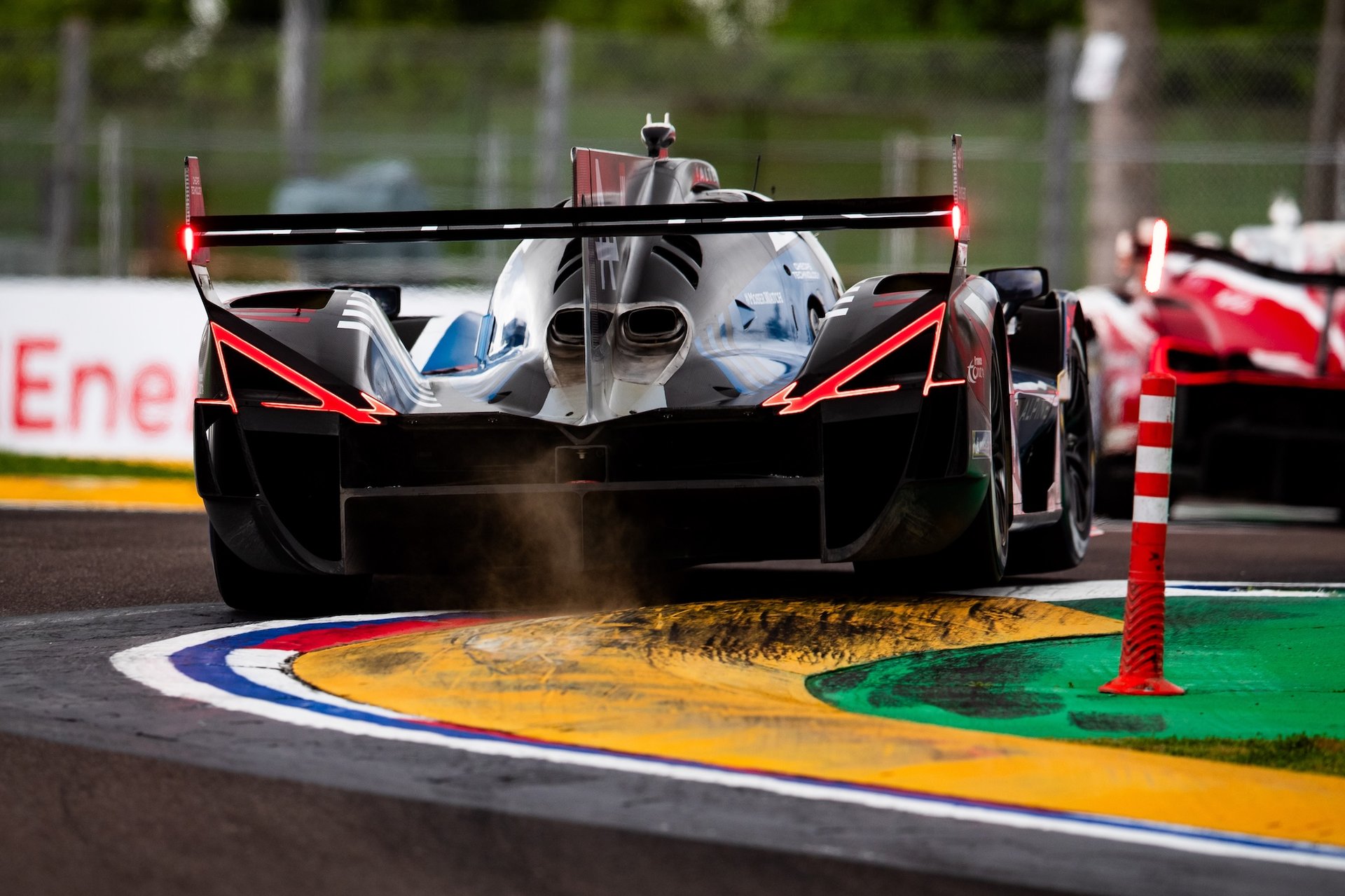
At the Autodromo Enzo e Dino Ferrari, a circuit that punishes both chassis shortcomings and poor traffic management, the #35 finished on the lead lap, just 59.385 seconds behind the winner after 213 laps. In today’s Hypercar landscape, that is no minor detail. It marks the dividing line between a car that capitalizes on circumstance and one that is capable of shaping its own race.
The context makes the performance even more significant. The Alpine A424’s announced final season, more demanding 2026 Michelin tyres, a hotter track than in 2025, and an extremely compressed field. Under those conditions, completing six hours without incident, without penalties and without any mechanical weakness amounts to a complete performance.
Alpine managed exactly that with both cars.
Friday: Milesi’s lap sends a clear signal – Alpine A424
The weekend shifted as early as FP2. Charles Milesi produced a 1:30.898. No other driver broke into the 1:30s. That lap did not guarantee anything for the race, but it set a clear benchmark: the A424 had the capacity to challenge for outright pace under the right conditions.
That lap validated the work carried out on the 2026 evolution. The added downforce did not compromise top speed and, more importantly, brought greater stability in Imola’s most demanding sections. The car absorbed compressions more effectively, handled direction changes with greater composure, and could be leaned on earlier in the lap.
At that point, Alpine also knew Ferrari, Toyota and Cadillac still held a margin over a single qualifying lap. The internal reading remained clear-eyed: the outright speed was there, but the real difference would emerge over the long run.
Qualifying: Alpine in the mix, but with no margin to spare
Saturday confirmed that hierarchy. In Hyperpole, the #35 took 7th place with a 1:30.508, 0.381 seconds off Antonio Giovinazzi’s pole time in the Ferrari #51. The #36 had to settle for 11th with a 1:30.806.
The margins were microscopic: just 0.073 seconds covered the top four. Alpine was not at the very front, but it was fully embedded in the group of manufacturers capable of fighting for victory. Milesi’s 308.6 km/h top speed also confirmed that the extra downforce had not upset the car’s overall balance.
The grid gave the #35 a platform from which to attack, while the #36 started in a more traffic-exposed zone. The race would quickly amplify that difference.
Before the race: tyres, traffic, energy — the three decisive variables
With no rain forecast, the race was always going to be decided by technical parameters. The 2026 Michelin tyres introduced a more sensitive thermal operating window. At Imola, with its aggressive kerbs and repeated traction phases, degradation rises sharply as soon as a car drifts out of that window.
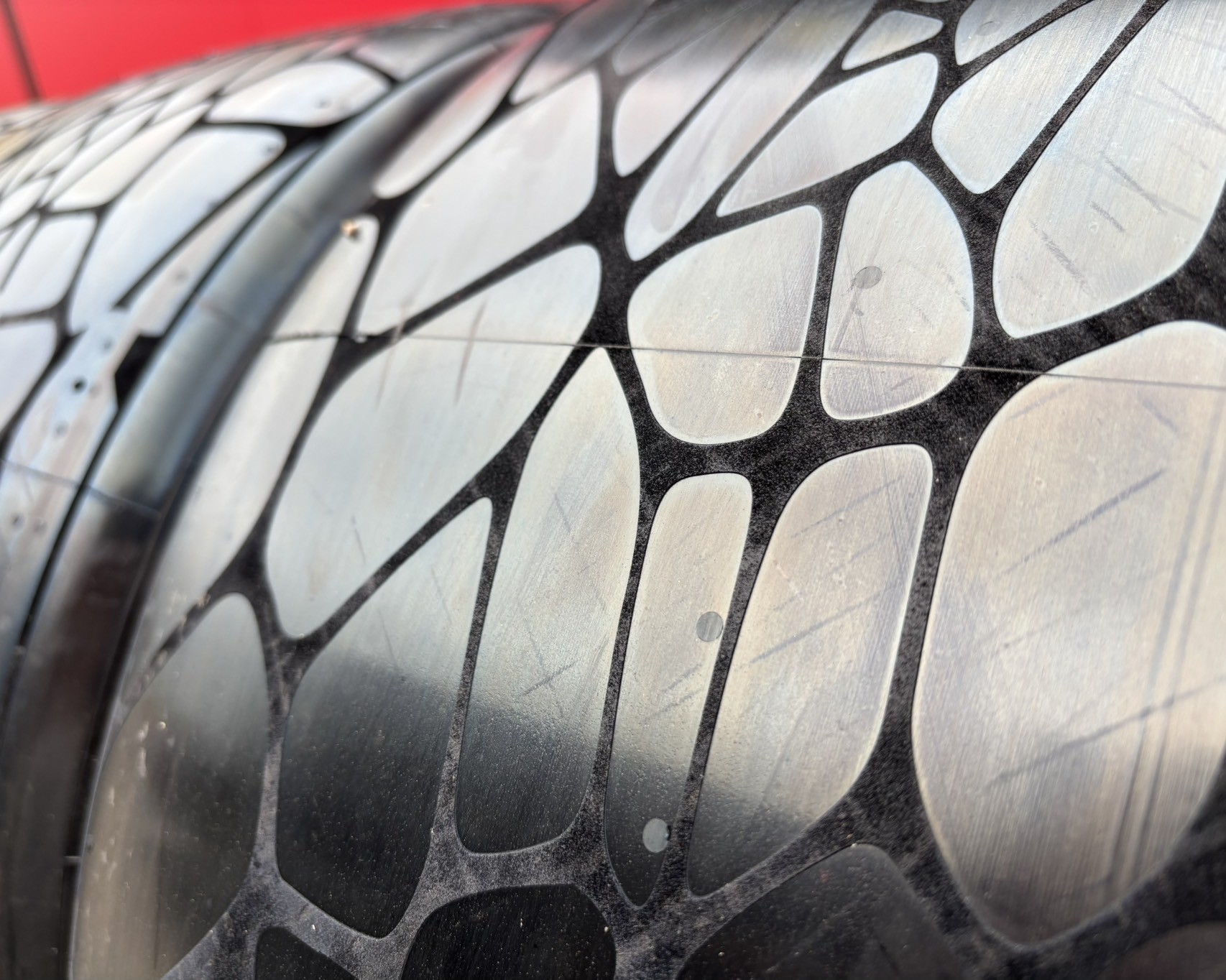
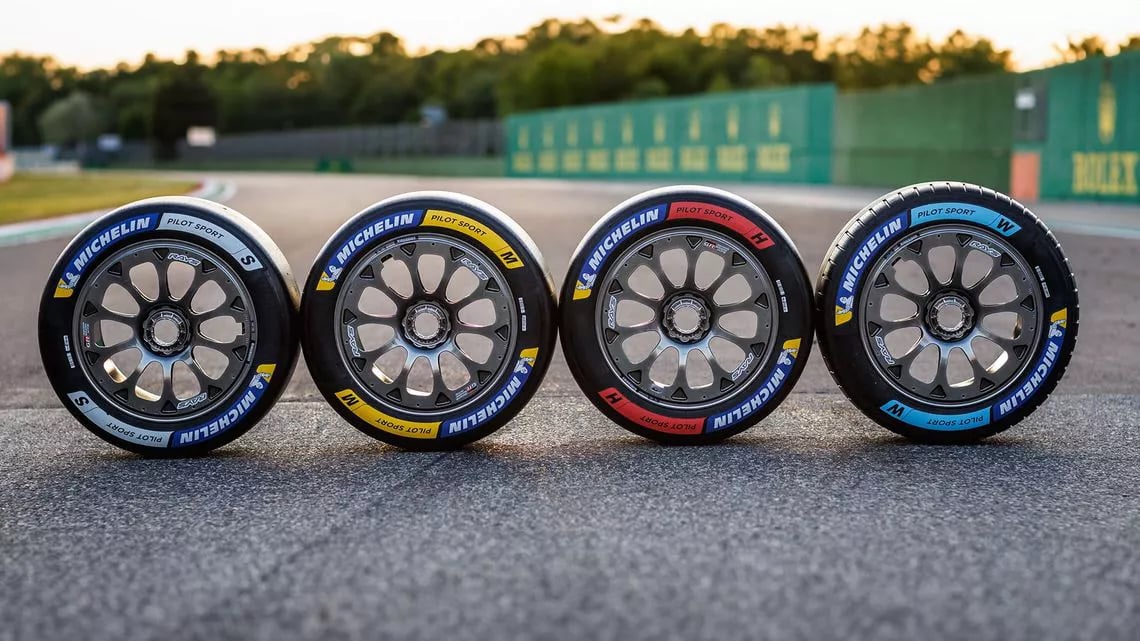
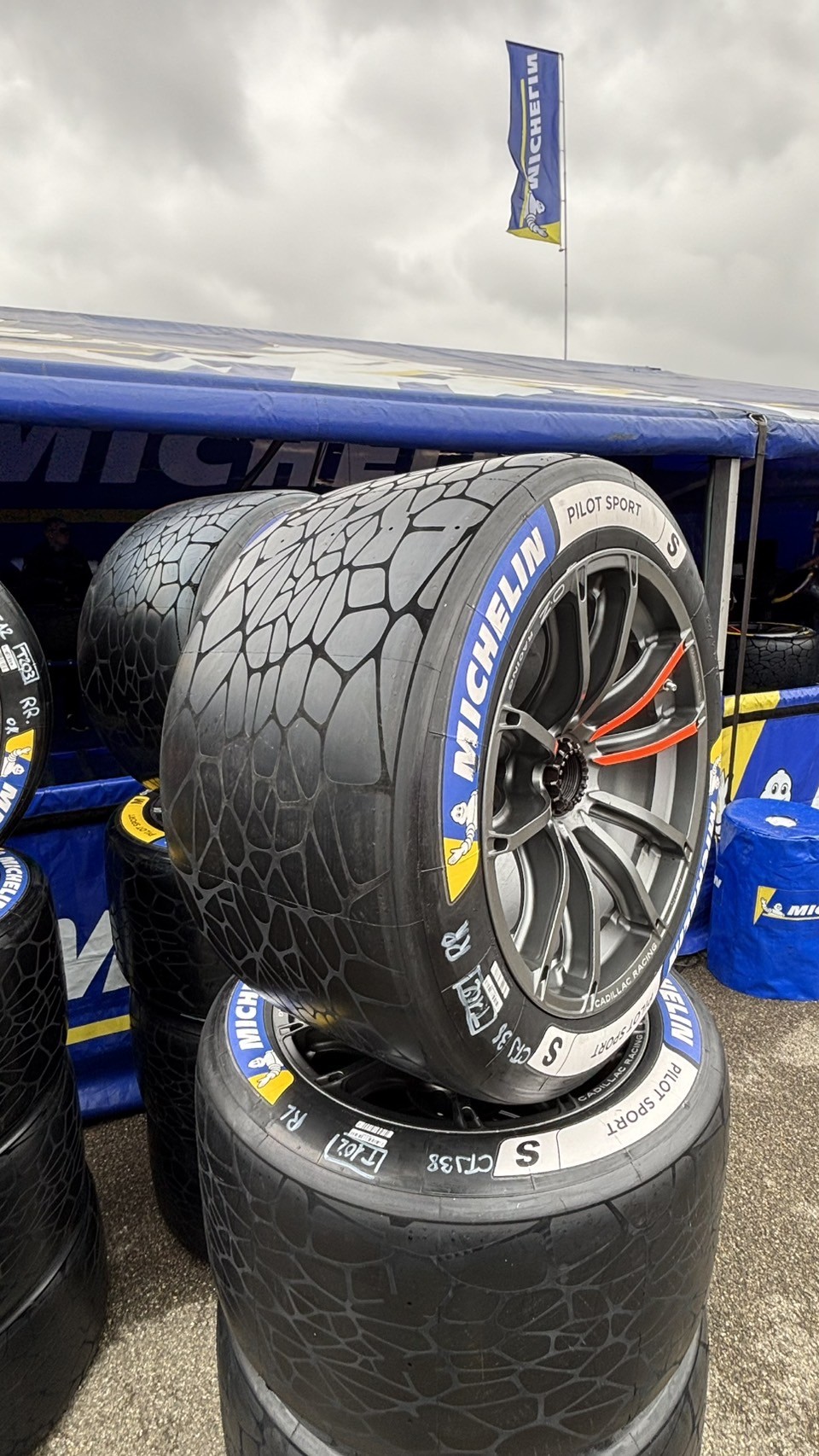
Traffic was just as important. On a narrow circuit, losing a second behind a slower car can ruin an entire stint. Then there was hybrid energy management, which demanded total discipline: any overconsumption would inevitably be paid back over the course of the race.
Alpine approached the race with two distinct readings. The #35 followed an aggressive path, built around double-stints and perfectly synchronized pit stops. The #36 prioritized continuity, limiting exposure to risky situations and focusing on clean execution.
Race start: immediate stability, immediate pace
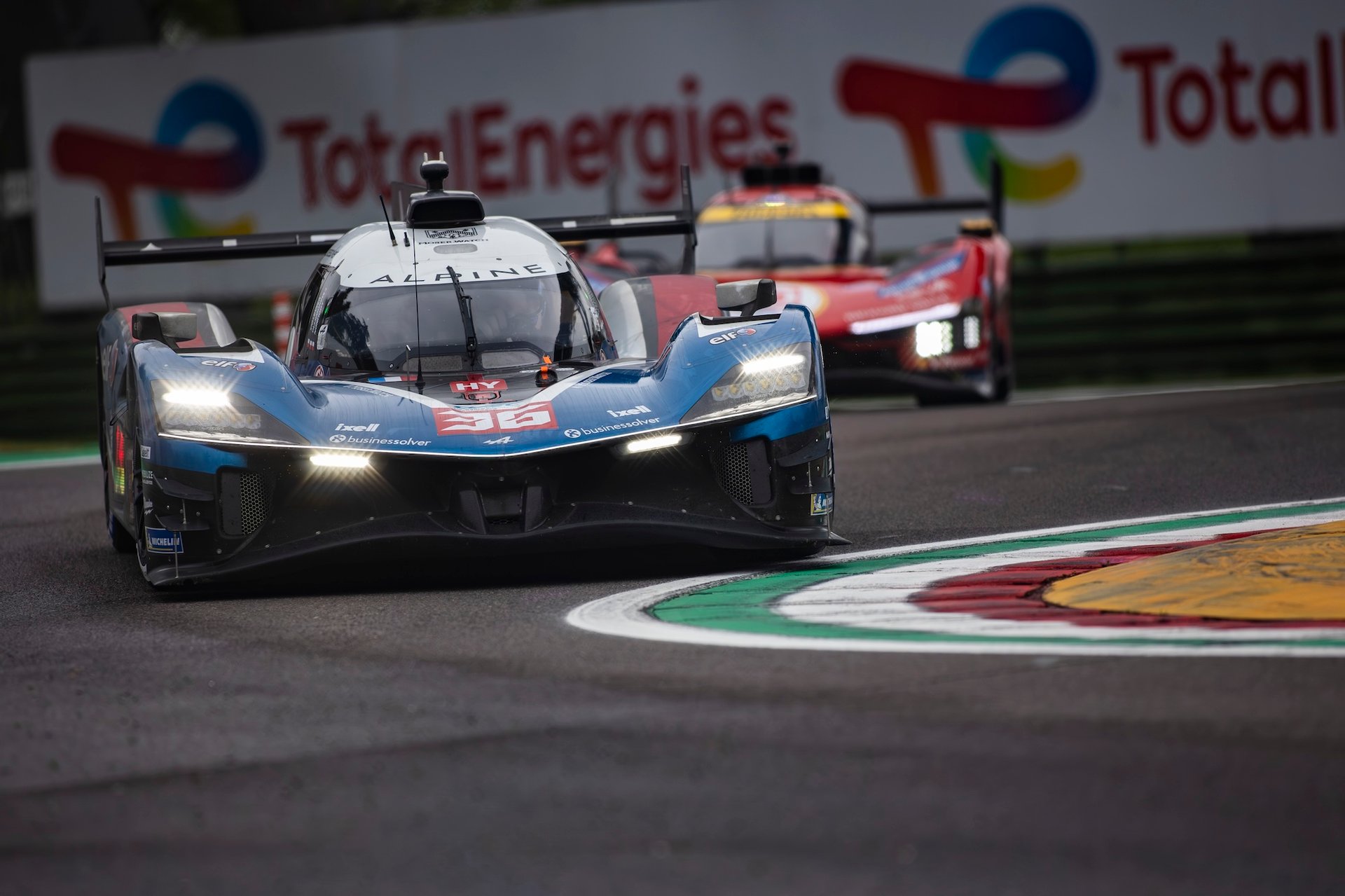
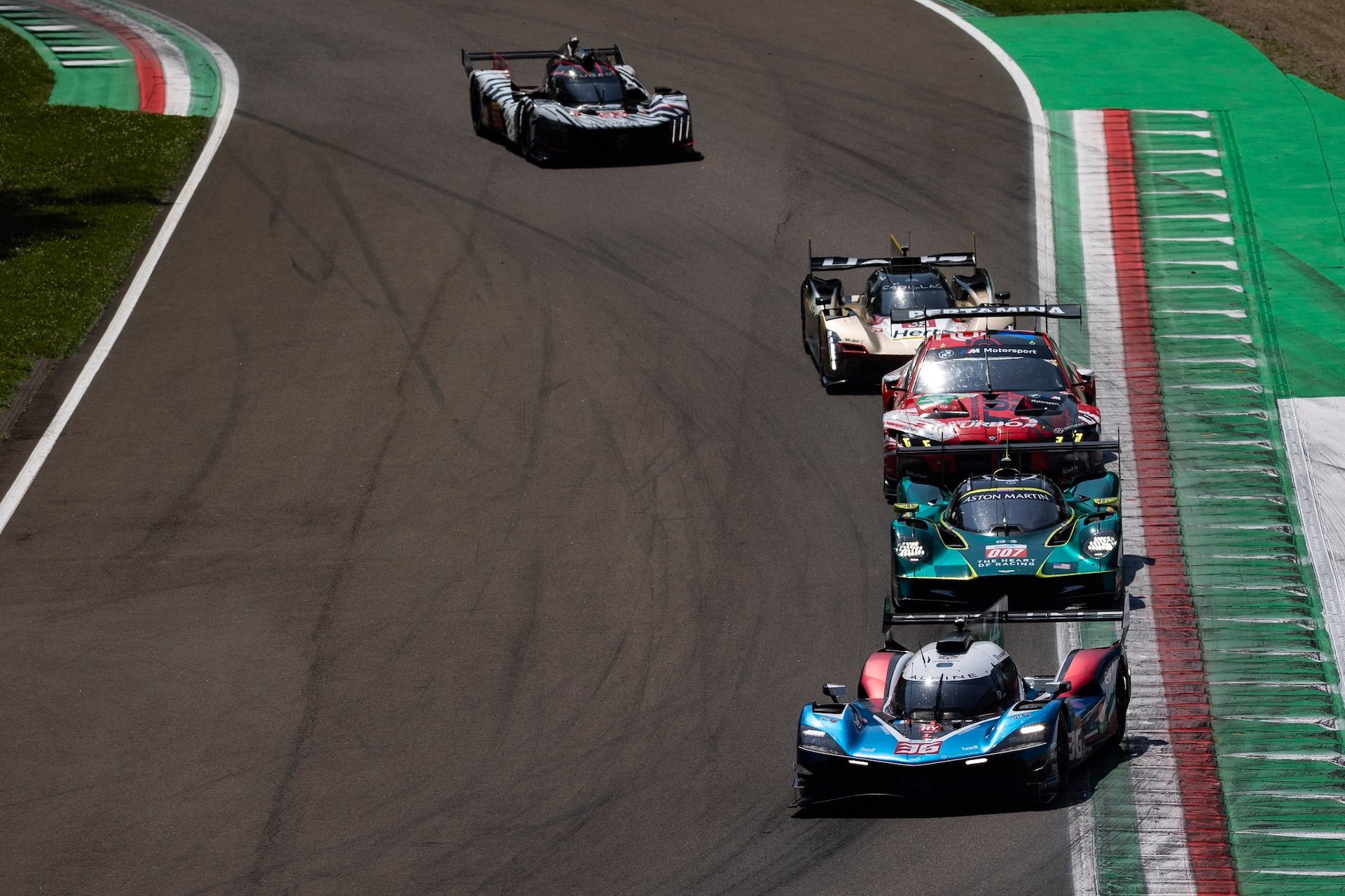
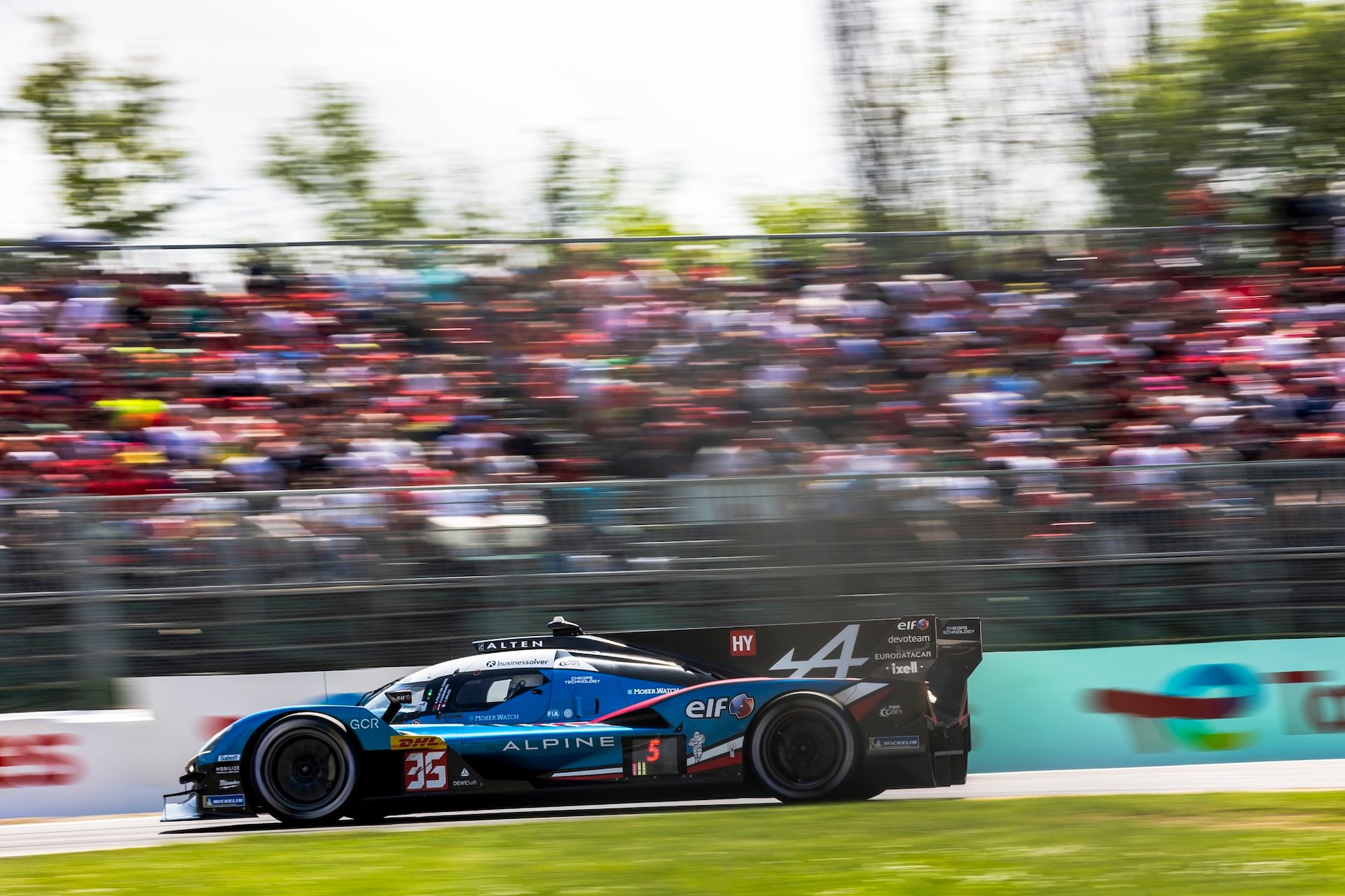
At 1 p.m., both A424s launched cleanly. The #35 held onto 7th, while the #36 settled around 11th. No contact, no incident.
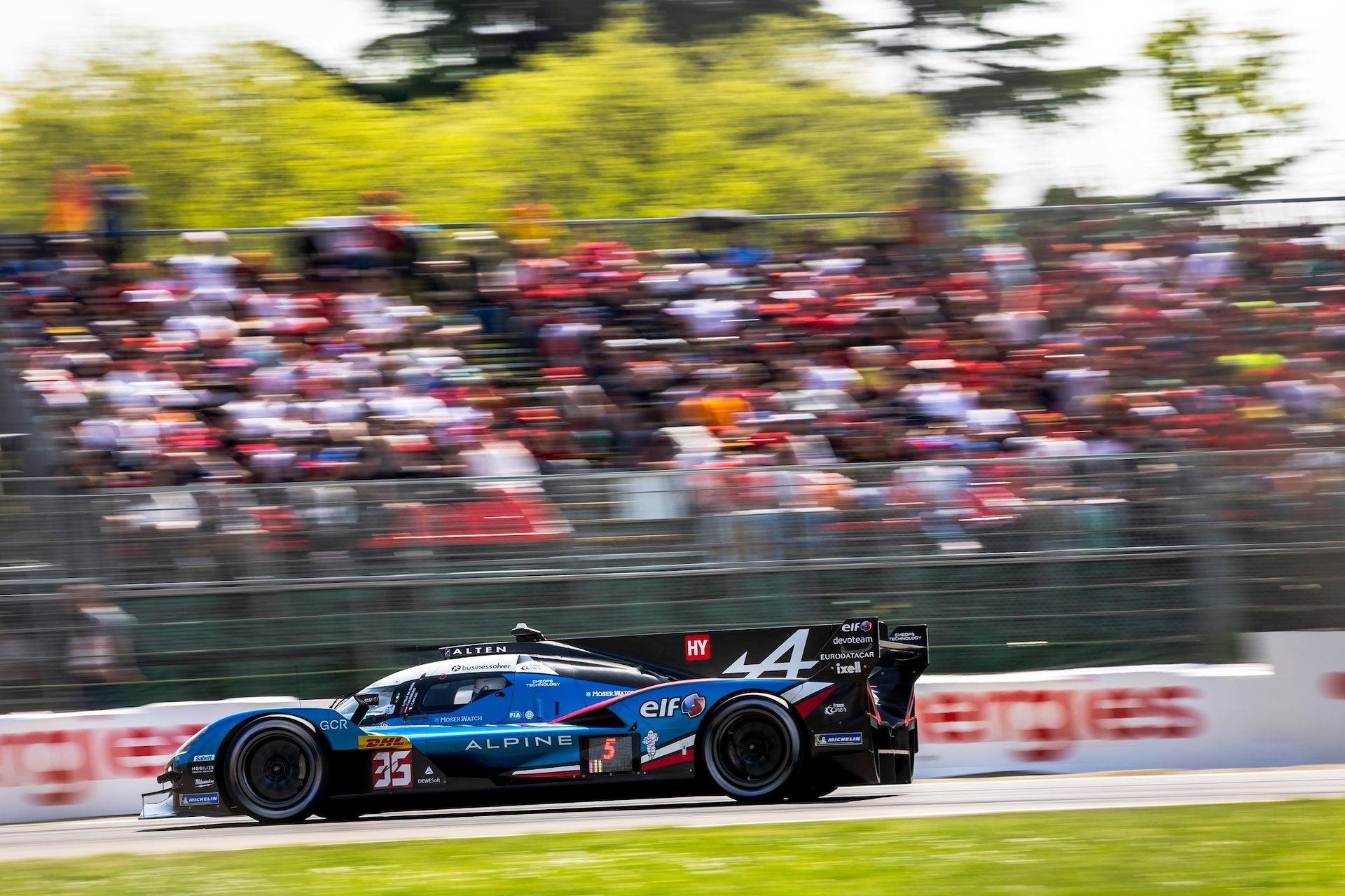
From the opening stints, the #35 locked into the leaders’ rhythm. It carried fuel load well and did not overwork its tyres early. On lap 22, it posted a 1:33.009, its fastest lap of the race, while still running heavy. The message was unmistakable: the underlying pace was already there, without needing any special circumstances.
The #36 found itself in denser traffic. Its pace remained coherent, but opportunities were fewer. Too often, the time it lost depended more on where it was on track than on its outright speed.
First hour: building the race step by step
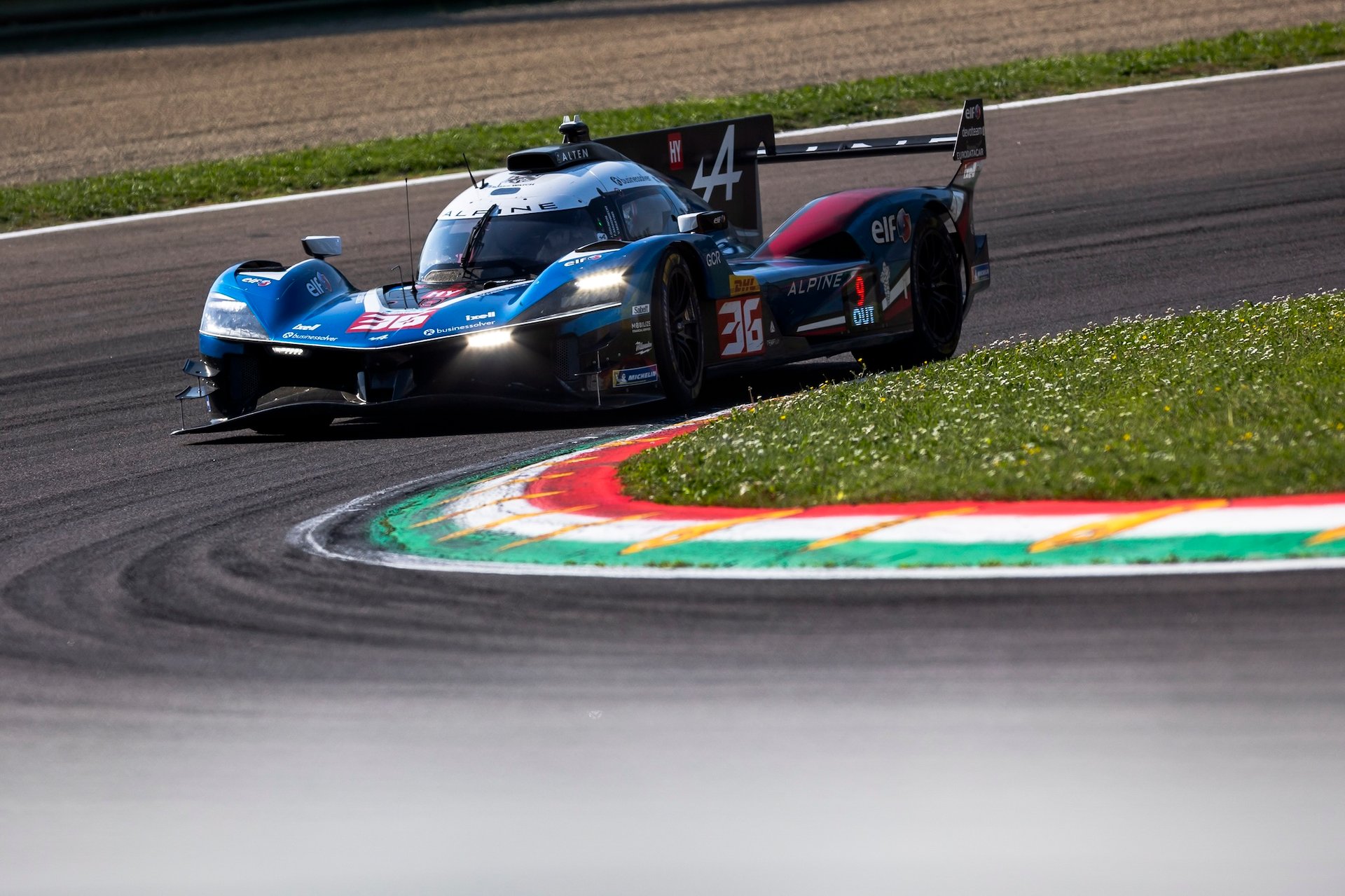
Through the opening stints, the #35 advanced without interruption. The overtakes were not dramatic, but they kept coming. Every corner exit was clean, every braking phase controlled. The car remained inside a stable performance window.
The #36 followed a more linear trajectory. It held position, looked after its tyres and avoided situations that could have compromised its race. The choice was deliberate: give nothing away rather than chase uncertain gains.
Hours 2 to 4: the #35 fully cashes in on its strategy
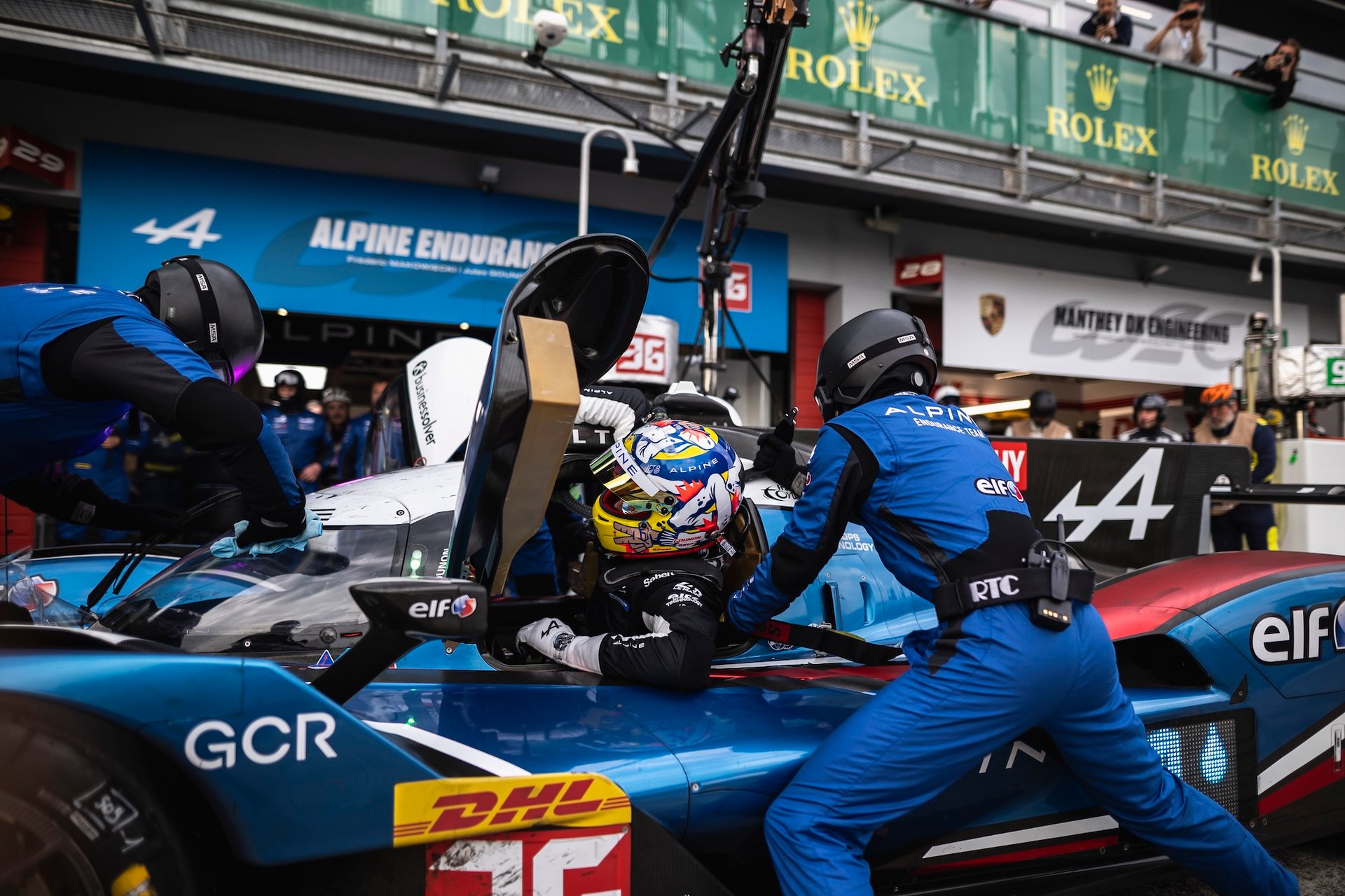
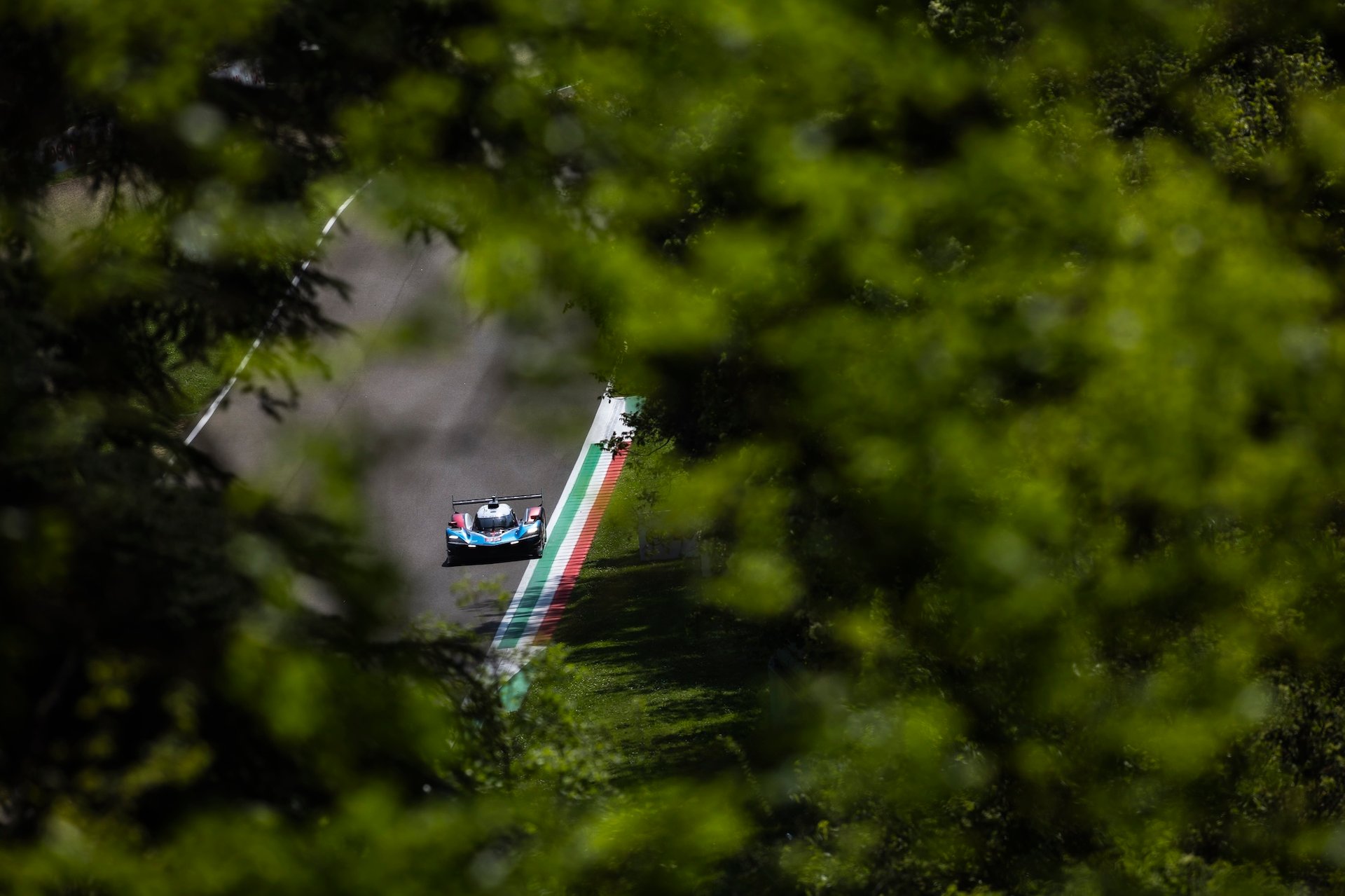
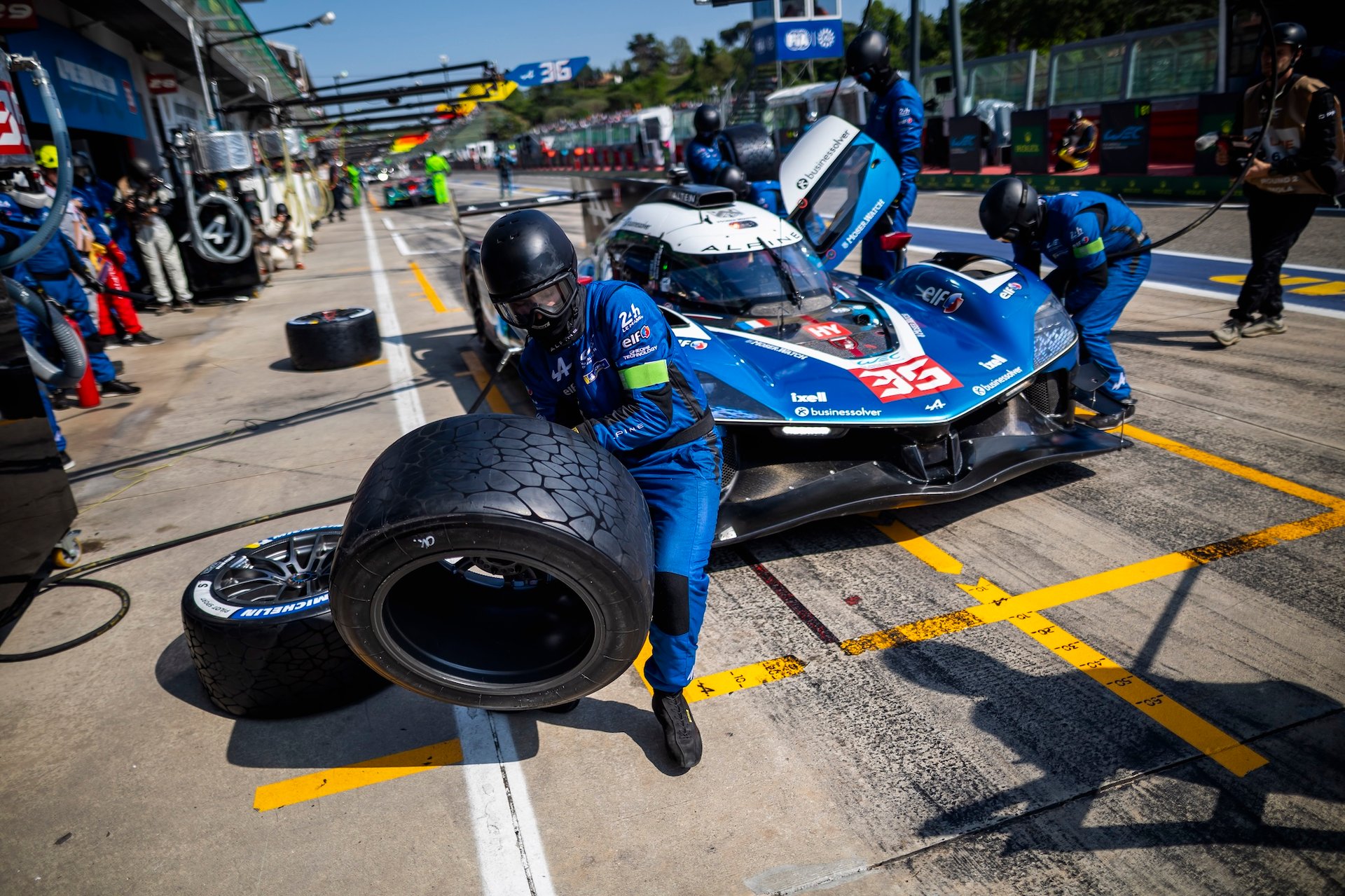
This was the phase in which Alpine’s race took shape. The #35 moved into the top six, then into the top five. Pit stops were perfectly timed around traffic windows, and the double-stints held together without any abrupt drop in performance.
The A424 maintained a stable platform. The stints stayed remarkably consistent, mostly in the 1:34 range. Around it, direct rivals began to show greater variation, especially late in the stint.
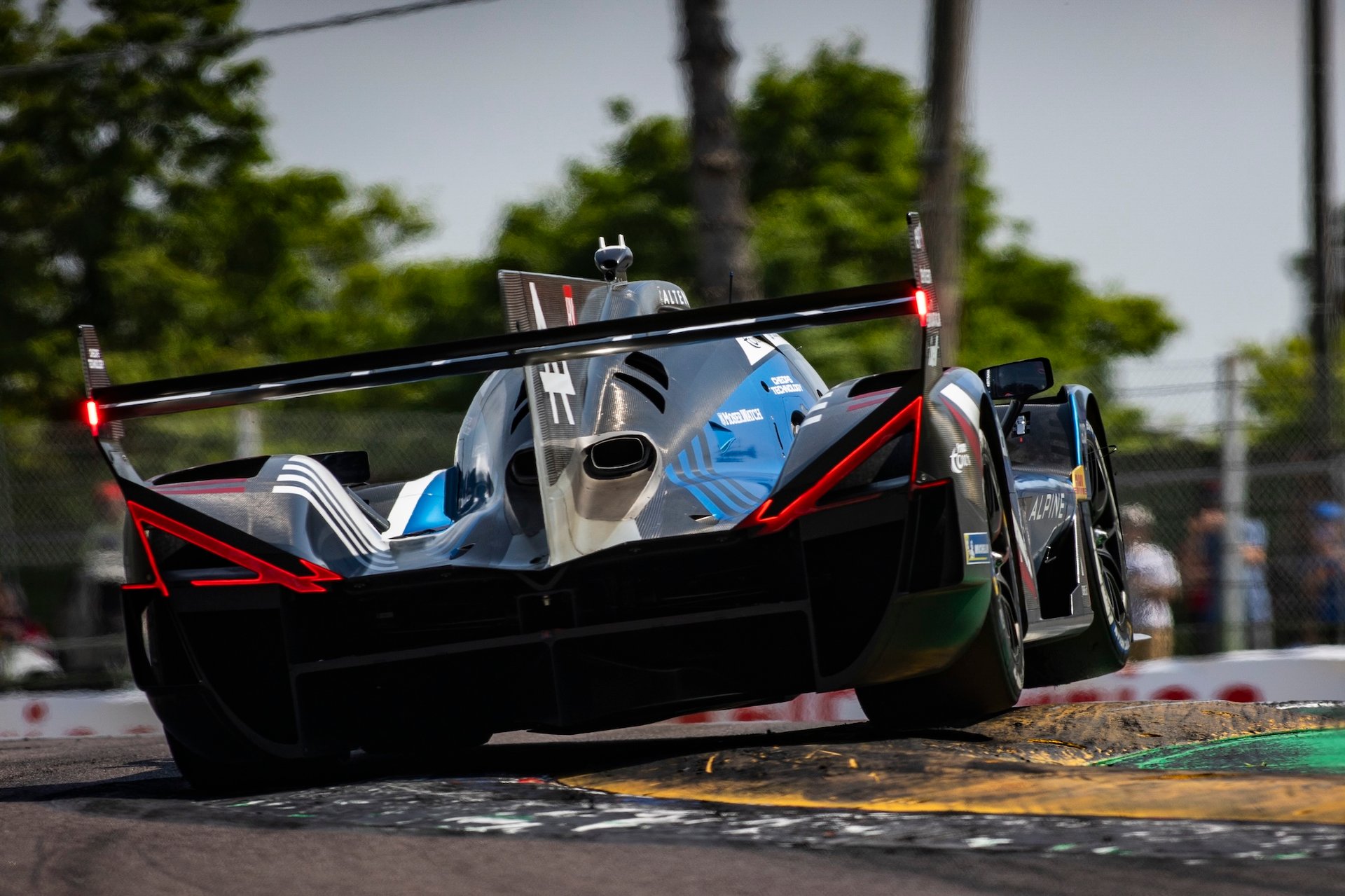
The car’s ability to take Imola’s kerbs without punishing its tyres became a tangible advantage. Grip faded progressively rather than suddenly, which allowed Alpine to keep extracting performance lap after lap.
The #36 continued a clean but more constrained race. It remained in the top 12 but never fully escaped traffic. One or two less favorable stints slightly widened the gap.
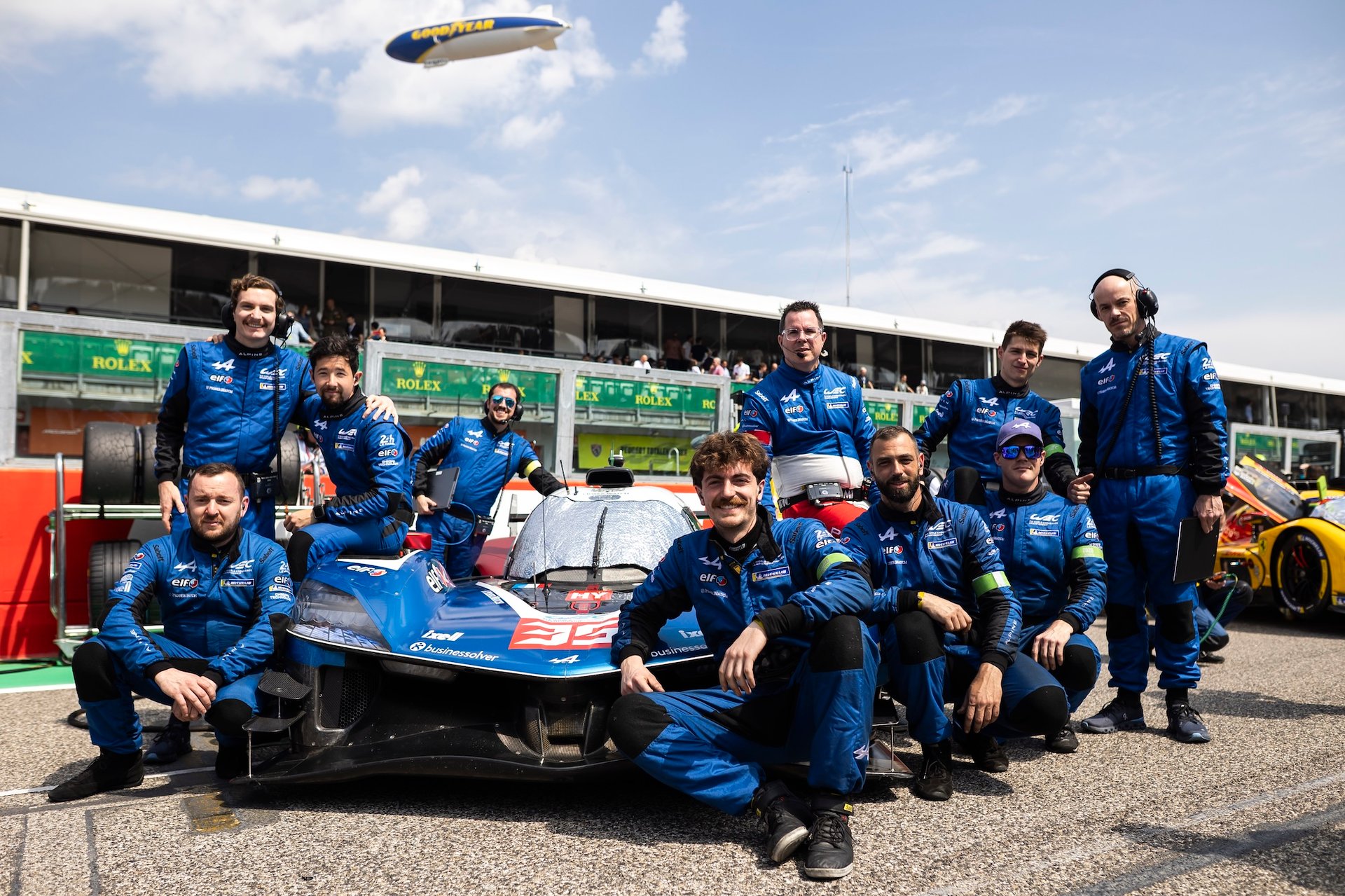
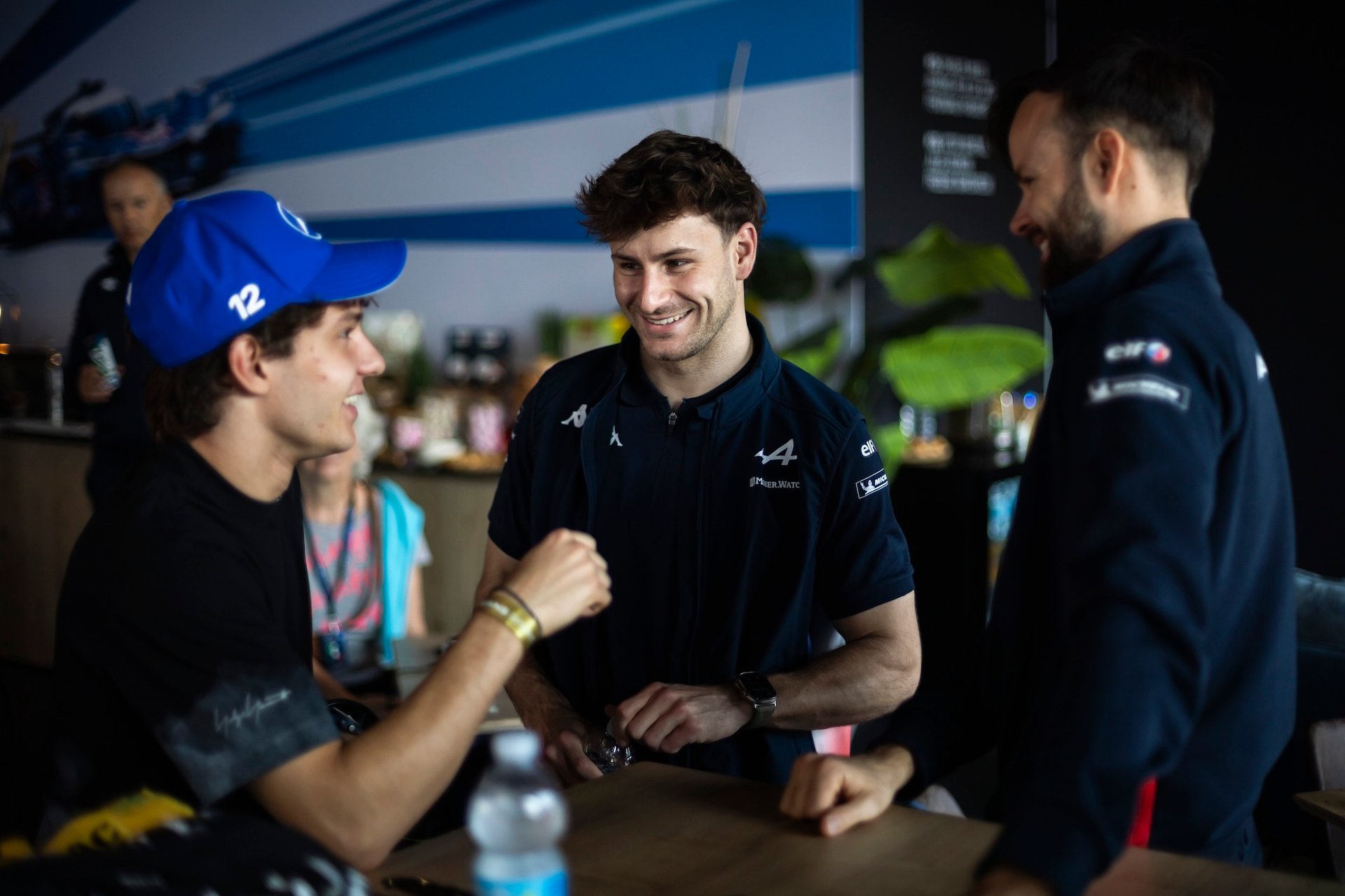
Technical reading: an A424 that is finally consistent across the board
The 2026 evolution changes the car’s overall operating range. The added downforce improves stability through fast sequences, but above all it improves consistency over long stints.
Over the kerbs, the A424 no longer comes apart. Losses in grip are limited, and traction remains clean.
The drivers can sustain a high pace without triggering excessive degradation. Hybrid energy management has also reached a very high level of precision. No drop-off, no visible overconsumption. The car’s deployment remains linear across the full six hours.
All of this allows Alpine to build its strategy without compromise. The stints flow one into the next without major correction, which gives the team greater freedom in every call it makes.
Hours 4 and 5: the #35 settles into the podium fight
From the fourth hour onward, the #35 established itself firmly inside the top five. The gap to the leaders remained under control. The car showed no sign of weakness.
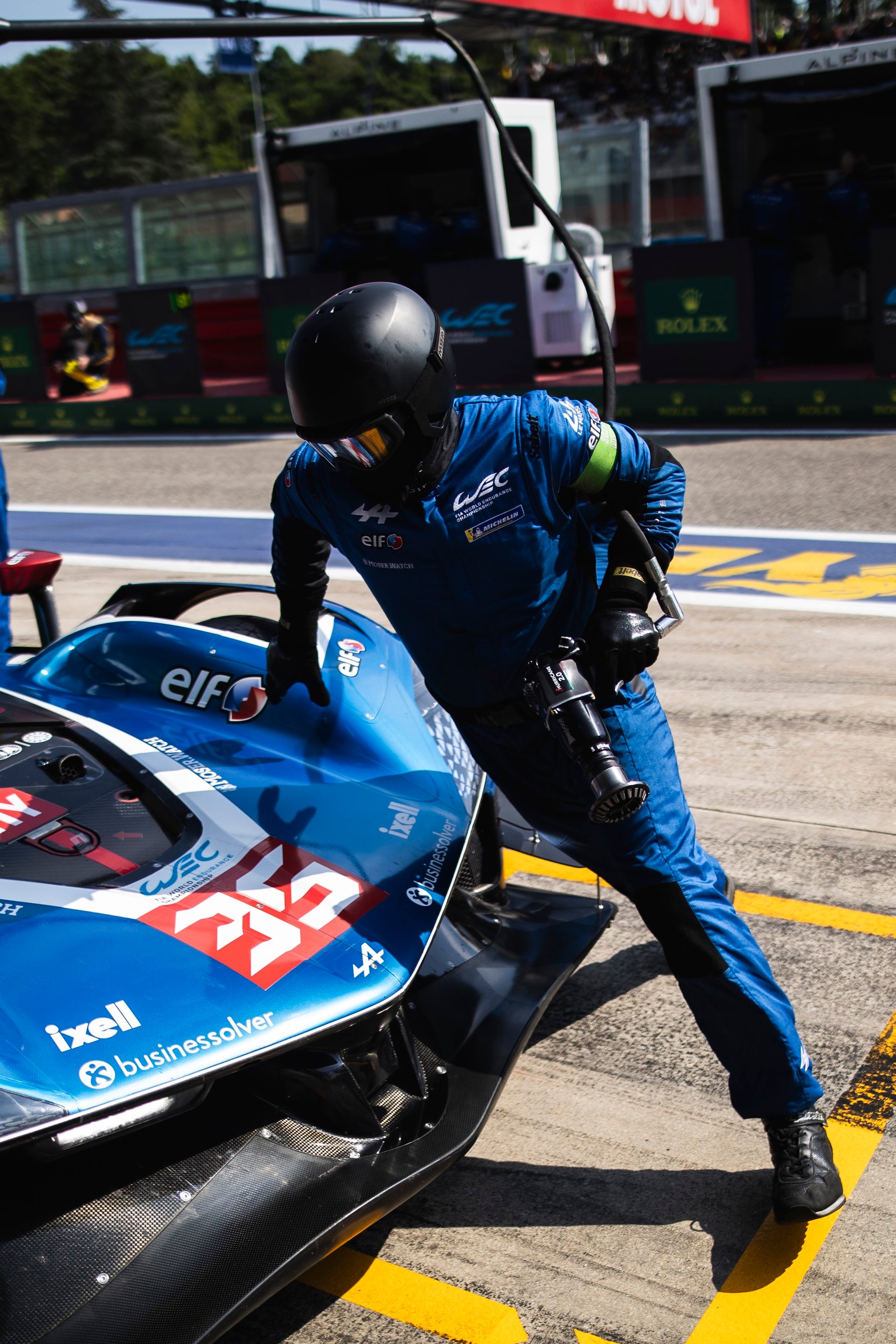
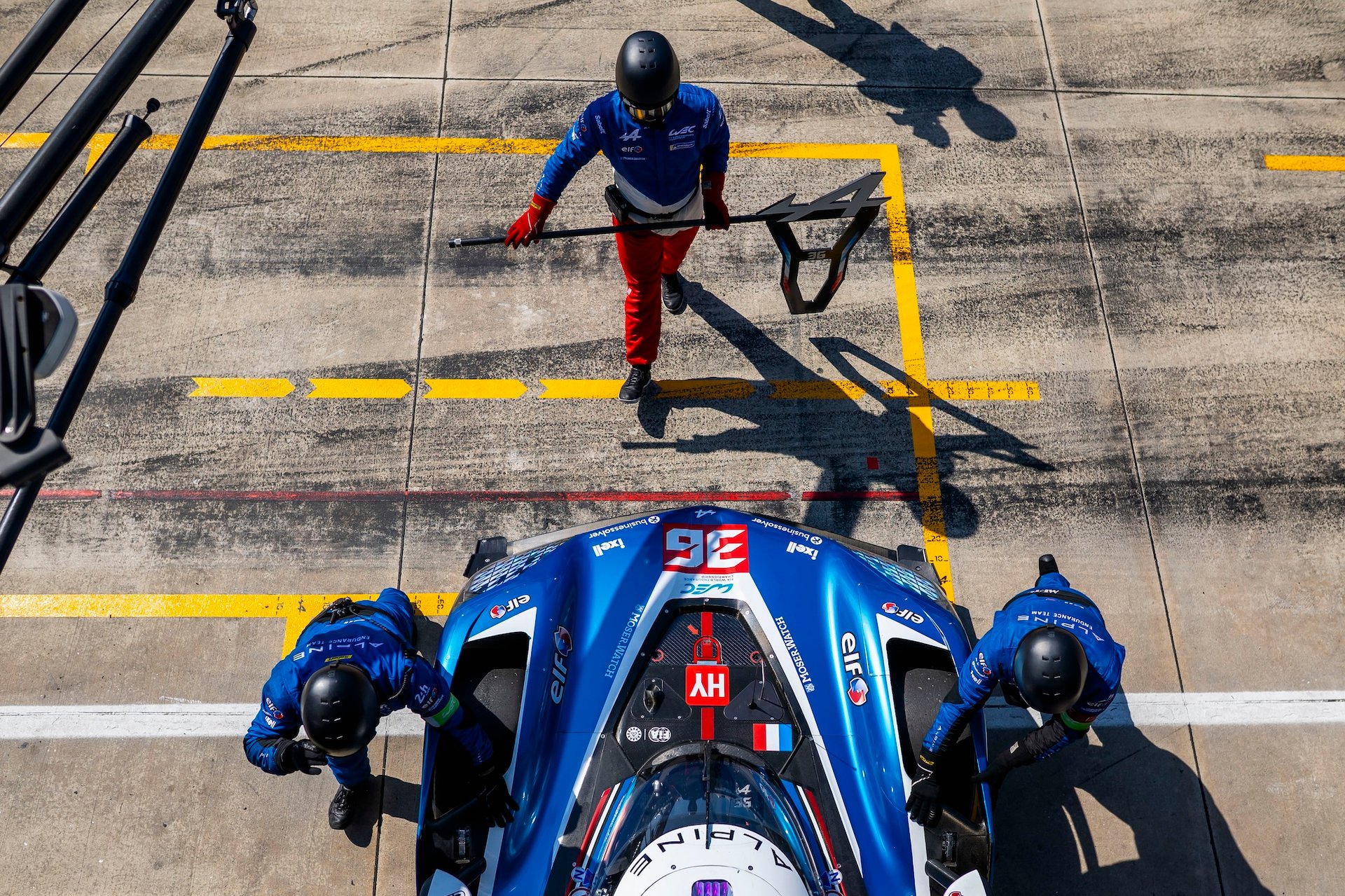
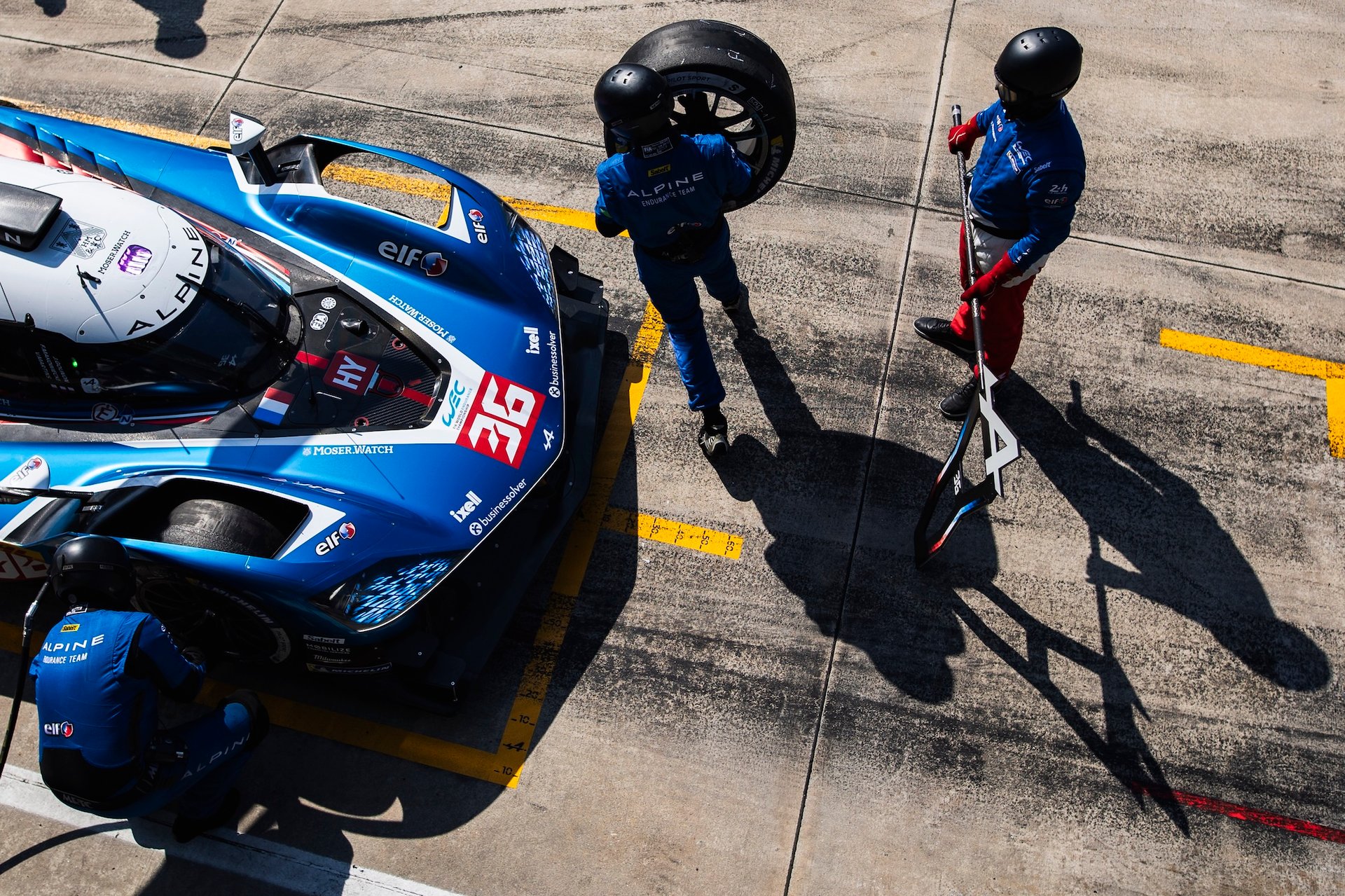
The stints stayed clean, the pit work remained efficient. That stability late in the run allowed Alpine to sustain a high pace at a stage where other cars were already having to back off.
The #36 continued on a steady path of its own. It lost a lap to the leaders but stayed on track without incident and without any sharp drop in performance.
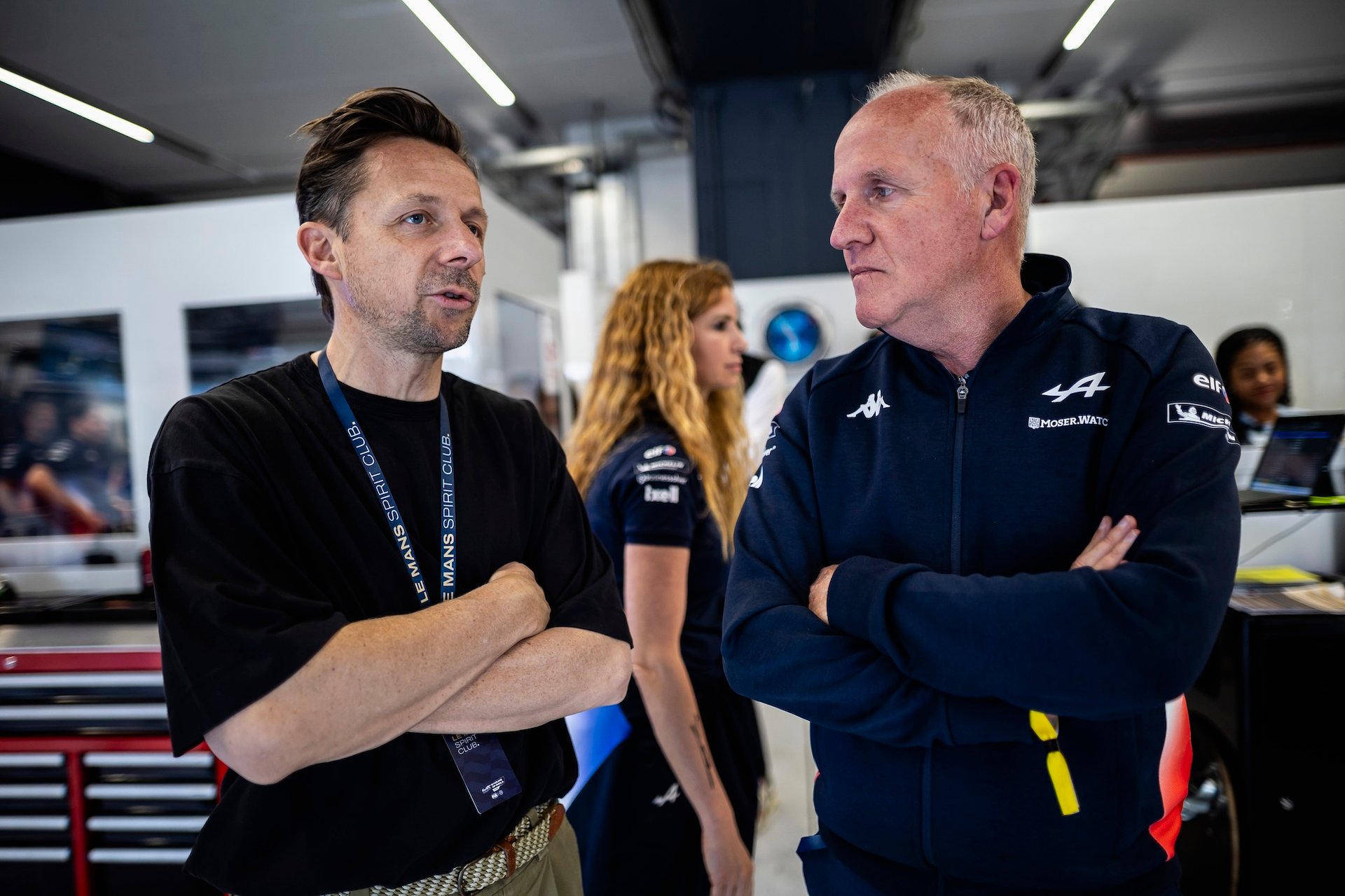
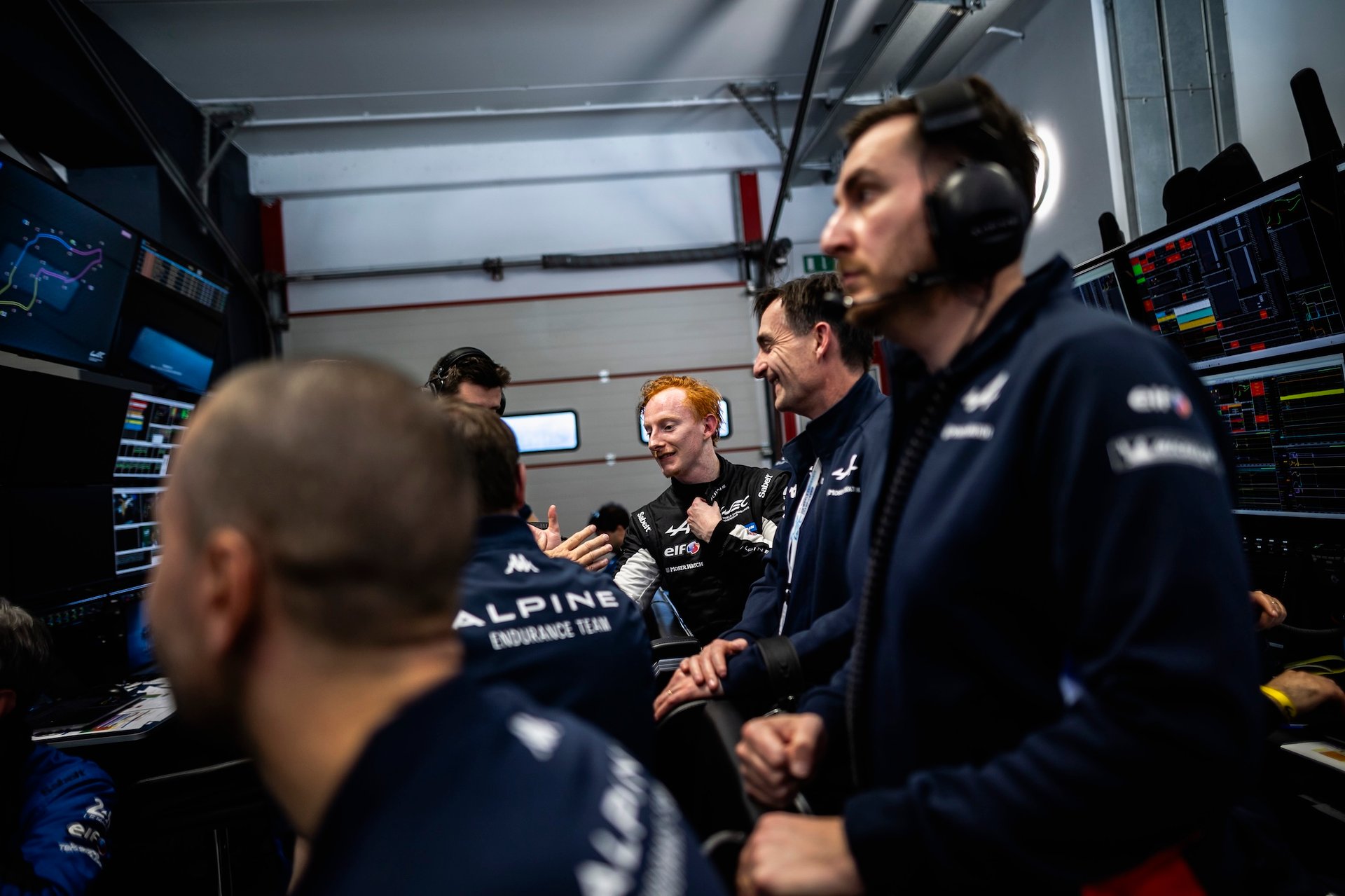
Final hour: Milesi closes the door on Fuoco
The final hour concentrated all the tension of the race. The #35 was running fourth. Behind it, Antonio Fuoco in the Ferrari #50 moved into striking range.
The gaps remained within a handful of seconds. Traffic complicated every move. Tyre management became decisive.
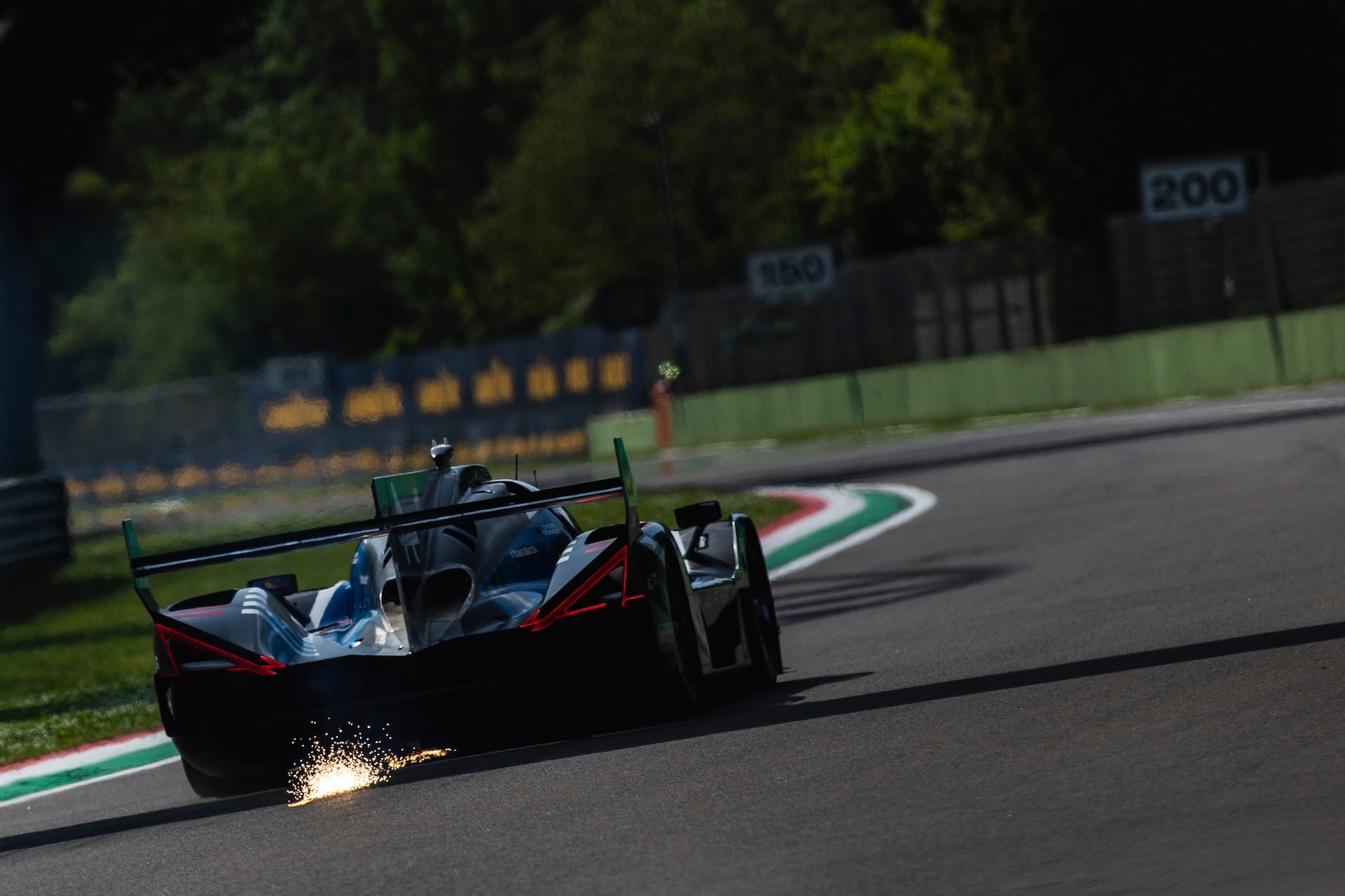
Charles Milesi held a relentless rhythm. No lock-up, no mistake. The car stayed stable even at the end of the stint. Every corner exit was optimized, every backmarker cleared with precision.
The #35 held position all the way to the flag. The final margin stayed narrow, but there was never a real opening for the Ferrari.
The #36 finished its race in 11th place, one lap down, without incident.
Key numbers: a performance built over the full distance
The #35 completed 213 laps in 6:01:10.324, 59.385 seconds behind the winning Toyota #8. Its average speed reached 179.66 km/h. It stayed on the lead lap for the entire race.
Its fastest lap, a 1:33.009 on lap 22, came early in the race, underlining just how stable the car was from the outset.
The #36 covered 212 laps in 6:00:43.534, at an average speed of 178.73 km/h. Its best lap was a 1:32.258 on lap 76.
Neither car suffered a mechanical issue. Neither required a prolonged stop. Neither was involved in any incident.
Full Hypercar classification – 2026 6 Hours of Imola
| Position | Team / Car | Laps | Gap |
|---|---|---|---|
| 1 | Toyota Racing #8 (Buemi / Hartley / Hirakawa) | 213 | — |
| 2 | Ferrari AF Corse #51 (Pier Guidi / Calado / Giovinazzi) | 213 | +13.352 s |
| 3 | Toyota Racing #7 (Conway / Kobayashi / de Vries) | 213 | +41.187 s |
| 4 | Alpine Endurance Team #35 (Félix da Costa / Milesi / Habsburg) | 213 | +59.385 s |
| 5 | BMW M Team WRT #20 | 213 | +1:00.543 |
| 6 | Ferrari AF Corse #50 | 213 | +1:00.901 |
| 7 | BMW M Team WRT #15 | 213 | +1:01.506 |
| 8 | Cadillac Hertz Team JOTA #38 | 213 | +1:01.995 |
| 9 | Aston Martin THOR Team #007 | 212 | +1 lap |
| 10 | AF Corse #83 | 212 | +1 lap |
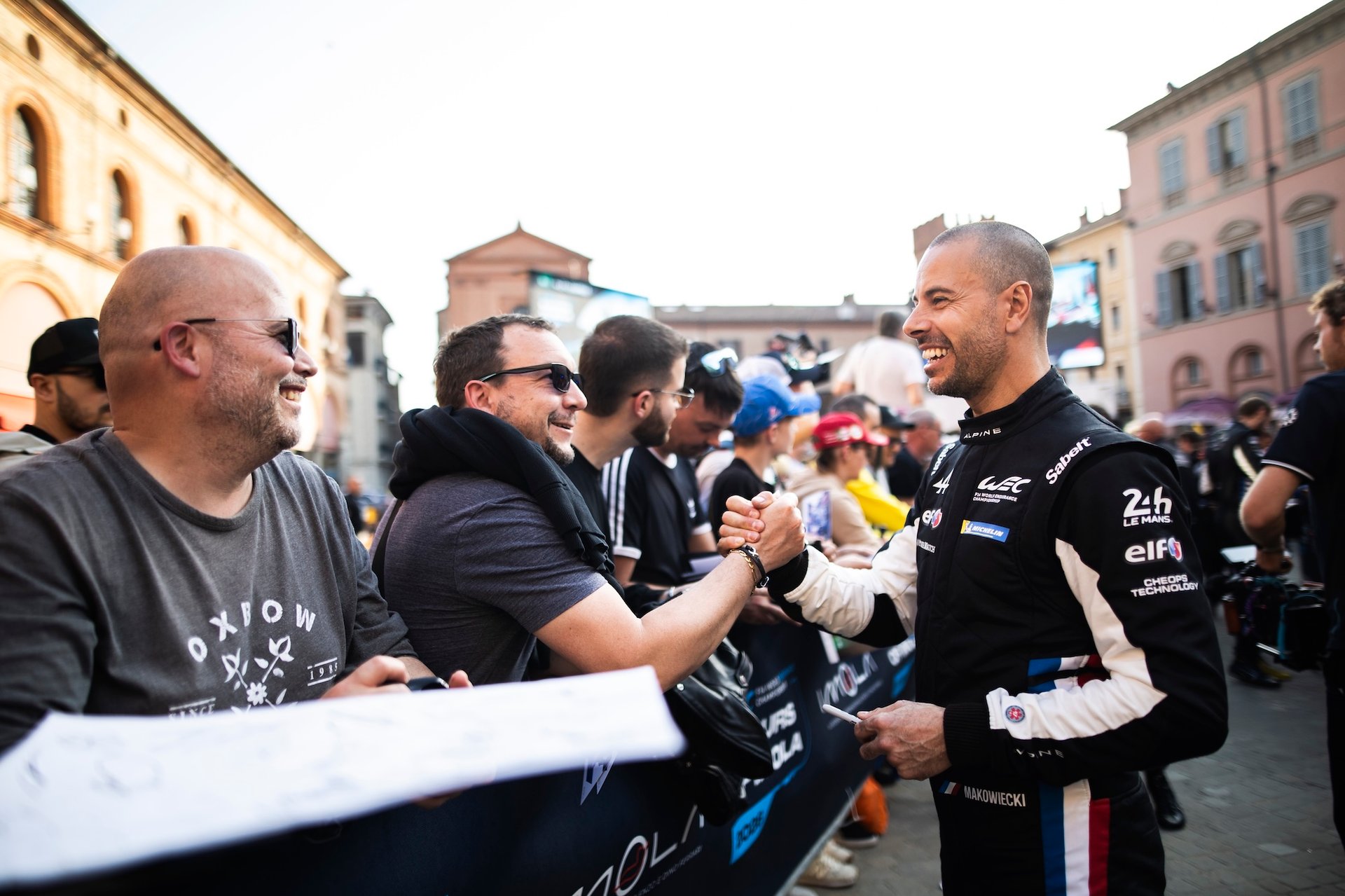
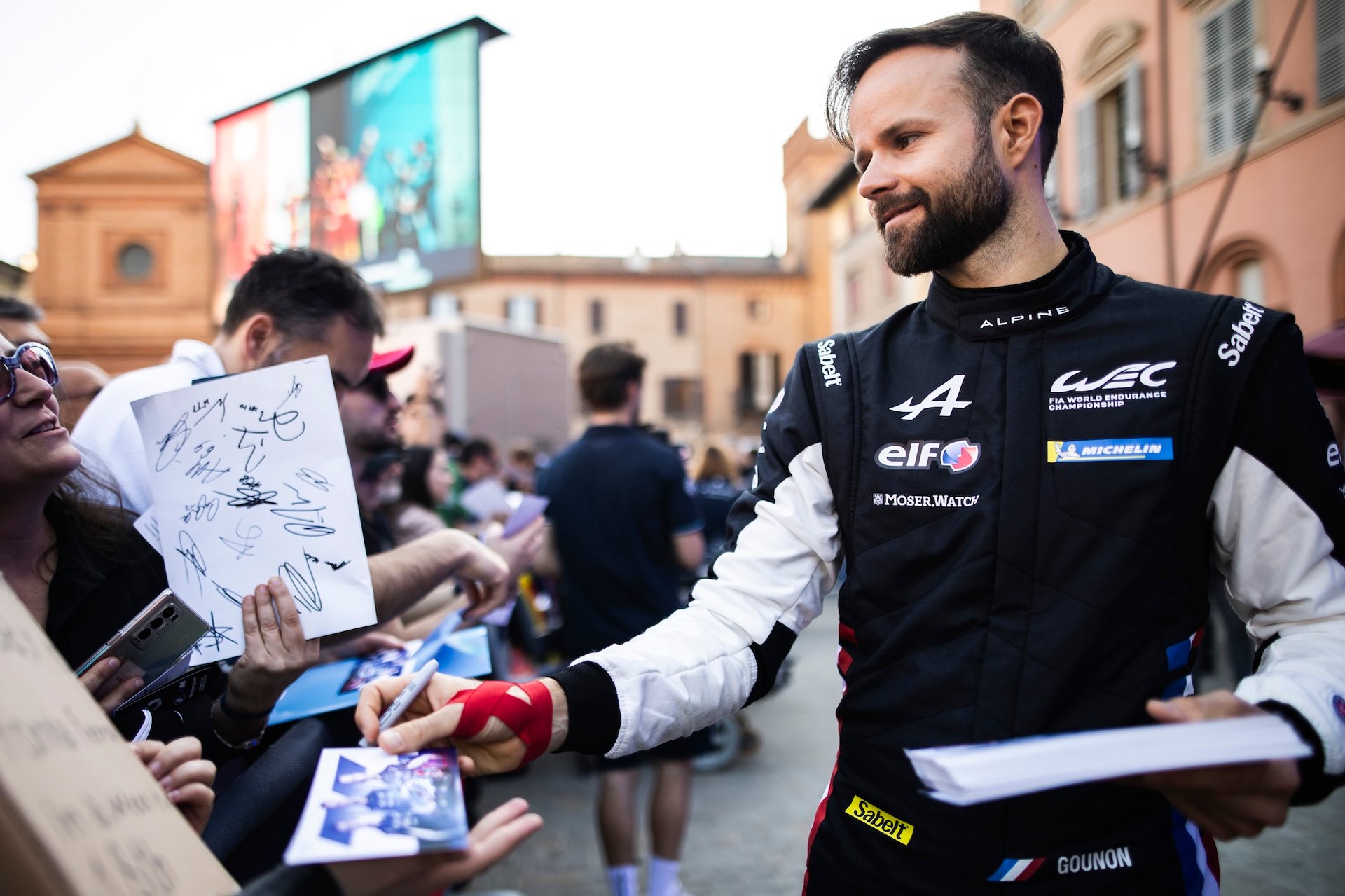
| 11 | Alpine Endurance Team #36 (Makowiecki / Gounon / Martins) | 212 | +1 lap |
| 12 | Peugeot TotalEnergies #94 | 212 | +1 lap |
| 13 | … | … | … |
| 17 | … | … | … |
Conclusion: Alpine reaches a new level
Alpine did far more than simply deliver a strong season opener. At Imola, it produced one of the most mature performances seen since the Hypercar program began. Pace, strategy, execution: every layer was under control. Nothing was left to chance.
The #35 embodied that shift perfectly. Fourth, just 59 seconds back after six hours, it built its race methodically from 7th on the grid. Its long-run speed stood out immediately, with a 1:33.009 best lap early on and a level of consistency that never faded. The strategy was spot-on, especially in the way Alpine handled tyre double-stints and hybrid energy management, always staying in the right operating window. And the final stint underlined just how high the level had become: a clean, hard, mistake-free defense against a Ferrari charging at full speed. António Félix da Costa, Charles Milesi and Ferdinand Habsburg operated as a single unit, without any drop in level.
The #36, more discreet in the final standings, fully delivered on its role. Eleventh, one lap down, it came through the six hours without incident, without any strategic error, and secured valuable manufacturers’ points. Over a long, tightly contested season, races like that matter just as much as headline-grabbing runs.
But the main point lies elsewhere. The 2026 Alpine A424 no longer resembles a car still in its learning phase. The aerodynamic evolution has transformed the way it behaves: more downforce, yes, but above all more coherence. The car absorbs everything Imola throws at it without losing composure, looks after its tyres, manages its energy with precision and remains effective from the opening stint to the final lap. It has become complete, readable and fully exploitable, capable of delivering sustained pace rather than isolated peaks.
Alpine Endurance Team is no longer racing to understand. Alpine is racing to fight at the front. Imola did not deliver a win, but it confirmed a new reality: this Alpine A424 can target podiums regularly, on demanding circuits and without relying on circumstances.
The season launch has been more than successful. It gives the project a clear direction and, above all, a new level of credibility. With a major date ahead, the 24 Hours of Le Mans, Alpine now heads forward with something more valuable than hope: a sound technical foundation and repeatable performance.
The Blues did the job. At Imola, they showed they are capable of doing much more.
FAQ – 2026 6 Hours of Imola: Alpine A424 (WEC)
Did Alpine deliver a successful race at Imola 2026?
Yes, absolutely. Even without a podium, Alpine Endurance Team delivered a benchmark performance. The #35 finished 4th less than a minute behind the winner after six hours, without incident, without penalties and with sustained pace. In such a dense Hypercar field, that level of execution places Alpine among the teams capable of fighting at the front over the full distance.
Why is the #35’s 4th place so important?
Because it was built, not inherited. The Alpine A424 climbed from 7th on the grid thanks to:
- very clean Michelin tyre management
- an efficient double-stint strategy
- consistent hybrid energy usage
It finished on the same lap as Toyota and Ferrari, which validates its true six-hour race pace.
What role did the #35 drivers play?
The António Félix da Costa / Charles Milesi / Ferdinand Habsburg line-up delivered without any drop in performance.
Milesi stood out in particular:
- fastest lap in the race for the crew (1:33.009)
- very consistent stints
- a strong defensive drive at the end
Across the full race, the crew maintained a uniformly high level without mistakes.
What changed on the Alpine A424 for 2026?
The 2026 aerodynamic evolution transformed the car’s behavior:
- more overall downforce
- better stability over kerbs
- better-controlled tyre degradation
- more linear energy management
The result is a car that is more consistent, easier to exploit over long stints and competitive from start to finish.
Was Alpine on the level of the best Hypercars?
Yes, over the race distance. Ferrari and Toyota may still retain a slight edge over one lap, but the A424 matched their race pace. The final gap, less than a minute after 213 laps, confirms that Alpine’s performance is now genuinely comparable over a full stint cycle.
Why is Imola such a good indicator of a Hypercar’s level?
The Autodromo Enzo e Dino Ferrari demands:
- aggressive kerb usage
- very limited overtaking room
- heavy tyre load
- fine traffic management
A car that performs at Imola is usually balanced and complete. The A424 validated exactly those qualities there.
What strategy did Alpine use during the race?
The #35 adopted an aggressive approach:
- well-managed tyre double-stints
- pit stops optimized around traffic
- priority given to track position
The #36 chose a more conservative strategy focused on consistency and reliability in order to secure manufacturers’ points.
Why was tyre management so crucial?
The 2026 Michelin tyres are more sensitive to temperature and degradation. On a circuit like Imola, poor stint management leads to:
- loss of grip
- overheating
- a drop in performance late in the stint
The A424 showed excellent stability in this area, especially on double-stints.
How should the #36’s performance in 11th be judged?
It was less visible, but still important. The #36 finished one lap down without incident, delivering a clean and consistent race. It brought home valuable manufacturers’ points and confirmed the overall reliability of Alpine’s package.
Can Alpine target podiums this season?
Yes. Imola showed that the Alpine A424 now has:
- long-run pace
- consistency
- reliability
- a strategy platform that can be exploited
A podium is now a realistic target on a variety of circuits.
Is this performance encouraging ahead of Le Mans?
Very much so. Heading toward the 24 Hours of Le Mans, Alpine now has:
- a reliable foundation
- strong energy management
- a sound understanding of the tyres
Imola is not Le Mans, but the fundamentals shown there transfer directly to a long-distance race.
Is the A424 finally a fully developed Hypercar?
Yes. After a learning phase in 2024 and 2025, the 2026 version now looks complete:
- balanced
- consistent
- competitive
- fully exploitable without compromise
Alpine is no longer in a development phase. It has entered the performance phase.
🔗 Also read on Les Alpinistes
- WEC – 6 Hours of Barcelona 2026: Alpine Endurance Team denied a top-five finish after late puncture
- Alpine crowned in FFSA GT 2026: the A110 GT4+ takes the title as Chazel sweeps the Cup honours
- Alpine A310 Vision: an unexpected comeback that feels like a breath of fresh air !
- BWT Alpine Formula One Team – Pierre Gasly 11th, Franco Colapinto retires at the Singapore GP
- Alpine PS1: “At Last!” — our first impression ahead of its Paris debut 2026
Photo credits: FIA WEC