🇫🇷 Cet article est également disponible en français : Lire en français
On Sunday, April 26, 2026, Buenos Aires did not merely host a Formula 1 demonstration featuring its home favourite Franco Colapinto. The city rediscovered a feeling it thought it had lost.
In Palermo, around the Monumento de los Españoles, avenues usually choked with traffic took on an entirely different role. Avenida del Libertador and Avenida Sarmiento were closed off to become a two-kilometre strip of asphalt reserved for a single-seater and an immense crowd.
From the morning onwards, there was something unusual in the air. Entire families arrived early, some carrying flags, others bringing folding chairs, and many simply hoping to see a Formula 1 car up close at least once in their lives. Plenty admitted they had never heard an F1 car anywhere other than through a screen.
Argentina has not hosted a Grand Prix since 1998. Yet around the barriers, the same names and places kept coming back in conversation: Fangio, Reutemann, the Autódromo Oscar y Juan Gálvez, the years when racing was part of the country’s sporting landscape. This Road Show, then, was not just about promoting a team or a sponsor. It reconnected several generations around a shared motor racing memory.
Franco Colapinto: back on the Argentine driver’s home soil
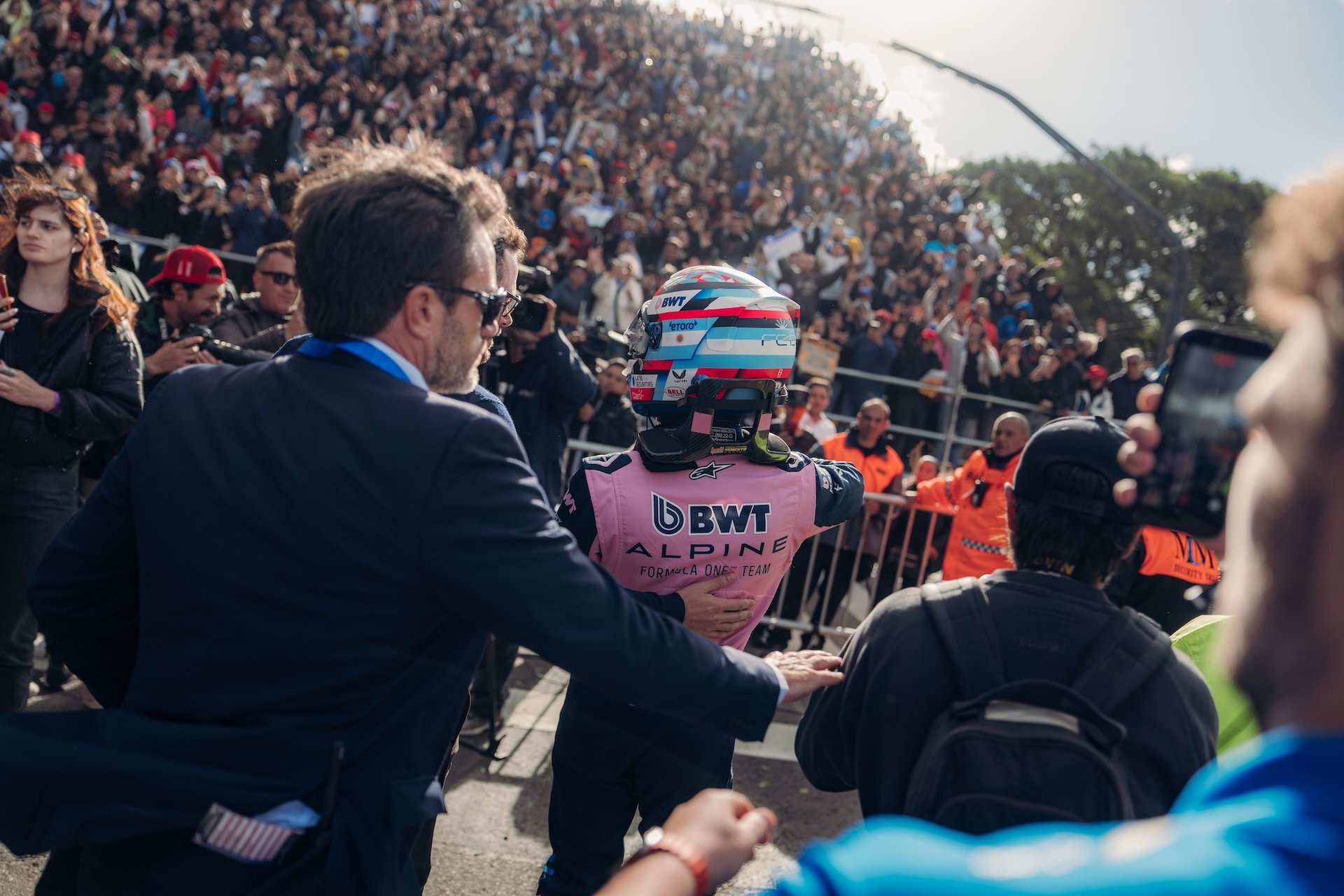
The numbers give a sense of the scale, but they do not fully capture what happened. Around 600,000 people lined the temporary route according to the most widely reported estimates. Some sources put the figure at 500,000, others higher. In the end, the exact number almost mattered less than the impression on the ground, which went far beyond statistics.
In several places, it was difficult to tell where the circuit really began and where the crowd ended. Pavements were packed, balconies were full, and some spectators watched from trees or bus shelter roofs.
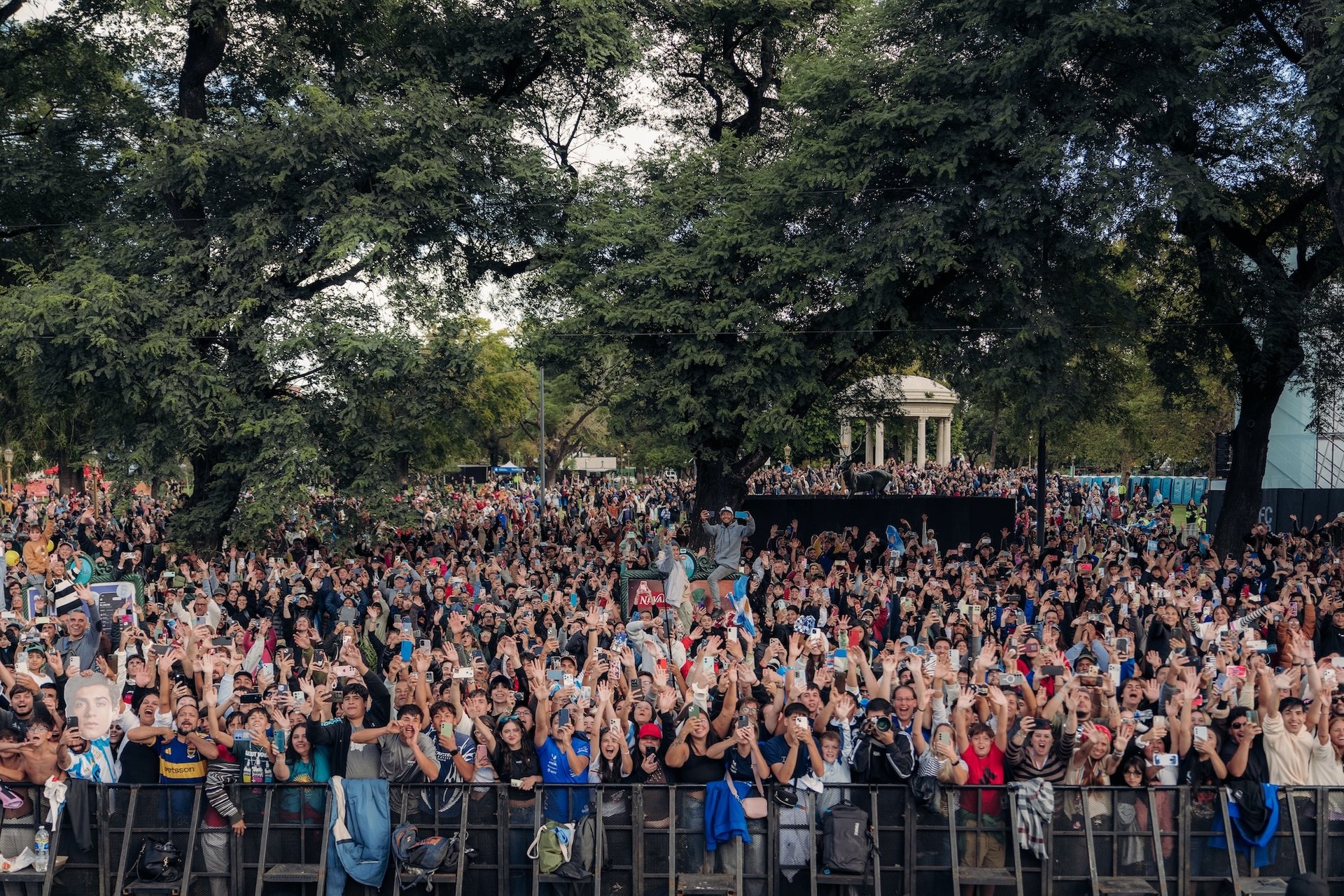
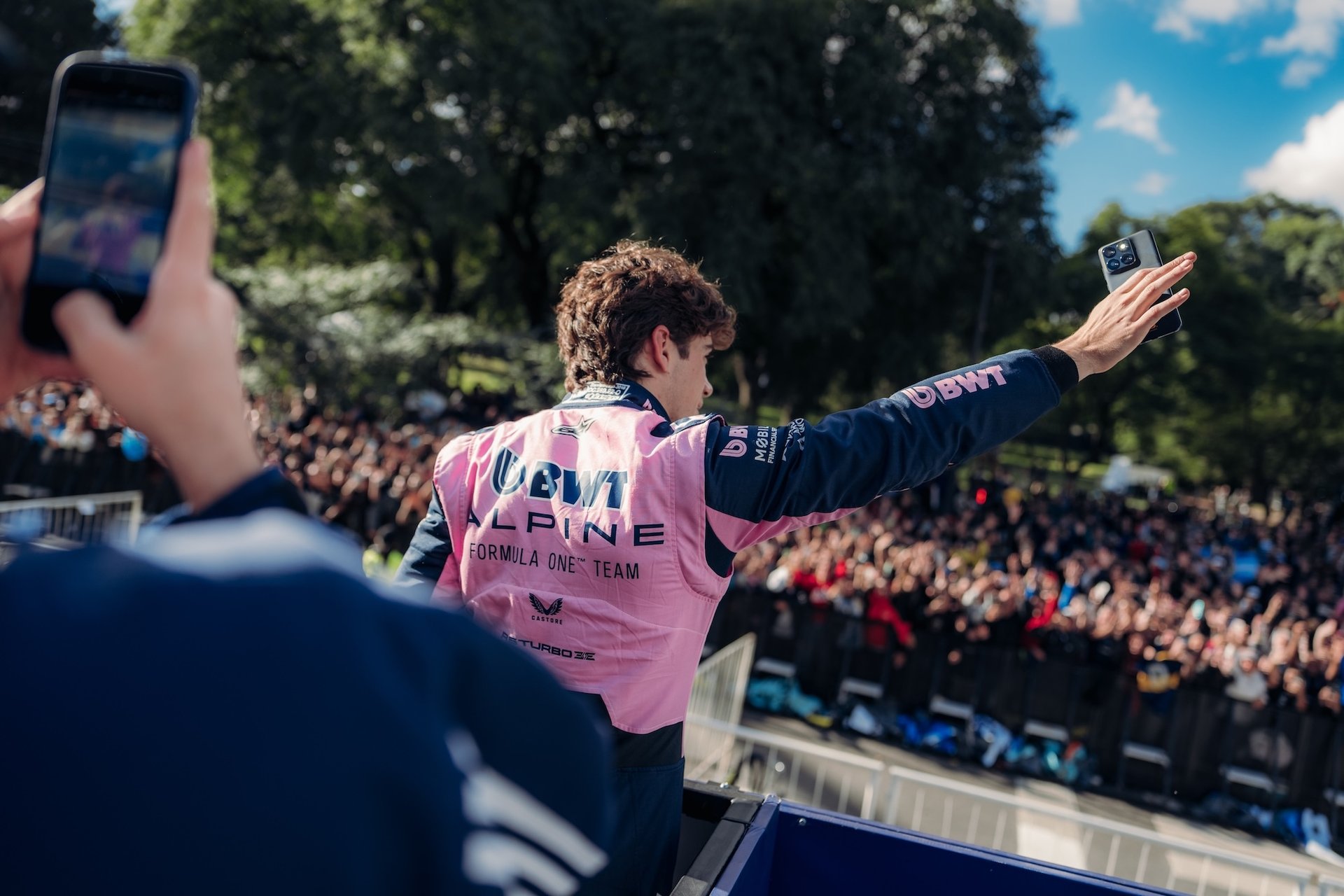
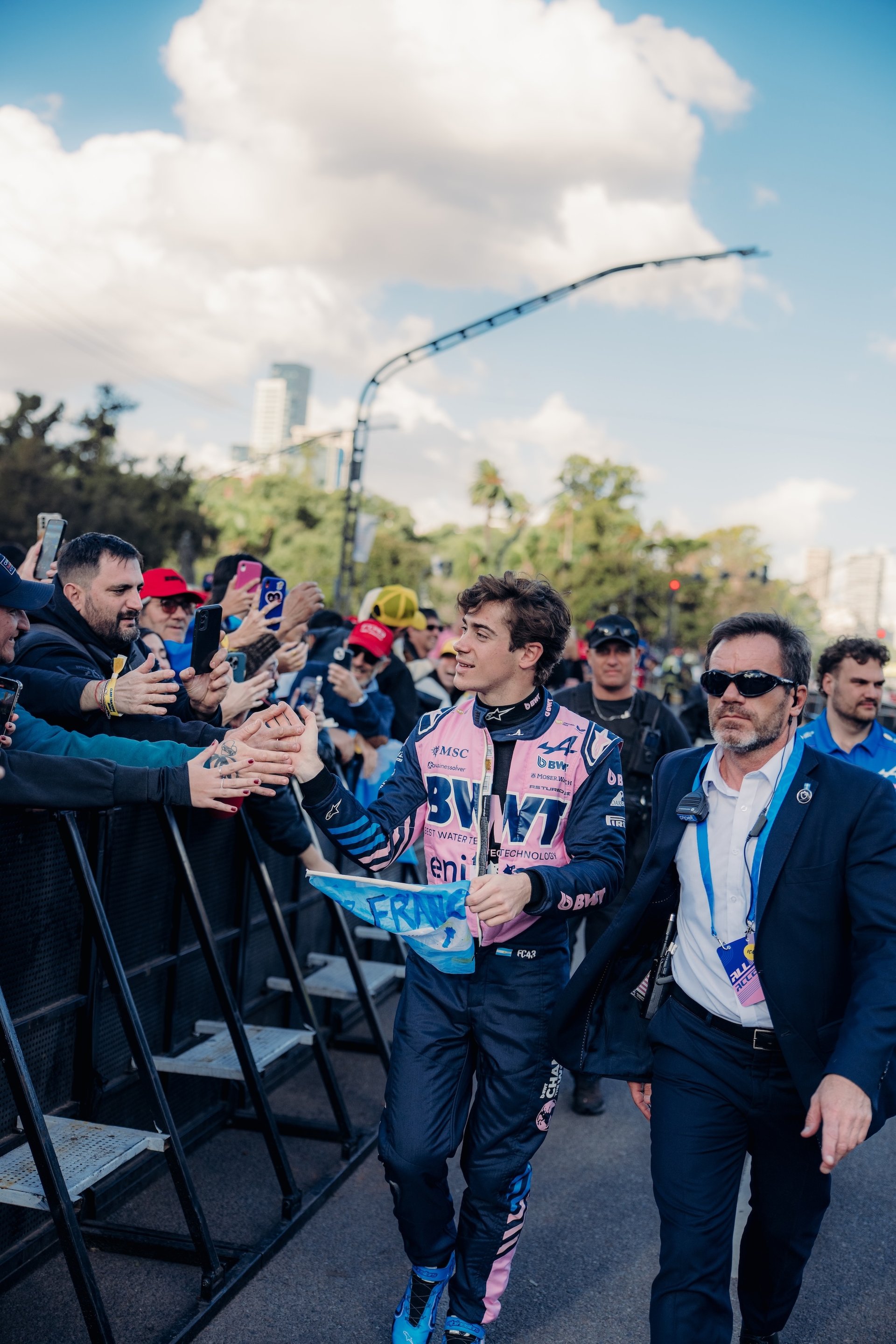
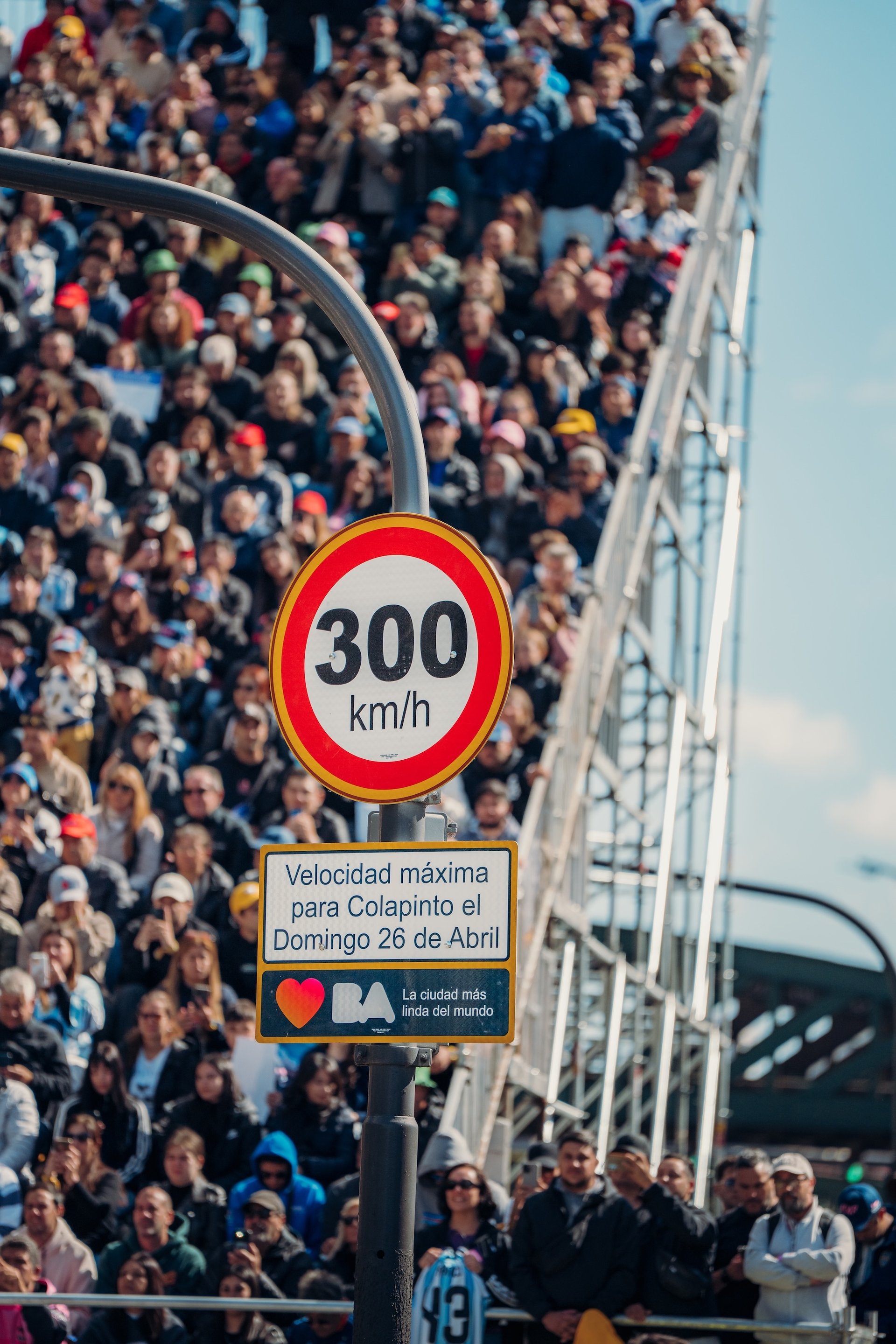
What stood out most was the mix of people. Long-time fans, retirees sharing their memories of Fangio, teenagers wearing Alpine caps, and children hearing the sound of a Formula 1 car for the very first time.
The Fan Zone, the stands and the entertainment were all there, of course, but they almost felt secondary. The event had taken on another dimension: that of an entire city focused on one shared moment.
A Lotus E20 to awaken the era of atmospheric V8s
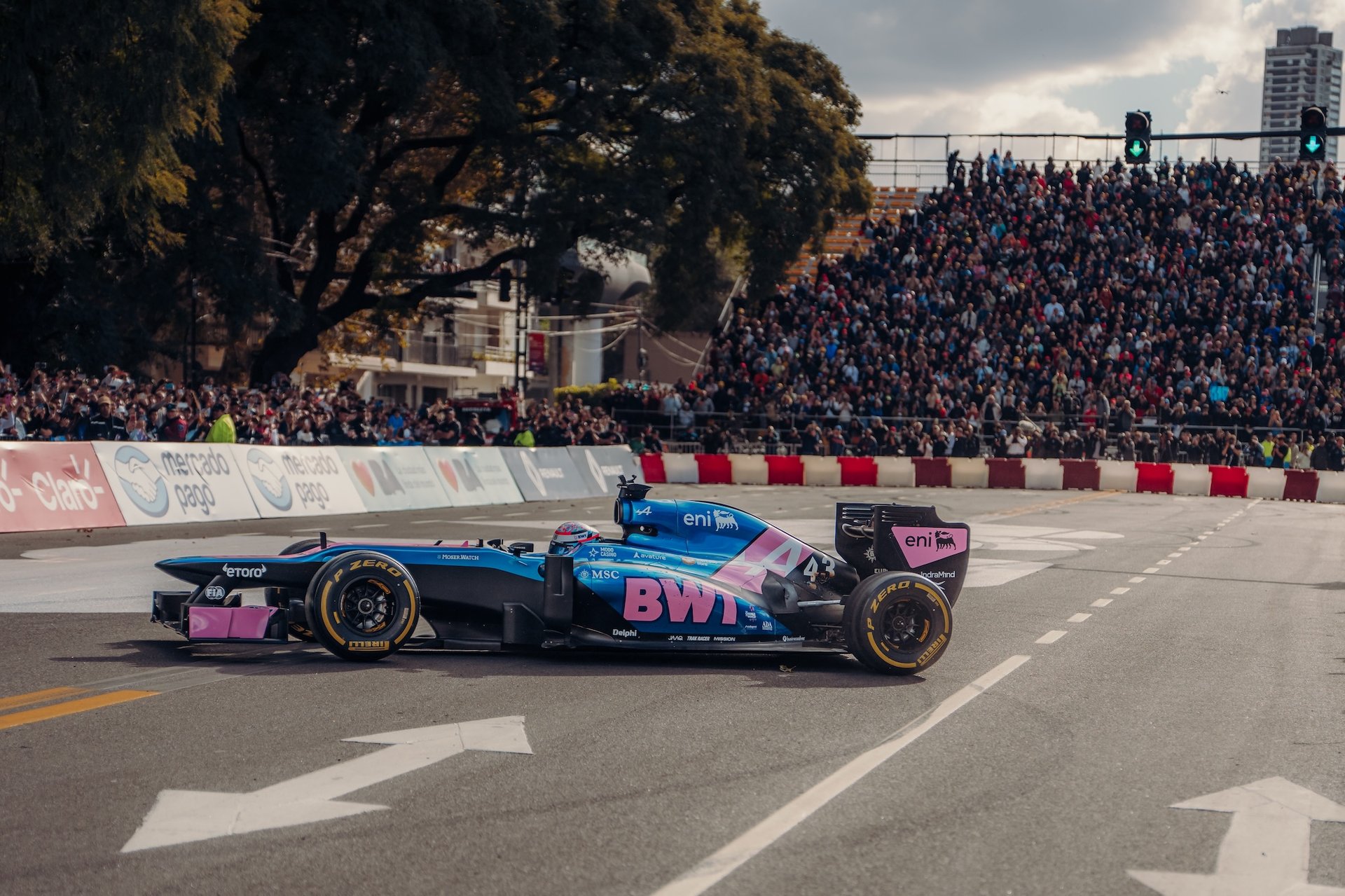
The choice of the main car said a great deal about Alpine’s intention. Rather than bringing out a muted, restricted modern single-seater for the occasion, the team rolled out the 2012 Lotus E20.
This car belongs to an era still cherished by enthusiasts. Its 2.4-litre naturally aspirated Renault V8 produces around 750 horsepower and, above all, a sound signature that has become rare in contemporary Formula 1.
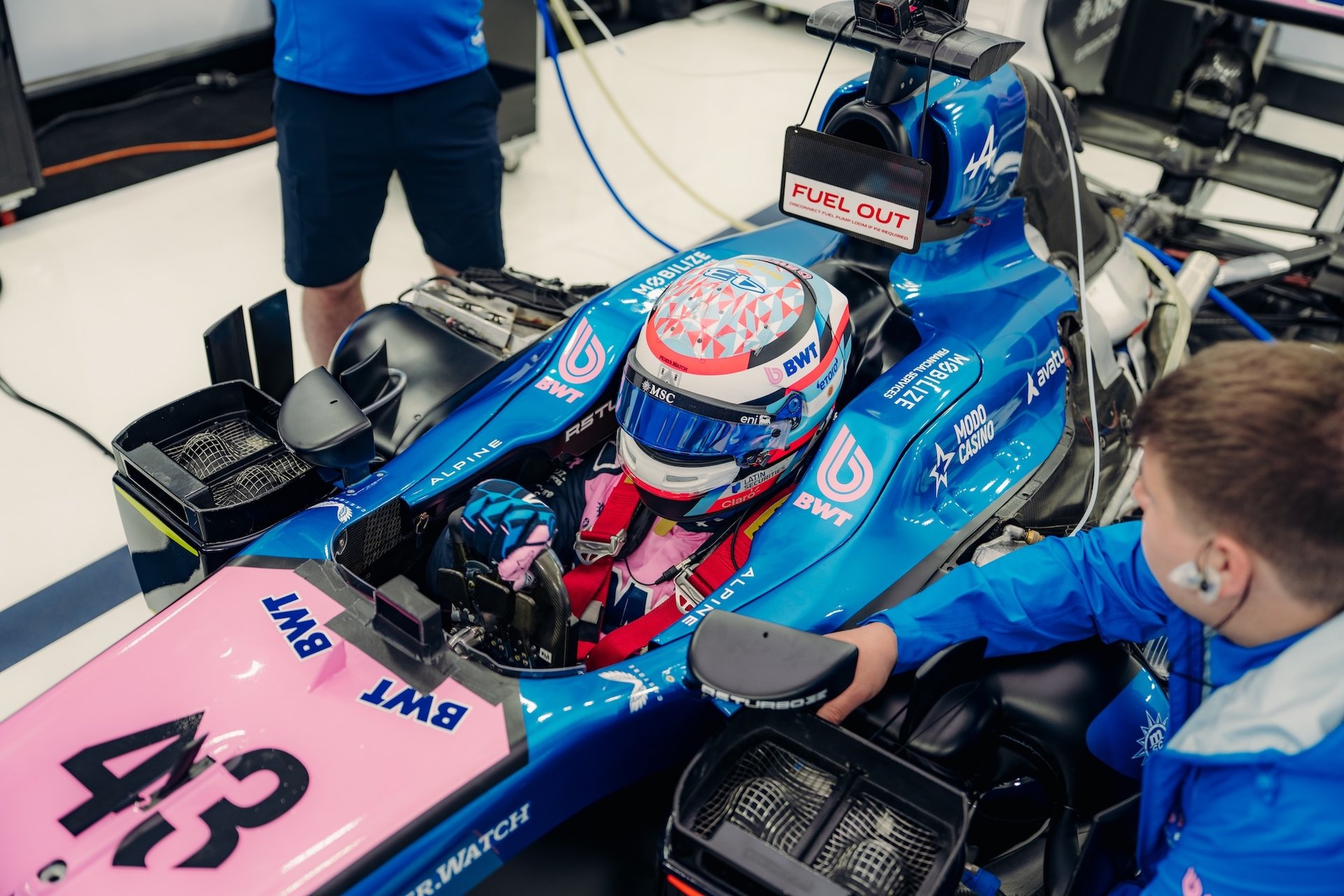
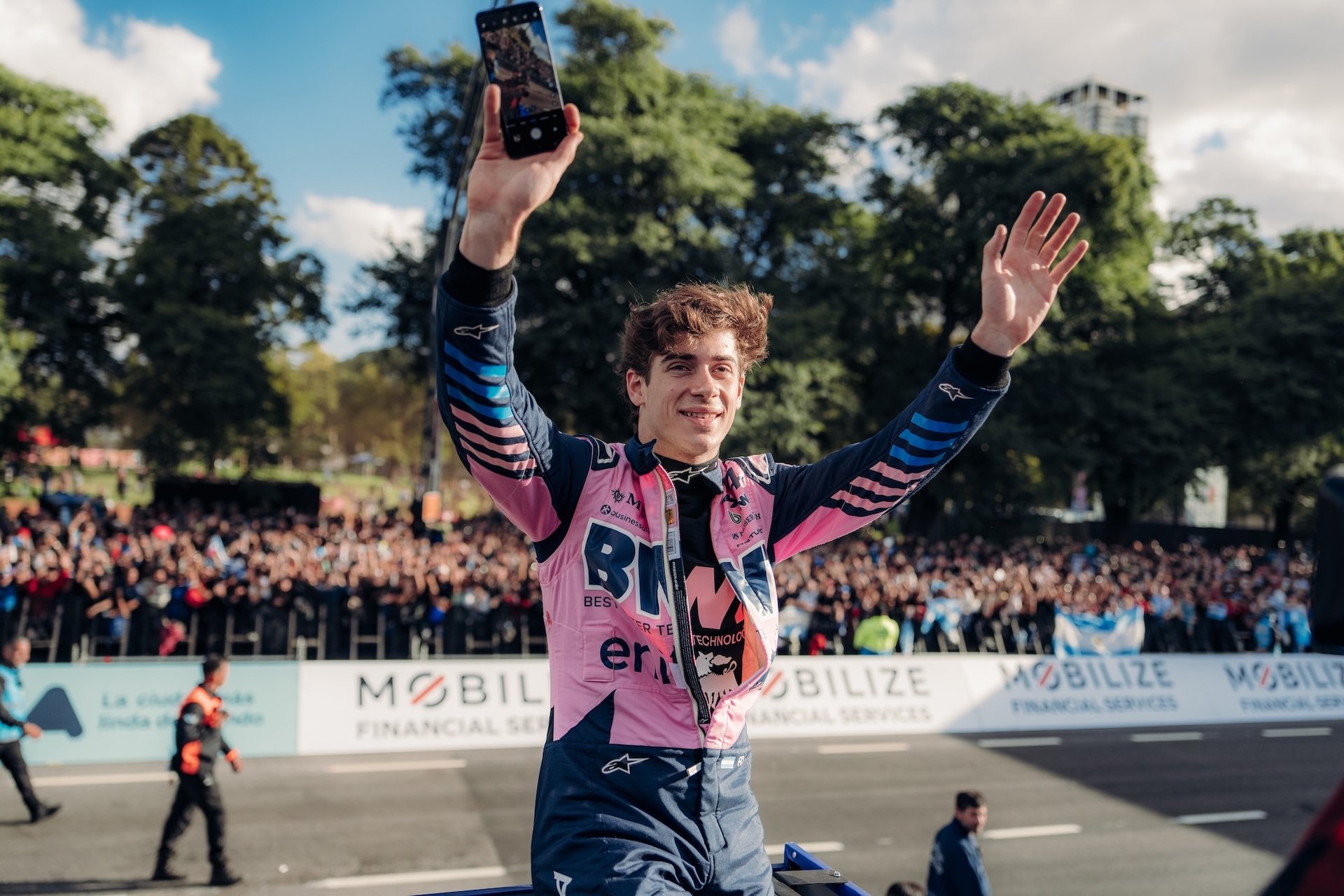
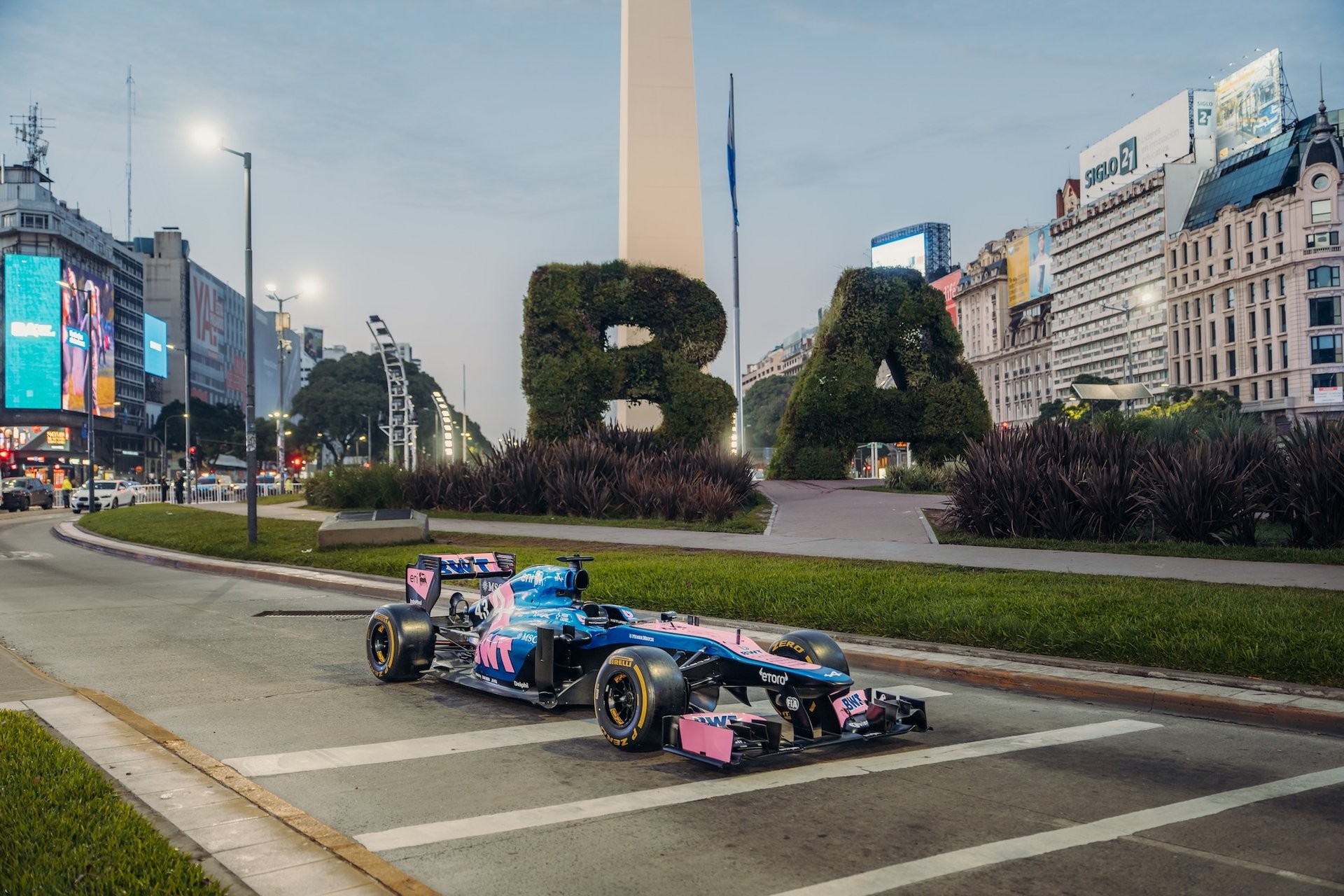
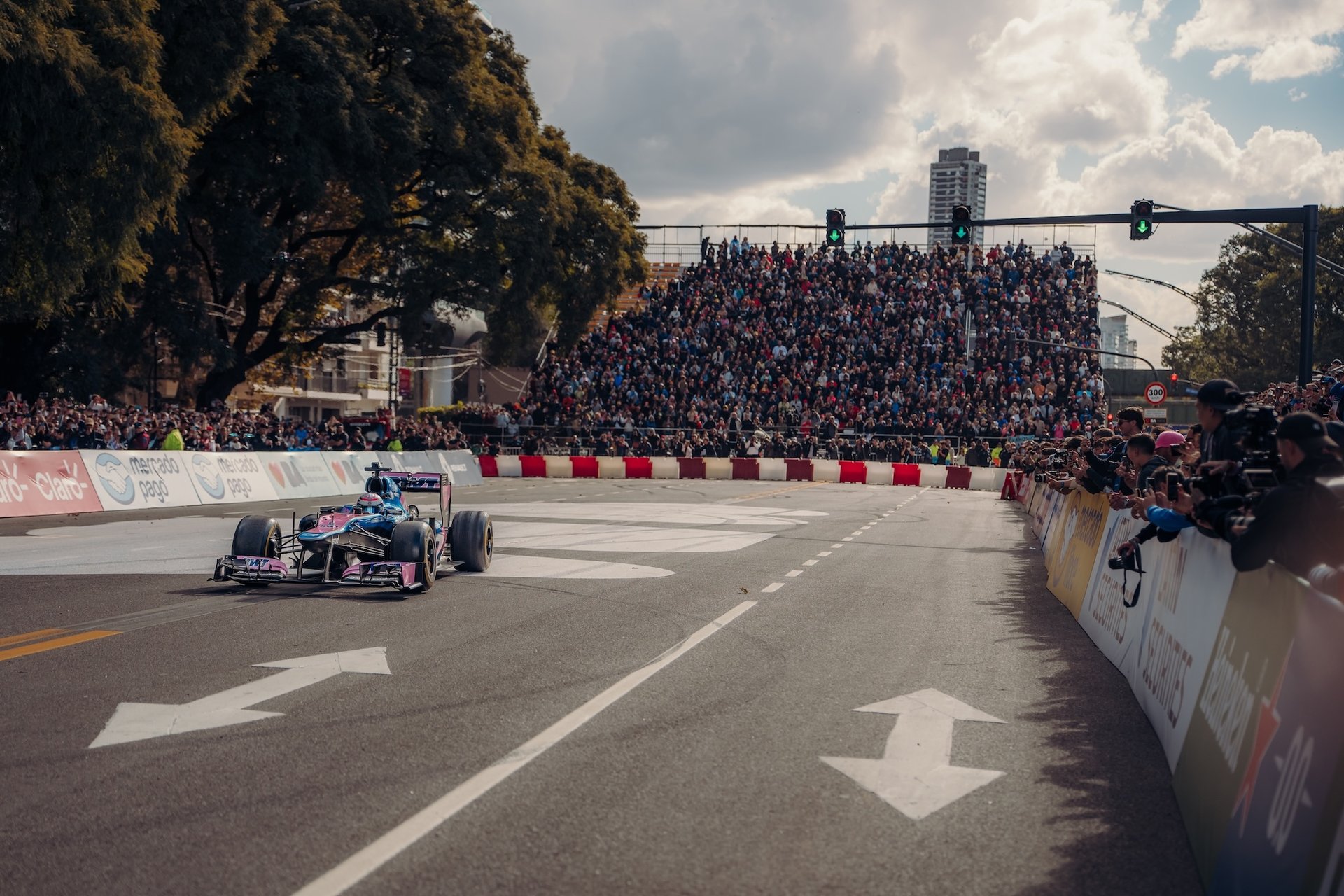
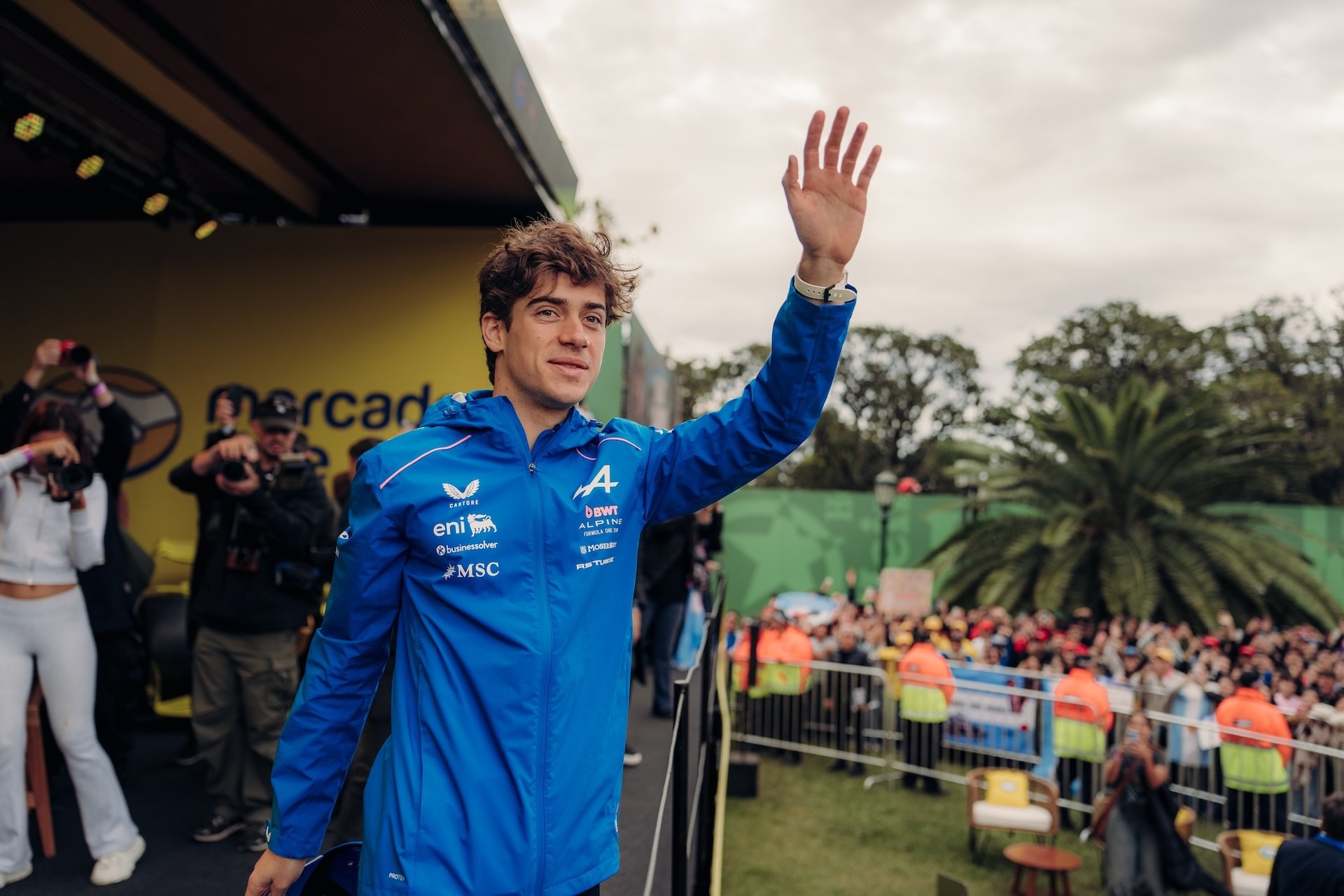
When Franco Colapinto took to the course at around 12:45 p.m., the noise was almost as striking as the speed. The engine echoed off the buildings of Palermo and triggered an immediate reaction. Phones went up, though many people quickly lowered their screens to watch it with their own eyes.
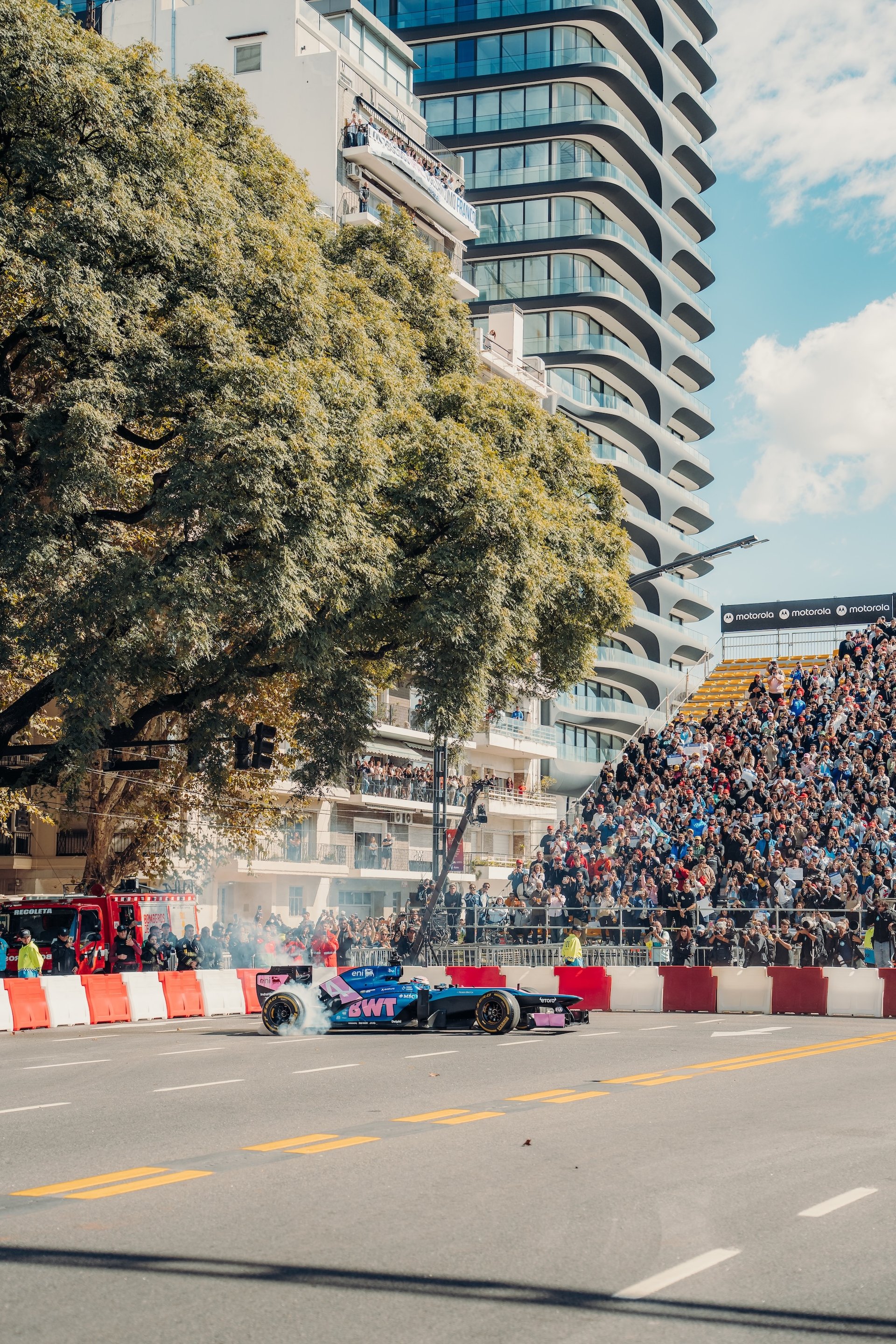
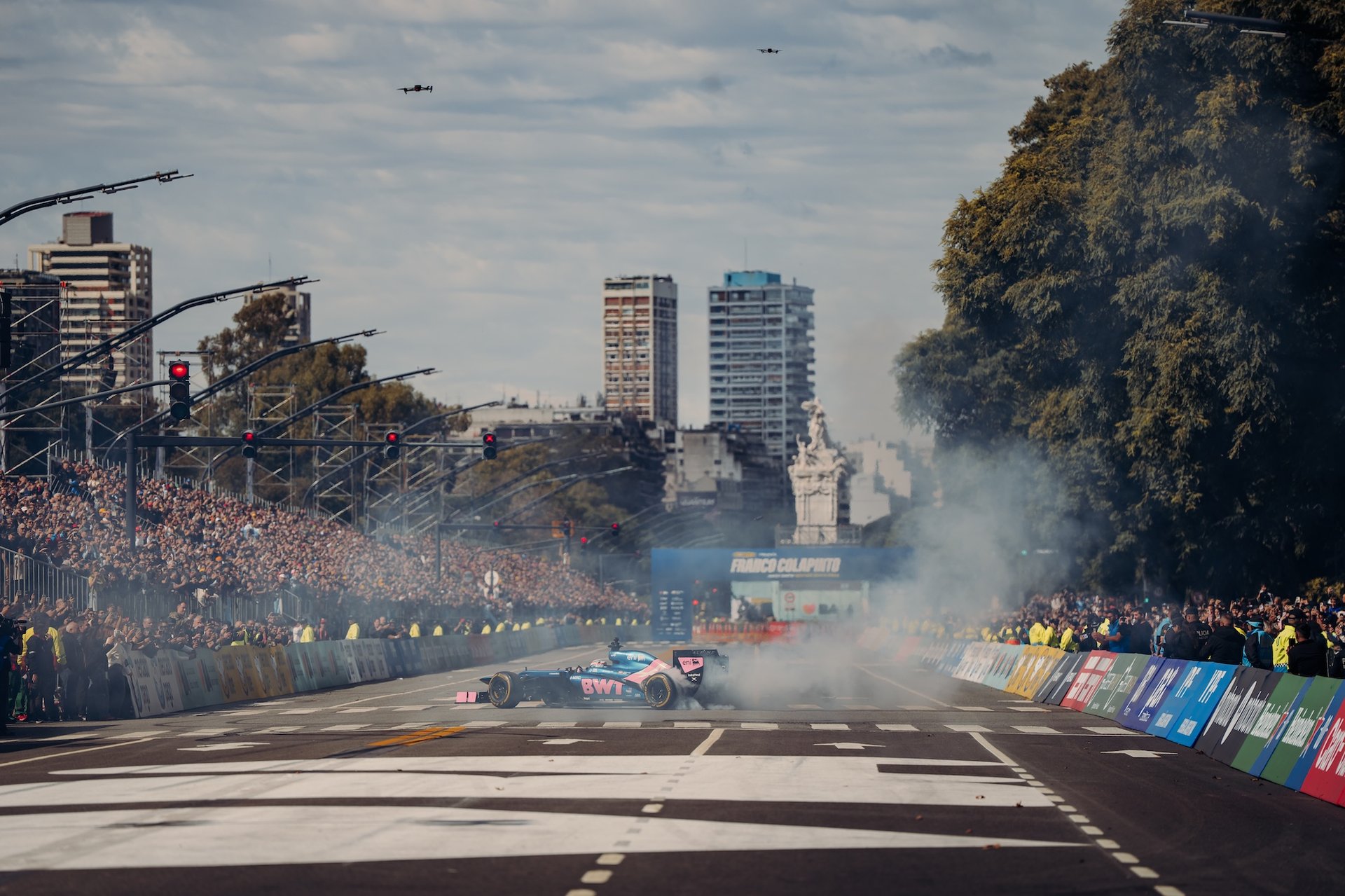
Colapinto did not drive as if he were simply ticking a marketing box. He provoked the rear end, launched into donuts and let the tyres burn longer than expected. With every pass, his confidence seemed to grow. The car slid more willingly, smoke filled parts of the route, and the crowd responded as if it were inside a stadium.
It quickly became clear that the driver was enjoying the moment as much as the crowd.
The Fangio tribute with the Mercedes-Benz W196
Around 2 p.m., the tone changed completely with the appearance of a replica Mercedes-Benz W196, the “Flecha de Plata” associated with Juan Manuel Fangio.
The effect was not the same as with the Lotus. The noise became secondary. What mattered here was the symbolism.
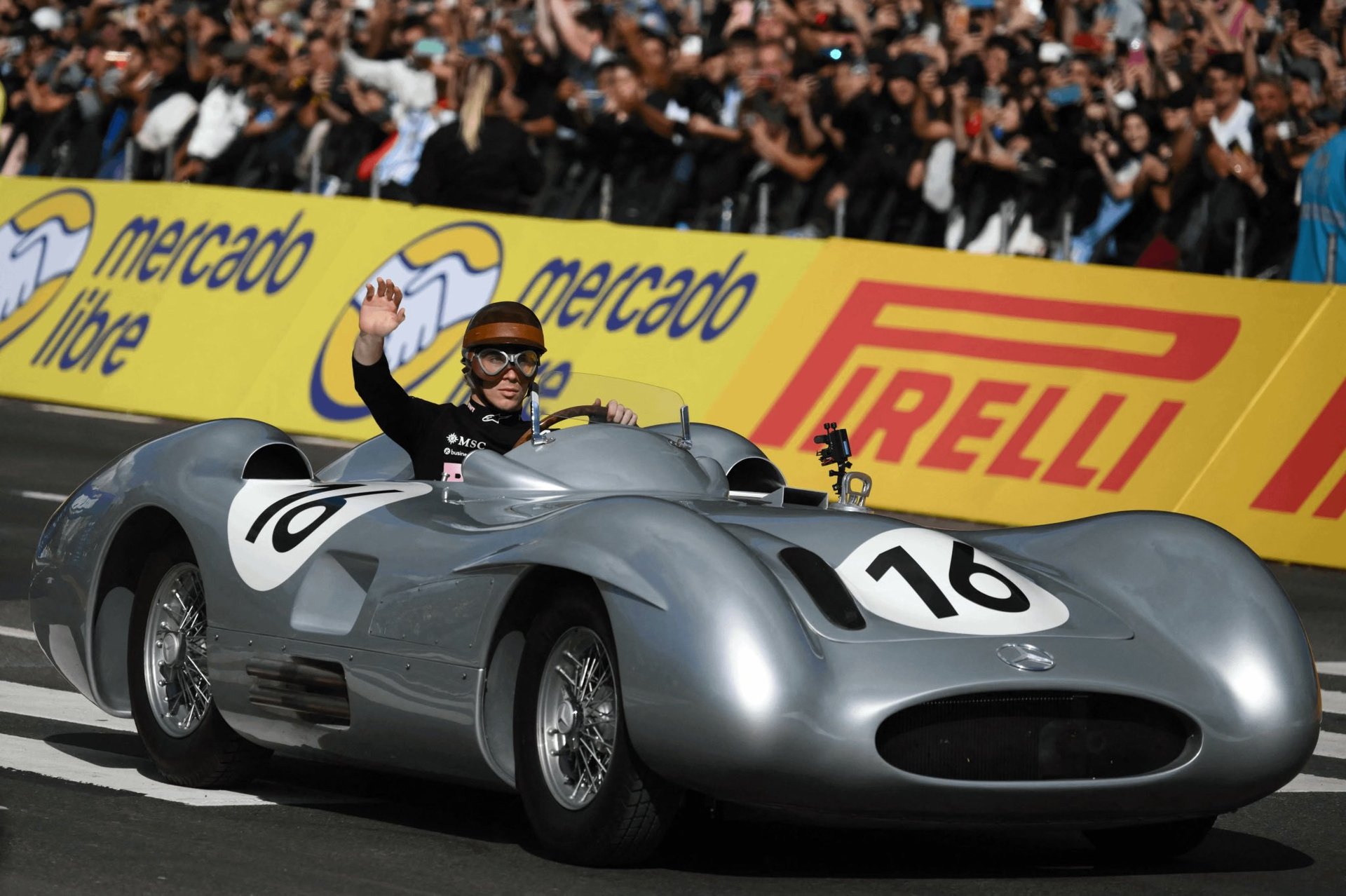
Fangio remains an almost untouchable figure in Argentina. Seeing him evoked in the heart of Buenos Aires through such an instantly recognisable car gave the demonstration a particular depth.
Colapinto wore a replica of the five-time World Champion’s helmet and took his time. He slowed down, looked towards the spectators, then stepped out of the car to greet the people behind the barriers.
For a few minutes, the event stopped being a mechanical demonstration. It became an unspoken passing of the torch between two eras.
The return of a child from Pilar turned Alpine driver
Franco Colapinto was not merely the headline driver of this demonstration. He also represented a generation of Argentine fans who grew up without a home Grand Prix.
Born in Pilar, in the province of Buenos Aires, he followed the familiar route of South American drivers aiming for Europe: karting, early sporting exile, junior single-seaters and steady progress through international championships.
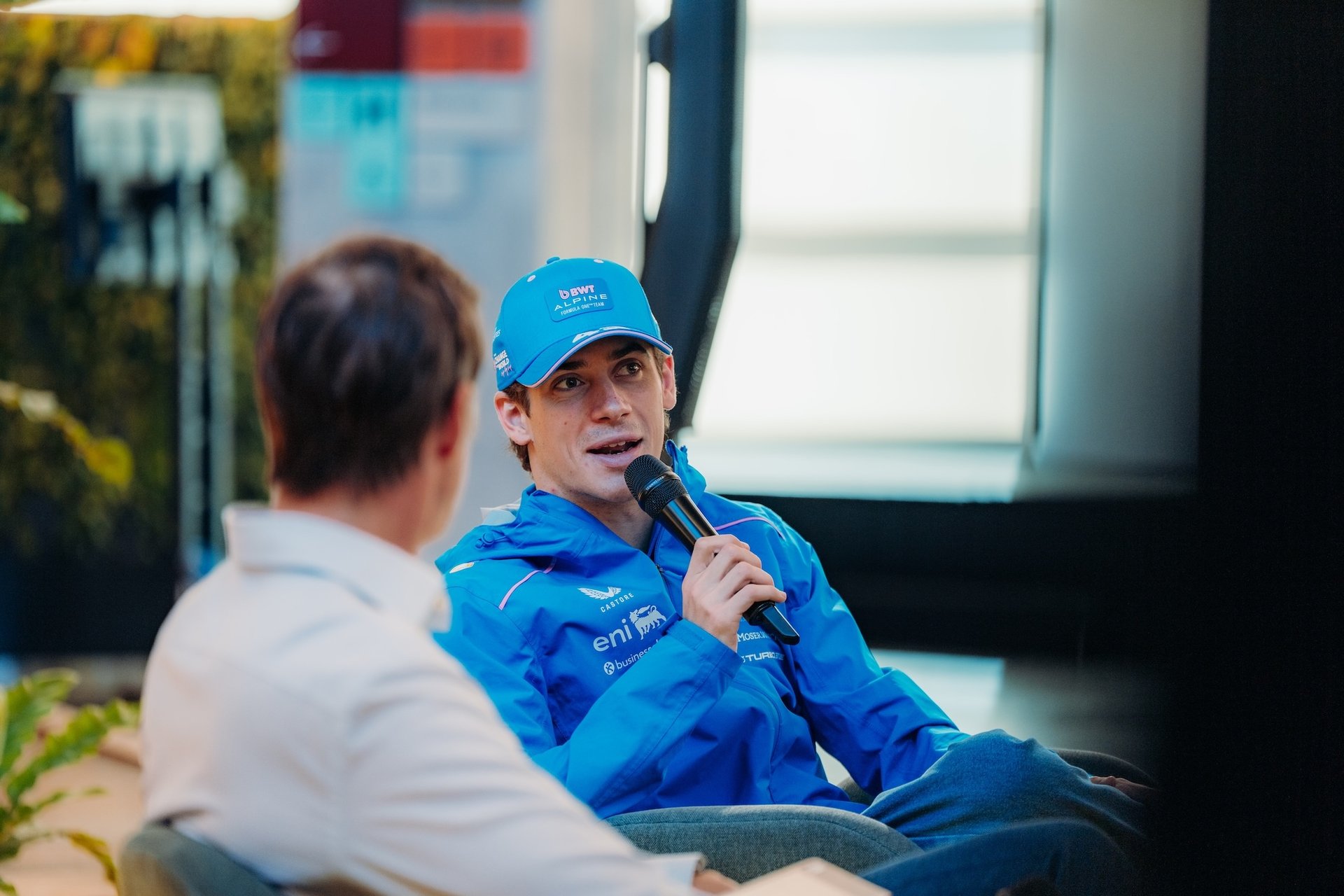
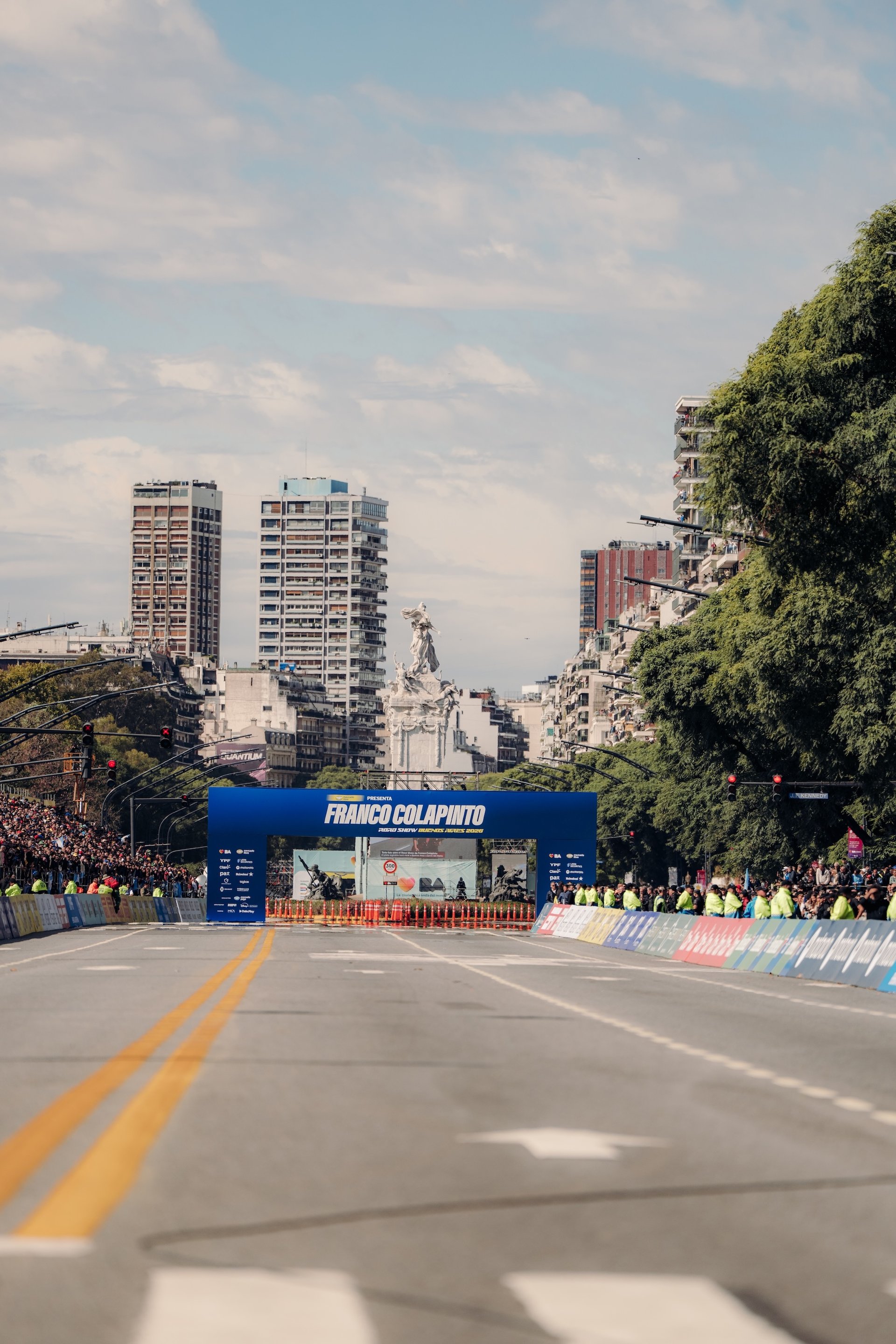
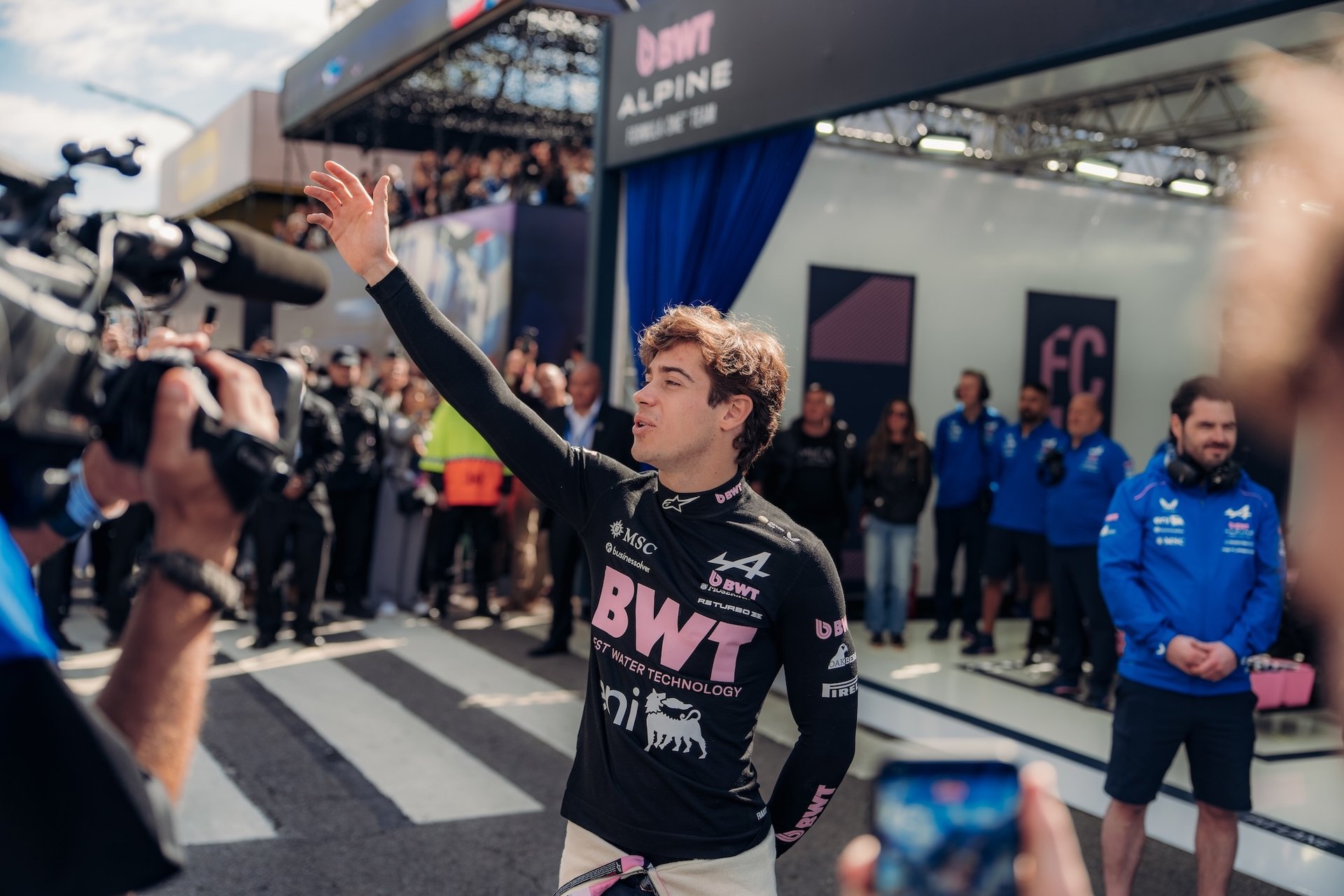
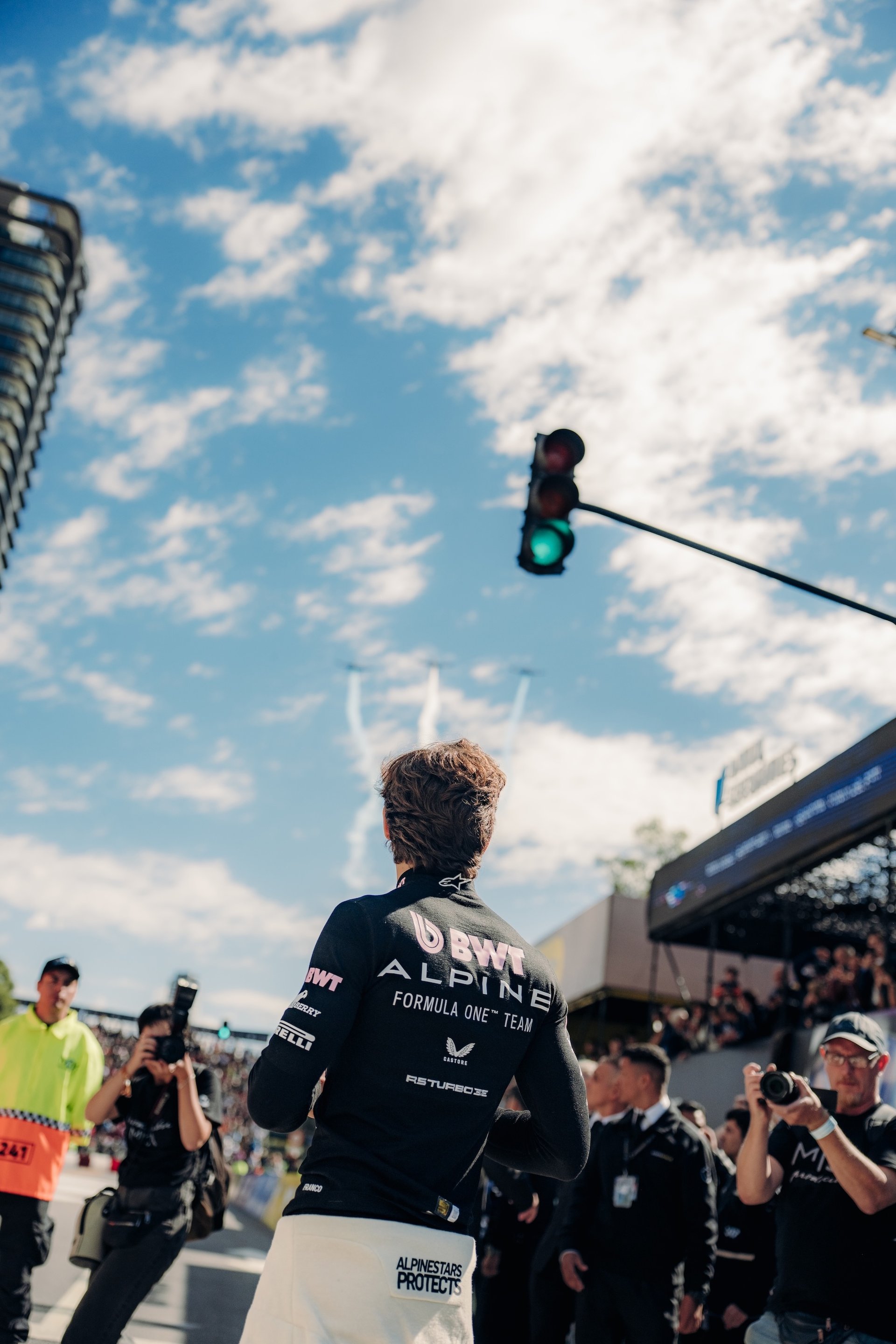
His arrival at Alpine has placed Argentina back within the contemporary Formula 1 landscape. This Road Show, then, was far more than a marketing commitment: it was a homecoming.
On several occasions, Colapinto raised a hand from the cockpit to salute the crowd. He deliberately slowed in front of the densest areas. He took time to look at the improvised grandstands and the buildings packed with spectators.
An immediate bond with the crowd
The bond between Colapinto and the crowd formed quickly. Unlike some demonstrations where drivers stick rigidly to protocol, the Argentine chose a more spontaneous approach.
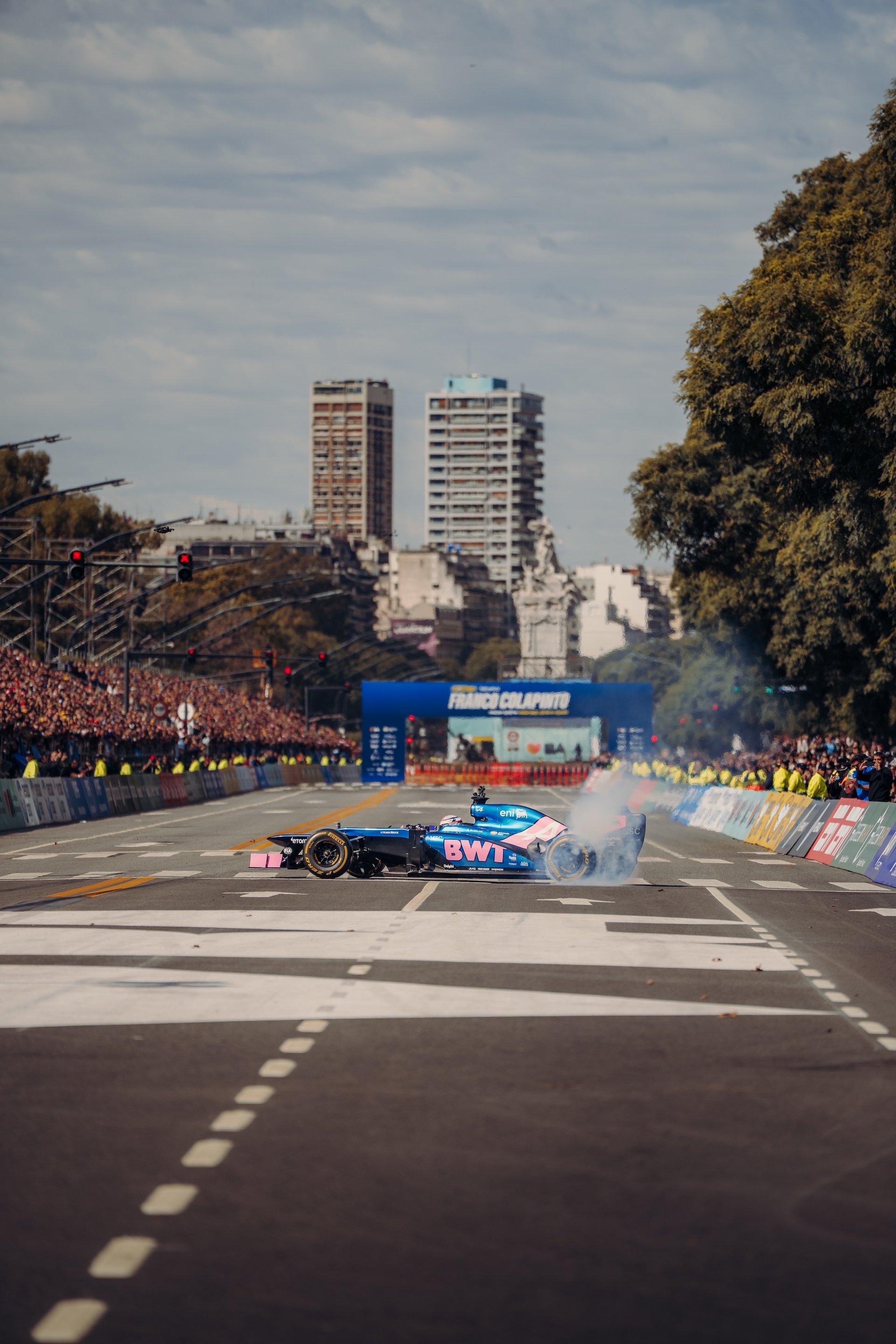
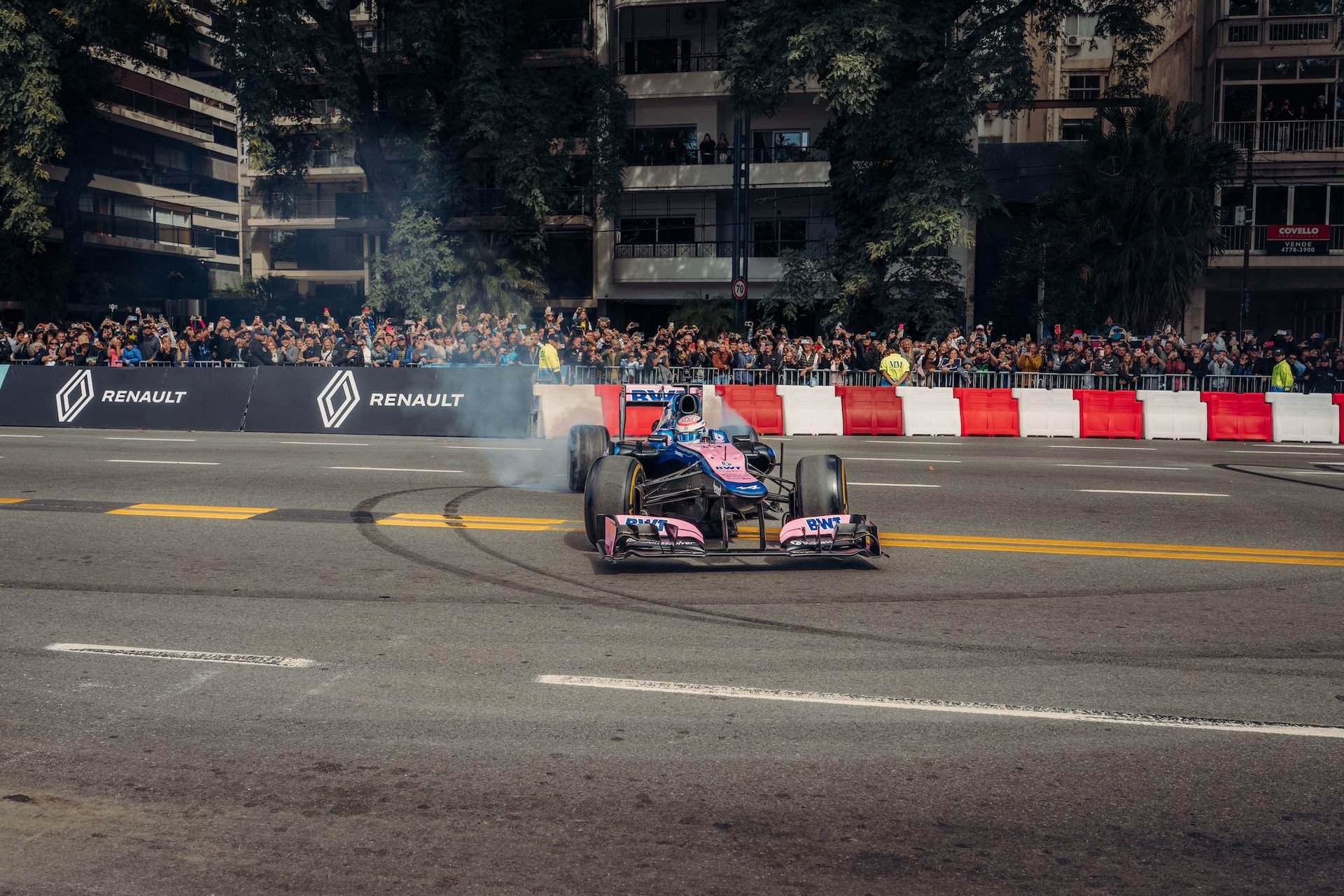
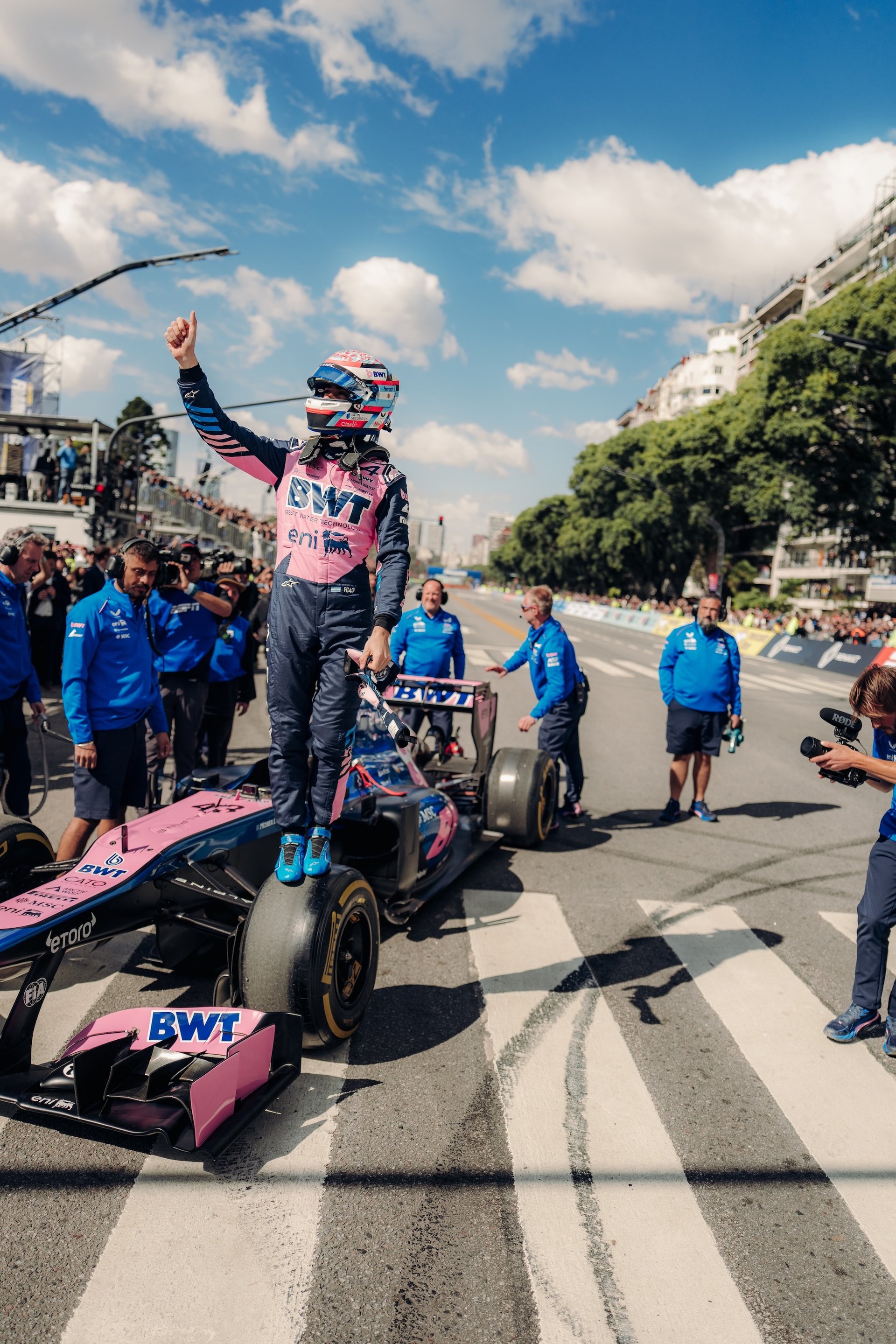
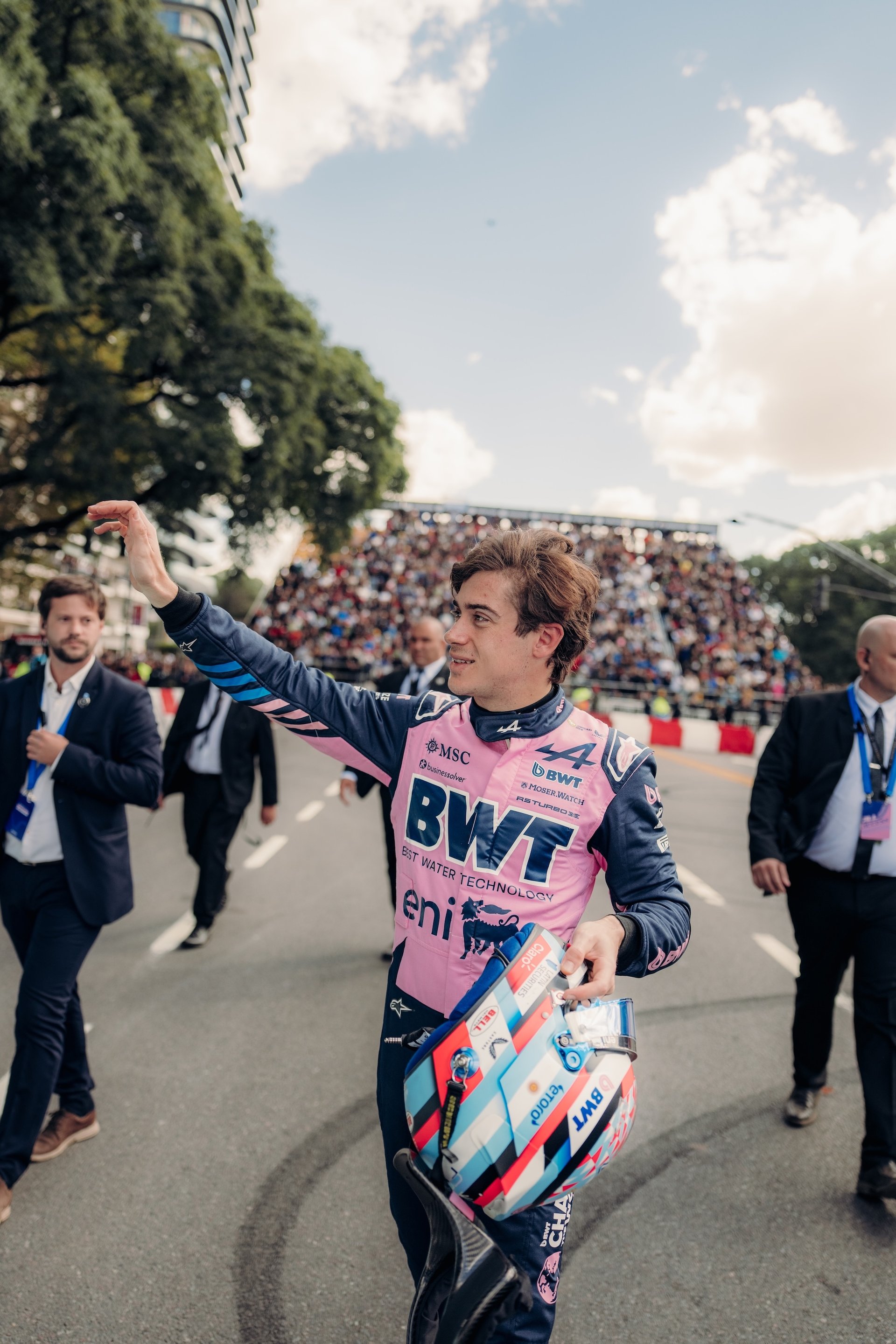
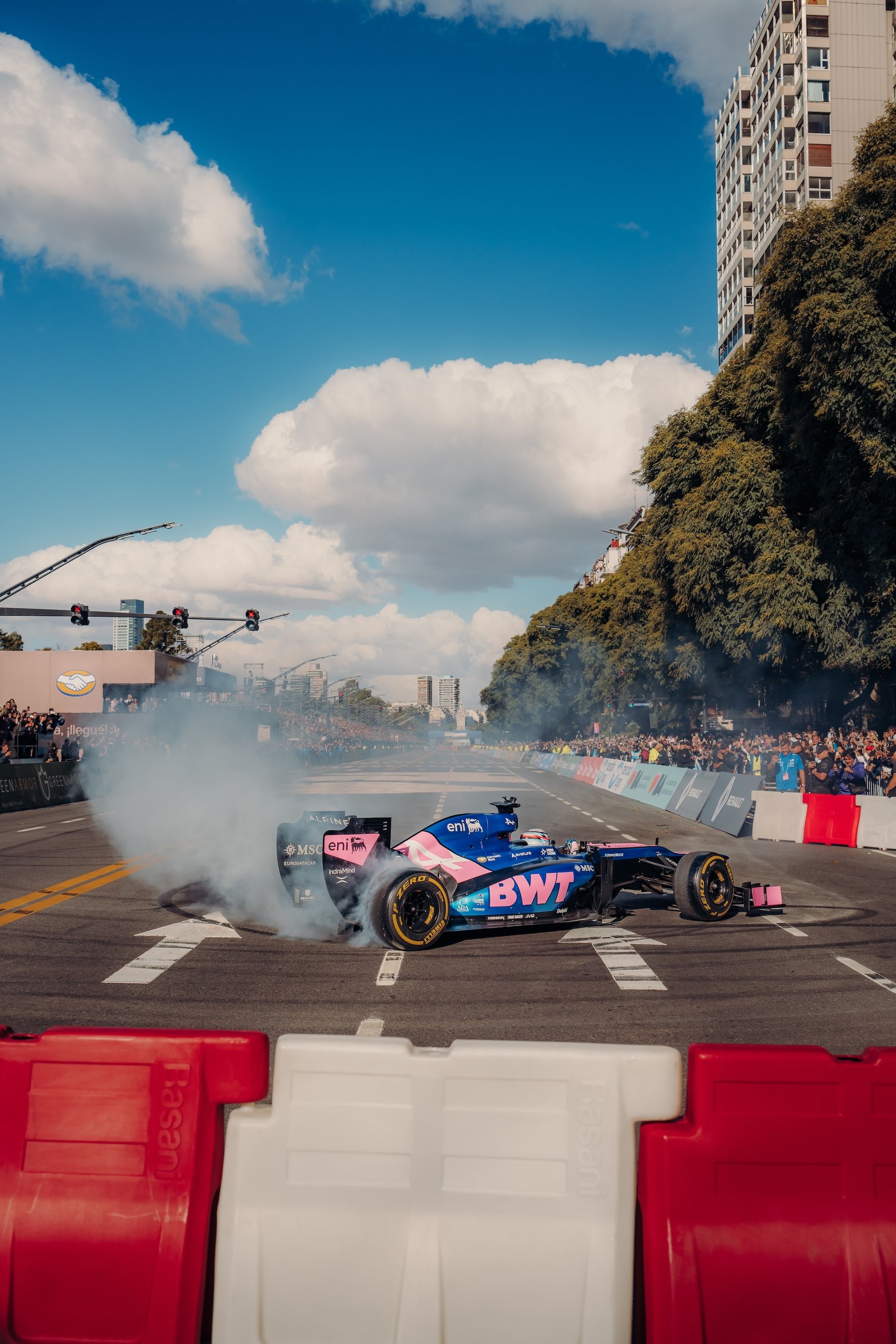
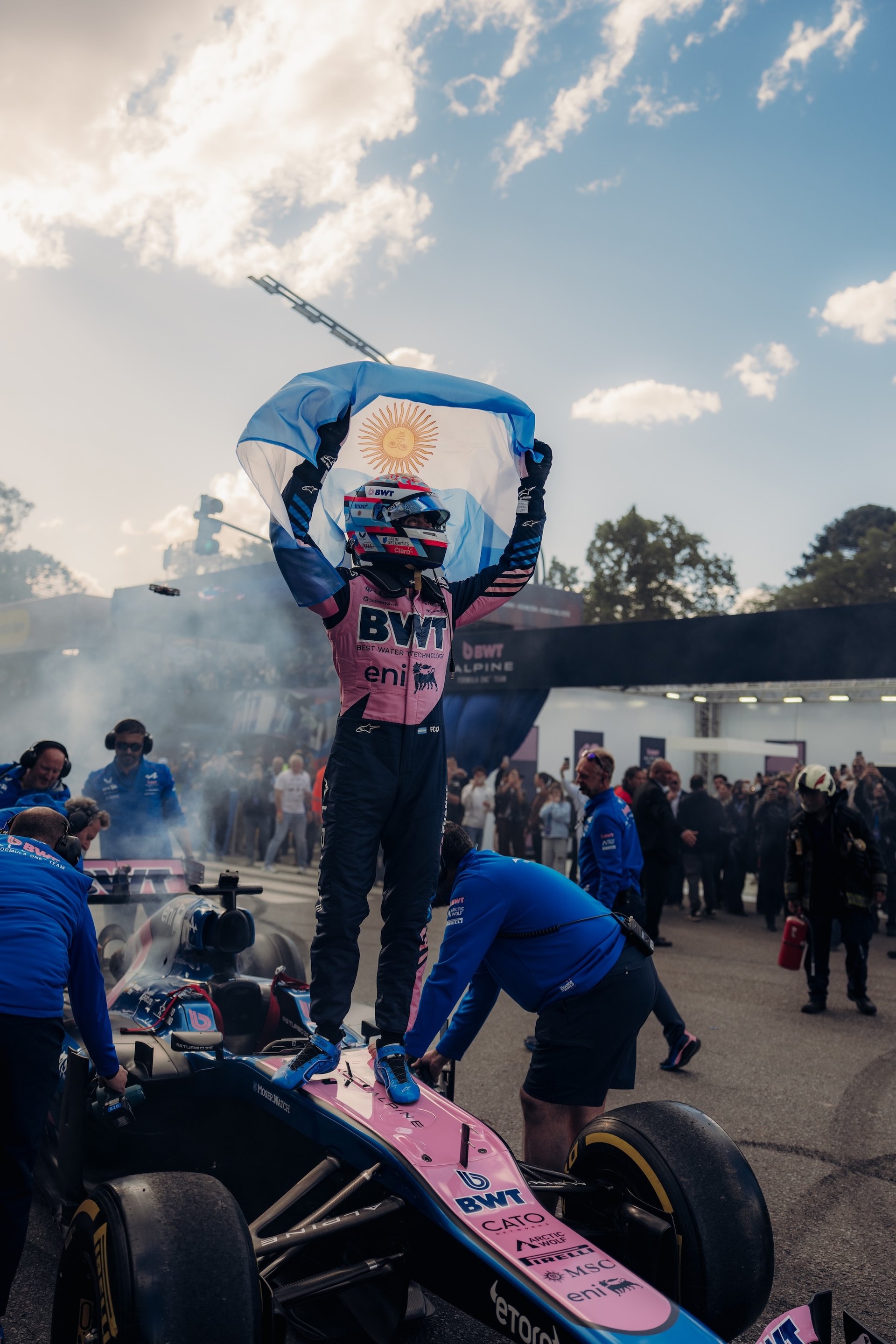
The repeated burnouts, committed passes and improvised gestures towards the public created a direct interaction. Little by little, the Road Show stopped feeling like a technical exhibition and became an ongoing dialogue between a driver and his country.
Every acceleration triggered an immediate response. Every braking zone came with cheers and applause. Even through the safety barriers, the sense of proximity felt unusual.
A machine pushed to its limits
As the day went on, Franco Colapinto pushed the Lotus E20 harder. The braking became more assertive, the tyres wore quickly, and rubber marks began to appear all over the course.
The final run, at around 3:30 p.m., was clearly the most intense. The driver linked together accelerations, held the donuts longer and seemed gradually to forget the usual restraint expected from this type of exercise.
Then came the image that quickly spread across social media.
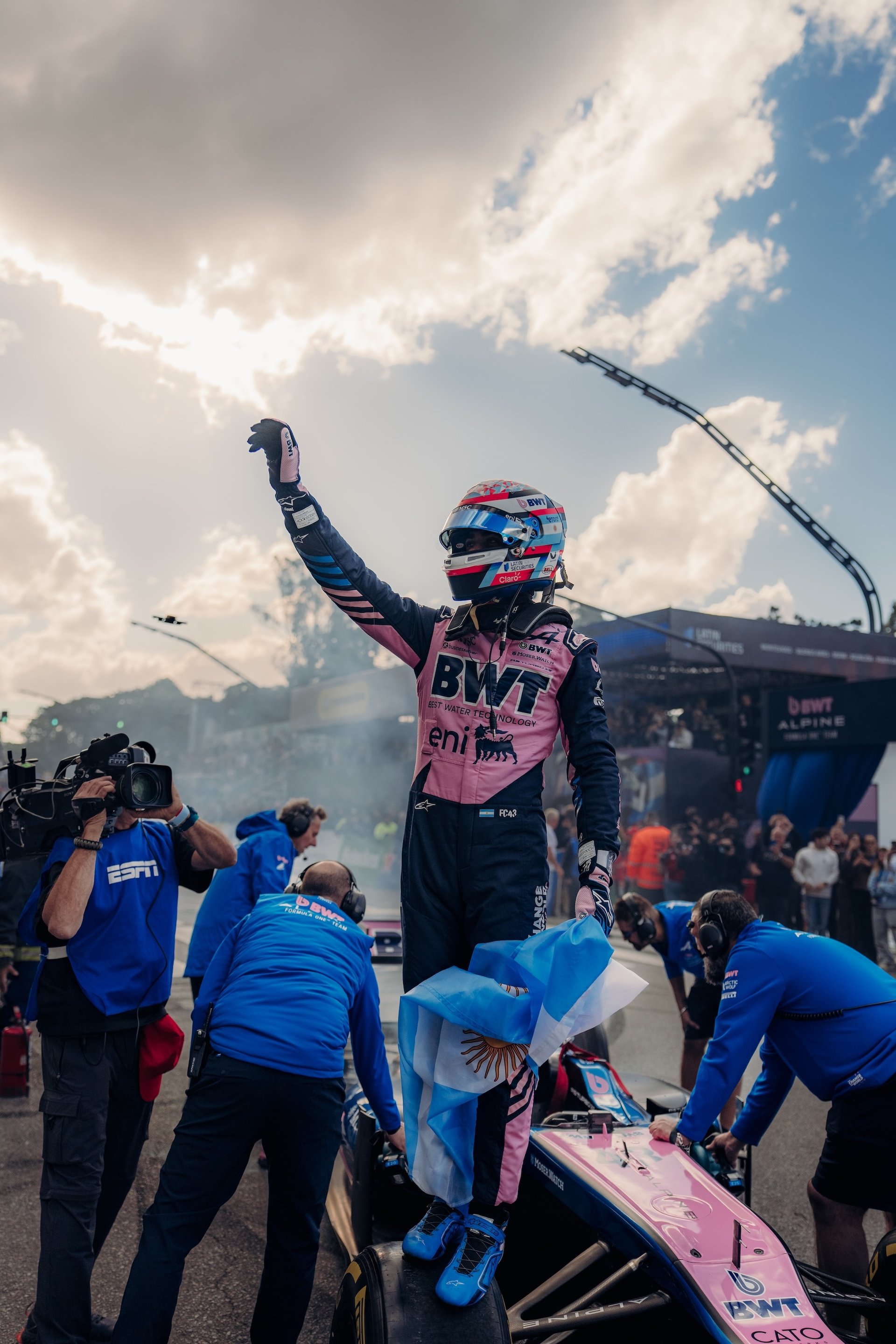
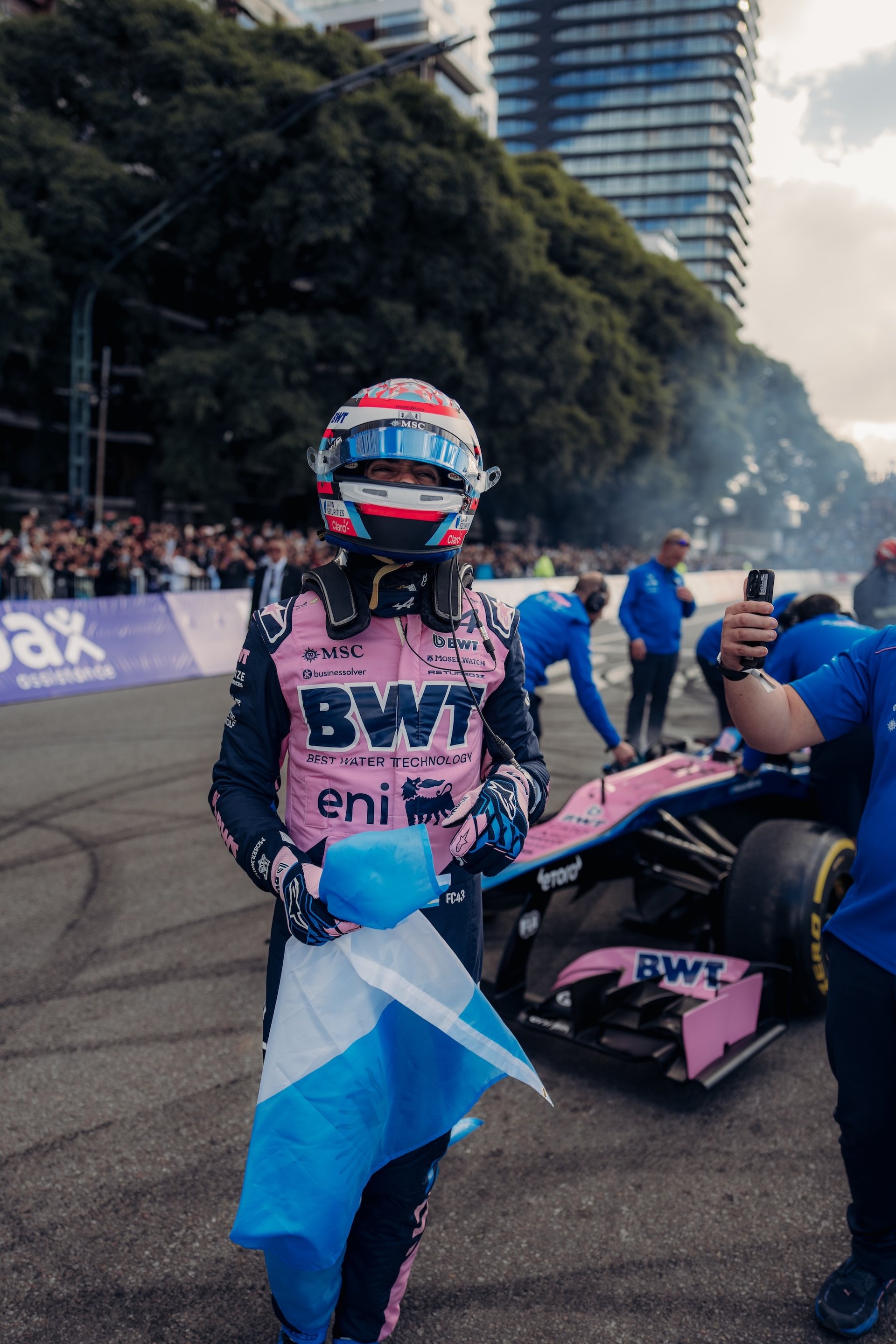
At the end of the run, a small flame appeared at the rear of the single-seater. It was not dramatic in the dangerous sense, but it was visible enough to freeze the crowd’s attention. Alpine mechanics immediately rushed in with fire extinguishers.
Colapinto climbed out of the cockpit calmly. He looked neither worried nor surprised. Almost amused.
At many promotional events, everything feels perfectly controlled. Here, that small dose of unpredictability paradoxically made the day more credible, more alive. As though the machine itself had reminded everyone it was not there merely to pose for the cameras.
Buenos Aires tests its ability to host Formula 1
The popular success of the Road Show goes far beyond media impact. It also offered a full-scale demonstration of Buenos Aires’ ability to organise a major motor racing event.
Local authorities were quick to raise the possibility of Formula 1 returning. Jorge Macri, the city’s mayor, publicly suggested that modernising the Autódromo Oscar y Juan Gálvez could once again become a strategic project.
The backing of private partners, notably Mercado Libre, also opens up a credible economic perspective. In a discipline where funding plays a central role, the presence of a powerful local player represents an important lever.
A passion intact despite twenty-eight years away
Above all, this Road Show underlined one obvious truth: Argentina’s passion for motor racing has never disappeared.
It was simply waiting for a contemporary catalyst. Franco Colapinto has filled that role by reconnecting a new generation with a championship the country had continued to follow from afar.
For a few hours, Buenos Aires no longer watched Formula 1 from behind a screen. It lived it up close, with its smells, its noise, its imperfections and its intensity.
Franco Colapinto :
« Waouh ! Quel sentiment incroyable de pouvoir piloter sur mes terres et surtout de partager cela avec autant de passionnés !
C’est tellement spécial de conduire une Formule 1 dans les rues de Buenos Aires, c’est sans doute l’un des plus beaux jours de ma vie. L’amour que les fans m’ont témoigné était tout simplement extraordinaire. Cet événement leur est dédié et j’espère qu’ils ont ressenti les mêmes émotions que moi.
Je tiens à remercier chaleureusement chacun d’entre eux pour leur présence, la magnifique ville de Buenos Aires, Mercado Libre, tous les partenaires ayant participé à l’événement ainsi que mes amis et collègues chez BWT Alpine Formula One Team pour leur aide précieuse dans l’organisation de cette démonstration. Et maintenant, cap sur Miami pour reprendre la compétition ! »
April 26, 2026 will not be remembered merely as an Alpine demonstration in the streets of Buenos Aires. It showed that a country historically tied to motor racing could still mobilise on a massive scale around Formula 1.
Between the sound of the V8, the tribute to Fangio, the closeness to the public and the final mechanical incident, the Road Show took on a far more organic dimension than expected.
This was not just a communications exercise. It was a statement of sporting identity, a reminder of collective memory and, perhaps, the first sign of a more ambitious return for Formula 1 in Argentina.
Source: BWT Alpine Formula One Team