


🇫🇷 Cet article est également disponible en français : Lire en français
Some numbers stick. On a spec sheet, “0–62 mph” sells.
In a crash test, it’s the stars. And when a new model “misses” the fifth one, the reaction is often the same: ah… so it’s less safe. Except that this reasoning has become less and less relevant.
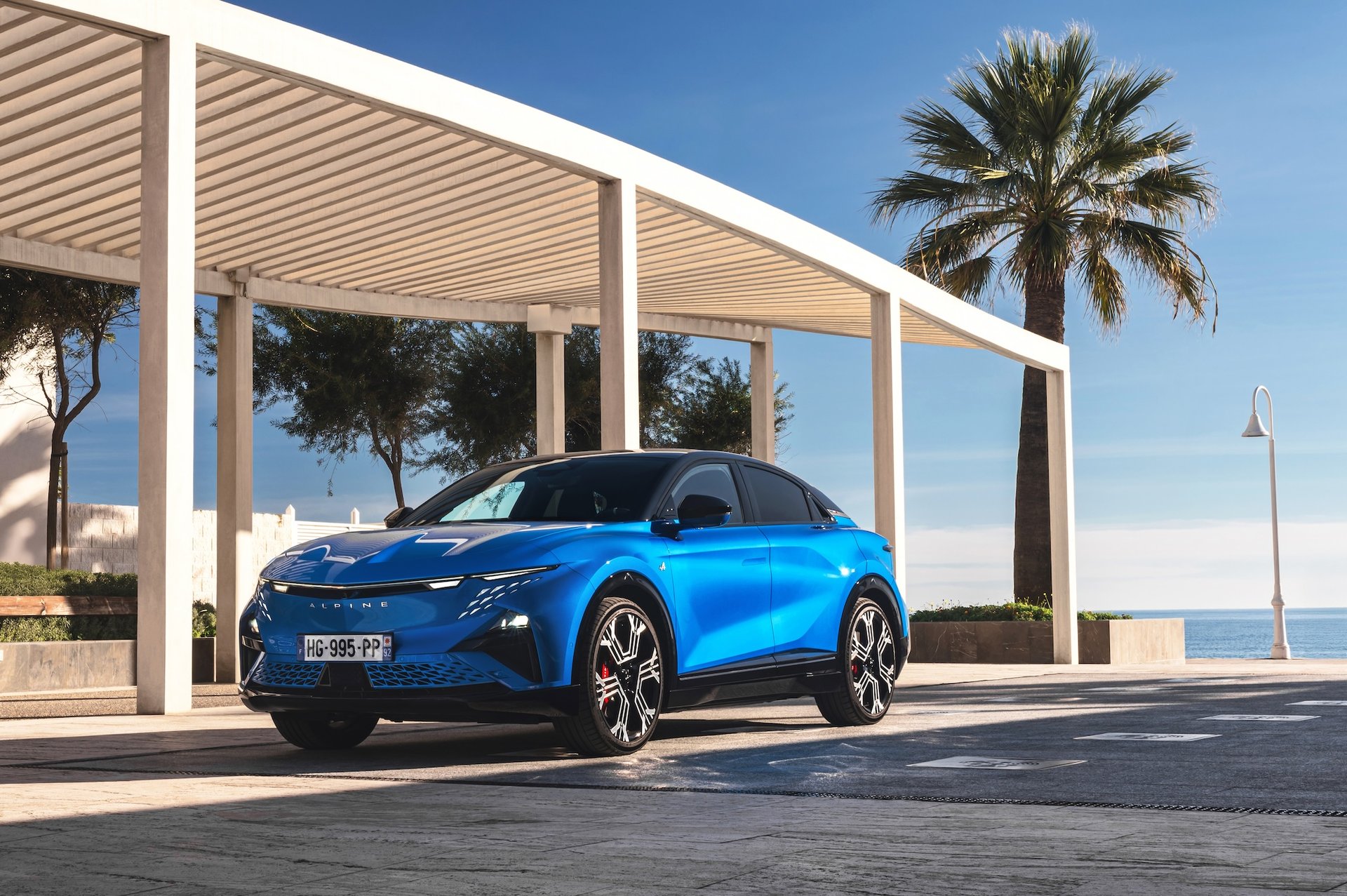
The Alpine A390 did not achieve Euro NCAP’s top rating: 4 stars. In detail: 74% for adult occupant protection, 85% for child occupant protection, 80% for vulnerable road users, and 77% for safety assist. The tested car is an A390 GT 400 hp, listed at 2163 kg on the assessment sheet.
So yes, “4 stars” is not the perfect label. But no, it is not automatically a red flag. And to understand why, you have to go back to something many people have forgotten: today’s stars no longer tell the same story as they did in 2005.
When Renault turned 5 stars into a slogan (and why it worked)
Early to mid-2000s: Renault made safety a major selling point. At the time, it made sense: Euro NCAP results were easy to read, the message was simple, and Renault could stack strong scores across several models. Official communication around the Clio III in 2005, for example, emphasised the 5-star result and the fact the brand was accumulating top-rated cars.
And above all: in the public mind, “5 stars” became a handy shortcut. Almost a label. People stopped reading the breakdown and looked only at the final star rating.
The issue is not that this reflex was absurd in 2005. The issue is that we still apply it in 2025… even though the exam has changed in nature.
Euro NCAP 2025: it’s no longer just about “taking a hit”
Today, Euro NCAP does not only rate cabin strength or airbag performance. The overall rating is built from four blocks: adult occupants, child occupants, vulnerable road users, and safety assist.
And crucially, Euro NCAP points out that stars are not cleanly comparable from one era to another, because protocols and requirements evolve.
In other words: a “5-star” car from yesterday might not be “5-star” under today’s scoring. Not because it has become dangerous, but because the definition of “very good” has moved, and the test is broader.
That is exactly what makes cases like the A390 interesting: this is not a “bad crash test”, it is a composite score where a few specific points can be enough to drop a star.
OK, but concretely: why does the A390 lose its 5th star?
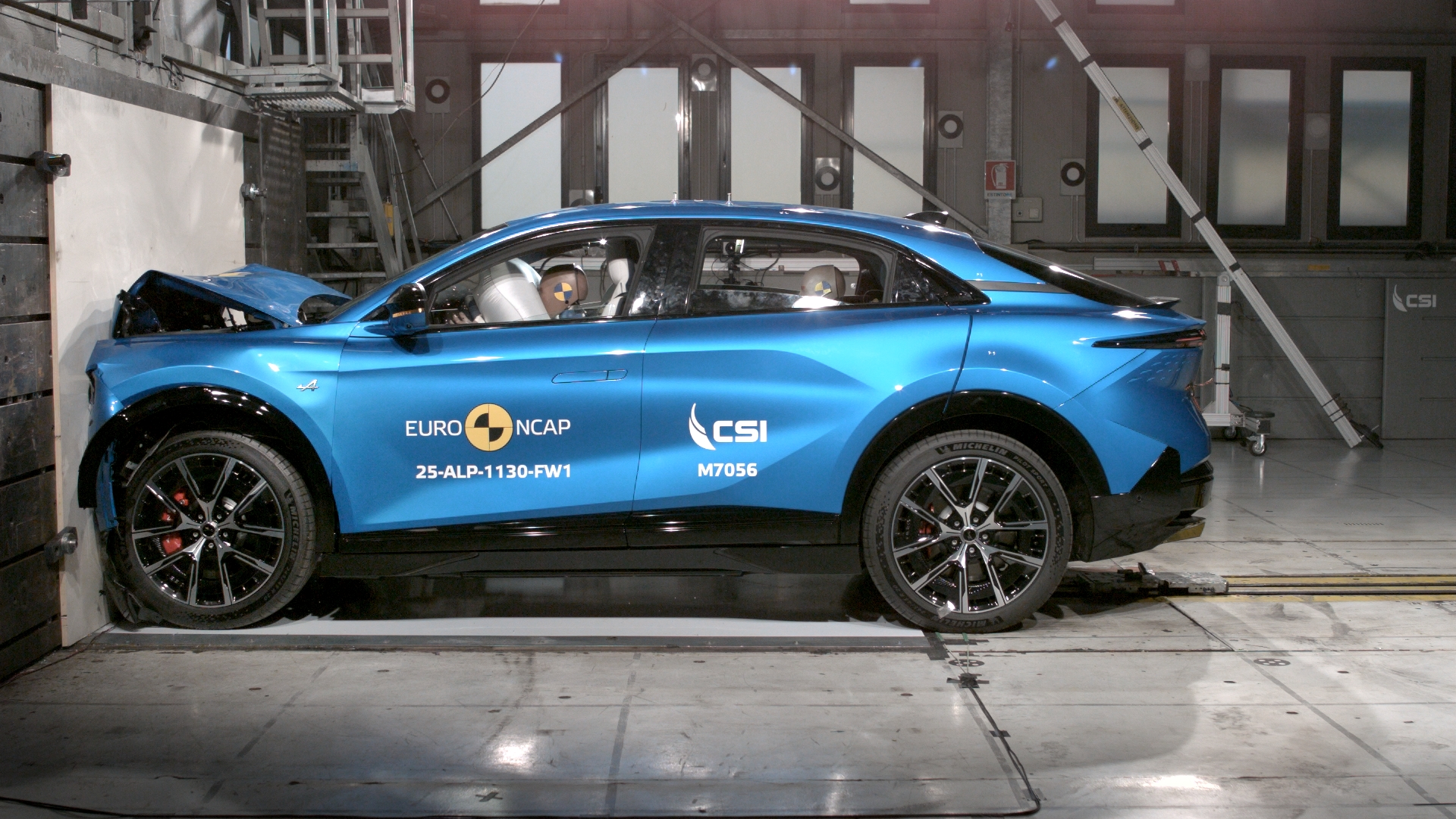
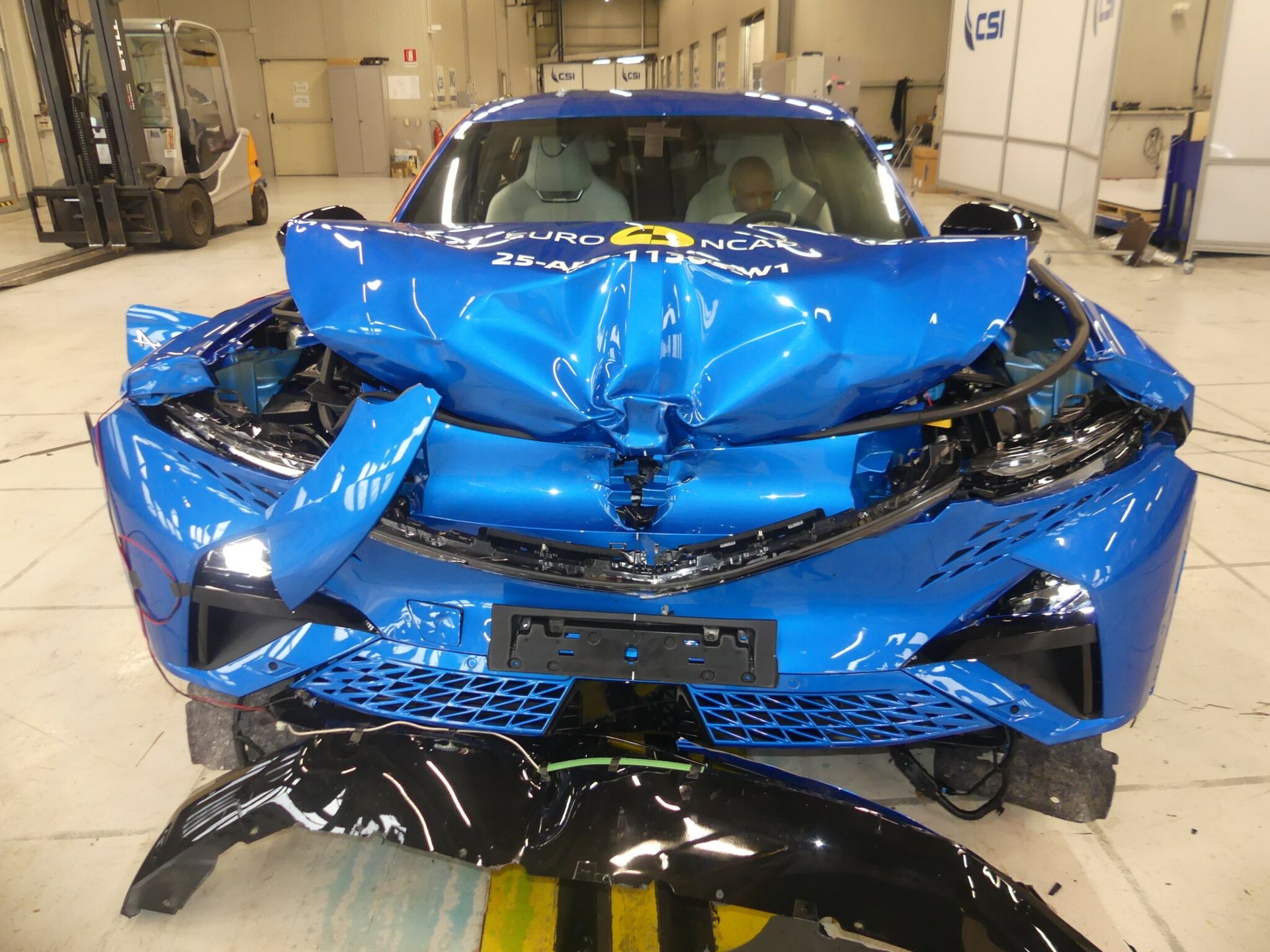
On paper, the A390 does not collapse. Euro NCAP describes a stable passenger compartment in the offset frontal test, and broadly solid protection on several points.
Where it gets tricky is in the details… and that is exactly what the stars can hide.
1) The chest: a weaker point in certain scenarios
Euro NCAP rates chest protection as marginal in the offset frontal test, and again as marginal in the side pole impact.
It is not “catastrophic”, and it is not “excellent” either: it is the kind of grey area that costs points.
2) The event that hurts: the door opening in a side impact
This is the point that carries most weight in the media narrative, for a reason: Euro NCAP states that the door opens in the side barrier test, triggering a penalty. Euro NCAP also notes a “knock-on” effect: the A390 does not score certain points related to far-side protection.
Important: “door opening” does not mean “unsafe in normal use”. But in an assessment protocol, it is structurally an event that is penalised.
3) The modern trap: what isn’t default-on may not count
This is a long way from 2005. Euro NCAP indicates that certain protections (for instance regarding pedestrians/cyclists) exist but are not activated by default on the tested vehicle — and therefore do not earn points.
This matters because it illustrates how the system has evolved: today, the rating depends not only on “what the car can do”, but also on how it is configured at delivery.
So… is it serious?
If we want to be factual: no, in the sense that “4 stars” does not mean “a car to avoid”. Euro NCAP presents 4 stars as a solid overall performance that does not reach the maximum in every assessed area.
But saying “it’s not a problem” needs to stay precise:
- It is not a problem if you mean “it is not a simple, direct indicator of being unsafe”.
- It remains a topic if you focus on what cost points: “marginal” chest ratings in some tests, and the penalty linked to the door opening.
In other words: you can put the star rating into context… without dismissing the details.
The real Alpine debate: how far to go with ADAS without losing the thread
Where this becomes truly “Alpine” is less about the numbers and more about the philosophy: Euro NCAP 2025 places strong emphasis on driver assistance, and part of the 5th star is decided by the ADAS toolkit… but also by how it is deployed.
The key point is that chasing 5 stars mechanically pushes towards a more “systemic” car:
- more sensors (radars, cameras, sometimes additional sensors depending on functions),
- more computing units and redundancies,
- more functions running permanently,
- more “conservative” calibrations (alerts, preventive braking, limitations) to perform well in the protocol.
None of this is “free”: it adds complexity, can add some mass at the margins, and above all it can change the driving experience (more frequent interventions, alerts, corrections). Yet Alpine’s identity has historically relied on a car that leaves meaningful room for the driver, with a clear read of the chassis.
With the A390, that tension is easy to see: Euro NCAP notes that certain protections exist but are not activated by default on the tested vehicle, which prevents scoring points.
Translation: to reach the higher star rating, it is not enough to “have” systems — you also have to accept that they are standardised and active by default, i.e. less “à la carte”.
The compromise Alpine has to find is here:
- fit the right level of ADAS (what genuinely reduces real-world risk and matches the protocol),
- while avoiding an arms race that turns the car into a technology demonstrator,
- and keeping dynamic coherence: a car that remains readable, agile in its reactions, and whose aids support driving rather than replace it.
This is not a “pro-ADAS” vs “anti-ADAS” debate. It is a question of dosage: how much assistance, at what level of intrusiveness, and at what cost (technical, mass, feel) — especially when a star can be decided by details such as whether features are default-on.
In summary: the star is missing, but context matters more than the number
The A390 has 4 stars, and the Euro NCAP sheet explains exactly where it falls short: “marginal” chest ratings in certain scenarios, a side-impact door-opening penalty, and part of the ADAS/VRU score influenced by eligibility rules (notably default activation).
That is not an automatic reason to panic. It is an invitation to read the detail, and to remember that in 2025, stars judge passive safety as much as the assistance ecosystem, its calibration, and its availability.
And for Alpine, the discussion that will remain central anyway is this: on a vehicle weighing over two tonnes, which technical choices allow it to stay true to the idea of an “agile” car — without slipping into a weight race in disguise?
Let’s not let technology drive us. Let’s drive it.
Sources recap
- Euro NCAP official results sheet and comments: Alpine A390 (2025)
- Euro NCAP: star rating interpretation guide (“How to Read the Stars”)
- Renault press archive (2005)

Yeah but the ratings are for everyone. None of the recent renault cara have 5 stars. But german, american, corean, chinese cars have. The alpine is the online 50k+€ car that doesnt archirve 5 star. 76% adult protection is bad. Every car on that segment goes to 90%+. Its not about more sensores, its the main crash protection that is not good. If cheap cars can do, why alpine and renault cant? There is no excuse. Cars from 25k€ can archieve better scores.