🇫🇷 Cet article est également disponible en français : Lire en français
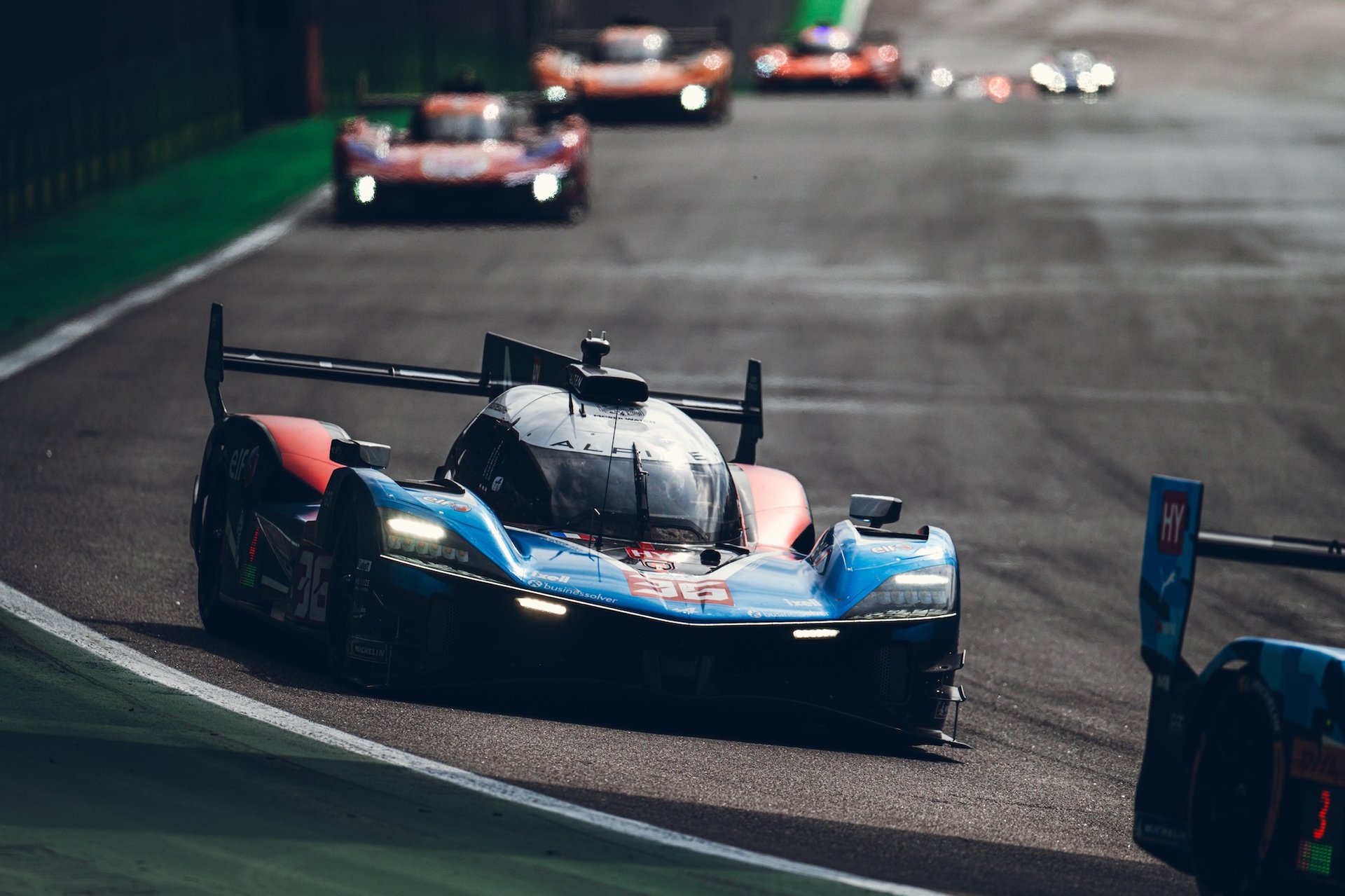
At the 2026 24 Hours of Le Mans, Alpine Endurance Team held its ground, but the A424 had hinted at more after such a promising week: the #35 of Ferdinand Habsburg, Charles Milesi and António Félix da Costa finished sixth, on the same lap as the winning Toyota, while the #36 of Frédéric Makowiecki, Jules Gounon and Victor Martins secured a place in the top 10.
Starting third after a brilliant qualifying week, the A424 confirmed its progress, but Le Mans reminded everyone of an old truth: pure speed is not enough when Toyota, BMW and Cadillac turn the Sarthe into a chess match at more than 220 km/h on average.
Alpine Endurance Team: Thursday night’s promise
There had been that shiver first. The one that always runs through the paddock when the stopwatch stops confirming an impression and turns it into fact. In qualifying, the Alpine A424 #35 had not merely shown well: it had struck hard. Ferdinand Habsburg, then Charles Milesi, had placed the blue prototype among the favourites, with a turn of speed not always associated with Alpine’s Hypercar programme since its beginnings.
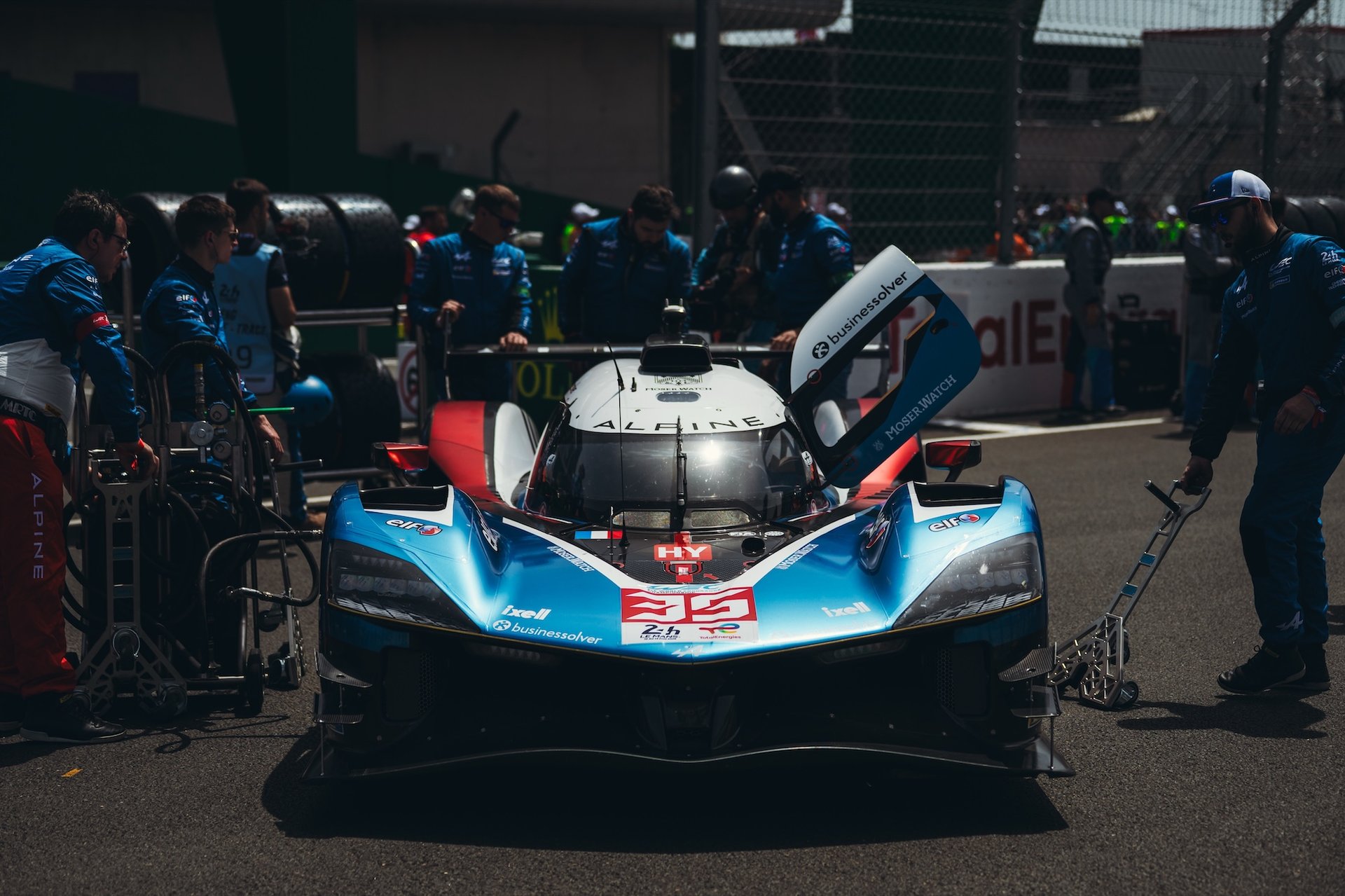
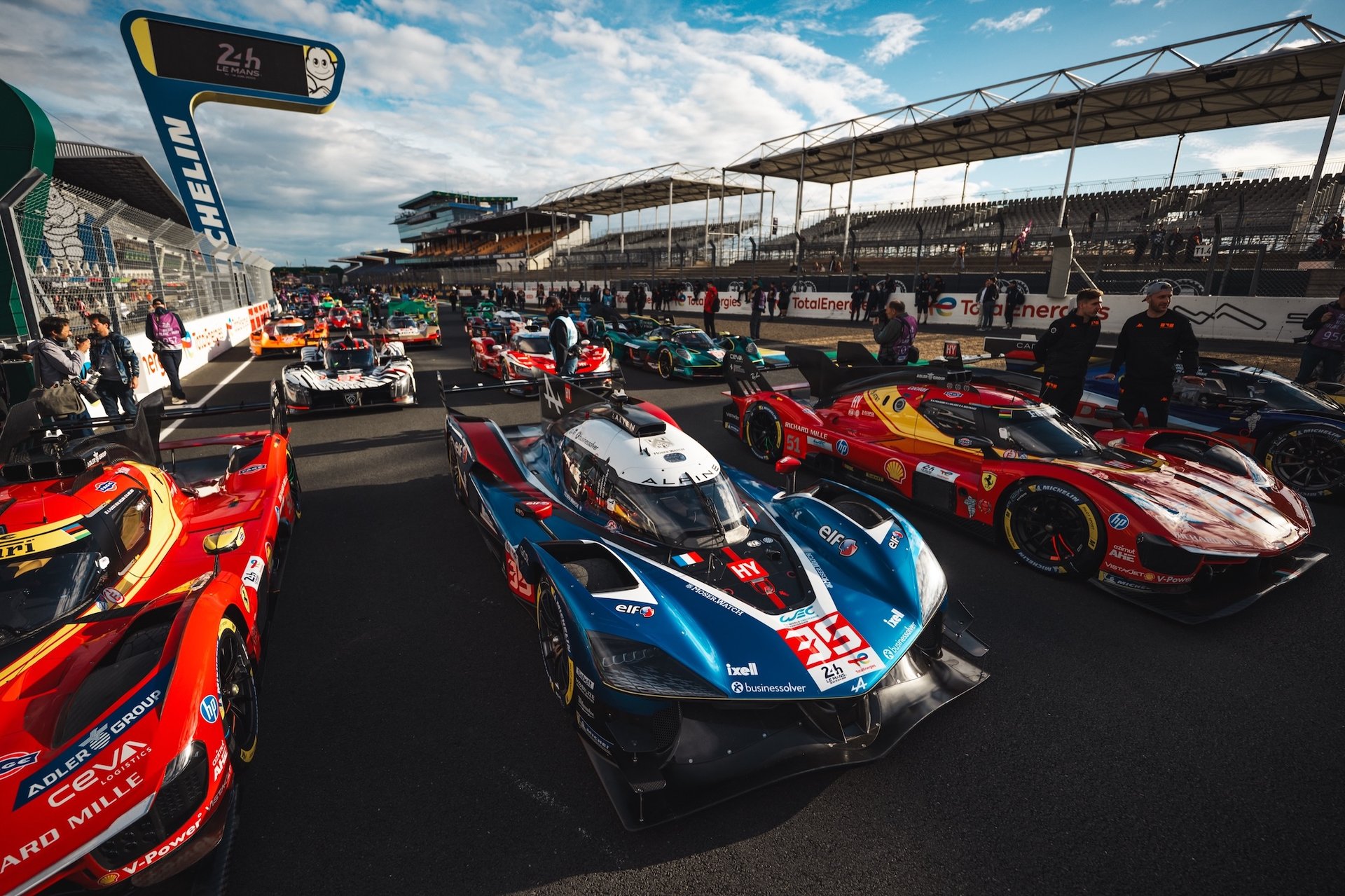
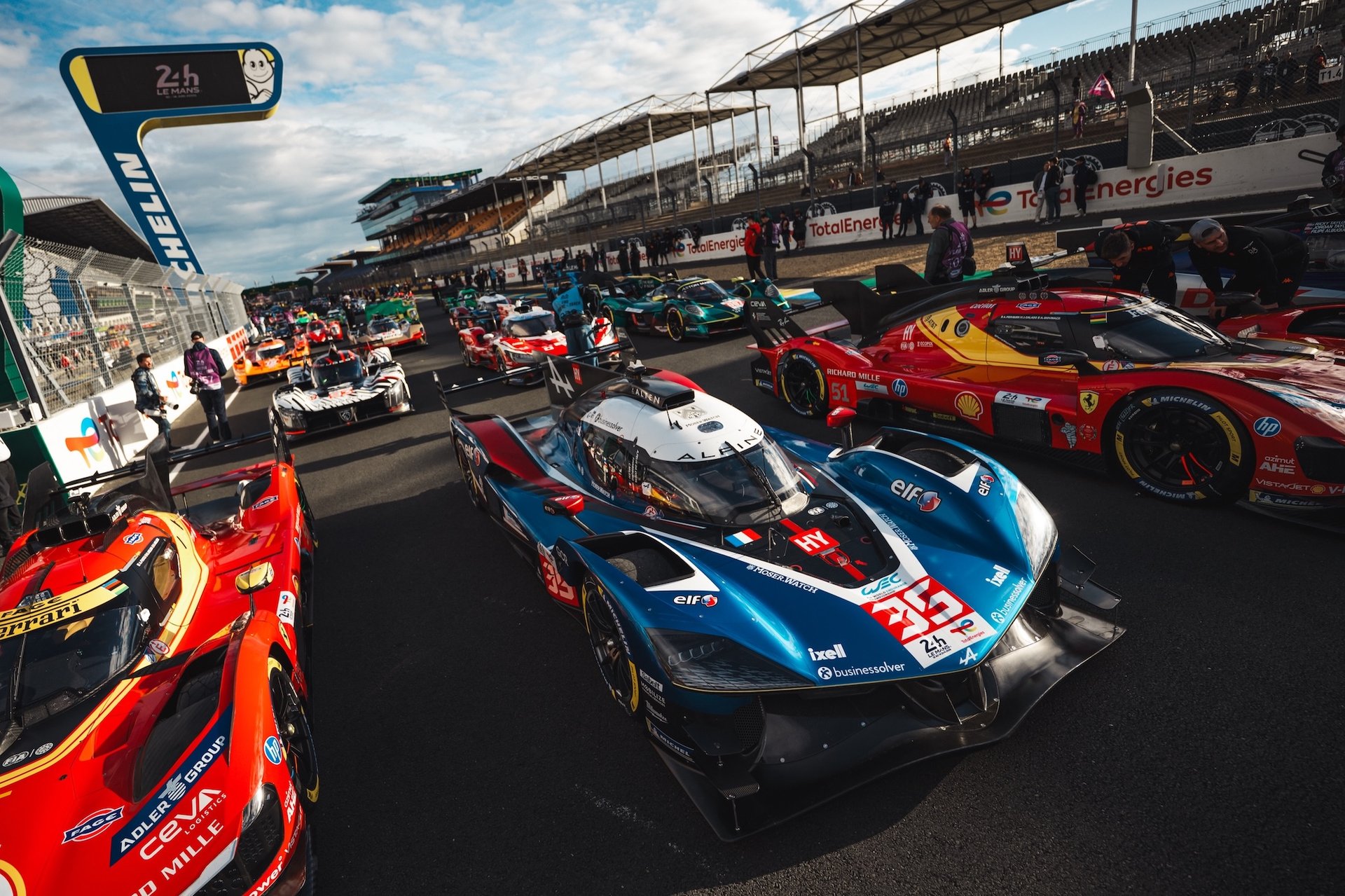
Le Mans loves these kinds of signals. A car finding its window, a driver daring to brake late at Indianapolis, a Hypercar breathing through the Porsche Curves without seeming to fight its tyres. The #35 had set the fastest time in the initial qualifying session, then shone in Hyperpole 1 before climbing onto the second row of the grid. Third at the start, behind the BMW #15 and the Cadillac #12, it was exactly where Alpine wanted it to be: in immediate contact with the benchmarks.
24 heures du Mans
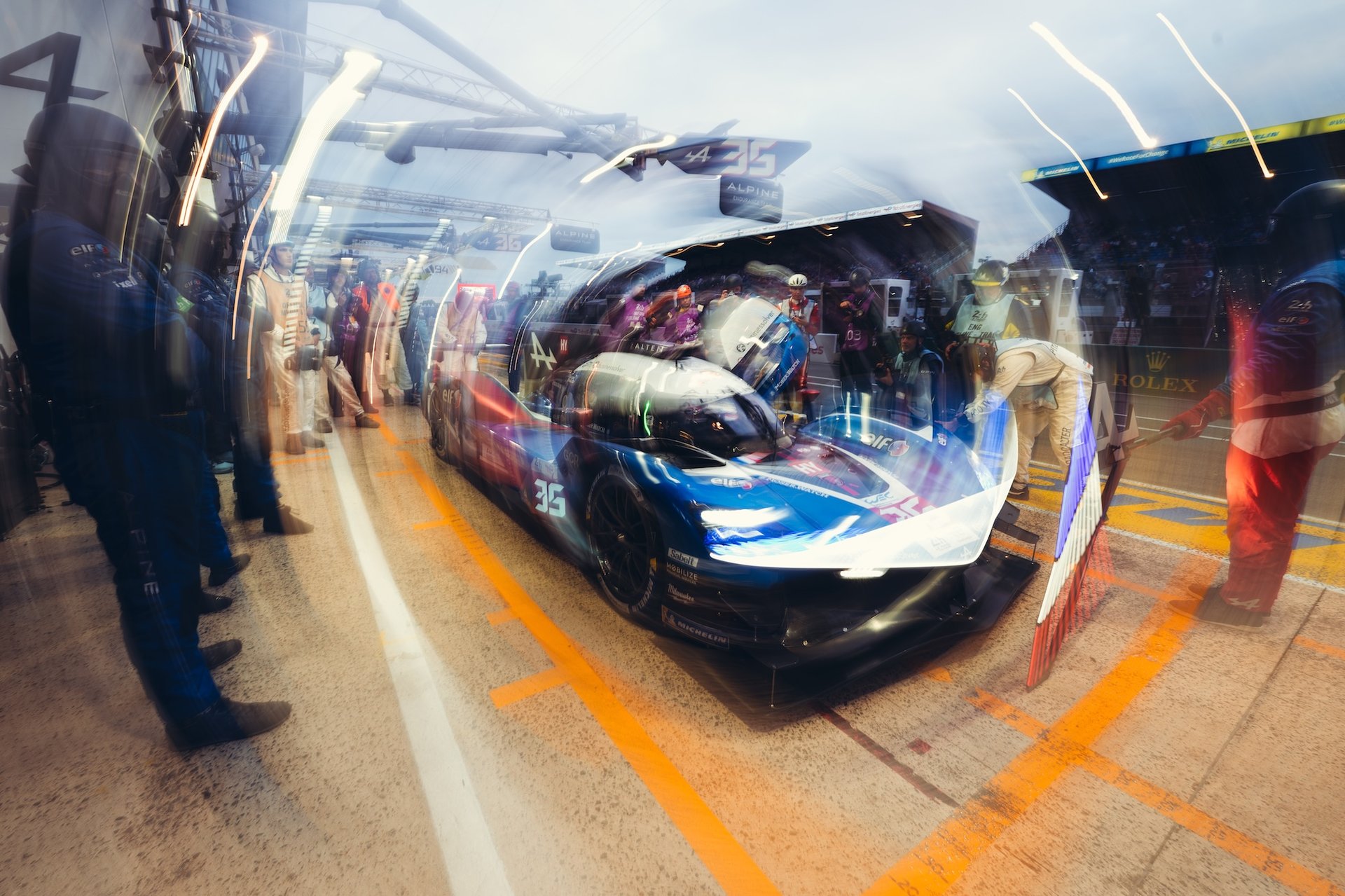
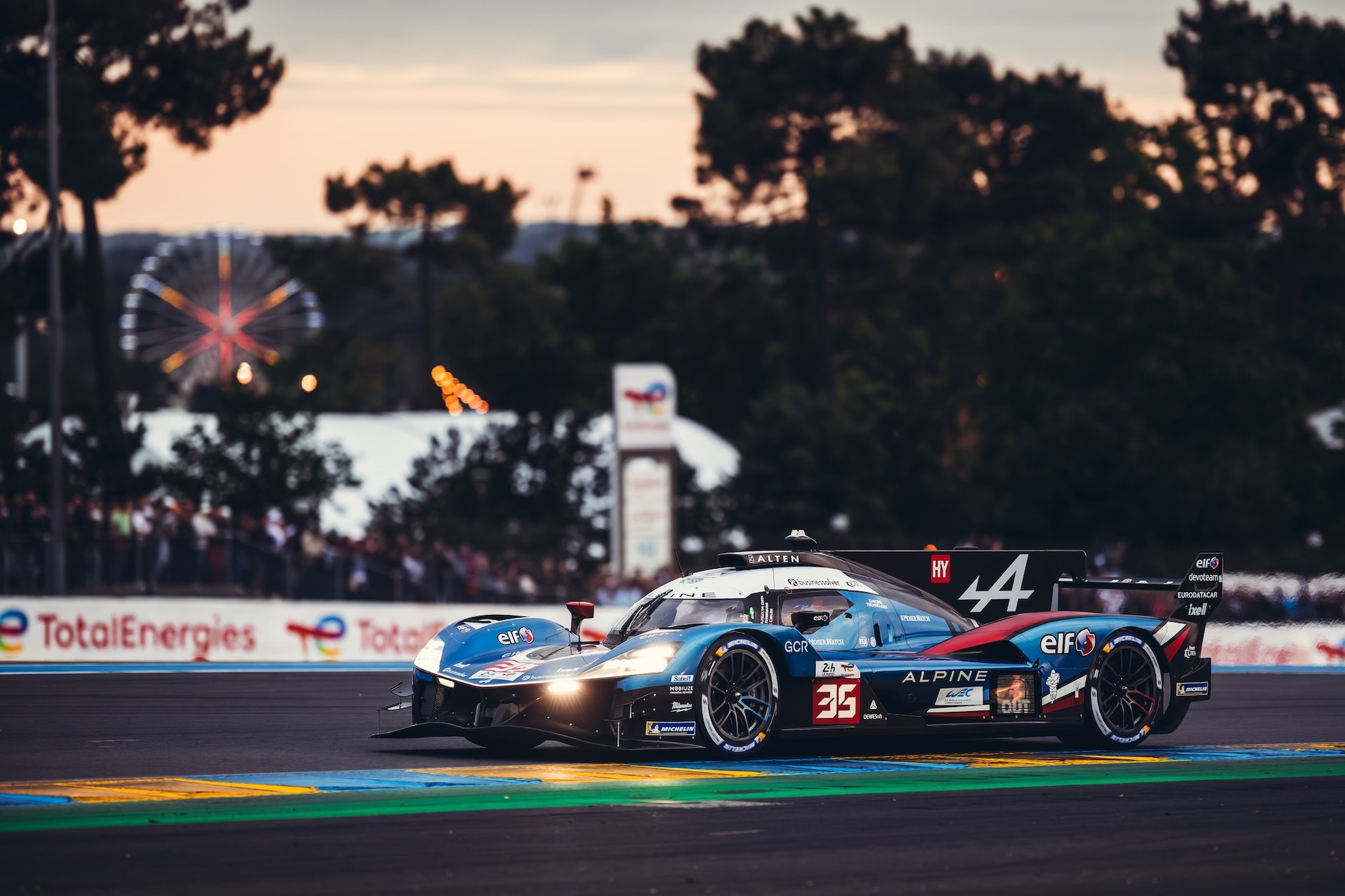
It was already a partial victory. Not the kind that fills a trophy cabinet, but the kind that changes the atmosphere in the paddock.
Since the beginning of the Alpine A424 programme, Alpine had moved forward with clear ambition but against a rougher reality. The car had needed time to understand its tyres, stabilise its aerodynamic balance and tame the demands of a Hypercar field that has become one of the most competitive in recent endurance history.
Against Toyota, Ferrari, Cadillac, BMW, Porsche, Peugeot and Aston Martin, heroics were no longer enough. You had to be complete. Le Mans 2026 was meant to say whether Alpine had become just that.
A start in the right rhythm
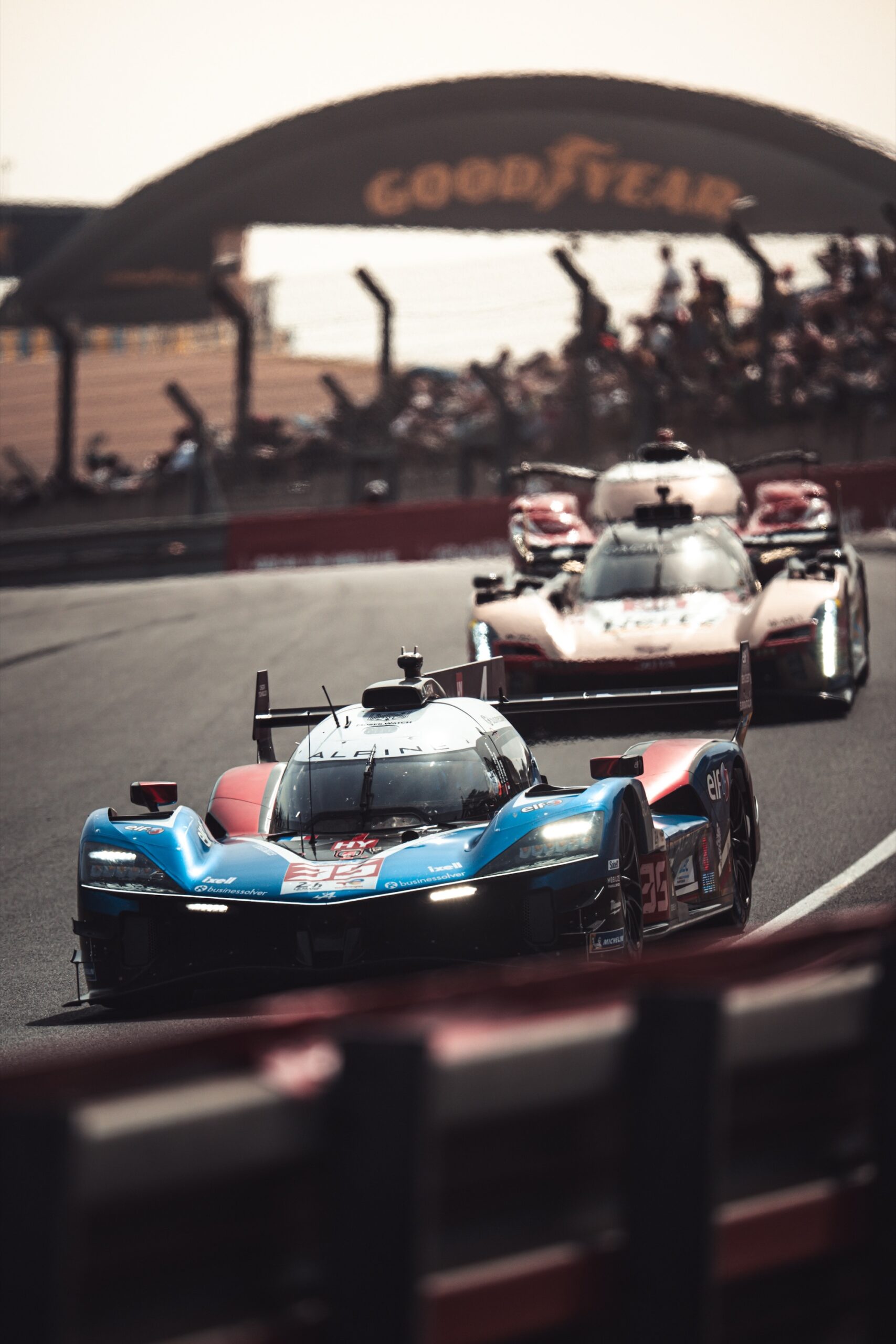
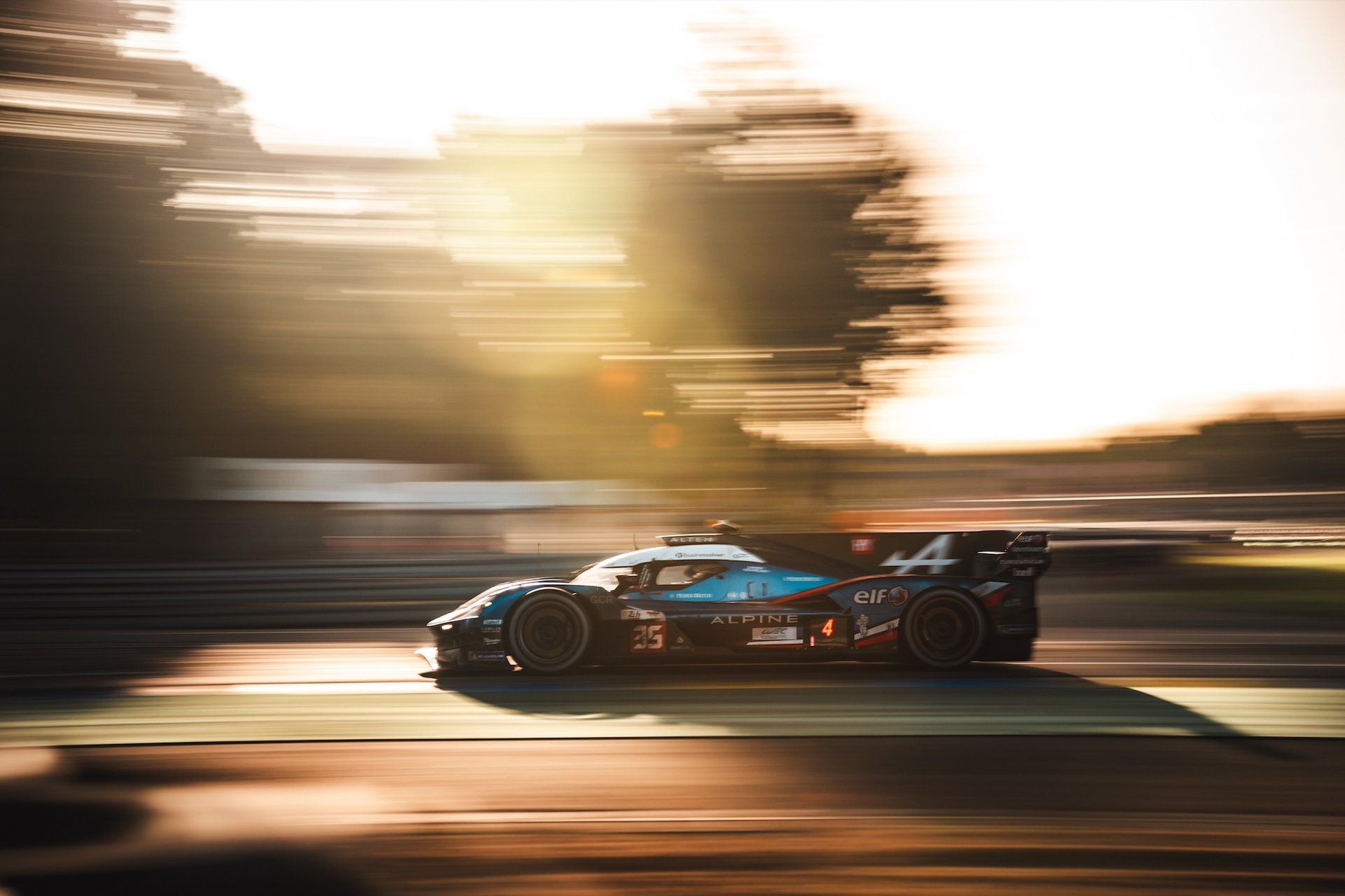
Saturday, 4pm. Under the still-high light of the Sarthe, Ferdinand Habsburg launched the #35. The start was clean, measured, without the kind of unnecessary aggression that can ruin twenty-four hours in two corners. The Austrian held his place in the leading group, then let his sense of rhythm speak. The #35 was not defending. It attacked when necessary, waited when traffic demanded it, and stayed in the slipstream of the cars expected to fight for victory.
In the opening laps, the Alpine A424 looked like a balanced car. Not spectacular to the point of burning its tyres, not cautious enough to be swallowed up. It lived among the best Hypercars and began to feed optimistic scenarios. A podium? A top five? Something more if the race unravelled ahead? Le Mans lives on these possibilities, especially when they suddenly seem credible.
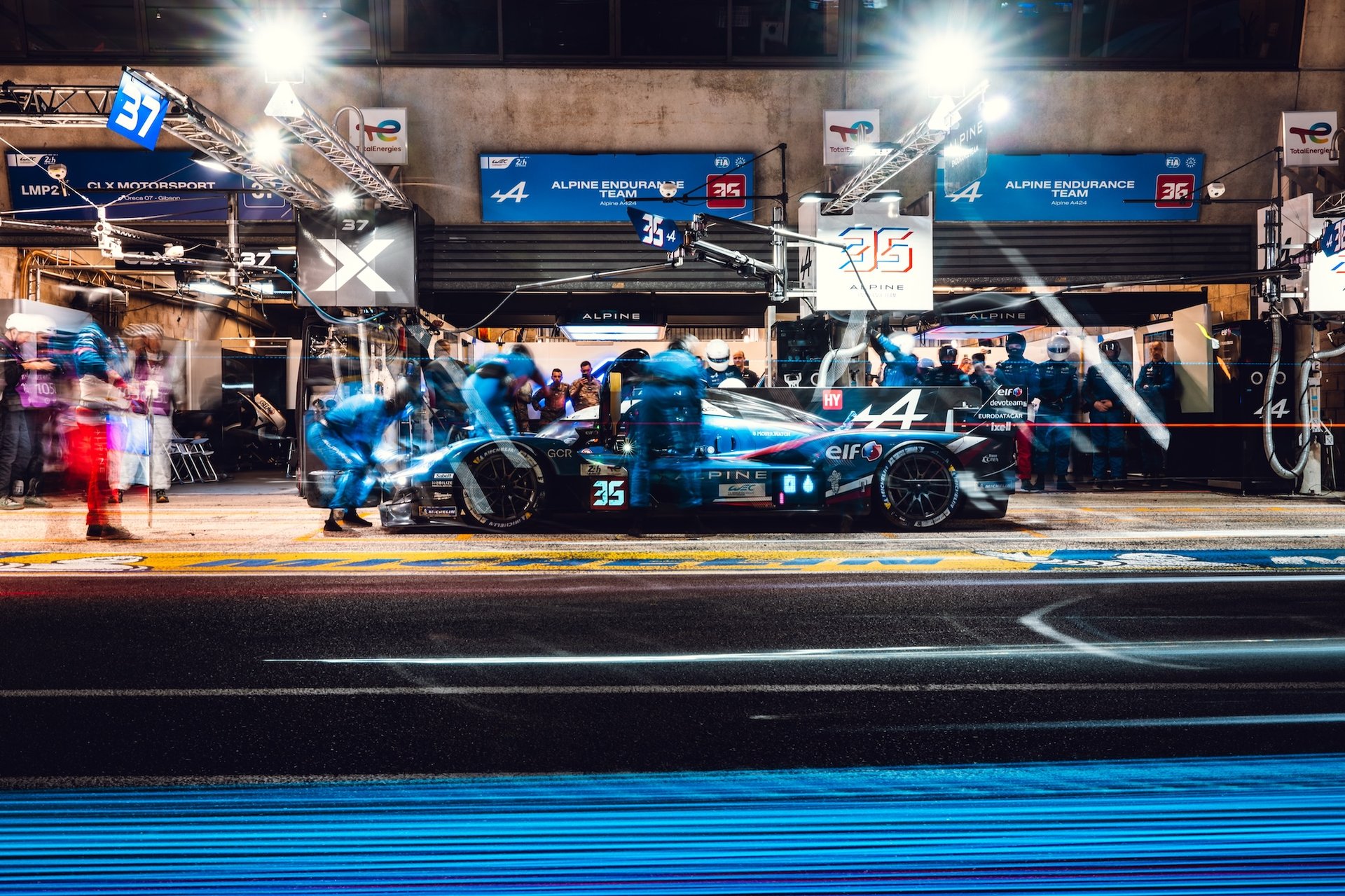
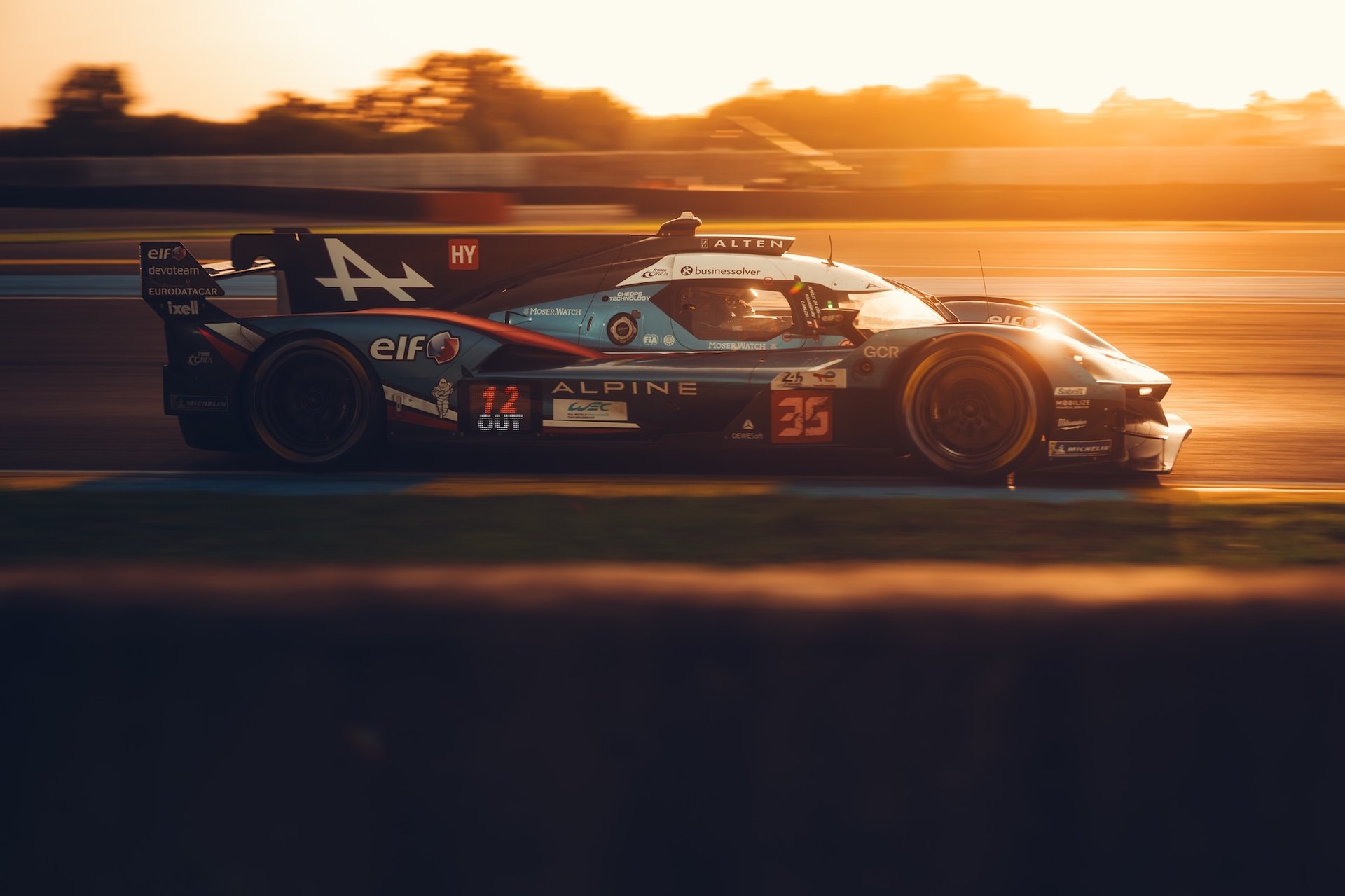
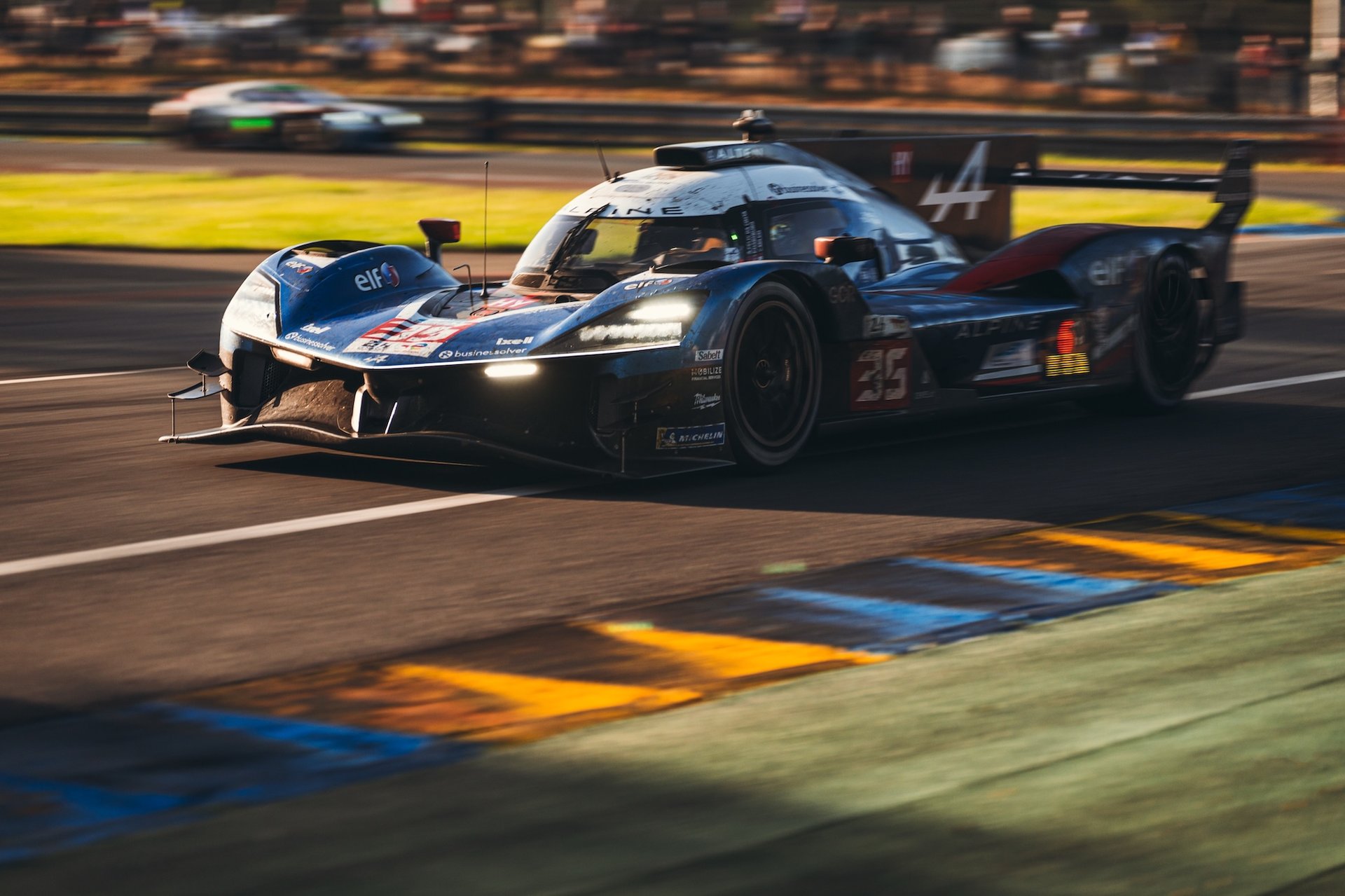
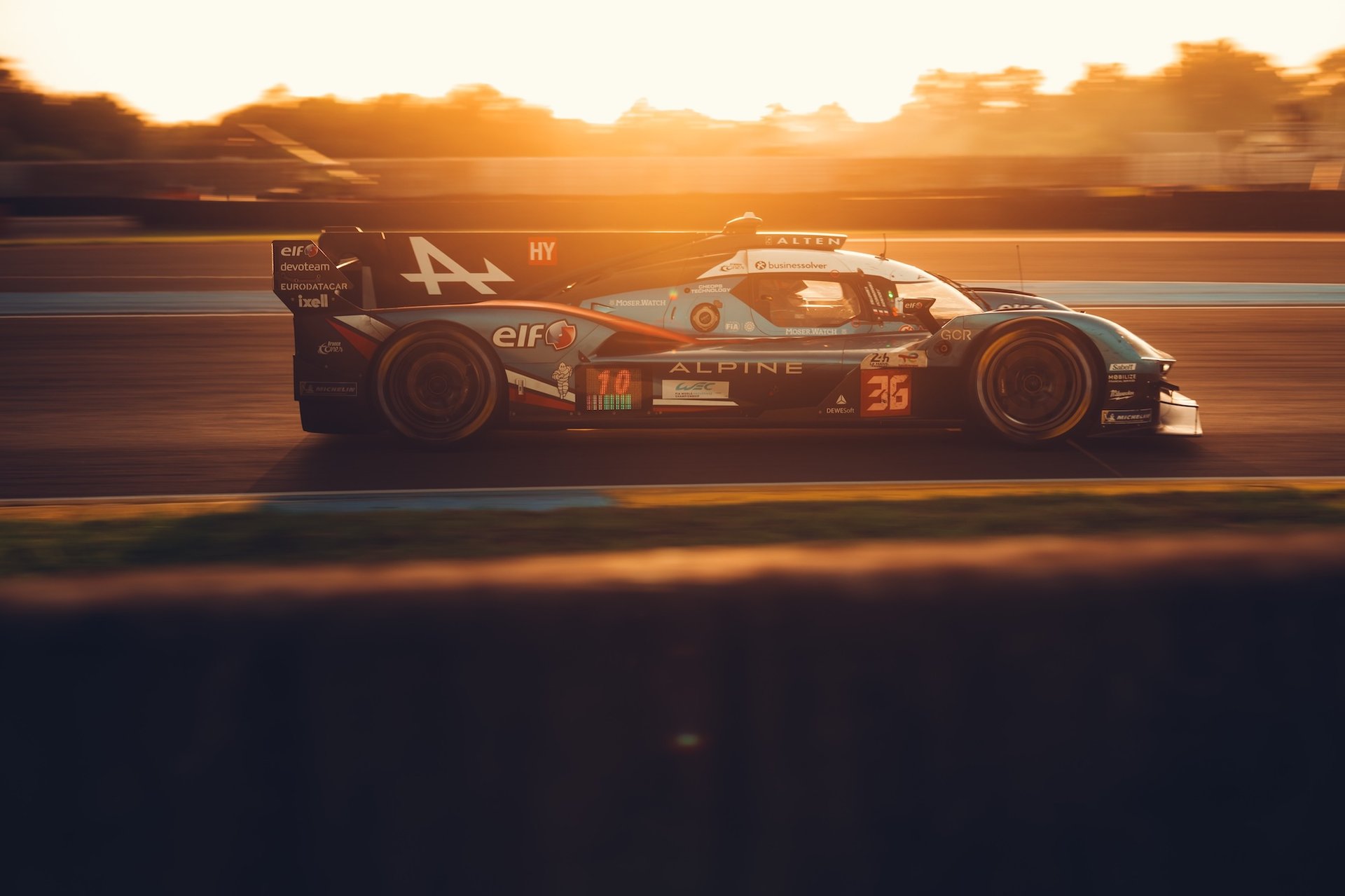
Behind, the #36 was fighting a different battle. Starting thirteenth with Frédéric Makowiecki, it had to climb back without overreaching. In that part of the order, risk is constant: you are not only racing other Hypercars, but also traffic, speed differentials, LMP2 stints and LMGT3 cars to clear in the wrong place. The strategy was less glamorous than that of the #35, but just as decisive: keep the car clean, preserve the tyres, and avoid losing the race before nightfall.
The opening phase confirmed one thing: Alpine had pace.
The first grains of sand
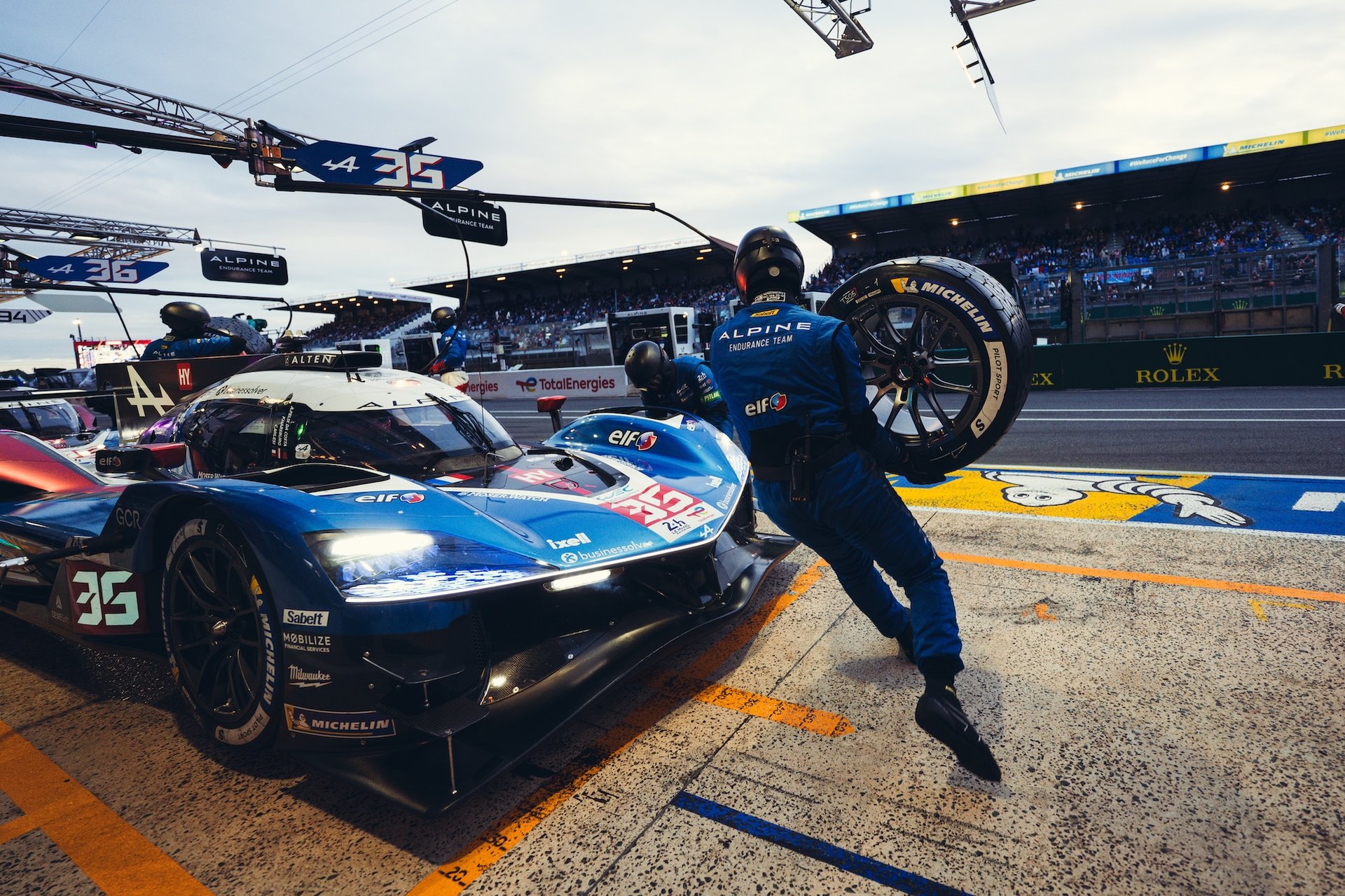
The answer became more complicated over the stints. Nothing broke in spectacular fashion. Nothing immediately condemned Alpine. But the race began to eat into its margins. Brake temperatures became a concern. The tyres did not always remain in their ideal window. Traffic imposed its compromises. The #36 suffered a major lock-up with Victor Martins, as the Frenchman had to deal with a delicate situation in the pack. The vibrations that followed forced the team to adapt its plan.
This kind of incident is typically Le Mans: too small to overturn a race on its own, but costly enough to alter its texture. A shortened stint disrupts a refuelling cycle. A tyre set changed earlier than planned affects the available stock. A vibration forces the driver to lift in the fast sections, or at least prevents him from attacking with the same freedom. On a 13.626 km circuit, the punishment is rarely immediate. It builds.
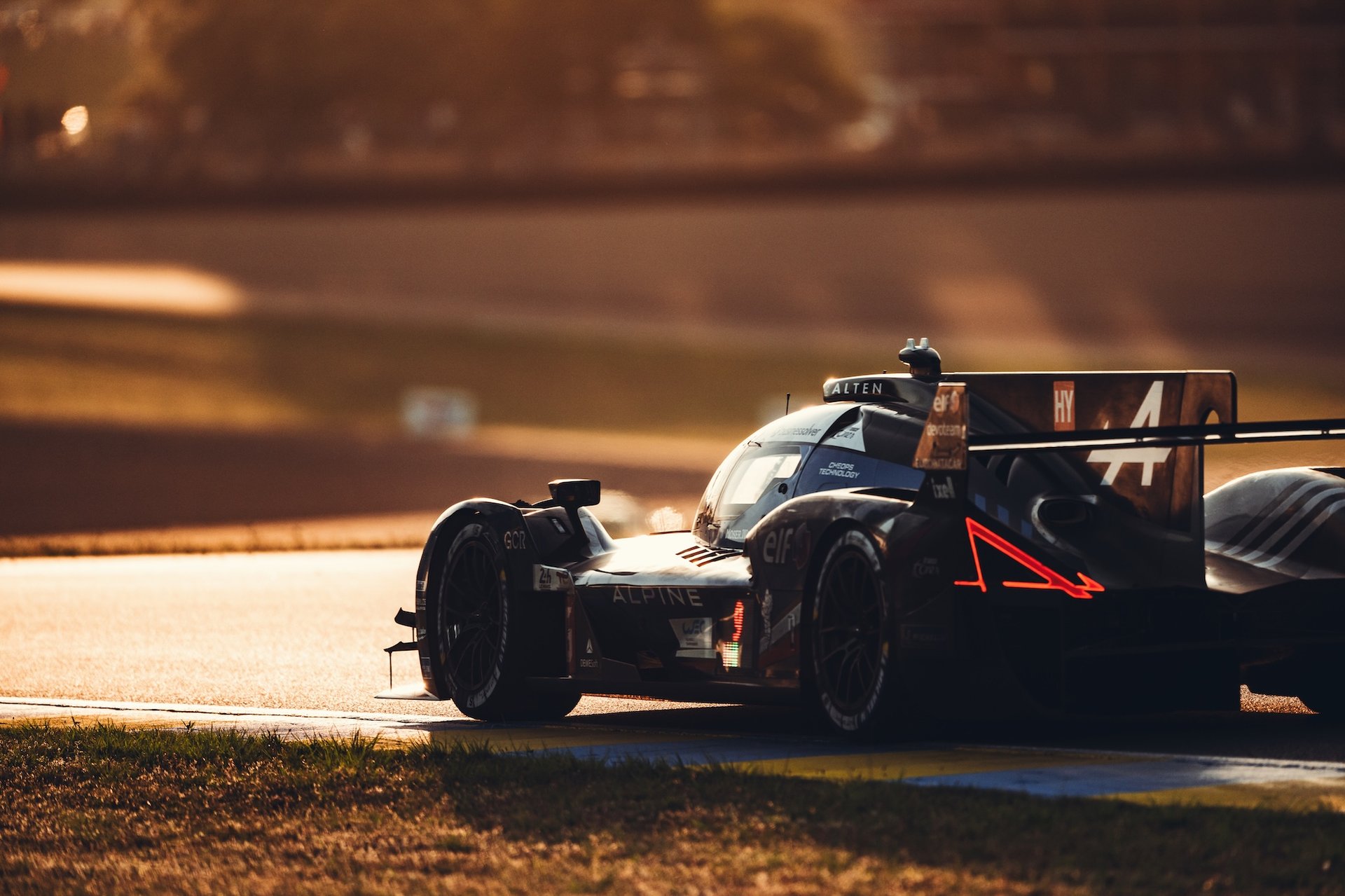
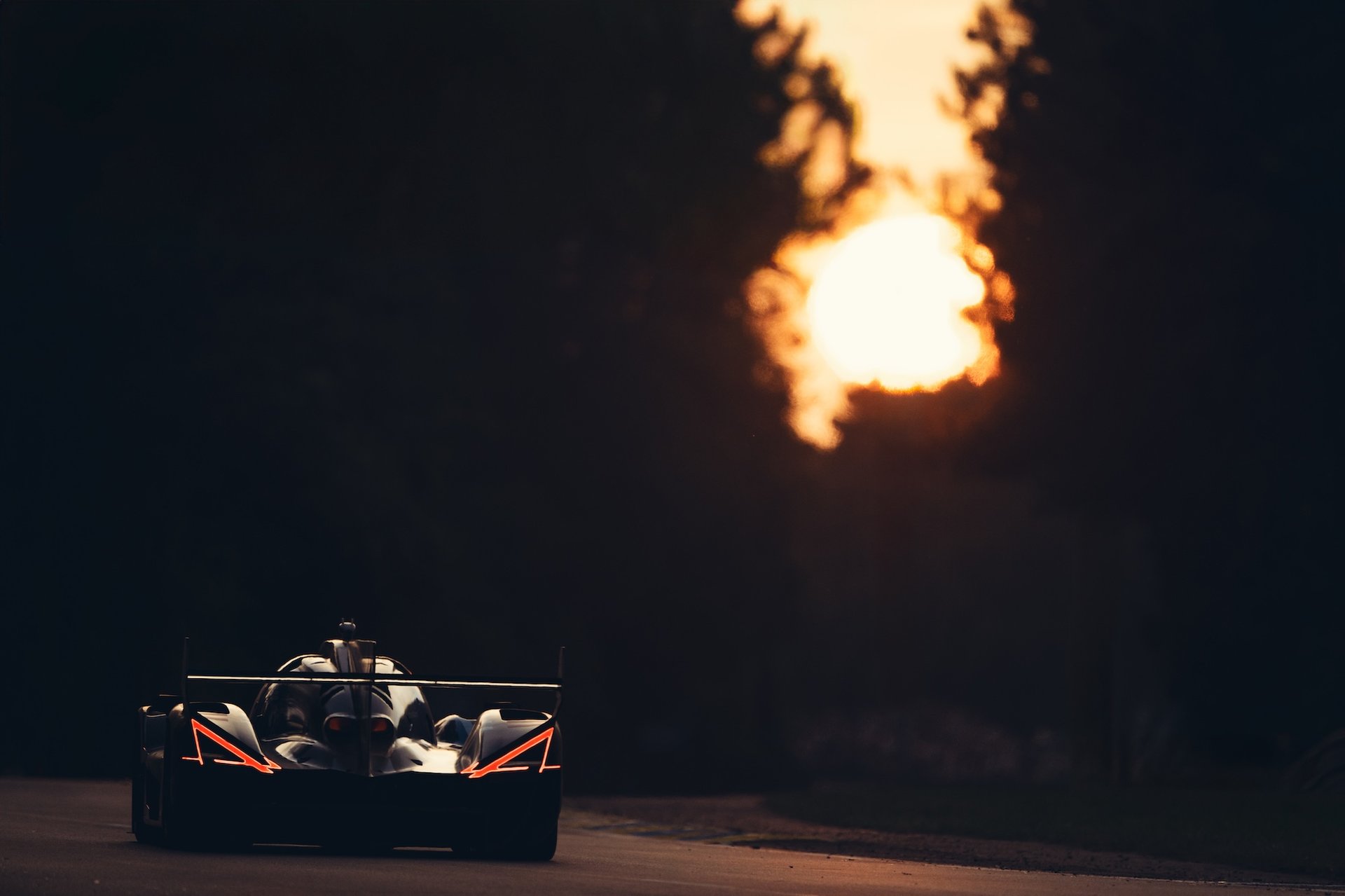
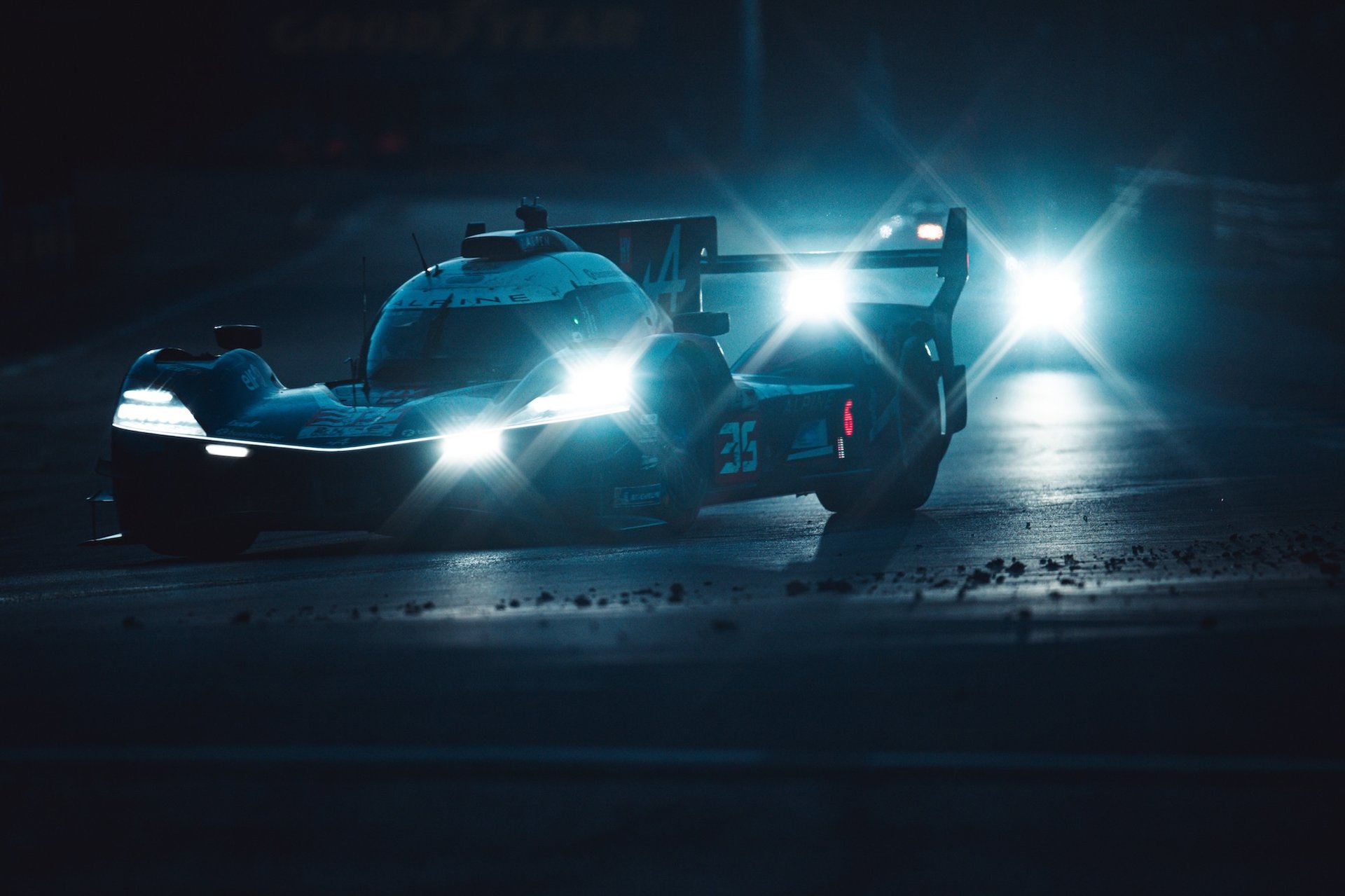
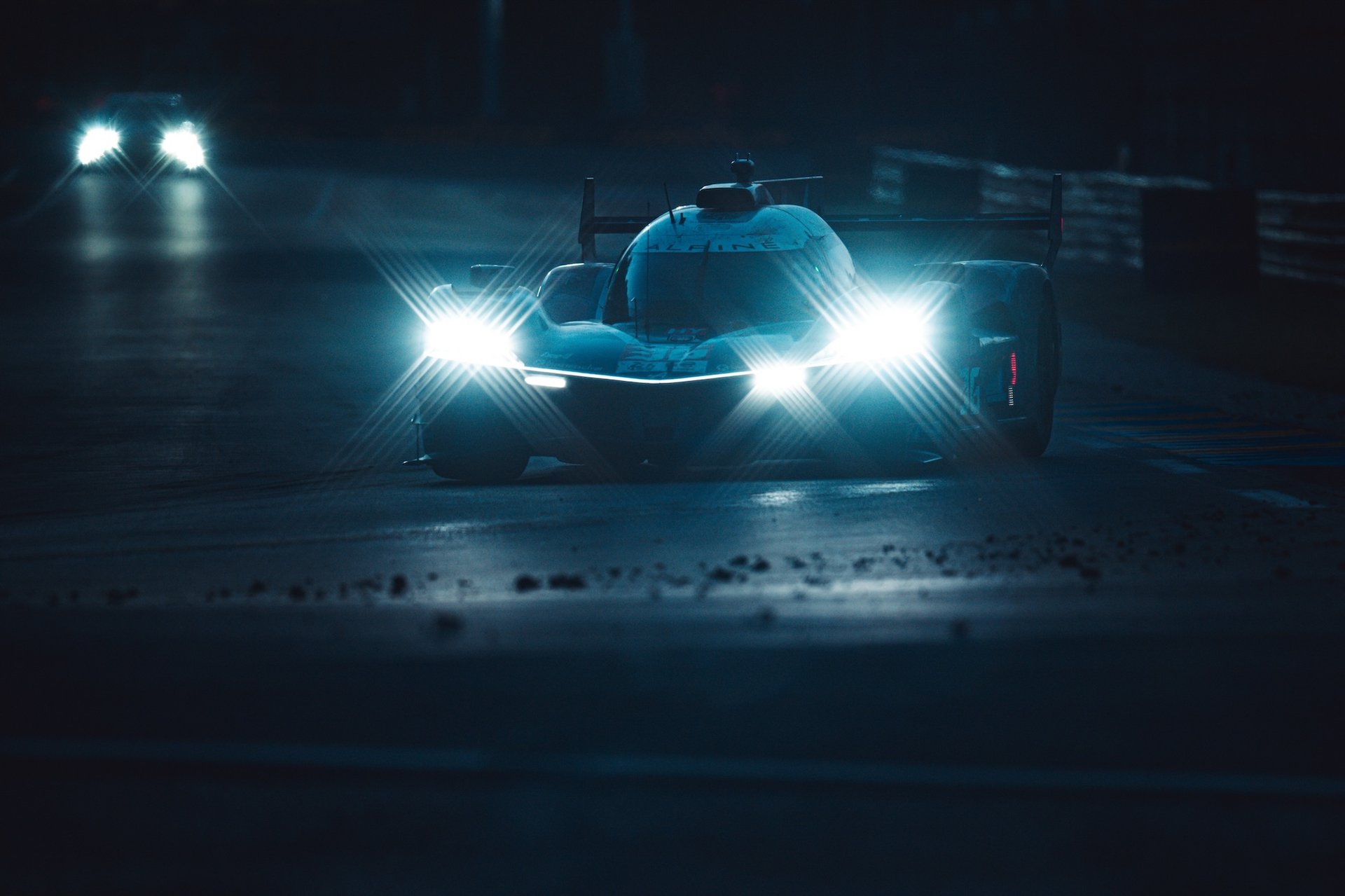
The #36, already starting further back, lost fluidity. The #35 remained more firmly in the fight, but a limit began to emerge: ahead, Toyota, BMW and Cadillac were not merely going fast. They were constructing their races. They stretched stints, protected tyre windows, played with neutralisations and shifted pressure from one crew to another. Alpine was not being dropped for lack of speed. It was beginning to be kept at arm’s length by an accumulation of details.
That is often where modern Le Mans is decided. Less in spectacular failure than in the inability to make everything perfectly simple for twenty-four hours.
Night as judge of peace
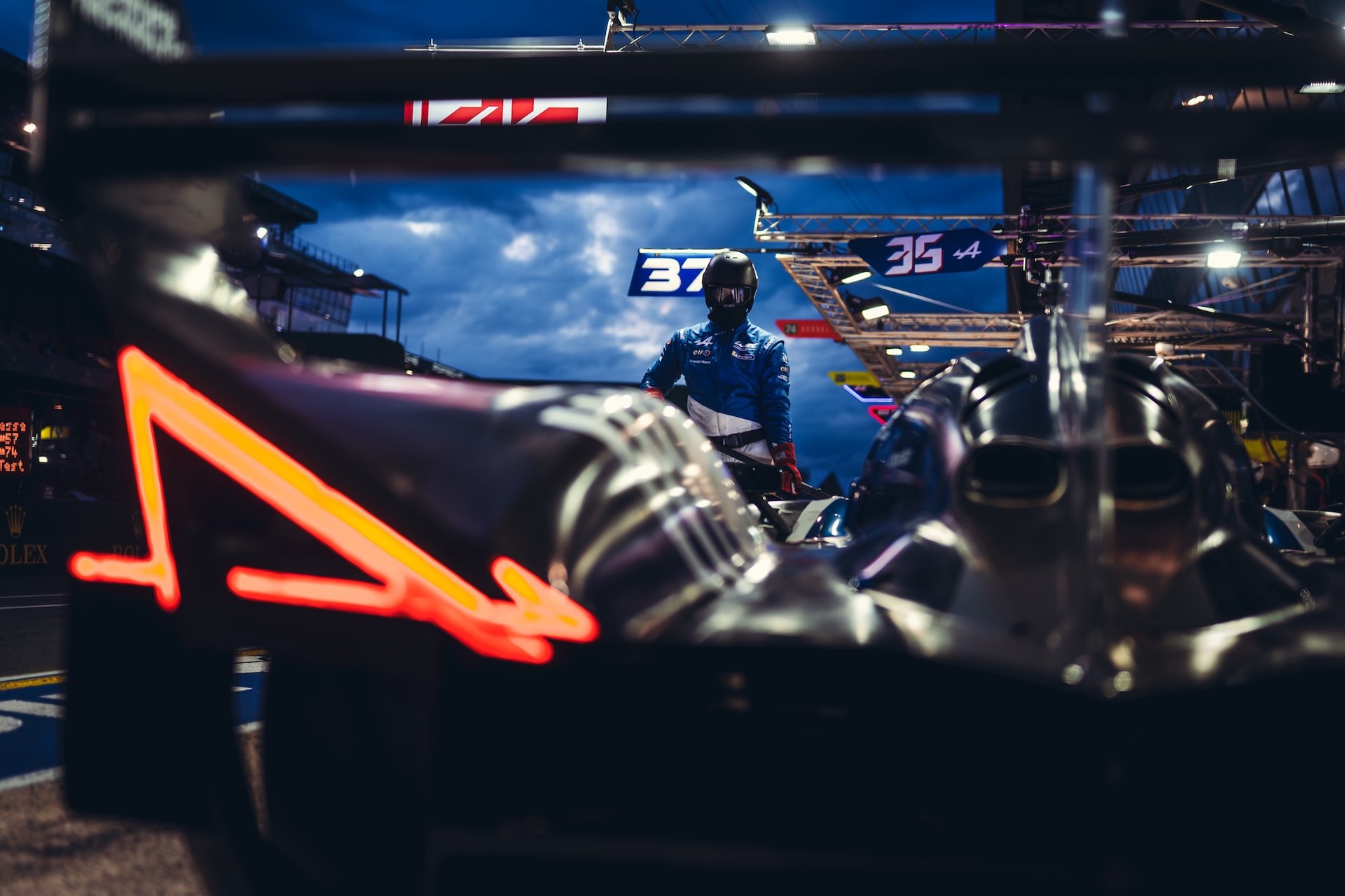
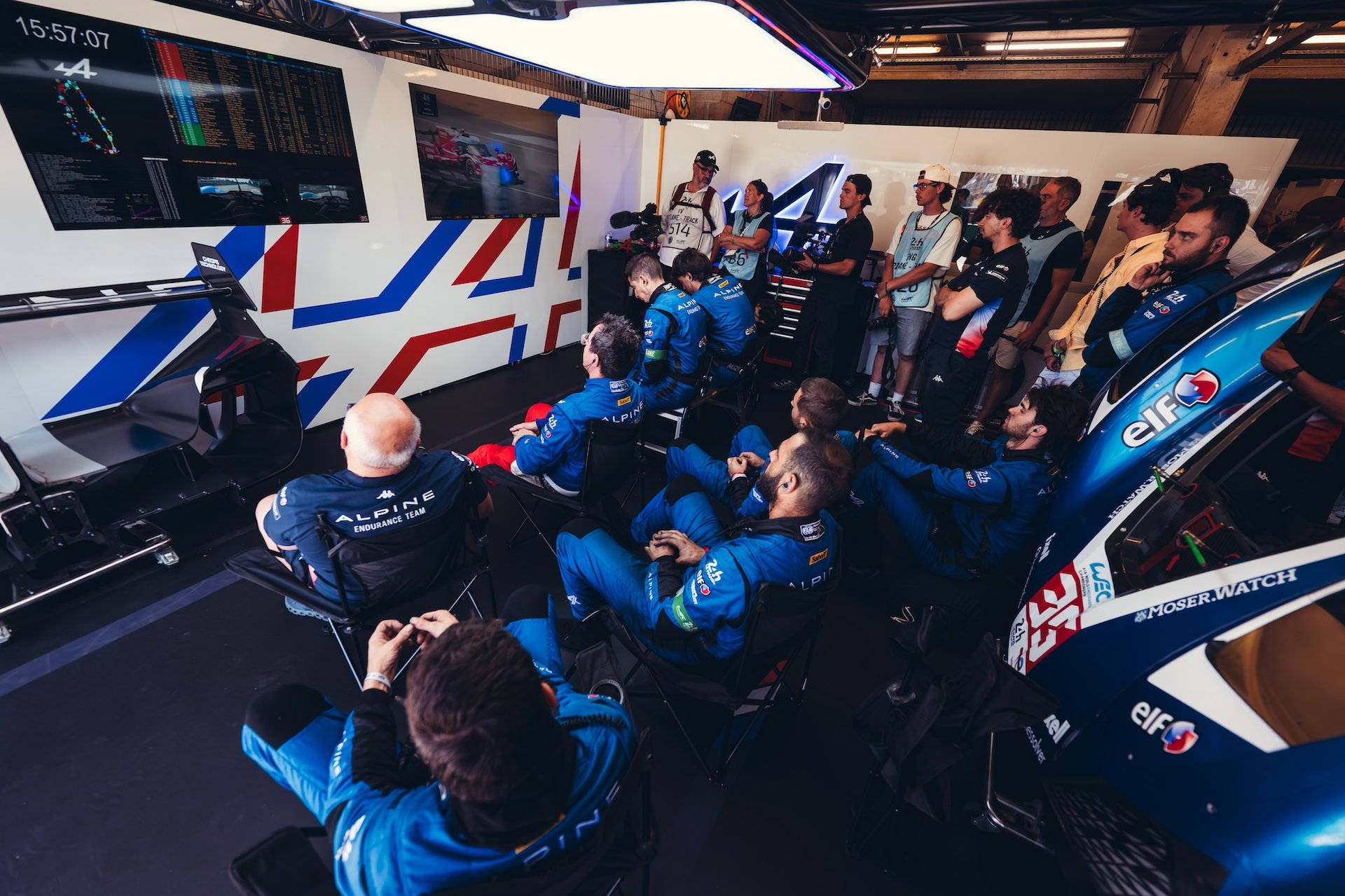
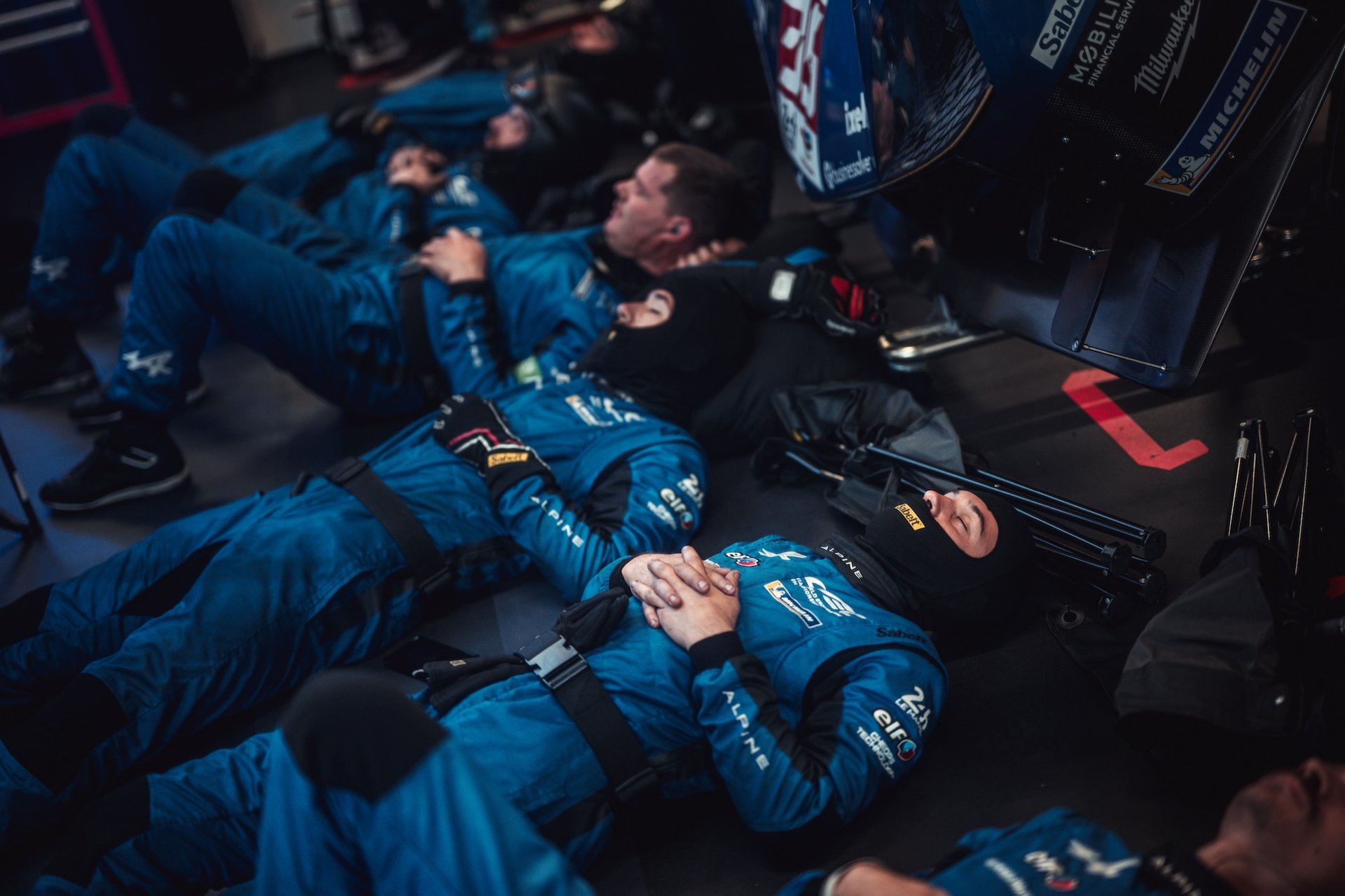
Night is not scenery at Le Mans. It is a race within the race, a second contest that begins when reference points disappear and cars become headlights, temperatures, sector times and shorter radio messages. For Alpine, it became a phase of resistance.
António Félix da Costa, Charles Milesi and Ferdinand Habsburg had to preserve the #35 in a zone where hope still existed. The car remained on the same lap as the leaders, which at Le Mans always keeps a threat alive. A favourable neutralisation, a problem ahead, a better-executed stop, and the story could take on a different colour. But the A424 had to cope with real constraints: brake temperature, tyre management, dense traffic and the difficulty of keeping grip when running in dirty air behind other Hypercars.
And yet, both Alpines were still there.
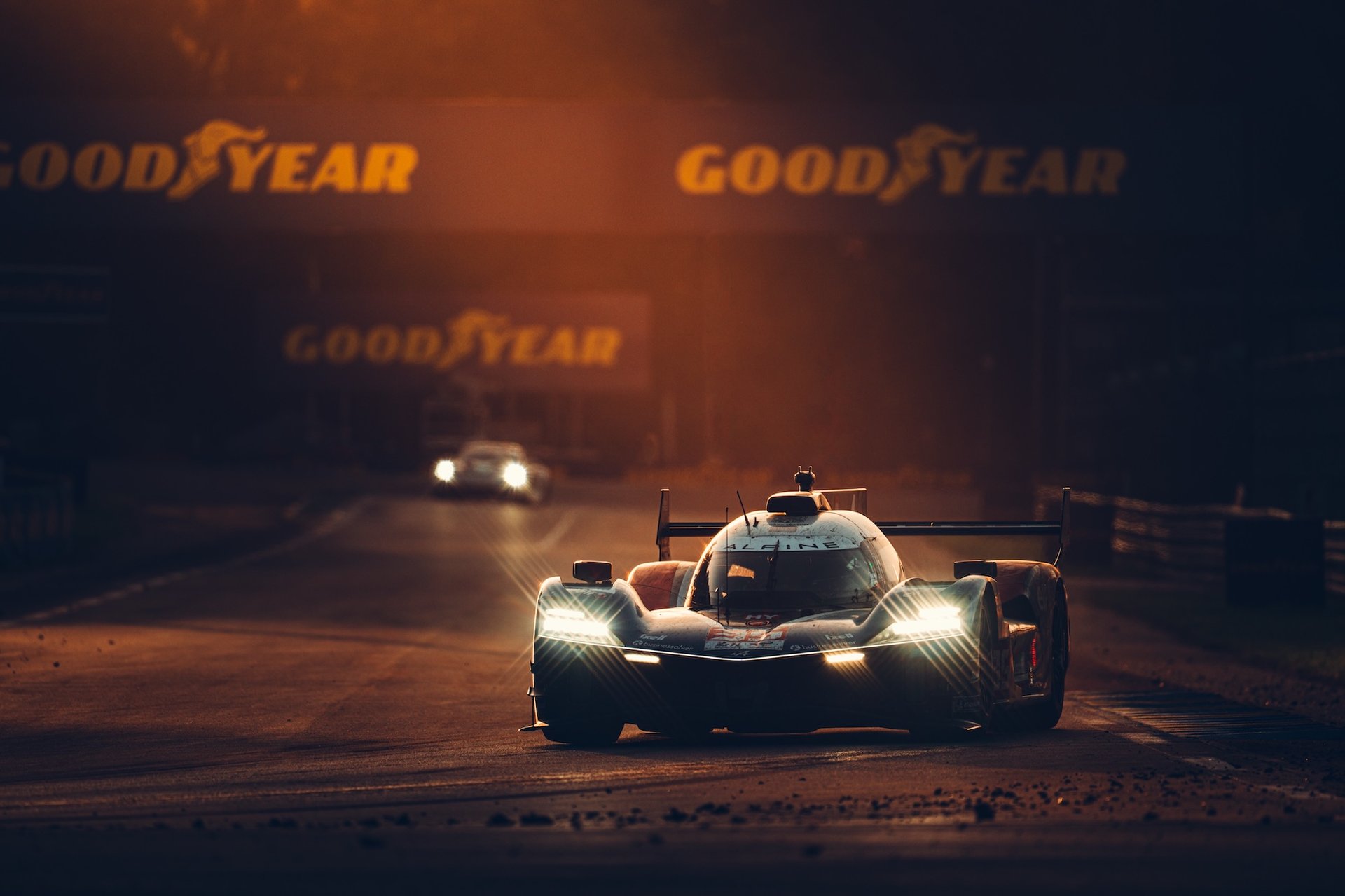
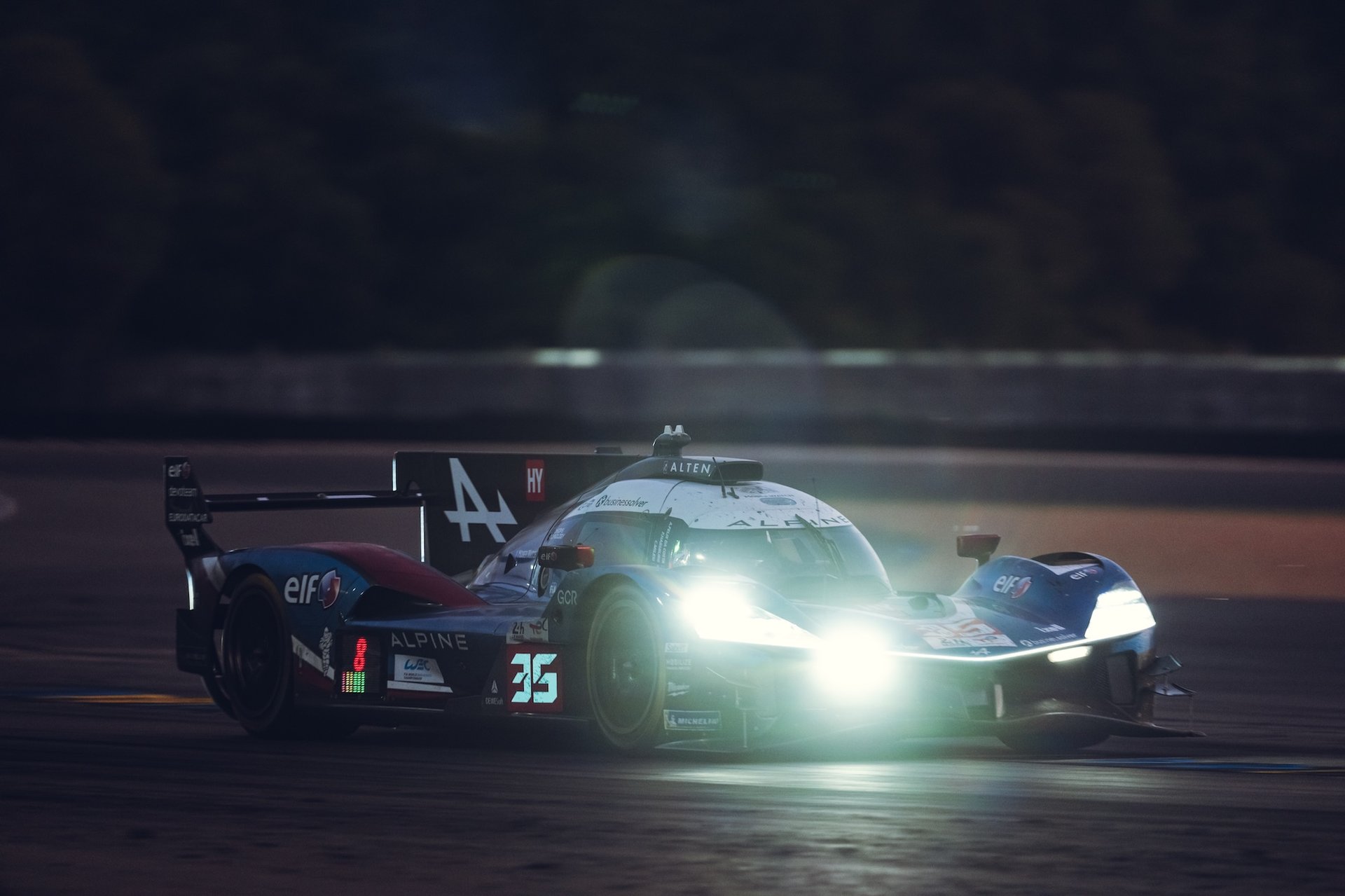
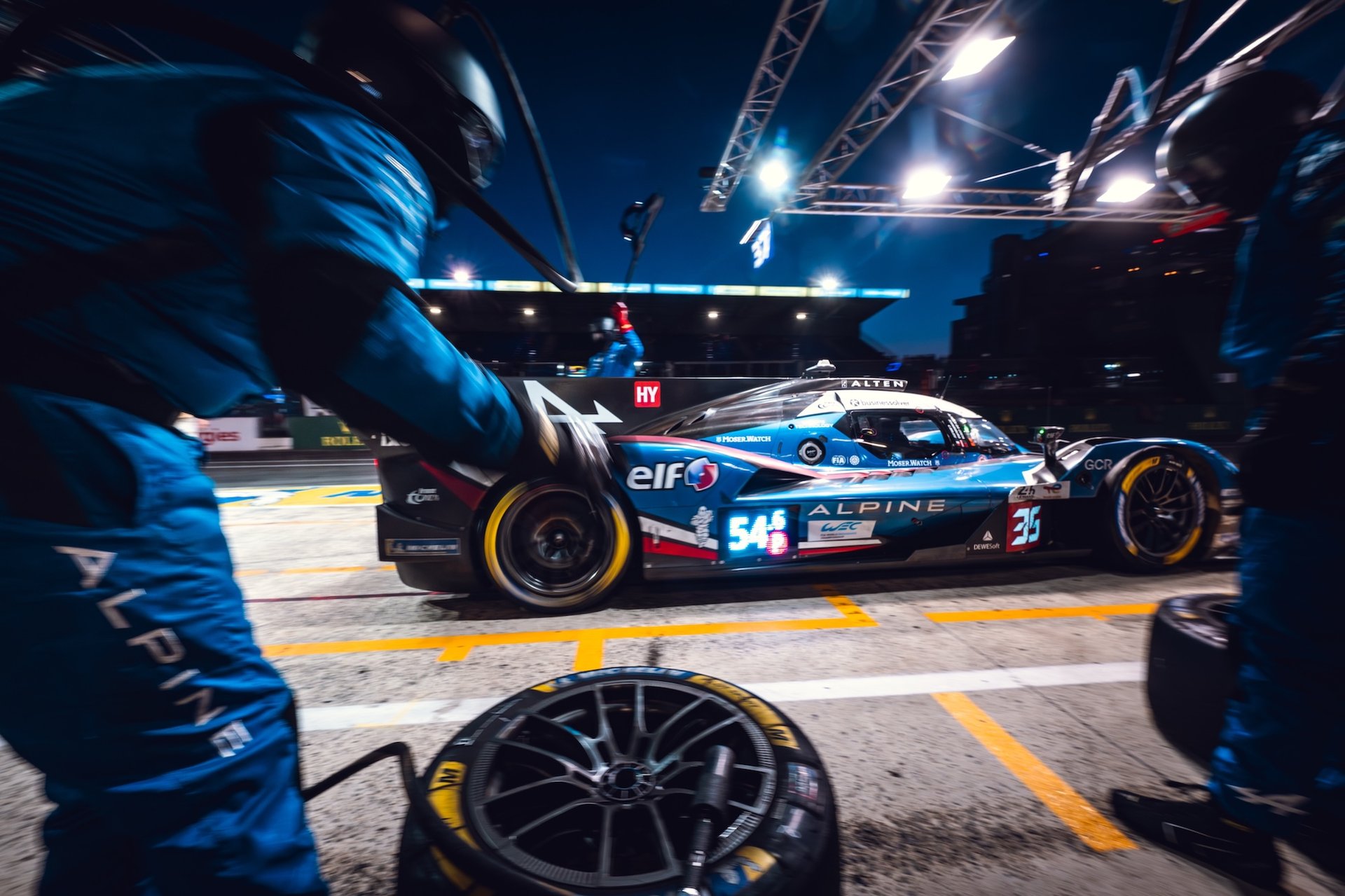
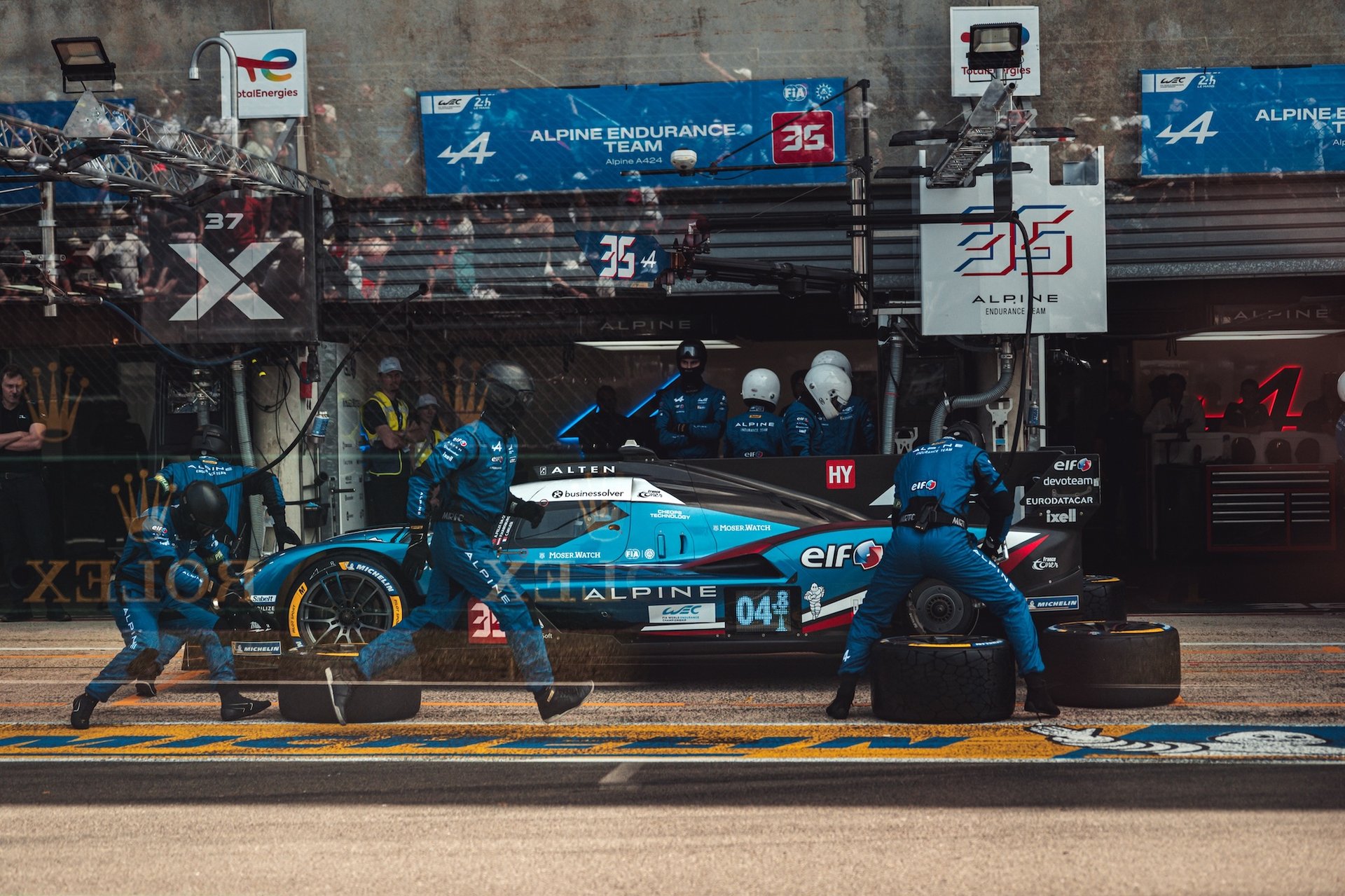
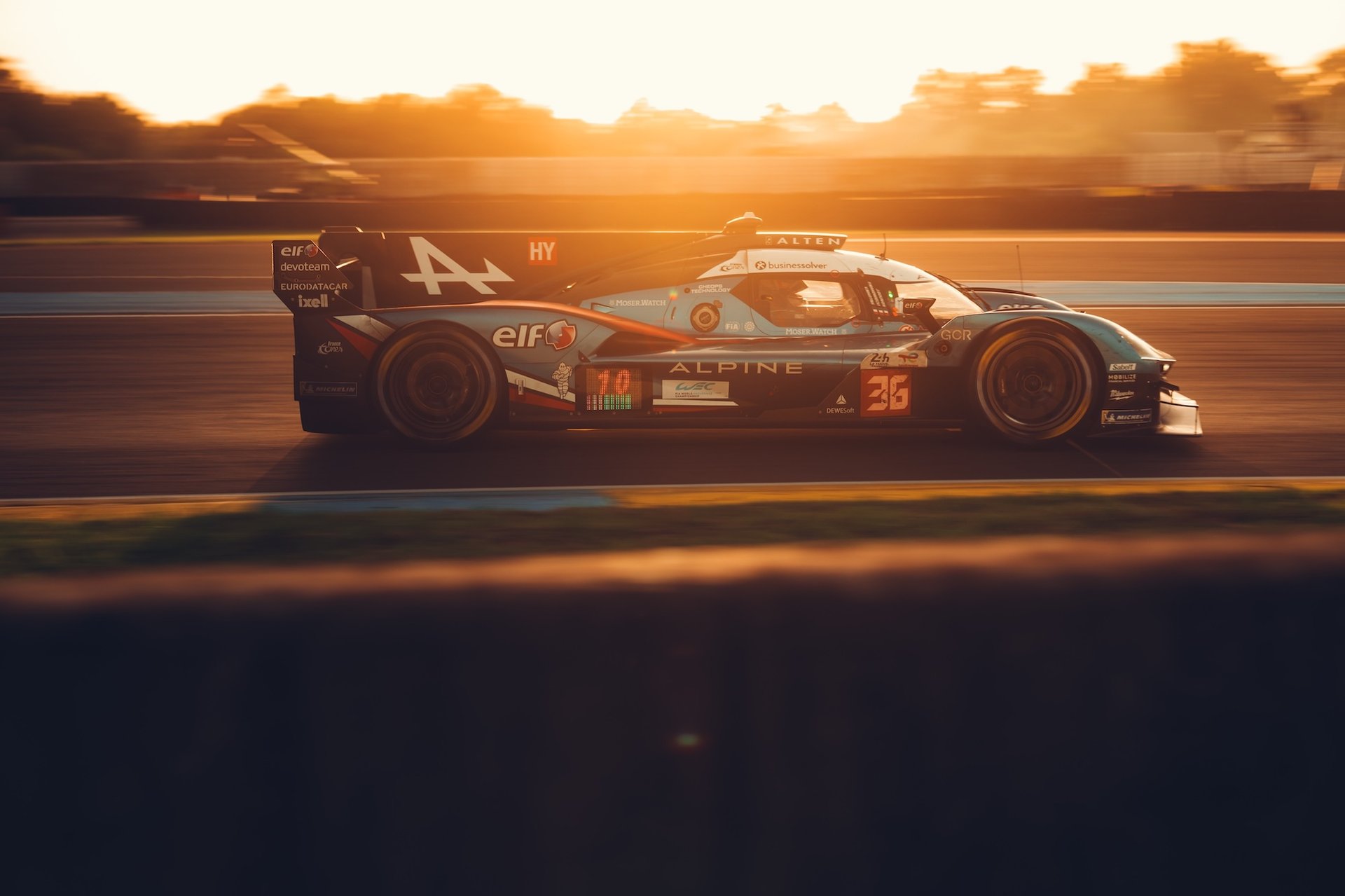
That may be one of the most important lessons of this edition. In its early seasons, the A424 had often looked like a project still searching for maturity. At Le Mans 2026, even when compromised, it did not collapse. It absorbed the blows. It adapted. It allowed its drivers to hold on to the finish. The night did not turn Alpine into a victory contender, but it did not erase it either.
After sixteen hours of racing, both A424s were still among the solid cars. The #35 was in the fight for the top six, while the #36 remained in a position from which it could still bring home an overall result. The podium was slipping away, but sporting honour remained intact.
Ahead, Toyota lets its experience speak
While Alpine stabilised its race, victory was being decided elsewhere, in a strategic intensity that gave this 2026 edition its shape. Toyota, starting further back after a disappointing Hyperpole, returned in the most typically Le Mans way: patience, execution, lucidity. The #7 GR010 Hybrid of Mike Conway, Kamui Kobayashi and Nyck de Vries did not win because it dominated every moment. It won because it was present when the race opened up.
BMW, with the #20, pushed all the way. Cadillac, long a threat, confirmed that its prototype had the speed to win, even if race setbacks and penalties prevented it from closing the deal. Ferrari, the recent triple benchmark in the Sarthe, salvaged fifth place with the #51, but without recovering the grip it had enjoyed in previous years.
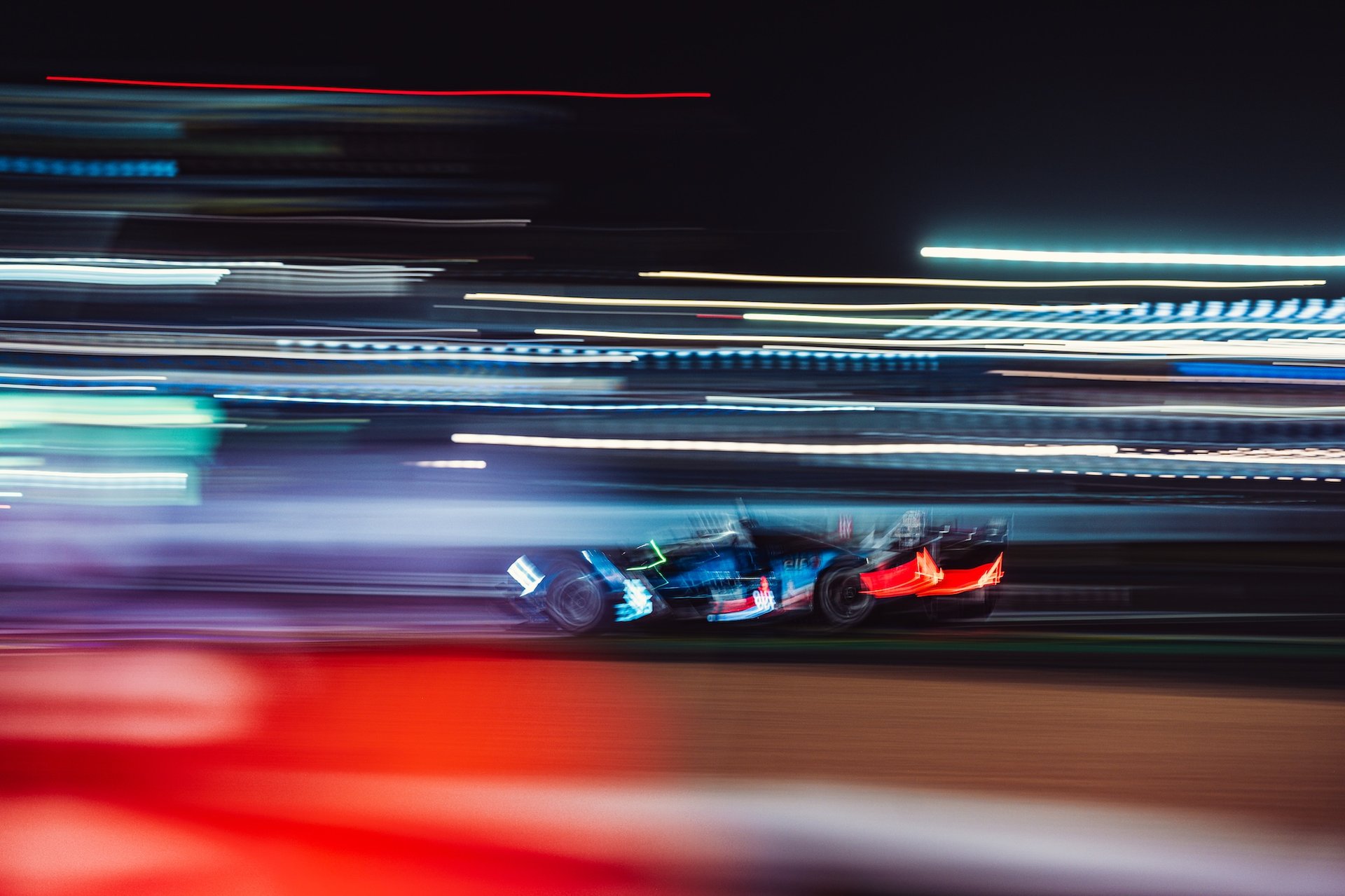
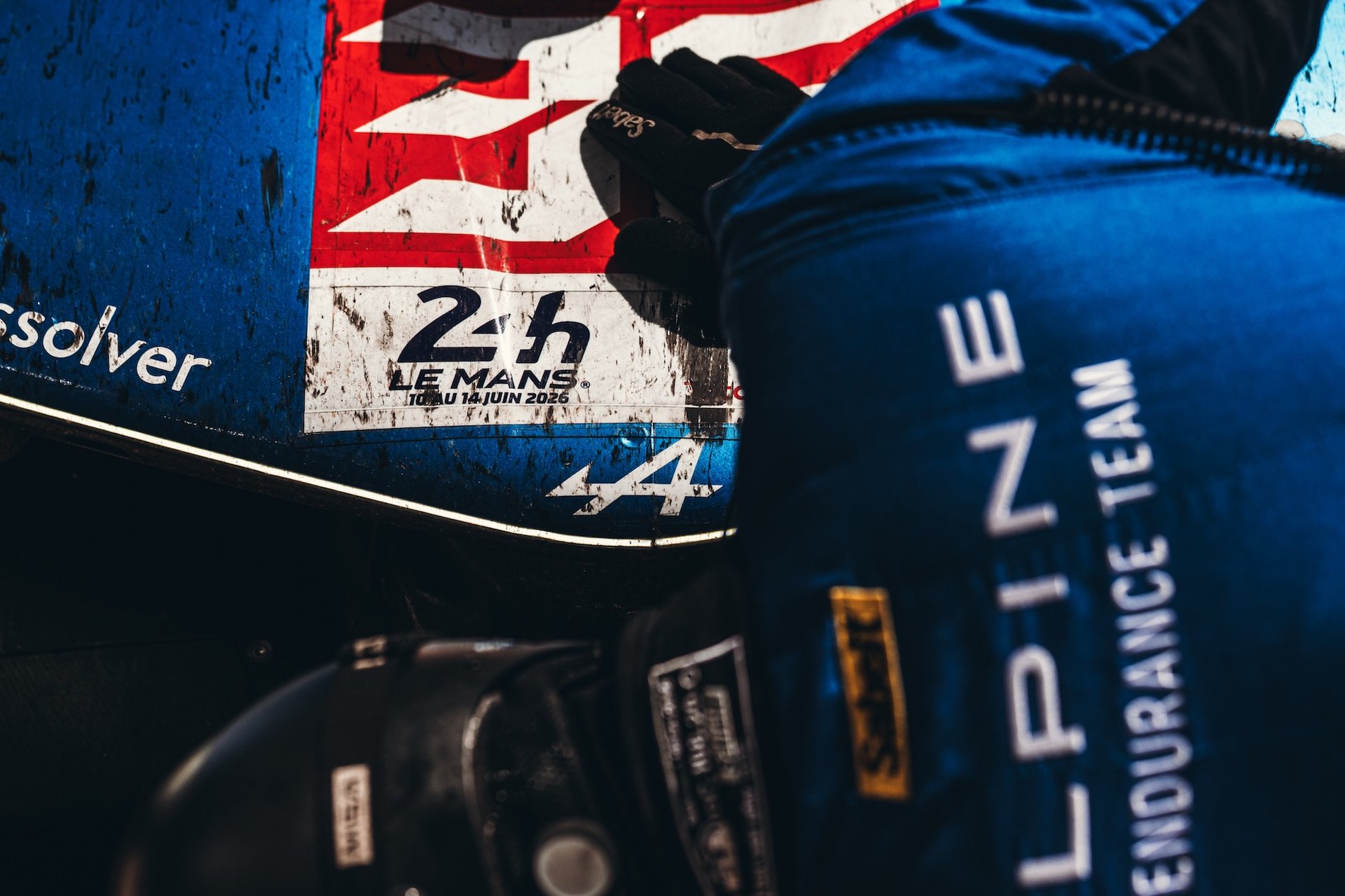
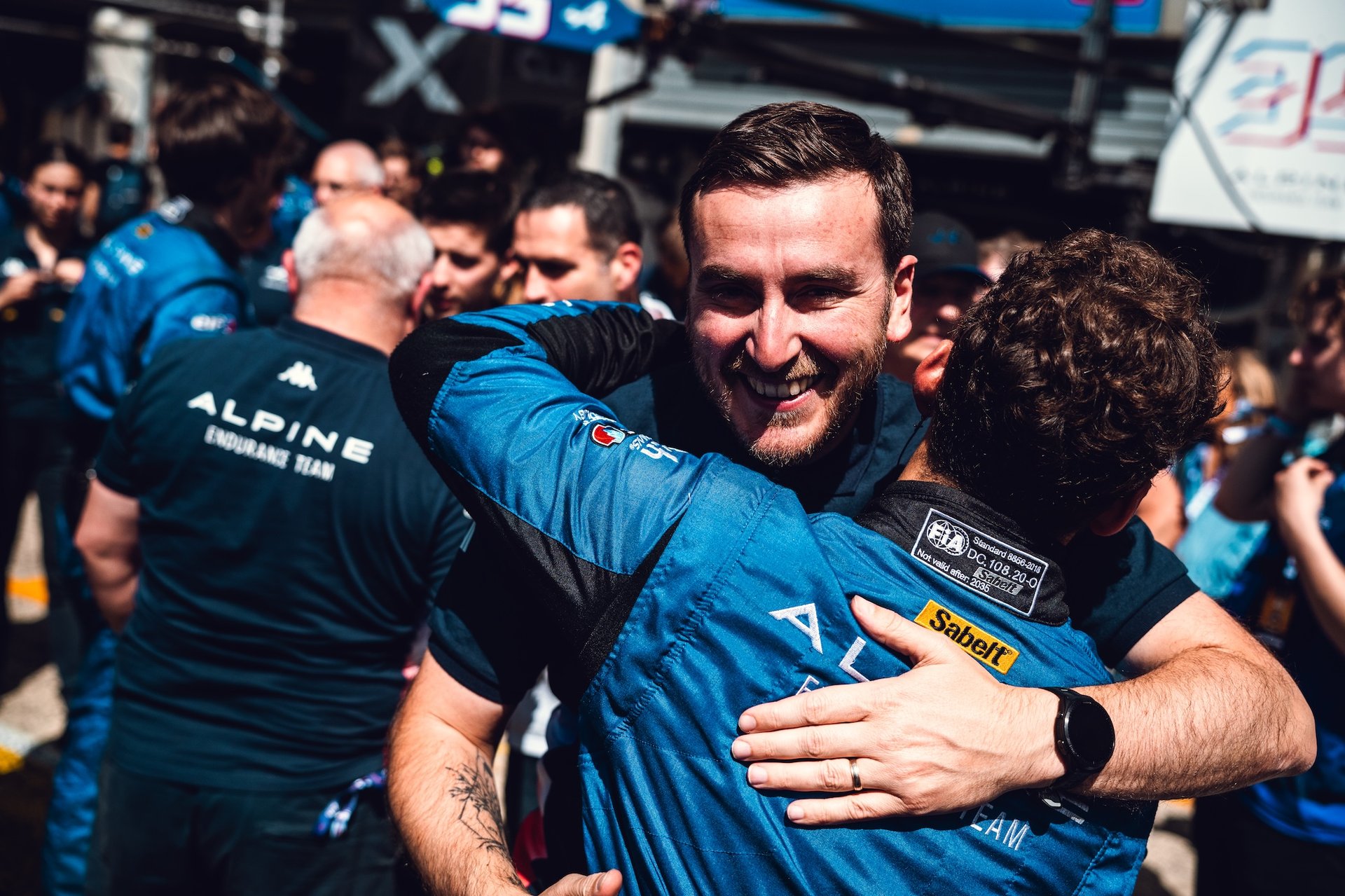
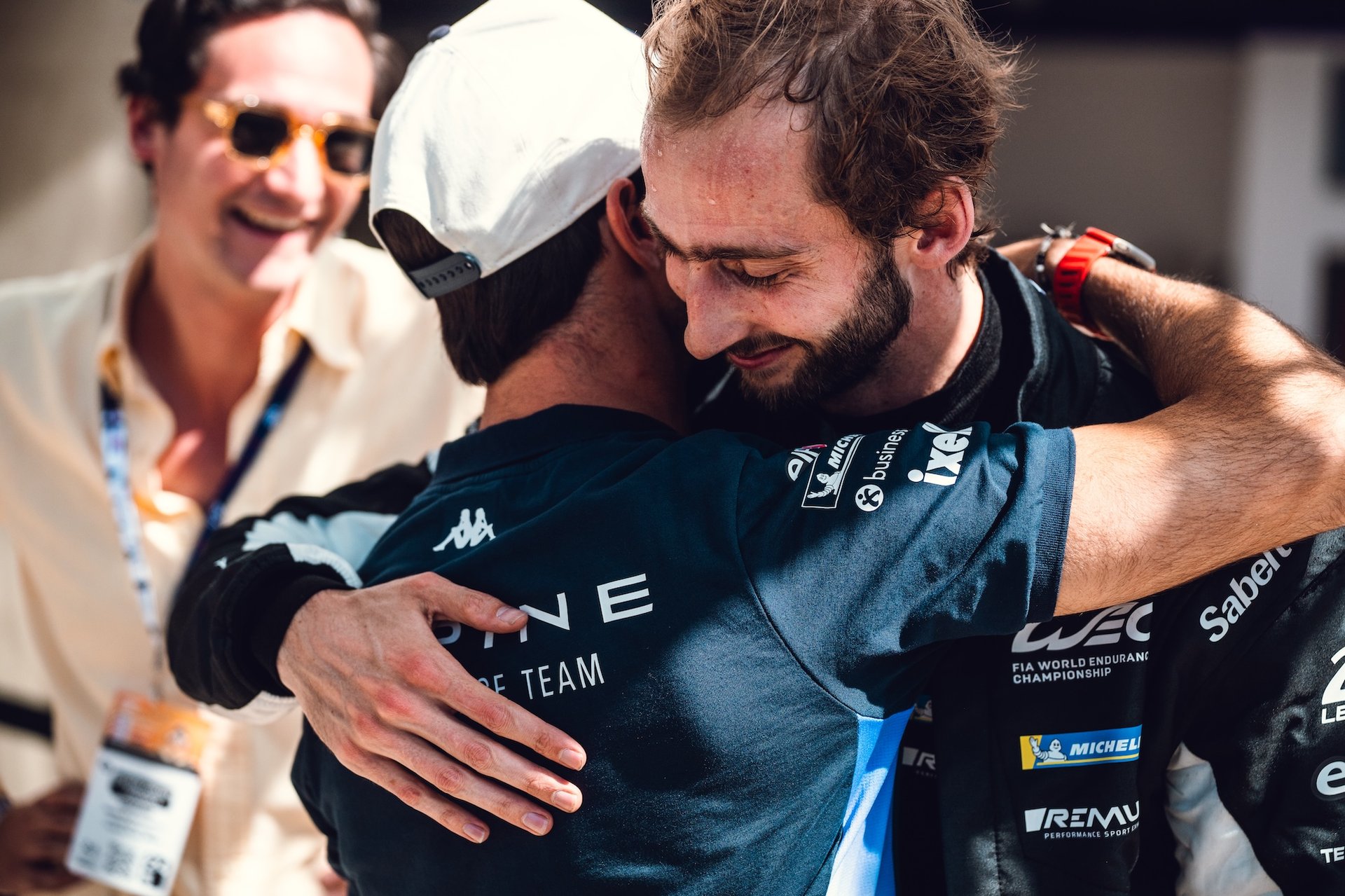
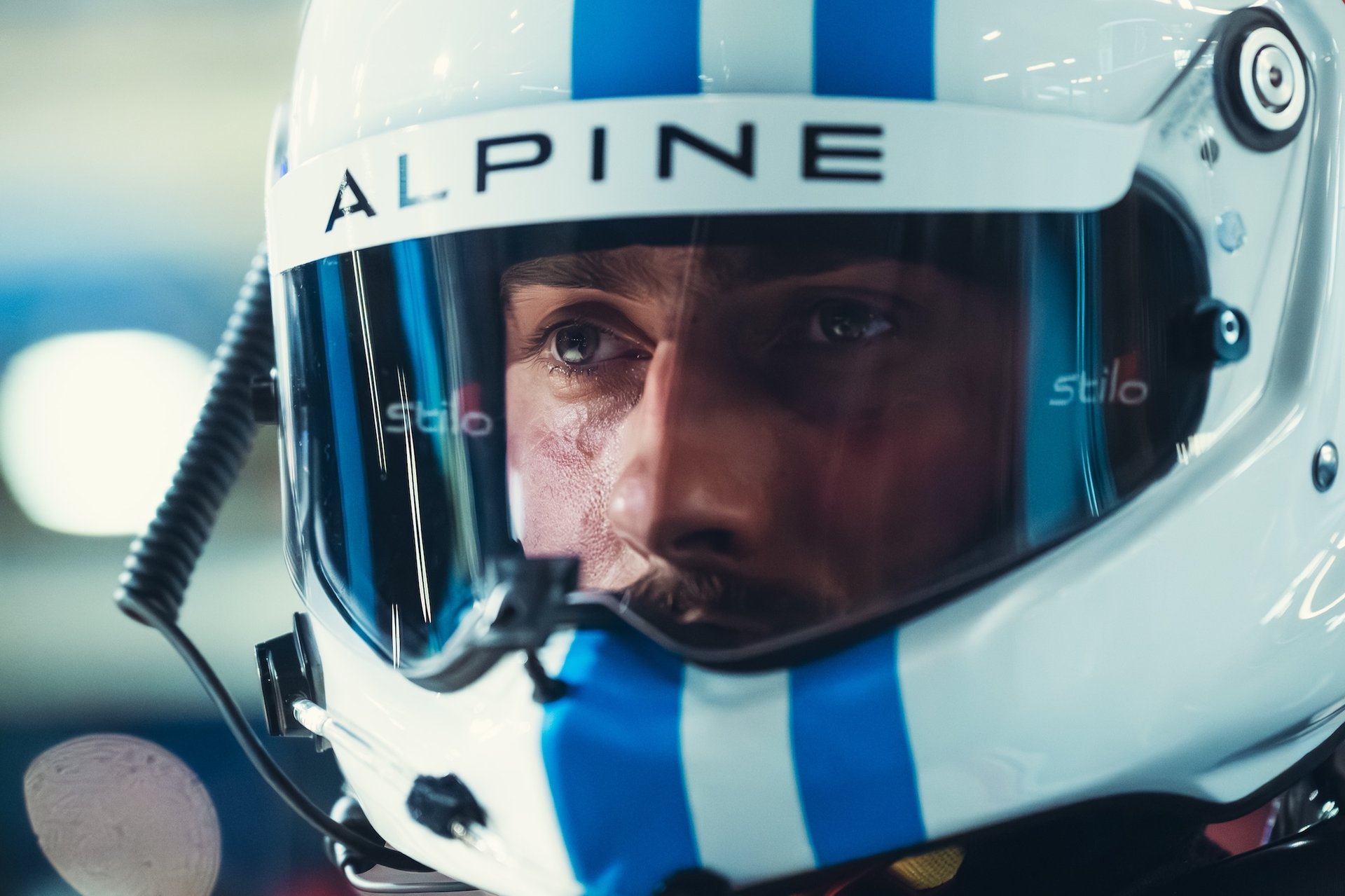
That is the context in which the #35’s sixth place must be read. Alpine did not lose to ordinary cars. It finished behind Toyota, BMW, Cadillac and Ferrari in an edition where the level of execution required to fight for the podium was almost merciless. The difference between a respectable top six and a place on the rostrum is not only found in a fastest lap. It lies in the ability to repeat the right lap at the right time, on the right tyre set, behind the right safety car, without a forced stop, without a shortened stint, without traffic badly managed.
Le Mans 2026 rewarded that cold science. Alpine had part of it. Not yet the whole formula.
A final hour without a miracle
In the final hours, the race tightened without truly swinging Alpine’s way. Up front, Toyota, BMW and Cadillac fought for the major positions with surgical precision. Victory was decided by tiny gaps after twenty-four hours of effort: Toyota #7 won after 381 laps, BMW #20 finished 10.913 seconds behind, Toyota #8 at 20.417 seconds and Cadillac #12 at 32.381 seconds. An unbreathable final hour for the leaders, but a more contained one for Alpine, whose main task was to secure what the night had left it.
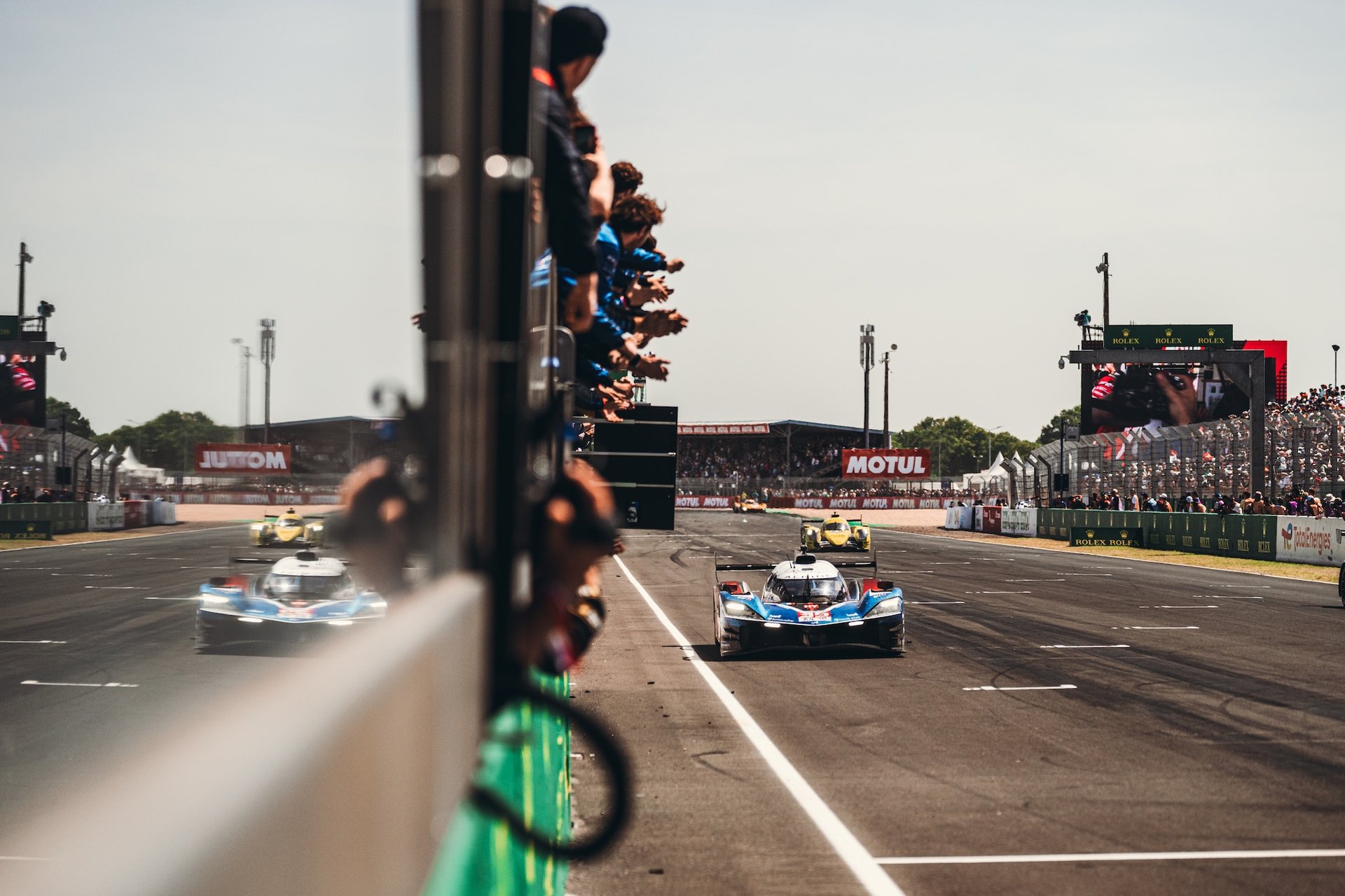
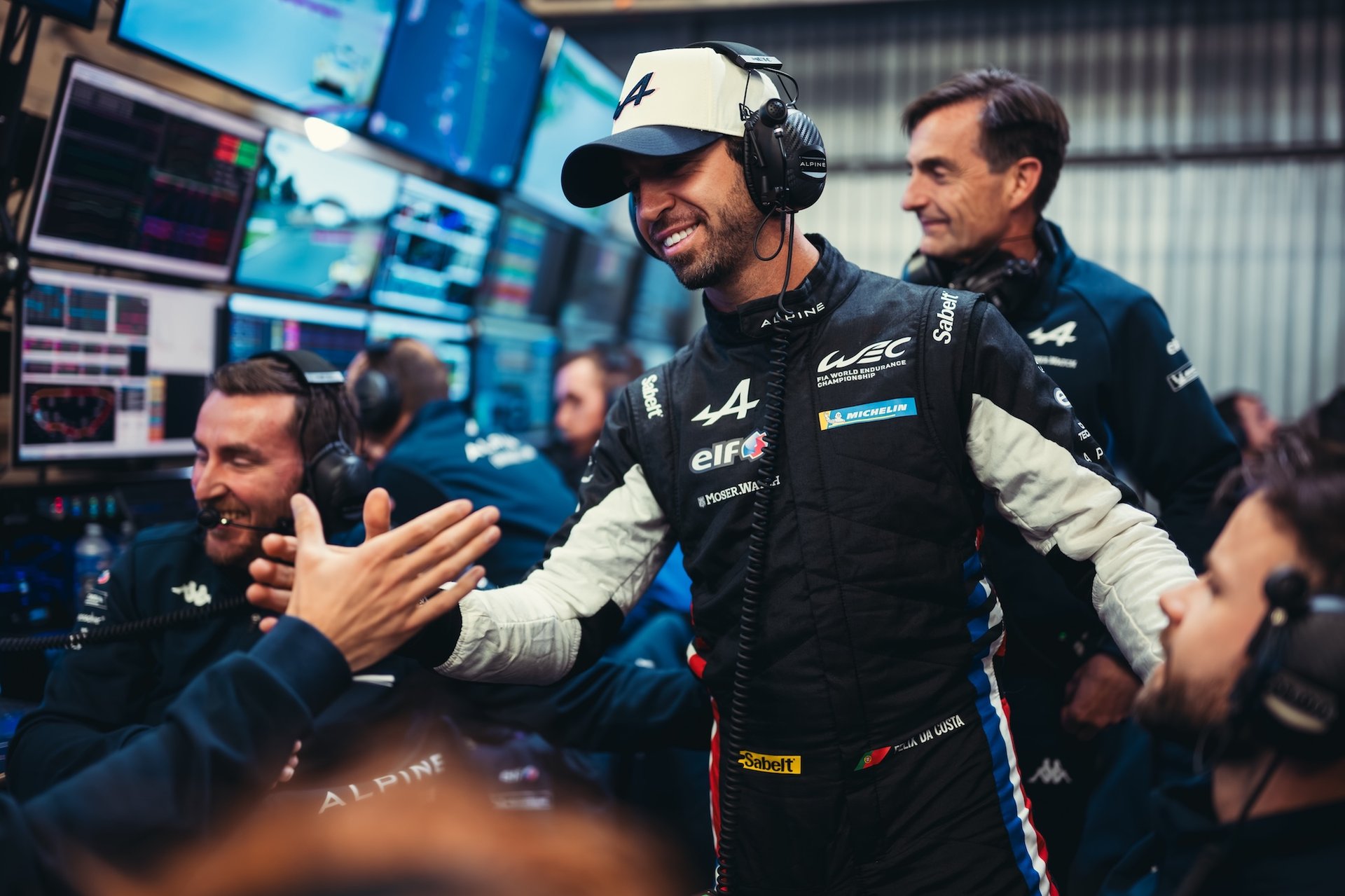
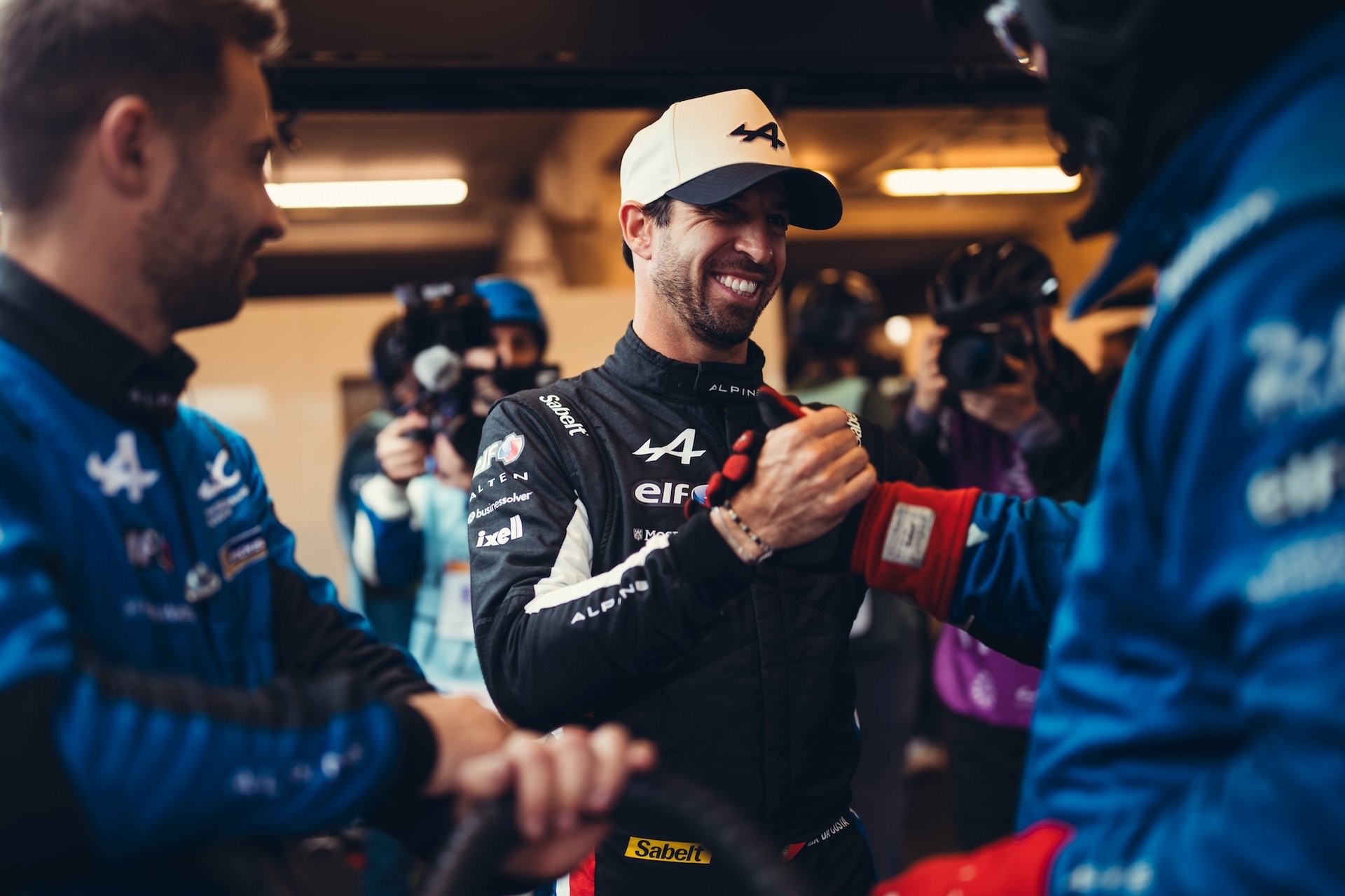
The #35 crossed the line sixth, 2 min 30.205 sec behind the winner. Same lap as Toyota. Same total distance. But not the same race.
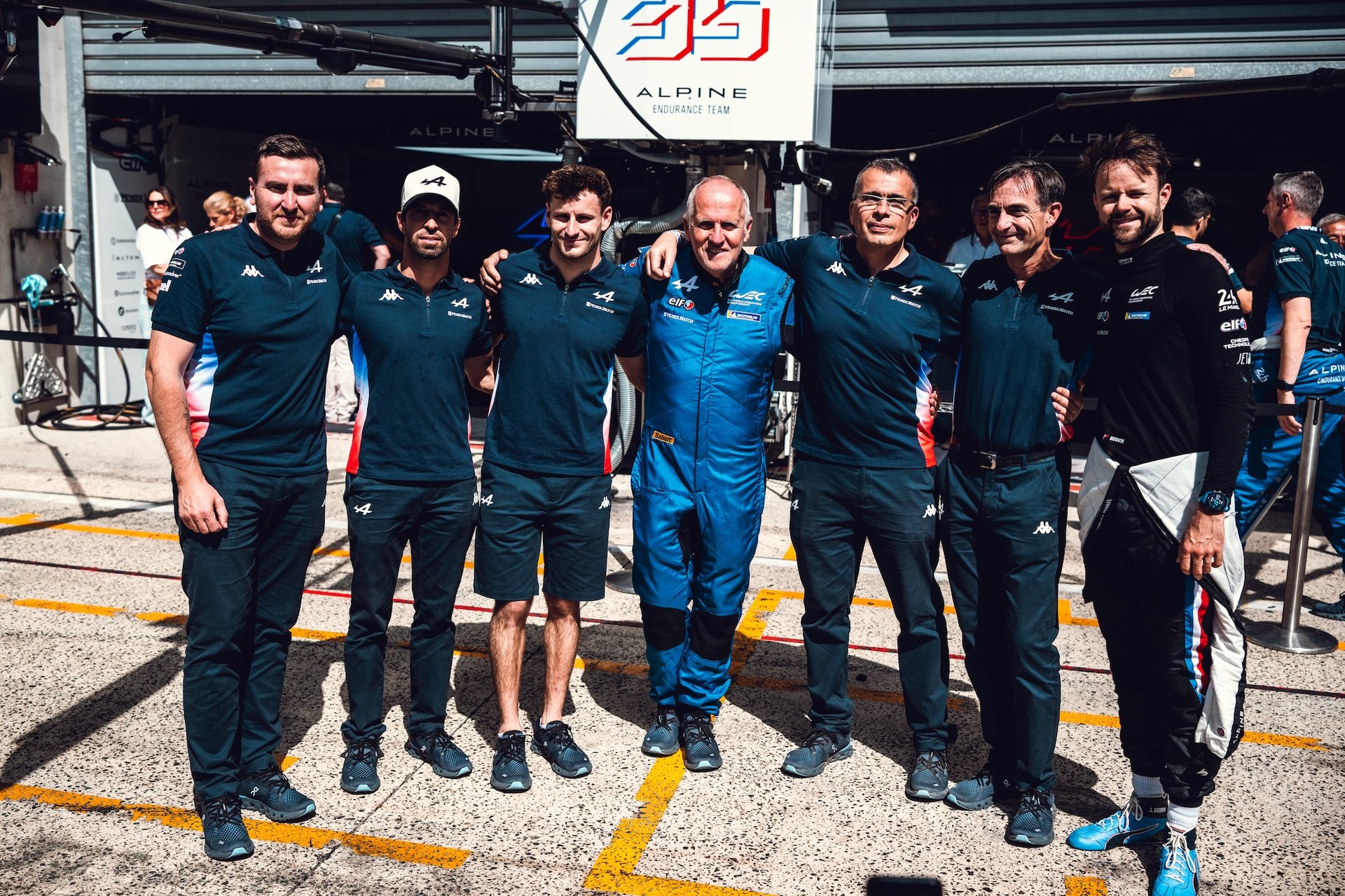
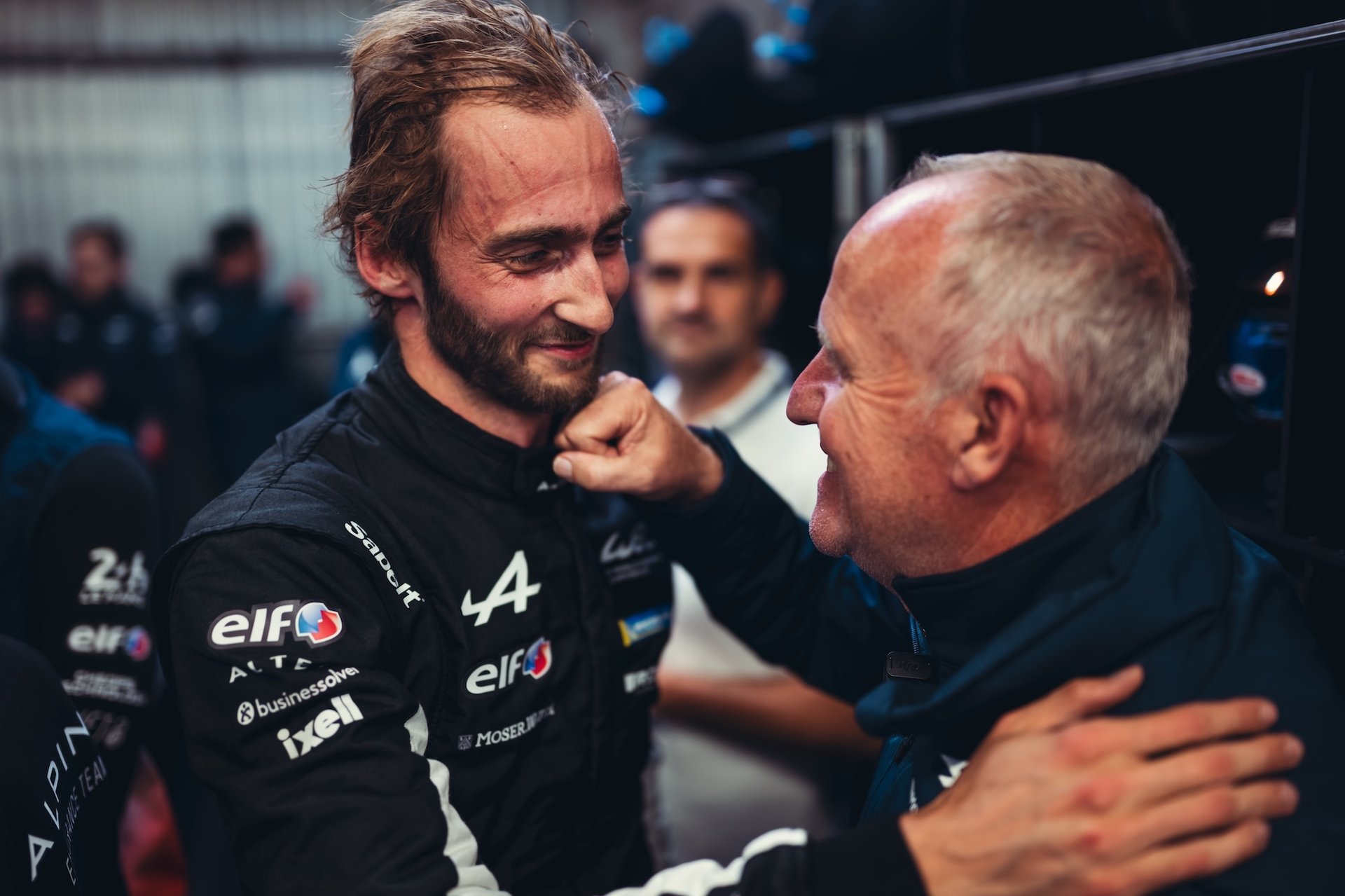
That figure says a lot. Being on the same lap as the winner at Le Mans remains a mark of strength. But in the Hypercar era, where prototypes can run for twenty-four hours with impressive rhythm density, it is no longer enough to claim you were fighting for victory. The #35 also finished just 7.782 seconds behind the fifth-placed Ferrari #51. Enough to feed an immediate regret: with a cleaner stint, a less compromised tyre set, a better-timed neutralisation, the top five was within reach.
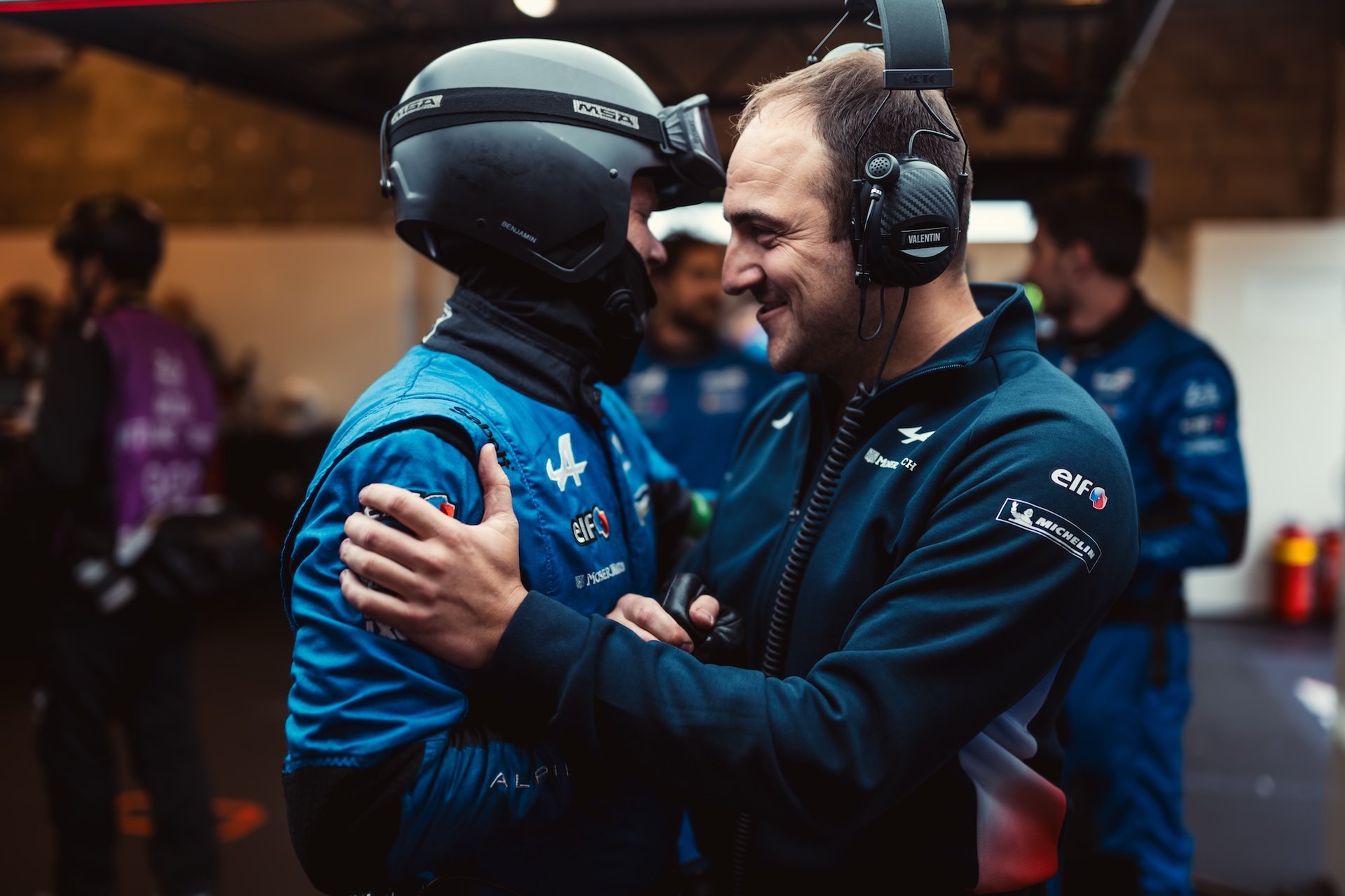
The #36 finished tenth, two laps down. Its result was less striking, but it completed a valuable image for Alpine: two classified cars, two prototypes at the finish, a double top 10 in a dense and brutal race. For a crew including Victor Martins, still learning endurance racing at the highest level, the experience carries a value beyond the raw classification.
The truth in the lap times
The fastest laps help refine the analysis. The Toyota #8 set the Hypercar benchmark in the race with a 3 min 25.041 sec. The winning Toyota #7 recorded 3 min 25.155 sec, the Cadillac #12 3 min 25.369 sec and the BMW #20 3 min 25.607 sec. The Alpine #35 posted a best of 3 min 26.243 sec, with the #36 on 3 min 26.399 sec.
The gap is not huge. But it is enough.
Over one lap, the #35 was a little more than a second off the best Toyota and less than a tenth behind the Ferrari #51, credited with a 3 min 26.154 sec. That places Alpine in a very clear zone: at the level of the second leading group, close to Ferrari, capable of beating or containing several major rivals, but slightly behind the quartet that truly fought for victory.
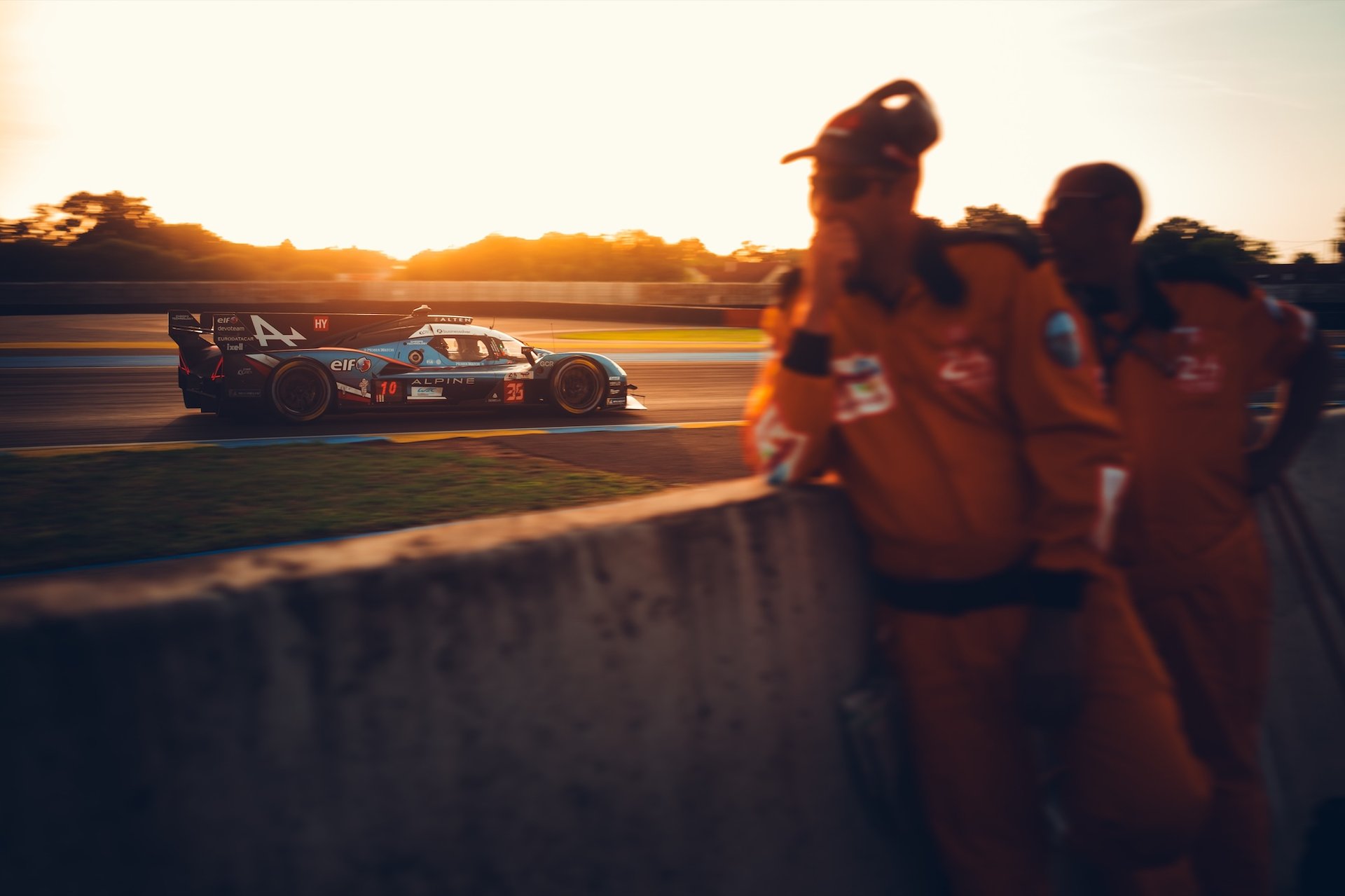
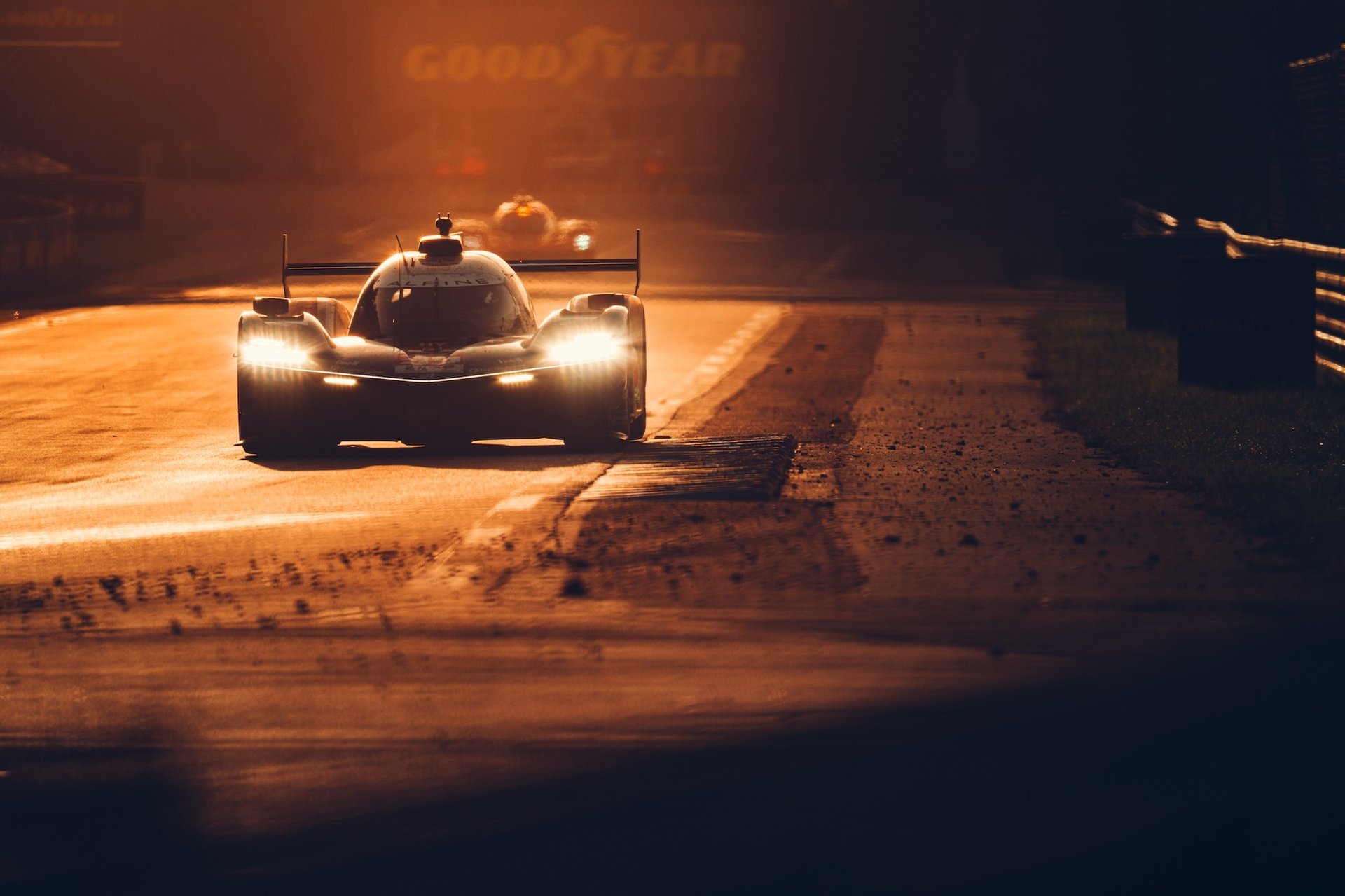
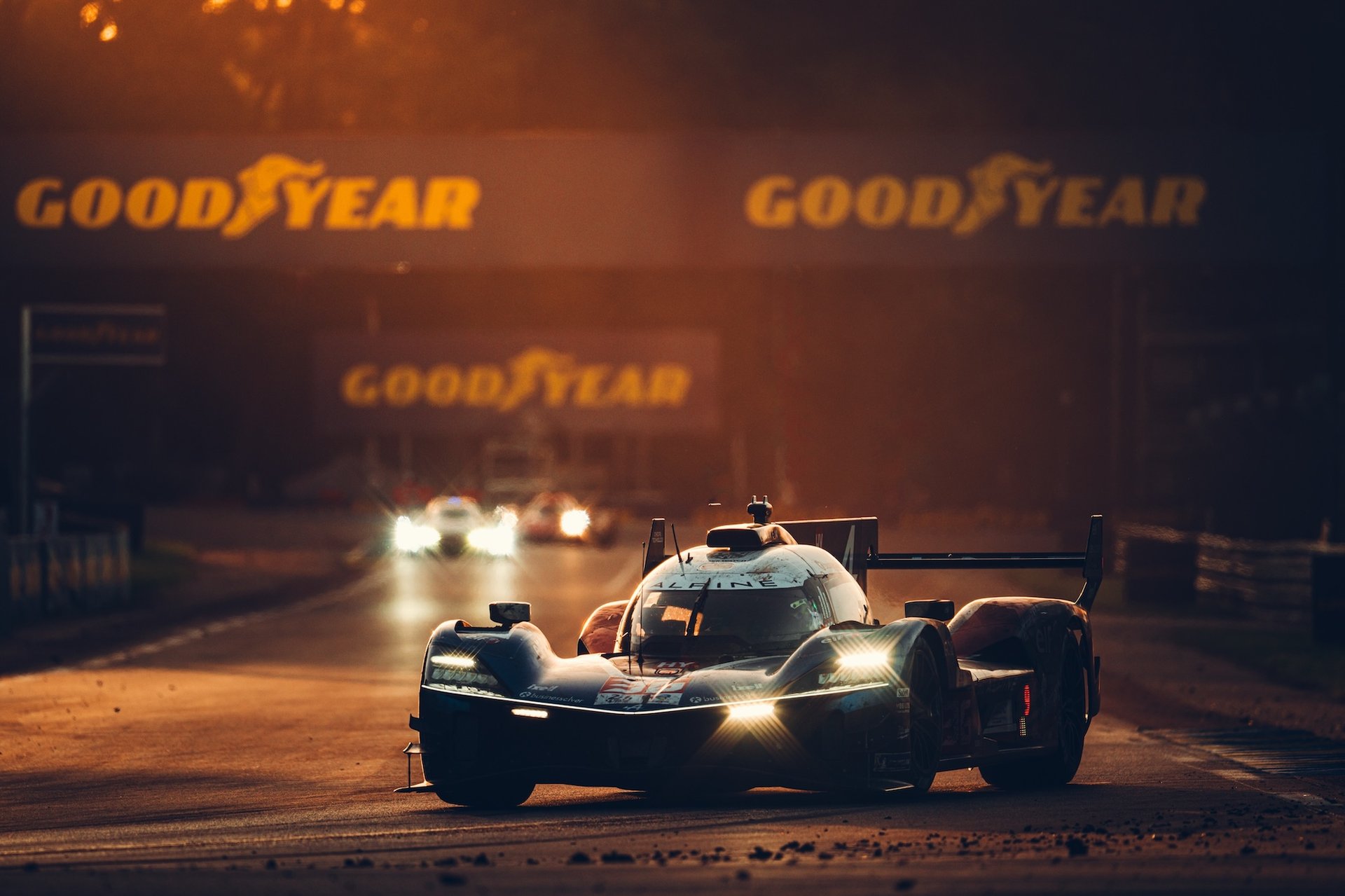
The most interesting point is not just the absolute gap. It is the contrast with qualifying. In Hyperpole, the A424 #35 could reach the 3 min 23 sec bracket. In the race, over stints and through traffic, it did not quite have the same average authority. That does not mean the car was poorly born or poorly set up. It simply illustrates the gap between a standout performance and a twenty-four-hour performance.
Alpine had the peak. Toyota had the repetition.
The #35, the car of regret
In the Alpine garage, the #35 will probably remain the car of regret. It had the strongest cards: third on the grid, an experienced crew, qualifying speed confirmed on track, and the ability to stay on the same lap as the winners. It finished sixth. Honourable, yes, but honour is not always enough to erase the taste of what might have been.
Ferdinand Habsburg brought stability at the start. Charles Milesi, highly visible over one lap, embodied the programme’s peak speed. António Félix da Costa brought experience and the ability to hold a rhythm under pressure. Together, they delivered a clean race, robust enough to avoid collapse, but not free enough to chase down those ahead, who were giving almost nothing away.
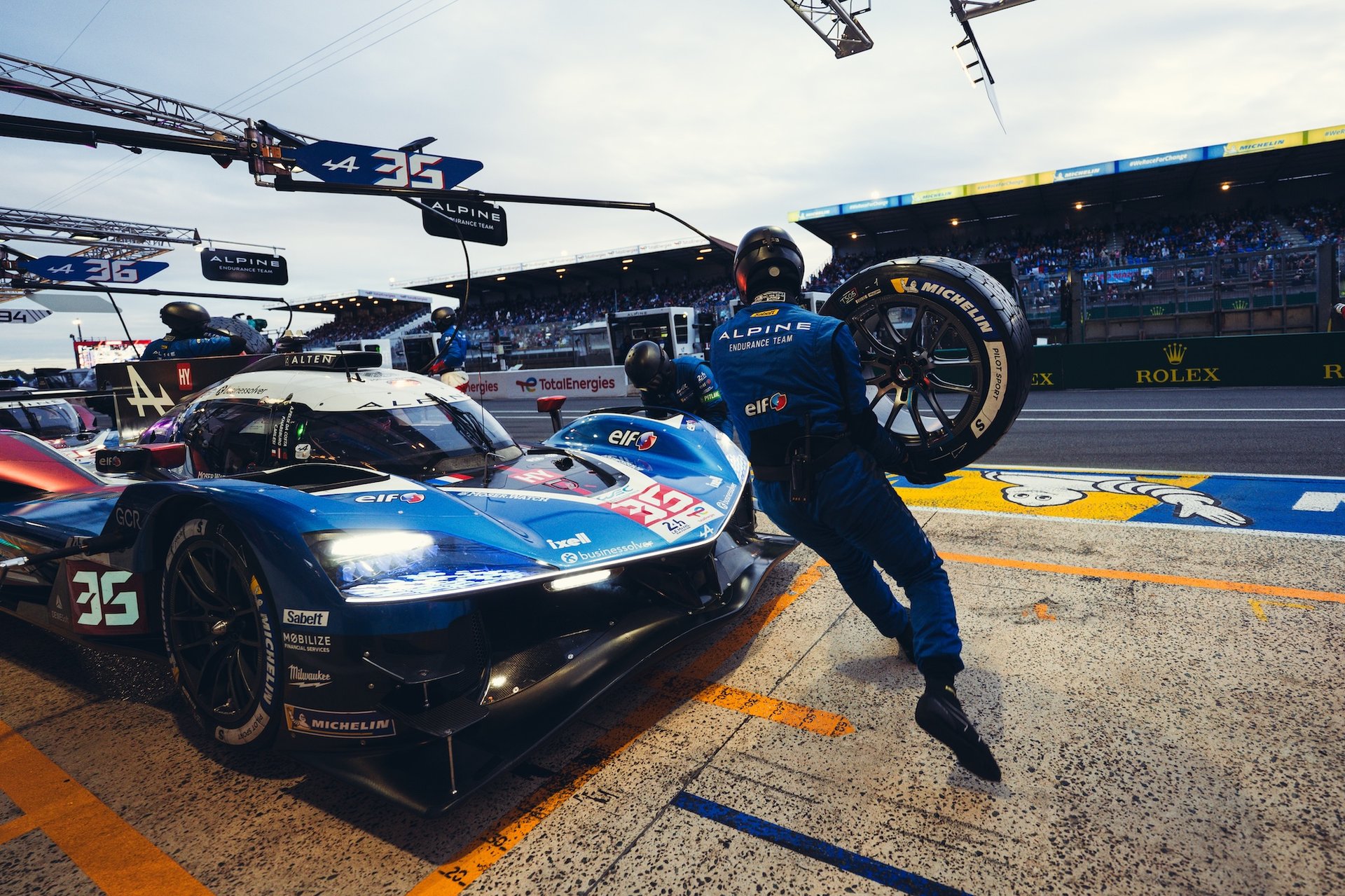
It would be unfair to turn that sixth place into a failure. Alpine finished ahead of AF Corse #83, Aston Martin #007, Cadillac #101, the Peugeots and several cars with strong arguments of their own. But it would be just as false to present it as a complete success. When a car starts third at Le Mans, shines in qualifying and finishes on the same lap as the winner, frustration is legitimate.
The #35 proved that the Alpine A424 could run at the front. It did not prove that it could impose its will.
The #36, a battered but useful race
The #36 experienced a different Le Mans. Less visible, less clear-cut, more wearing. Starting thirteenth, it first had to survive in the heart of the Hypercar pack. Makowiecki brought his experience, Gounon his endurance knowledge, Martins his speed and freshness, but the whole effort was disrupted by disturbed stints, vibrations and a less favourable dynamic.
The #36’s fastest lap, a 3 min 26.399 sec, was nevertheless very close to the #35’s. That detail is revealing. Pure speed was not absent. What was missing was continuity. A twenty-four-hour race is built less on one good lap than on hundreds of laps without unnecessary loss. The #36 too often had to repair its rhythm, pick up a broken thread, restart after an early stop or a less favourable sequence.
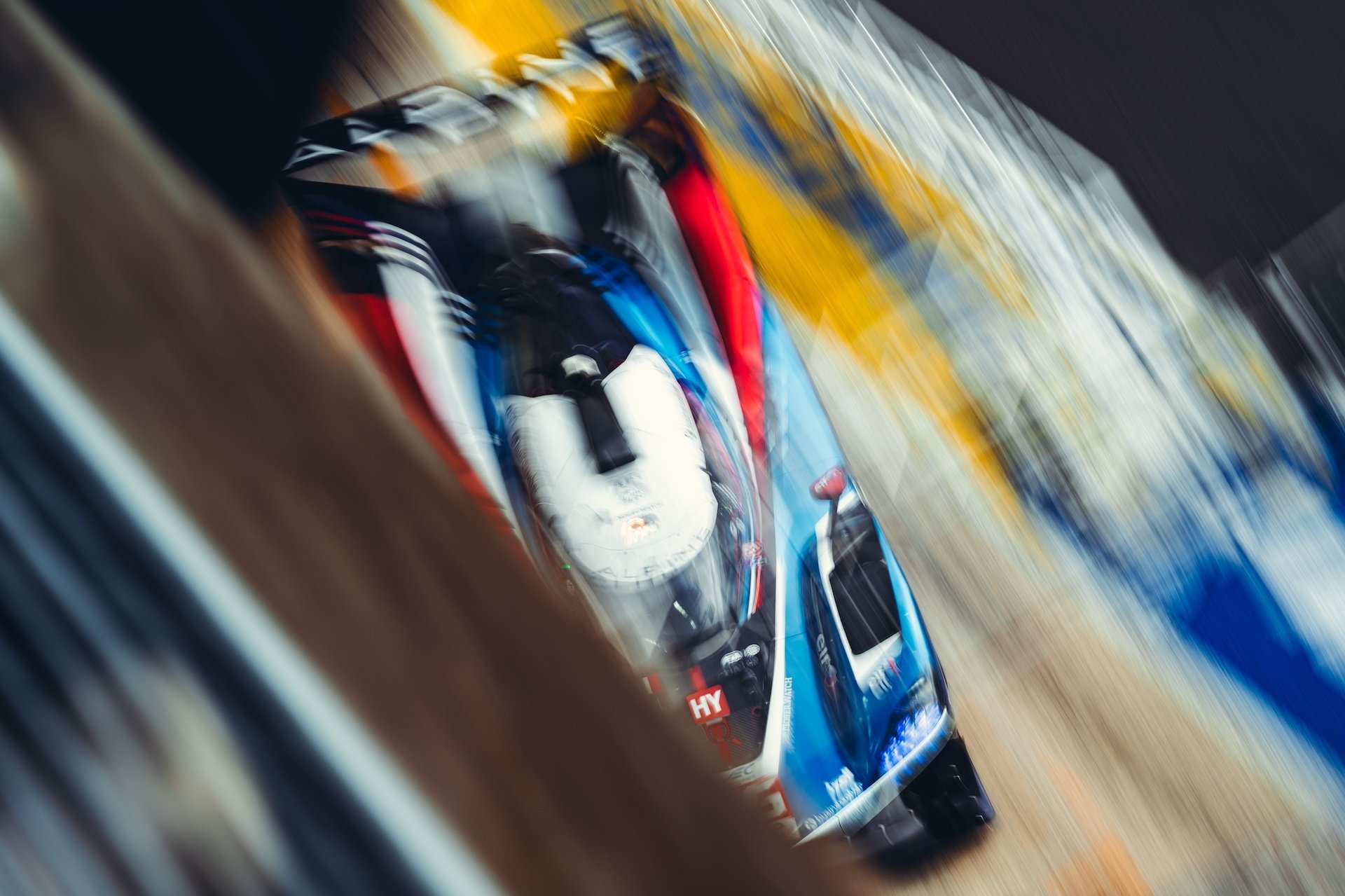
Its tenth place is therefore far from anecdotal. It gives Alpine a complete team result. It also shows that the A424, even in an imperfect race, had reached a level of reliability and coherence higher than in its early days. Le Mans does not always reward beauty of gesture. It rewards those who finish first of all. The #36 finished.
Did the A424 mature too late?
This may be the most delicate question. Did the Alpine A424 show in 2026 what it might have become had the programme continued? It is tempting to answer yes. After a period of learning, the prototype finally seemed to have found a healthier base, more stable tyre exploitation, the ability to play leading roles over one lap and the strength to absorb the distance.
But this progress has a bitter taste: the A424 is truly beginning to hold its rank just as Alpine is already preparing the exit. That may be the hardest thing to accept: this A424 has never looked more credible than when it is time to say goodbye.
The refocus on Formula 1 can be defended in a spreadsheet. Global visibility, budget arbitration, industrial priorities: the arguments exist. But seen from the Sarthe, they feel cold, almost brutal. Sportingly, this exit looks like waste. A human waste first: that of a team that learned, absorbed, corrected and progressed until it knew intimately a car born in difficulty. Then a technical waste: that of a prototype beginning at last to hold its place just as the programme is set to disappear.
Endurance does not forgive impatience. It rewards continuity, stacked seasons, nights spent understanding a tyre, a map, a behaviour in traffic, a brake temperature. Toyota reminded everyone again in 2026: you do not win Le Mans on a flash of brilliance, but on a culture. On years of method, stability and collective memory. That is precisely what Alpine was building.
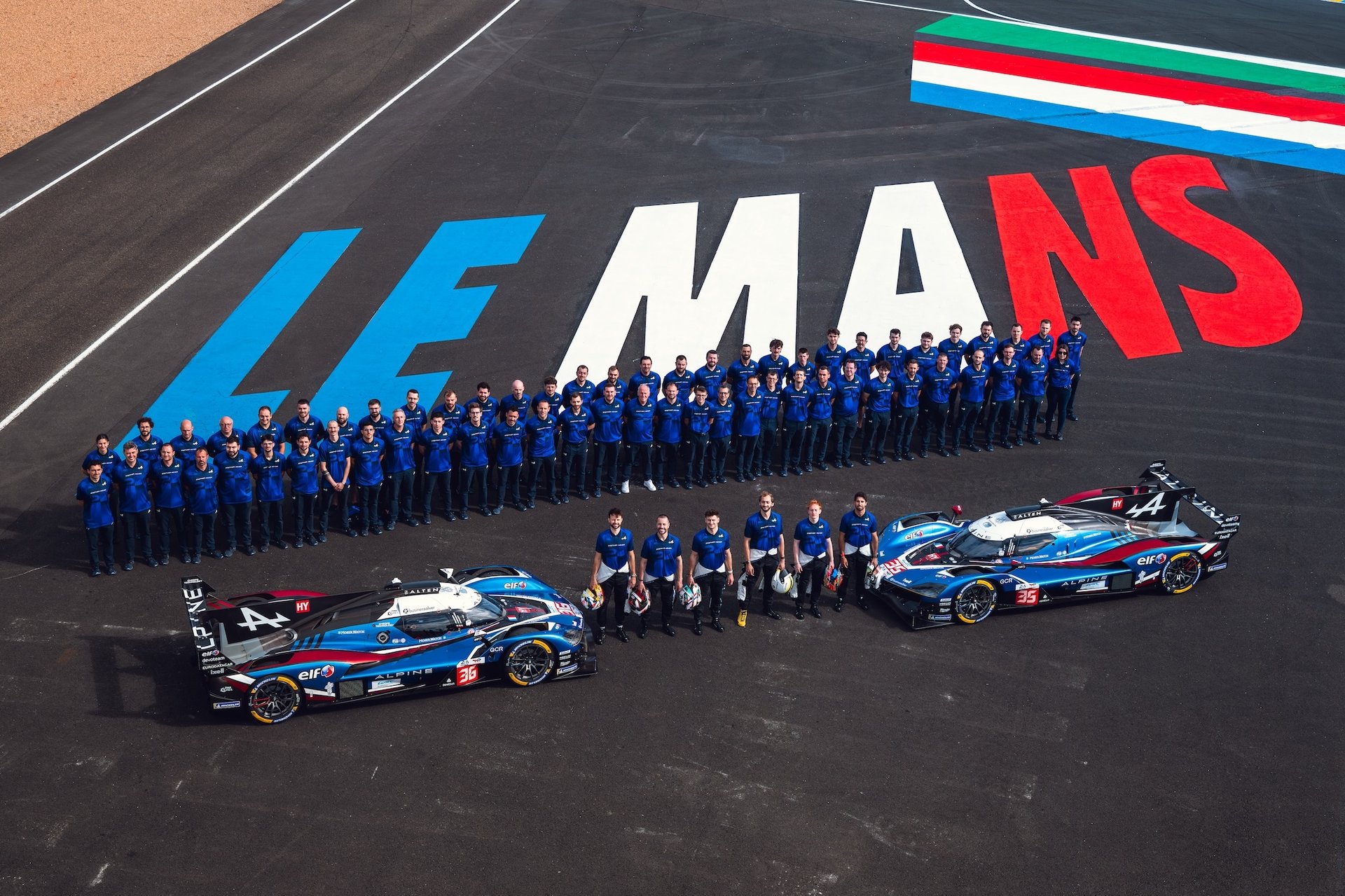
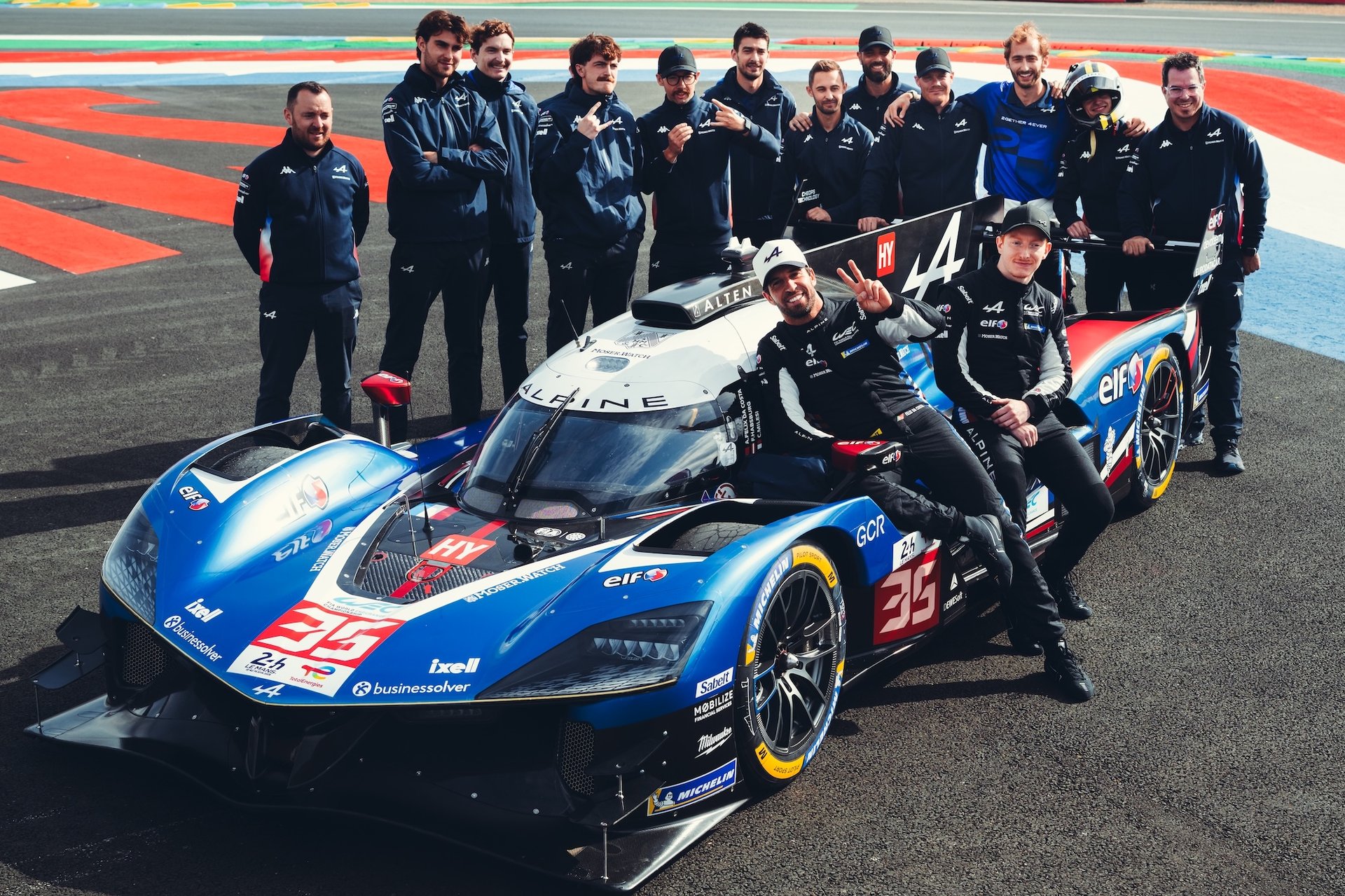
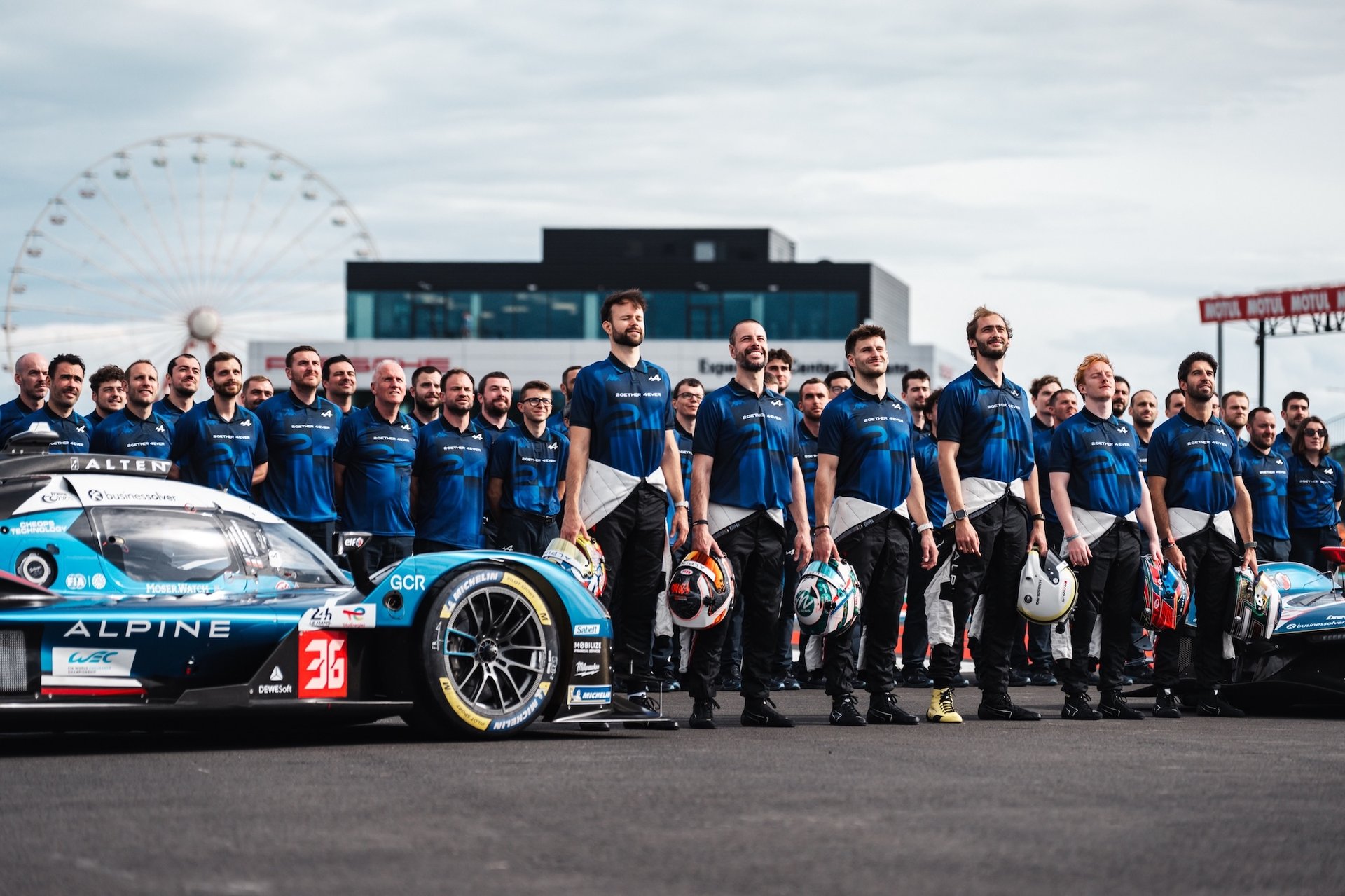
And that is where the decision hurts. Because endurance is undoubtedly where Alpine today appears most legitimate, most readable, most credible in competition. A French marque, a history linked to Le Mans, a Signatech team shaped by this discipline, women and men who speak the language of stints, refuelling, sleepless nights and races that do not lie. None of that can be replaced by a line in a press release.
Alpine therefore leaves the stage with a car that did not win Le Mans, but that had finally stopped chasing its own promise. The A424 did not accomplish everything. It did not overturn Toyota, BMW, Cadillac or Ferrari. But it had put Alpine back in the top class with real substance, in a WEC that has once again become central, dense, followed and coveted by major manufacturers. Leaving now means closing the door just as the team was truly beginning to enter the room.
A farewell without triumph, but not without panache
Alpine Endurance Team’s 2026 24 Hours of Le Mans will not be remembered as a French victory in the Sarthe. It will not join 1978. It will not be told as a great overturning of the hierarchy. But reducing it to sixth and tenth place would miss the point.
Because this race is above all about a team. A real one. A collective that knows Le Mans, knows endurance, and knows how to absorb the pressure of a week as long as a season. Alpine Endurance Team, with Signatech, did not win this edition. But it once again demonstrated its know-how. Its ability to prepare, operate, repair, decide and hold on. The final performance calls for no questioning of the team. Quite the opposite. It reminds us that this structure has exactly what endurance demands: method, calm, experience, and a racing culture.
The #35 had opened a door. After a week of pure speed, after that third place on the grid, it had the right to aim high. It did not turn that promise into a podium, but it never disappeared. Habsburg, Milesi and da Costa held their race to the end, on the same lap as the winning Toyota. Against a Hypercar field of rarely seen density, this is not a consolation prize. It is proof of level.
The #36 had a rougher race. More jagged. Less linear. But it too was there, tenth after 24 hours. And at Le Mans, that matters. Two classified cars, two A424s brought home, a team absorbing setbacks without coming apart: that is precisely what separates true endurance programmes from passing adventures.
Le Mans judged, as it always does. Toyota won because its execution was almost perfect. BMW confirmed its status as a major contender. Cadillac had the speed, but not the complete race. Ferrari salvaged fifth place. Alpine Endurance Team leaves with one certainty: the know-how is there. The experience is there. The legitimacy too.
And that is precisely what makes this ending so hard to swallow. This is not a team fading away for lack of competence. It is not a programme drained of meaning. It is the complete opposite. Alpine leaves Le Mans at the moment when its human and technical foundation appears strongest, when the A424 finally becomes a credible, fast, exploitable Hypercar, capable of existing in the top class without blushing beside the greatest manufacturers.
Sixth and tenth. Not a triumph. Not a rout. It is a straight, clean exit, almost too calm to express everything it leaves behind. Alpine Endurance Team leaves Le Mans with two classified A424s, a race carried through to the end, and this obvious truth: this team still had a great deal left to write.
What they said
Crew #35
António Félix da Costa
“We were obviously hoping for a better result, but we quickly understood that the race was going to be difficult. We had to deal with small issues throughout the event. The team did an excellent job to allow us to stay in the fight for as long as possible.
My team-mates were also flawless. Nobody made the slightest mistake and we delivered a perfect performance with the means we had. Sixth place is probably the best result we could achieve today. Congratulations to Toyota for their victory. It was an emotional week and now it is time to take a little well-deserved rest before returning to competition. There are still great races to contest together this season, starting with Brazil.”
Charles Milesi
“I feel honoured to have been chosen to cross the finish line at the wheel of the Alpine A424. I felt a lot of emotion under the chequered flag, with an immense sense of joy for everything we have achieved together.
I am extremely proud of our performance, because we gave everything from start to finish, without making the slightest mistake, without a penalty or an incident. Despite the issues, the car held on and I felt it still had more to offer with every stint. We showed some very good things this weekend and I think we can be very proud of the way we conducted this race.”
Crew #36
Frédéric Makowiecki
“It was a difficult race, as has already happened to us before. At times we were able to show an interesting level of performance, but in this type of event you have to be strong across the entire 24 Hours of Le Mans and avoid problems. We were lacking a little pace compared with the leaders of the field. On the other hand, I am really proud of the team. I think we have truly taken a step forward compared with previous years, even if we know that the final step is always the hardest to climb.”
Jules Gounon
“I am a little disappointed with our result, because honestly I feel we did not make any mistakes. We ran a clean race, with no penalty and no contact, and yet we only finish tenth, just like last year after a much messier performance on our part.
We were obviously hoping for better, but motorsport is sometimes like that. I want to thank the whole team for the incredible work they did, especially everyone working on car #36 and Philippe Sinault.”
Victor Martins
“It was one of the most incredible experiences of my career. I feel a sense of relief at having finished my first 24 Hours of Le Mans with Alpine. I wanted to experience this race with the whole team and they did remarkable work to stay mobilised, focused and to support us in the car.
It is difficult for us on track, but it is even harder for them. We never gave up and kept attacking until the end. I really enjoyed myself, whether by day, by night, at sunrise or at sunset. A big thank you to every member of the team. The car was fast, but a few issues compromised our chances of fighting for the top five.”
Management
Nicolas Lapierre, Sporting Director, Alpine Endurance Team
“Beyond the raw result, what I will remember most is the quality of the execution from the entire team throughout the week. The engineers, mechanics and drivers ran a clean race and the outcome is positive with two cars in the top ten at the finish. We showed further progress compared with last year, particularly with better top speed.
Given the quality of what the team did, and I really mean the whole operation, from the development teams to the race operation teams, every member genuinely did a very good job. The car was well exploited, but it was simply lacking a little pace.
I am satisfied and proud of their performance, which deserved to be rewarded with a better result, but motorsport is sometimes like that. And that is even more true at the 24 Hours of Le Mans. We will now focus on the end of the FIA World Endurance Championship season. There are still some great races ahead, and that is what we are going to do.”
Yann Paranthoën, Chief Engineer, Alpine Endurance Team
“We experienced a particularly intense 24 Hours of Le Mans, with many situations to manage in order to bring both cars to the finish. The overriding feeling is therefore a mix of satisfaction and frustration. We are happy to see both our cars in the top ten, but there is a little frustration because our targets were higher.
We were clearly lacking pace compared with some competitors throughout the race. Despite that, we are satisfied to have shown that the Alpine A424 was competitive in its 2026 package. We showed it in qualifying; there is still work to do on race pace, but this result represents a strong step forward compared with 2025. I also want to thank all the technical teams working on this project. The mechanics and engineers present at the circuit and in Viry-Châtillon all played an essential role.”
Alpine Endurance Team’s results at the 2026 24 Hours of Le Mans
Hypercar classification — 2026 24 Hours of Le Mans
| Pos. | Team | # | Drivers | Car |
|---|---|---|---|---|
| 1 | Toyota Racing | 7 | M. Conway / K. Kobayashi / N. de Vries | Toyota GR010 Hybrid |
| 2 | BMW M Team WRT | 20 | R. Frijns / R. Rast / S. Linde | BMW M Hybrid V8 |
| 3 | Toyota Racing | 8 | S. Buemi / B. Hartley / R. Hirakawa | Toyota GR010 Hybrid |
| 4 | Cadillac Hertz Team Jota | 12 | L. Delétraz / W. Stevens / N. Nato | Cadillac V-Series.R |
| 5 | Ferrari AF Corse | 51 | A. Pier Guidi / J. Calado / A. Giovinazzi | Ferrari 499P |
| 6 | Alpine Endurance Team | 35 | A. Félix da Costa / C. Milesi / F. Habsburg | Alpine A424 |
| 7 | AF Corse | 83 | Y. Yifei / R. Kubica / P. Hanson | Ferrari 499P |
| 8 | Aston Martin THOR Team | 007 | H. Tincknell / T. Gamble / R. Gunn | Aston Martin Valkyrie |
| 9 | Cadillac WTR | 101 | R. Taylor / J. Taylor / F. Albuquerque | Cadillac V-Series.R |
| 10 | Alpine Endurance Team | 36 | F. Makowiecki / J. Gounon / V. Martins | Alpine A424 |
| 11 | Peugeot TotalEnergies | 94 | L. Duval / M. Jakobsen / T. Pourchaire | Peugeot 9X8 |
| 12 | Peugeot TotalEnergies | 93 | P. Di Resta / S. Vandoorne / N. Cassidy | Peugeot 9X8 |
| 13 | Genesis Magma Racing | 19 | M. Jaminet / P. Chatin / D. Juncadella | Genesis GMR-001 |
| 14 | Aston Martin THOR Team | 009 | A. Riberas / M. Sørensen / R. De Angelis | Aston Martin Valkyrie |
FIA WEC standings after the 2026 24 Hours of Le Mans
FIA World Endurance Championship — Hypercar drivers
| Pos. | Drivers | Points |
|---|---|---|
| 1 | Conway / De Vries / Kobayashi | 75 |
| 6 | Da Costa / Habsburg / Milesi | 28 |
| 17 | Gounon / Makowiecki / Martins | 4 |
FIA World Endurance Championship — Hypercar manufacturers
| Pos. | Manufacturer | Points |
|---|---|---|
| 1 | Toyota | 132 |
| 4 | Alpine | 38 |
Source: Alpine Endurance Team