🇫🇷 Cet article est également disponible en français : Lire en français
Some soundbites are not dropped lightly by a brand boss in front of the British press, right in the middle of the Goodwood Festival of Speed. Philippe Krief has just put one on the table: the future electric Alpine A110 will be better than its petrol predecessor in every area that made the Berlinette such a success. That promise, made to Autocar, lands this Thursday 9 July 2026 alongside the first dynamic run of the A110 FUTURE development mule with Pierre Gasly at the wheel, and a flood of technical details on the architecture that will underpin the third generation of the car.
Gasly at the wheel, the Duke of Richmond as guest of honour
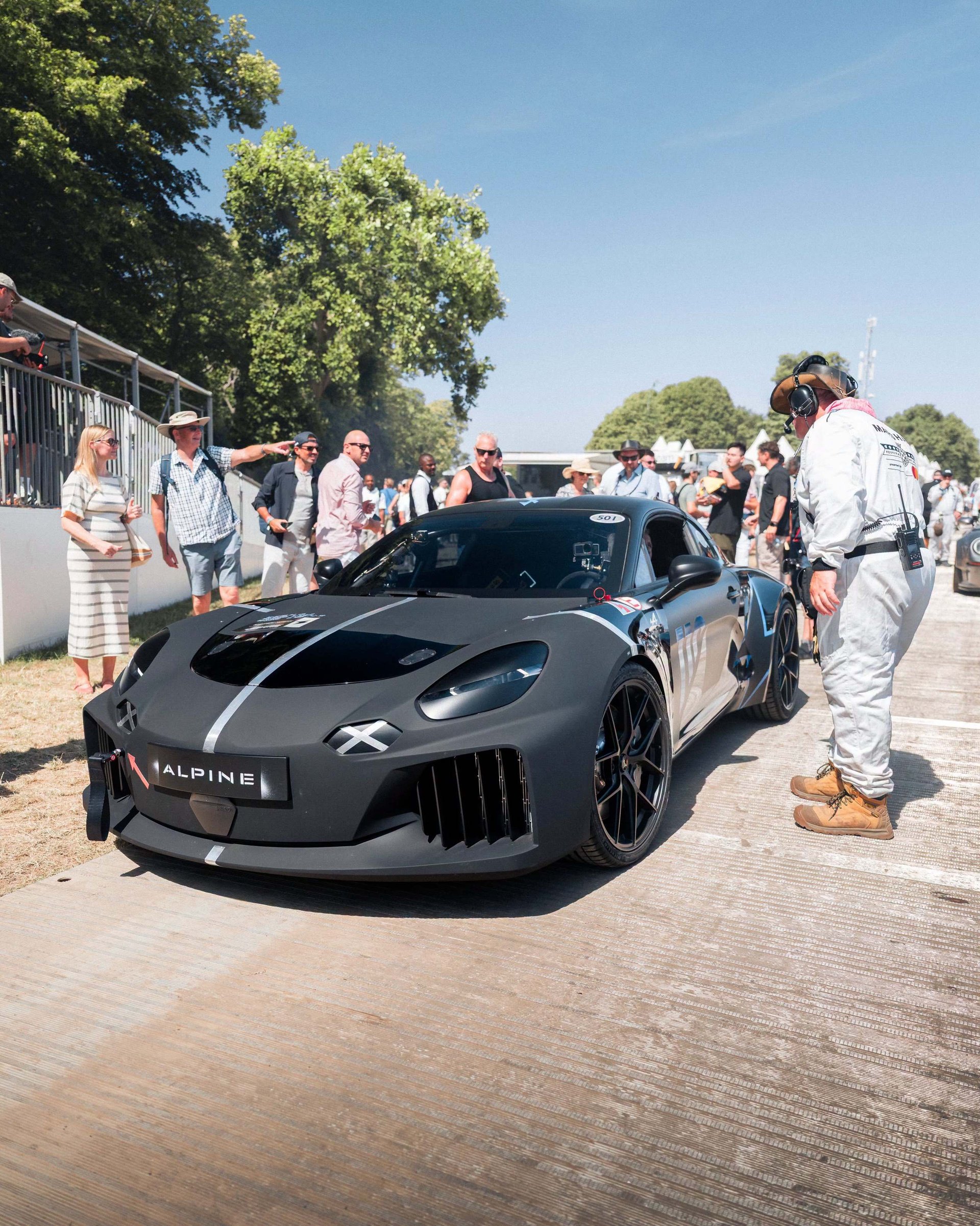
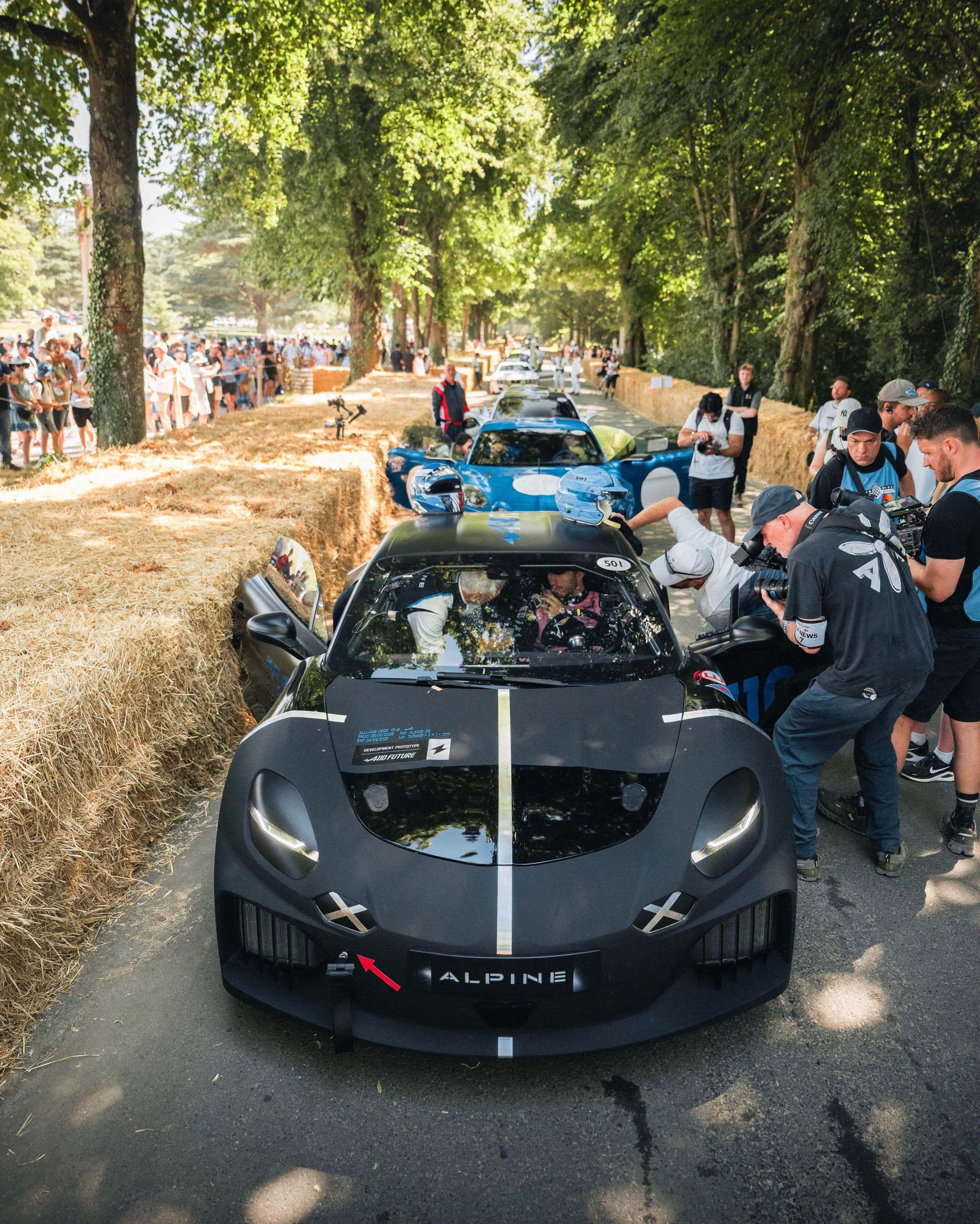
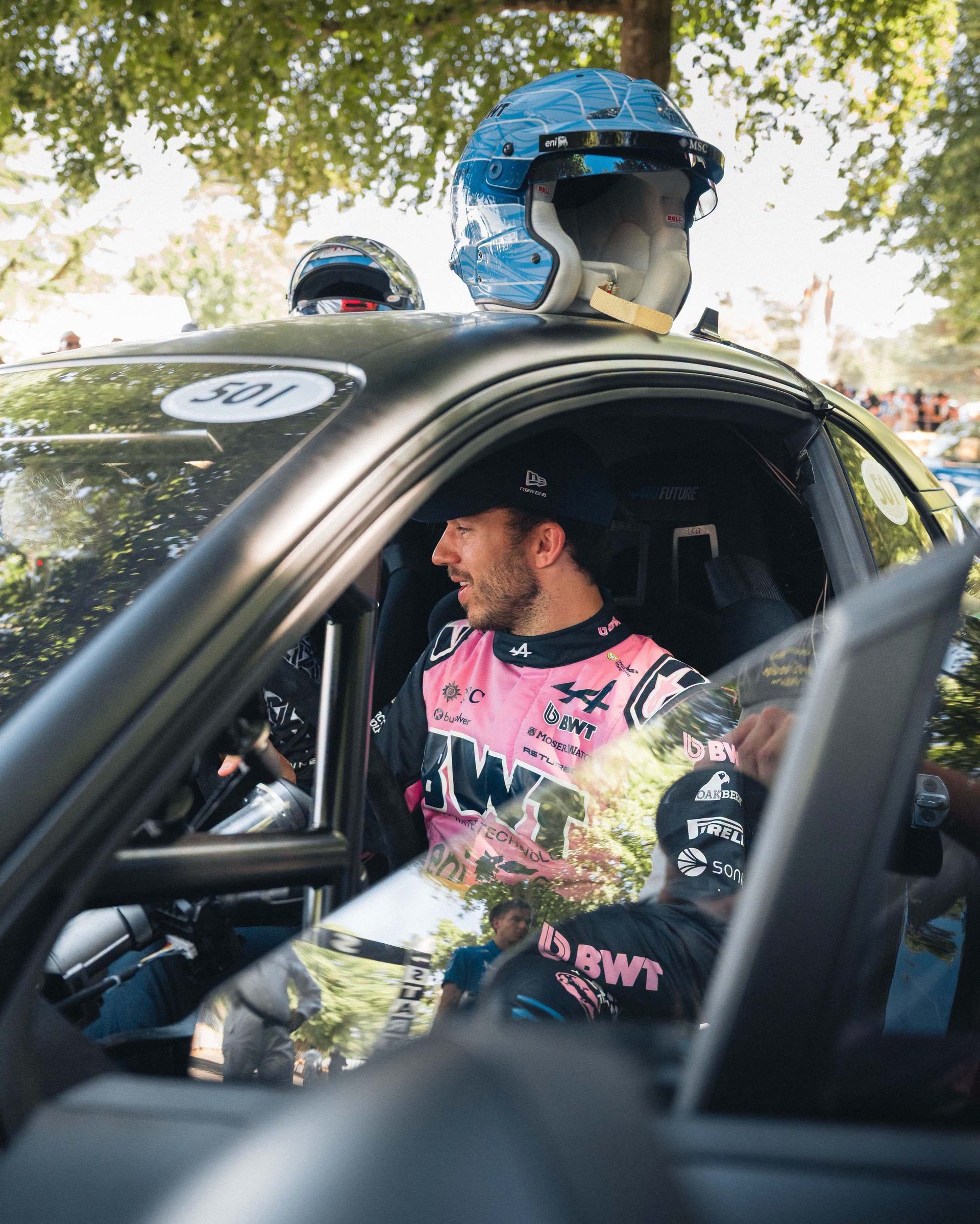
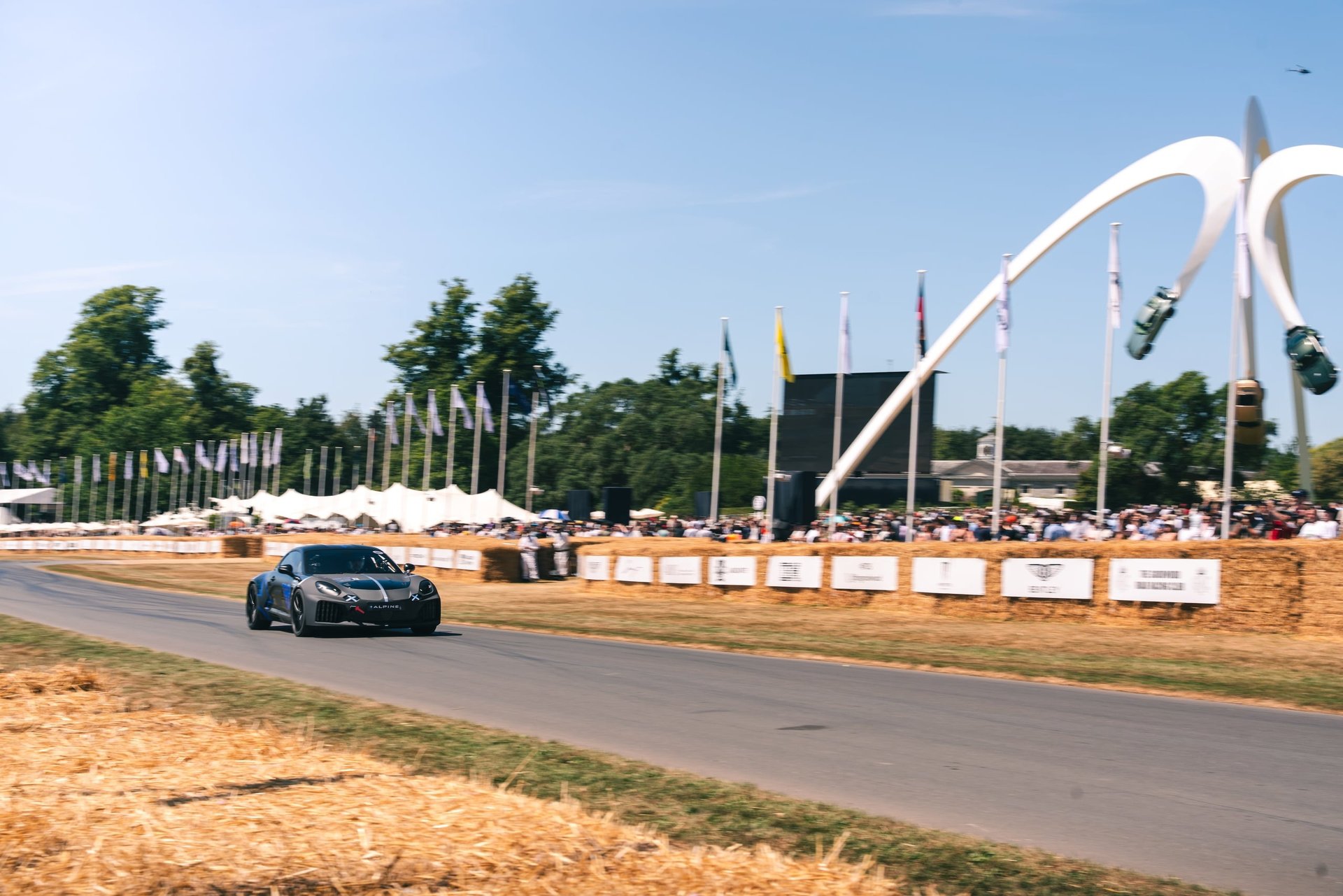
Pierre Gasly, race driver for the BWT Alpine Formula One Team, completed the very first public run of the Alpine A110 FUTURE development mule on 9 July 2026 up the Goodwood hill, with the Duke of Richmond, founder of the Festival of Speed, in the passenger seat. To say the symbolism was carefully staged is an understatement: for this first dynamic appearance, Alpine did not hand the wheel to an anonymous test driver but to its Formula 1 headline act.
At the top of the hill, Gasly summed up the exercise with the enthusiasm the occasion demanded, speaking of his pride at being among the first to represent Alpine’s future on the famous hillclimb. Above all, the French driver hammered home the message the brand has been pushing since the launch of its electric programme: an electric sports car can be “lighter” and “sharper”, and deliver genuine driving pleasure. Not a throwaway line from a Formula 1 driver, and one that speaks directly to the doubts voiced by some purists since the Berlinette’s electrification was announced.
The exercise is as much technical validation as marketing theatre: it is hard to imagine a better sounding board than a Goodwood hillclimb run, filmed and commentated live, to win over an audience of connoisseurs not known for their indulgence.
Alpine’s biggest ever presence at Goodwood
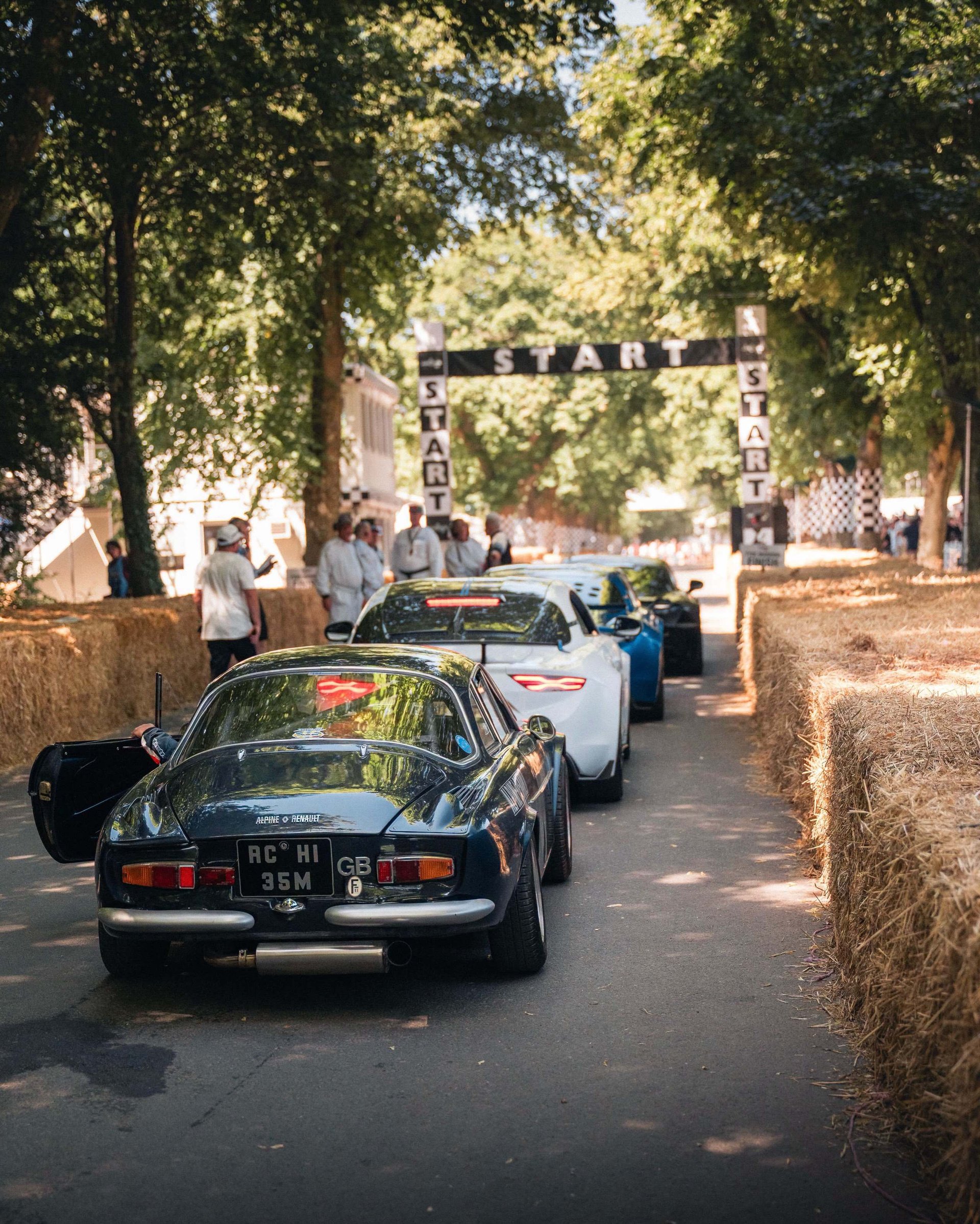
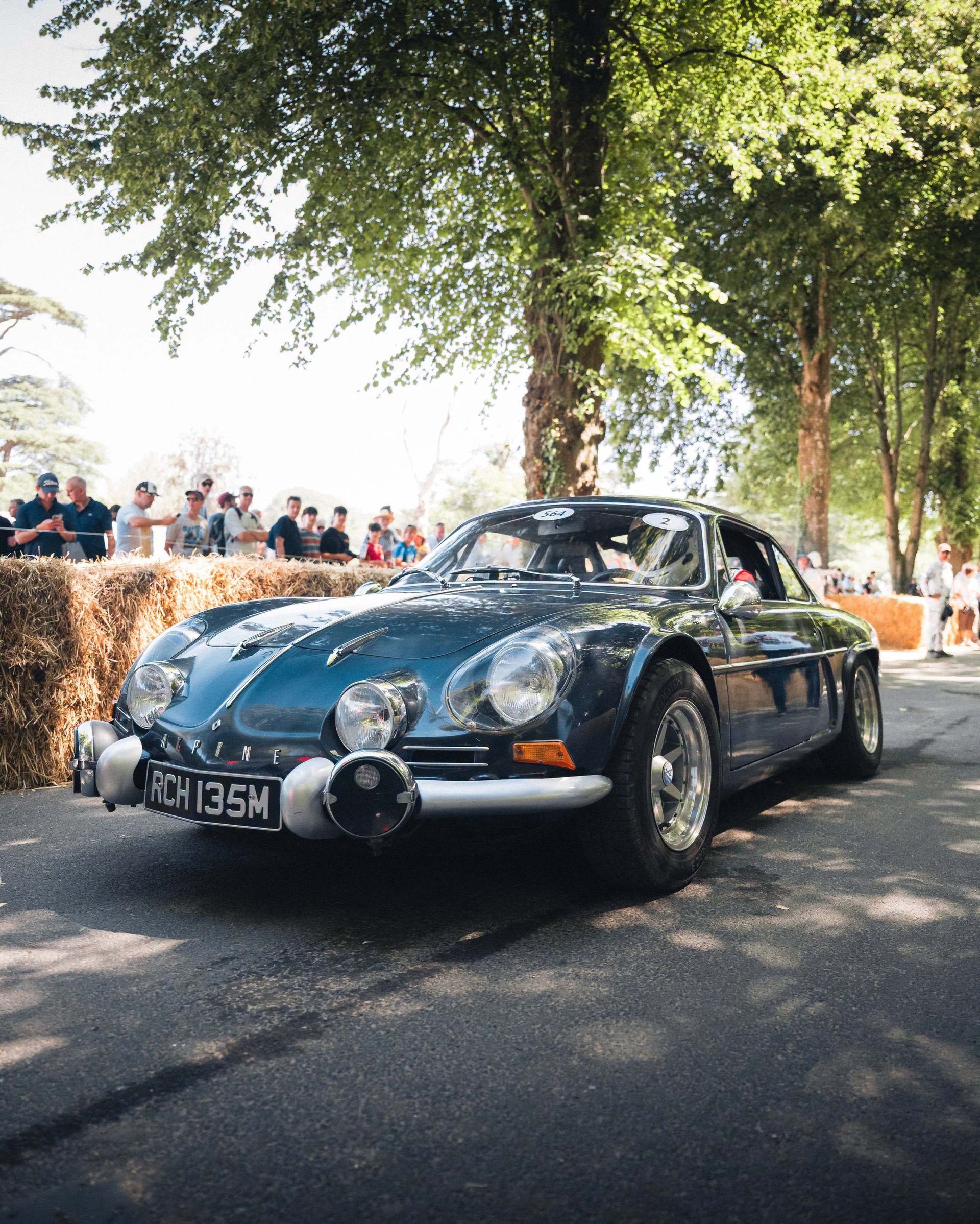
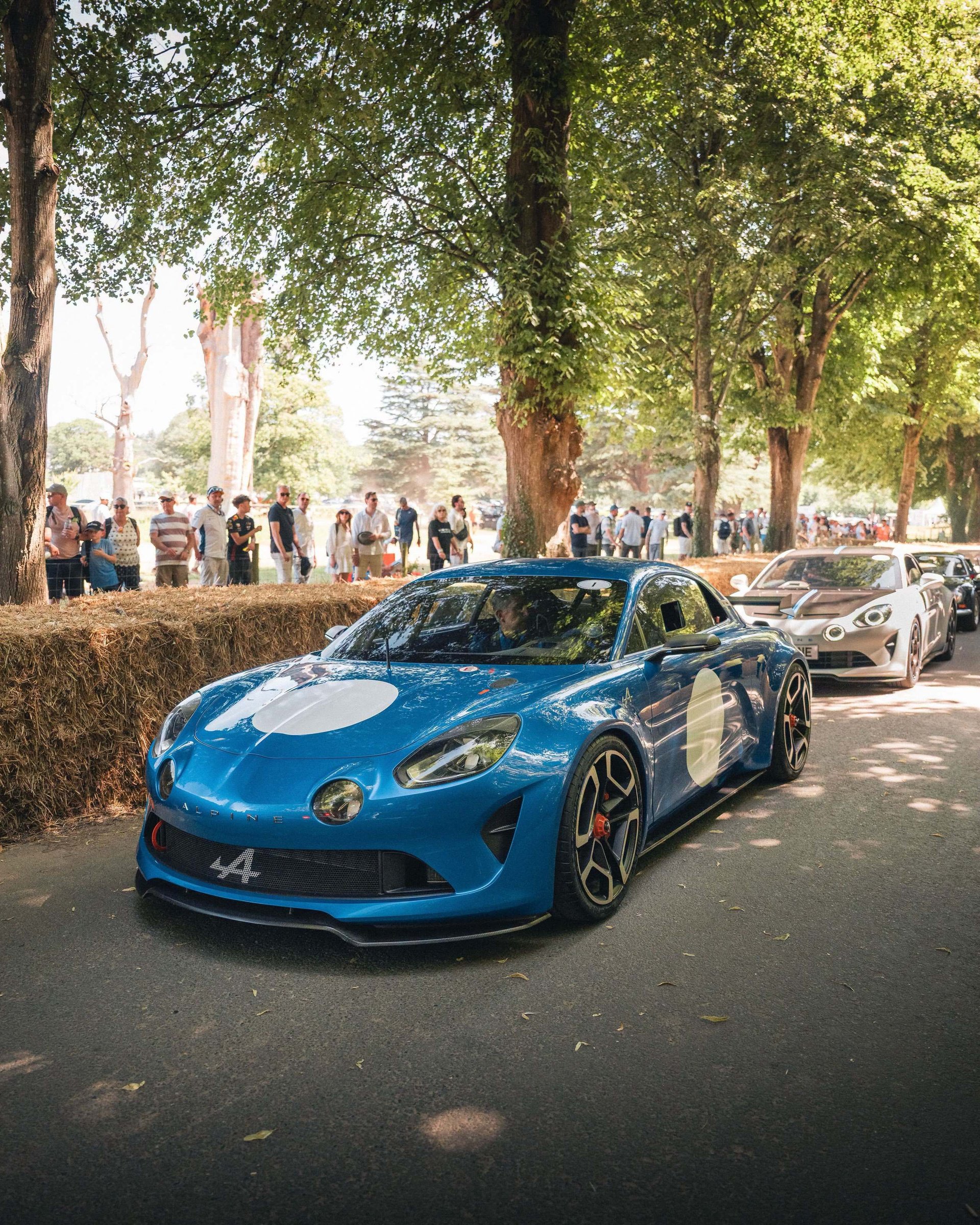
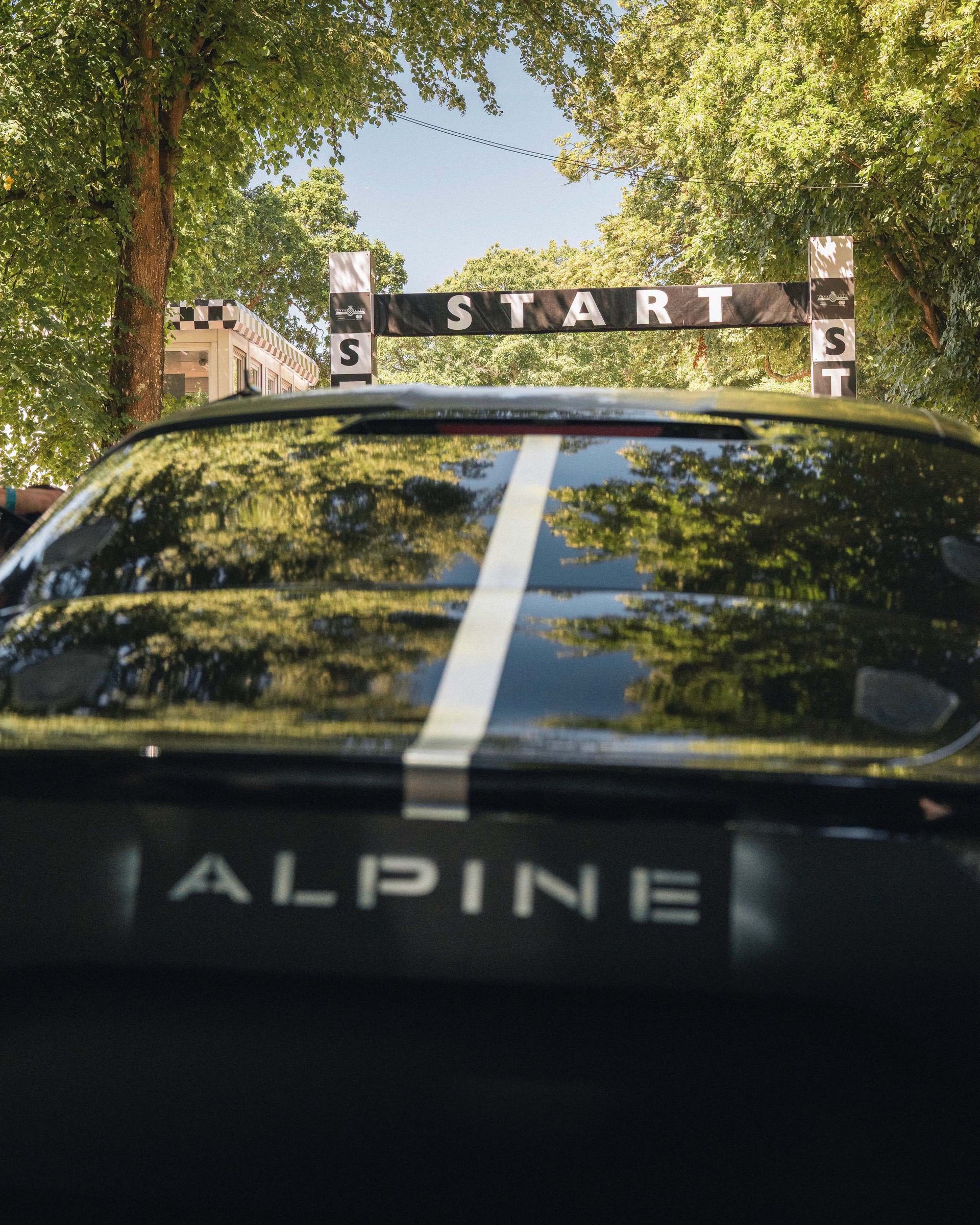
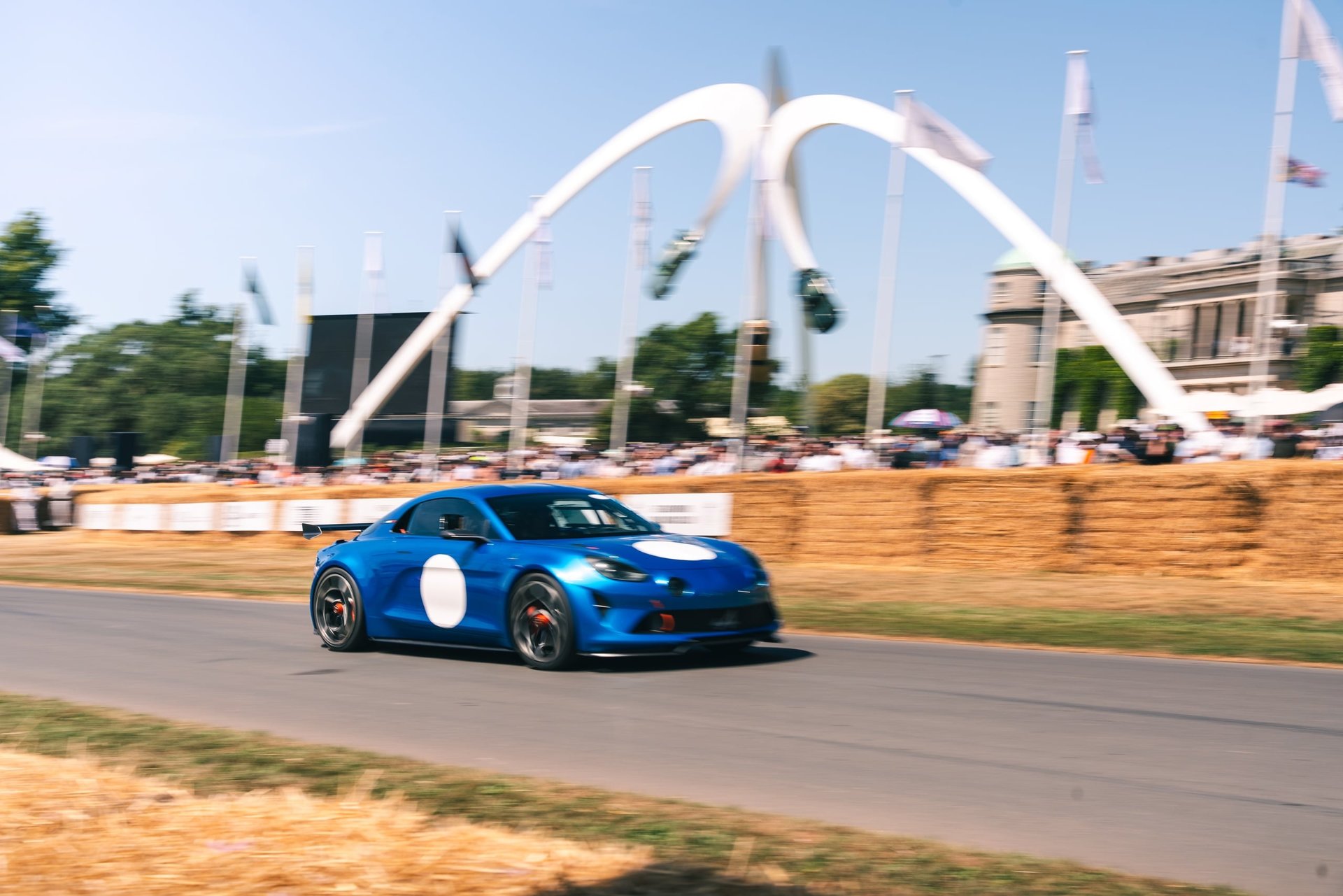
Alpine has rolled out its largest ever presence at the Goodwood Festival of Speed 2026, running from 9 to 12 July. The message is clear: this is not just about showing a prototype, but about telling the complete story of the Dieppe brand in a single place.
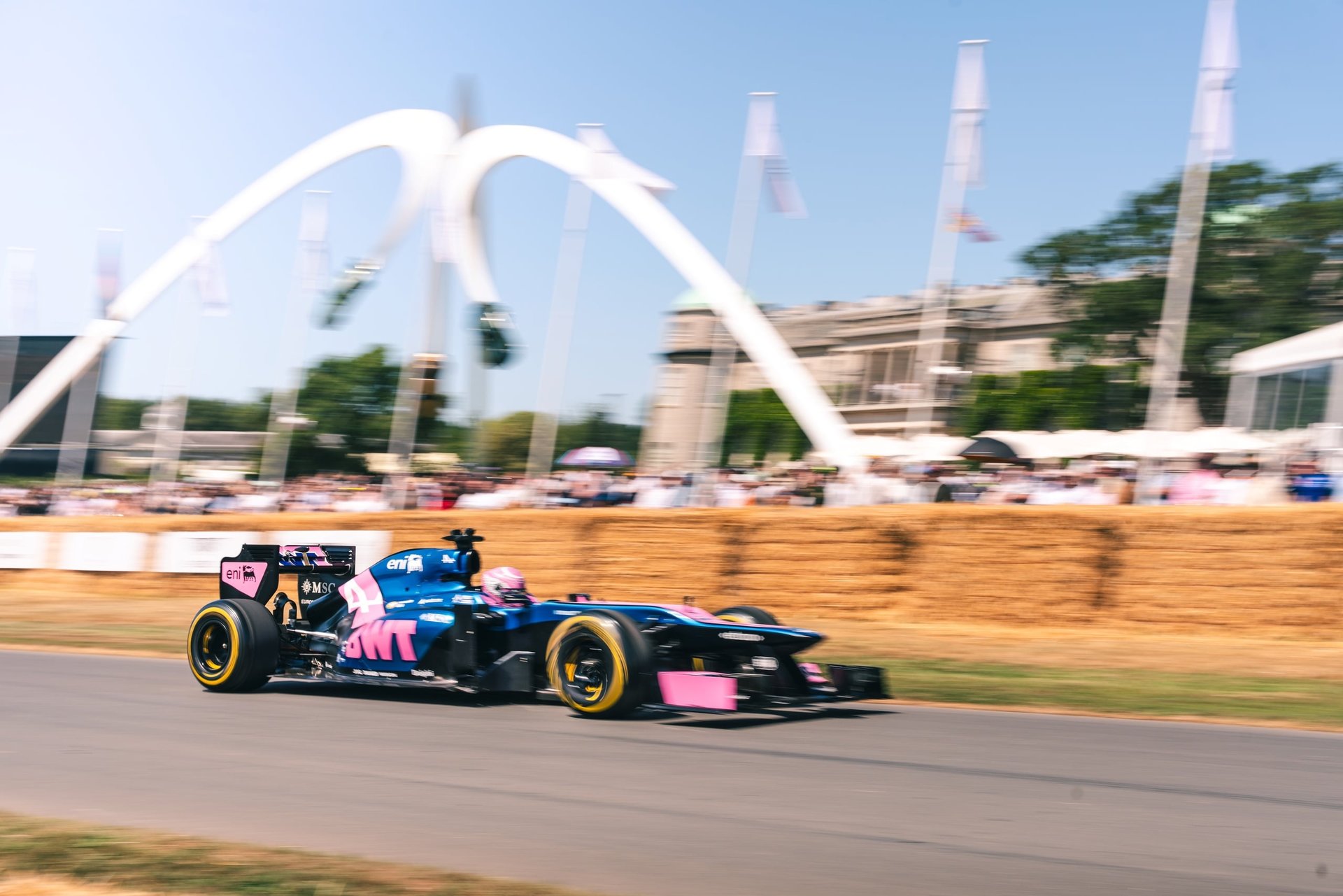
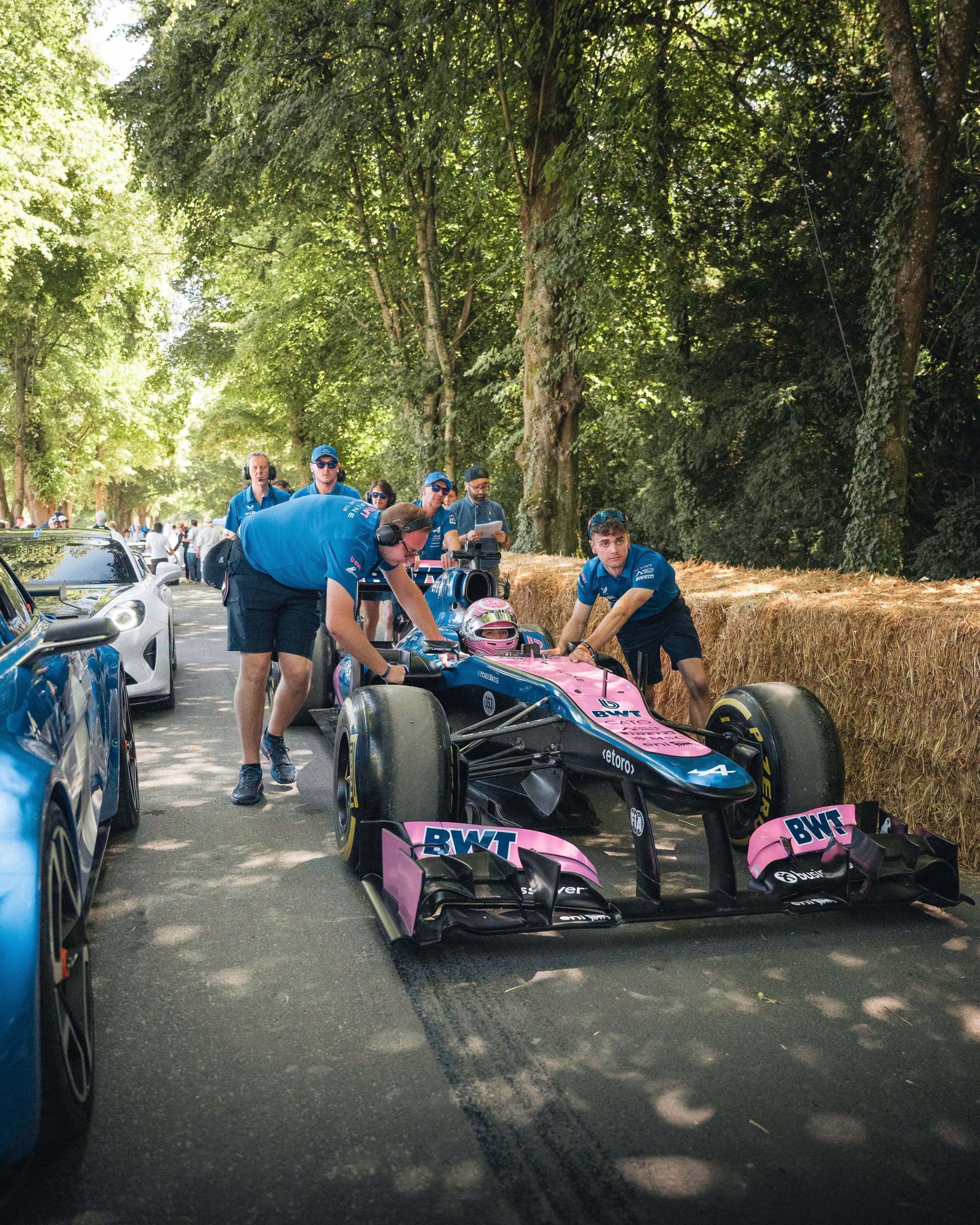
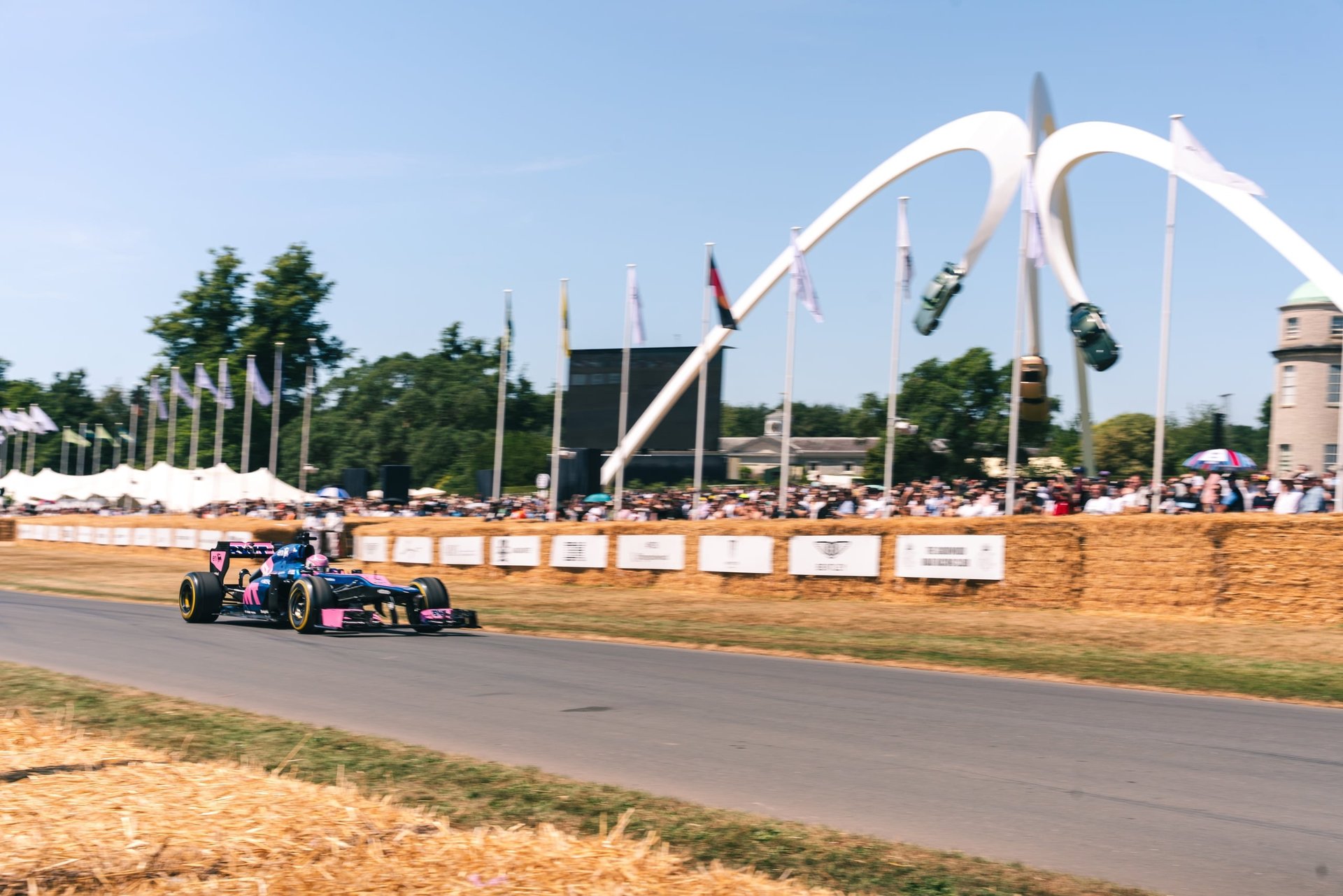
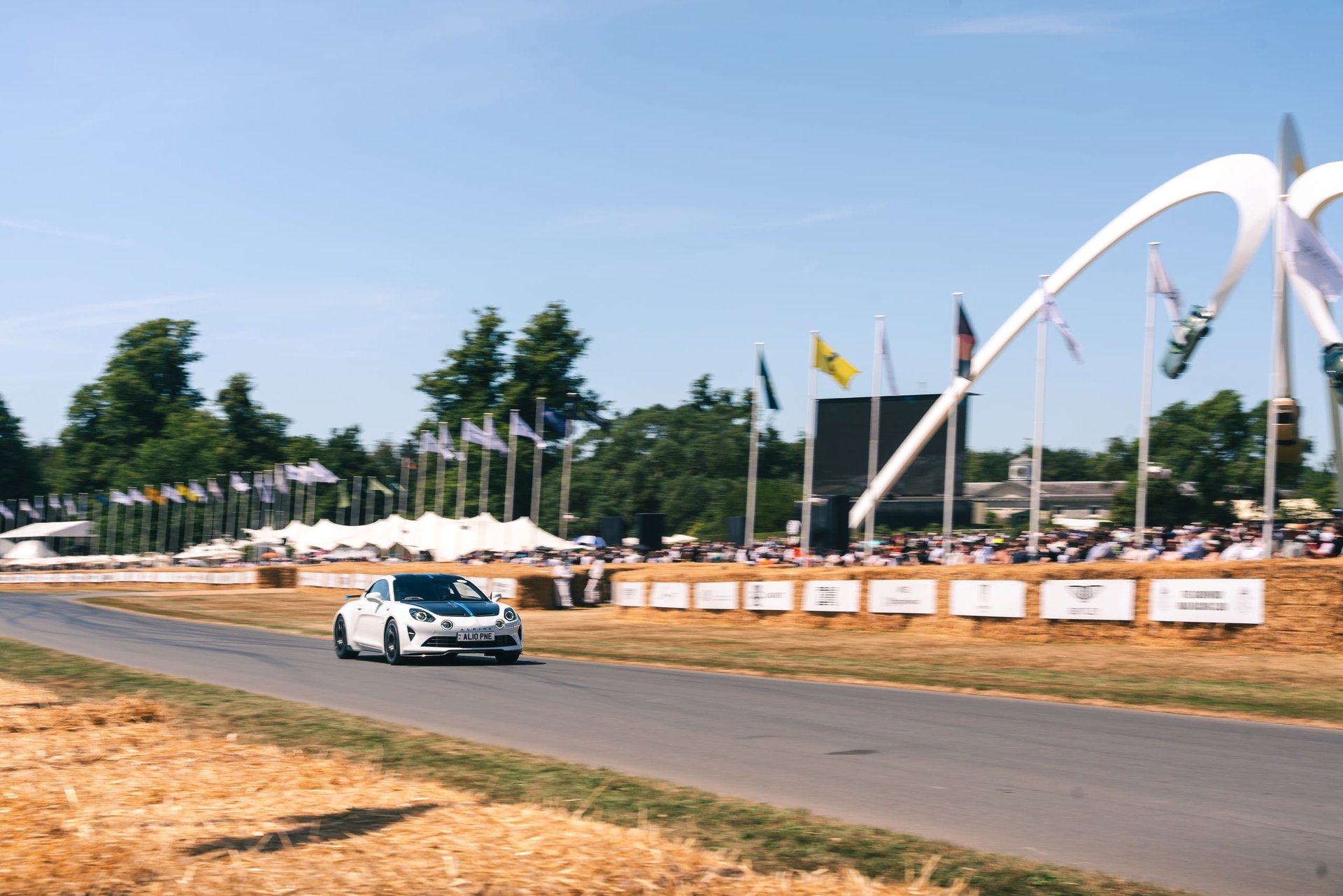
On the stand and in the paddocks, several generations of A110 sit alongside the FUTURE mule, together with the full current range (the A390 sport fastback, the A290 electric hot hatch, plus the versions and special editions of the current petrol A110) and two exceptional machines recalling the brand’s sporting record: the Alpine A442B, winner of the 1978 Le Mans 24 Hours with its 2-litre V6, and the 2012 E20 Formula 1 car, powered by a naturally aspirated V8.
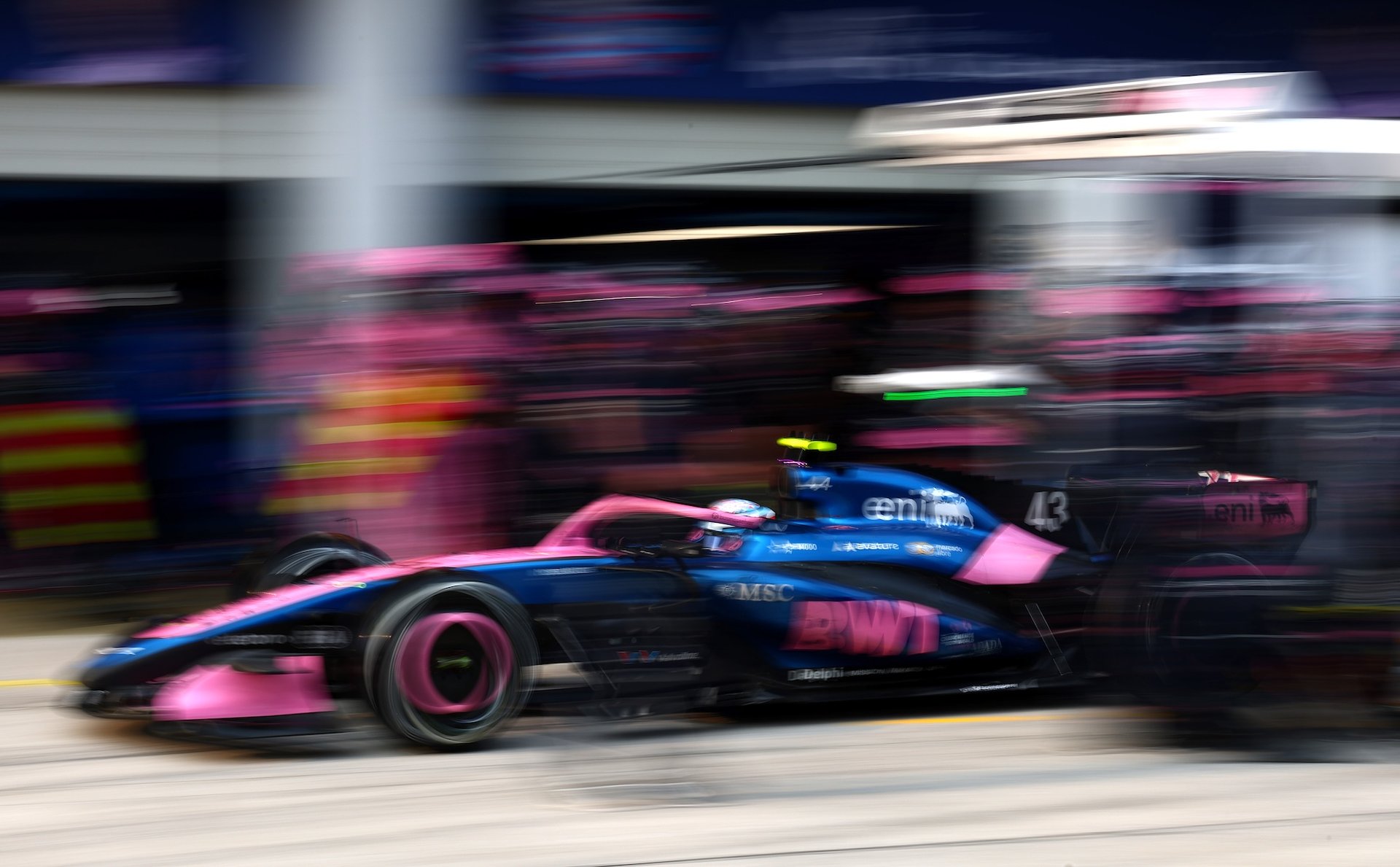
On the driver front, Alpine has mobilised its entire BWT Alpine Formula One Team line-up for the occasion: Pierre Gasly and Franco Colapinto headline, supported by Paul Aron, Alex Dunne and Nina Gademan for fan meet-and-greets, activities and track demonstrations throughout the four days of the festival. A dedicated hospitality space completes the set-up, with product presentations and interviews designed to amplify the operation’s global visibility.
Philippe Krief to Autocar: “better in every way” than petrol
Alpine CEO Philippe Krief promised our colleagues at Autocar on 9 July 2026 that the next generation of the A110, fully electric, would be better to drive than its petrol predecessor, in every single area. It is without doubt the most talked-about statement of Goodwood 2026. Enough to set teeth grinding among purists already mourning the petrol four-cylinder, but also enough to reshuffle the timeline: according to Krief, the full reveal of the car will not take place this autumn, as some elements suggested before Goodwood, but “next year”, in 2027.
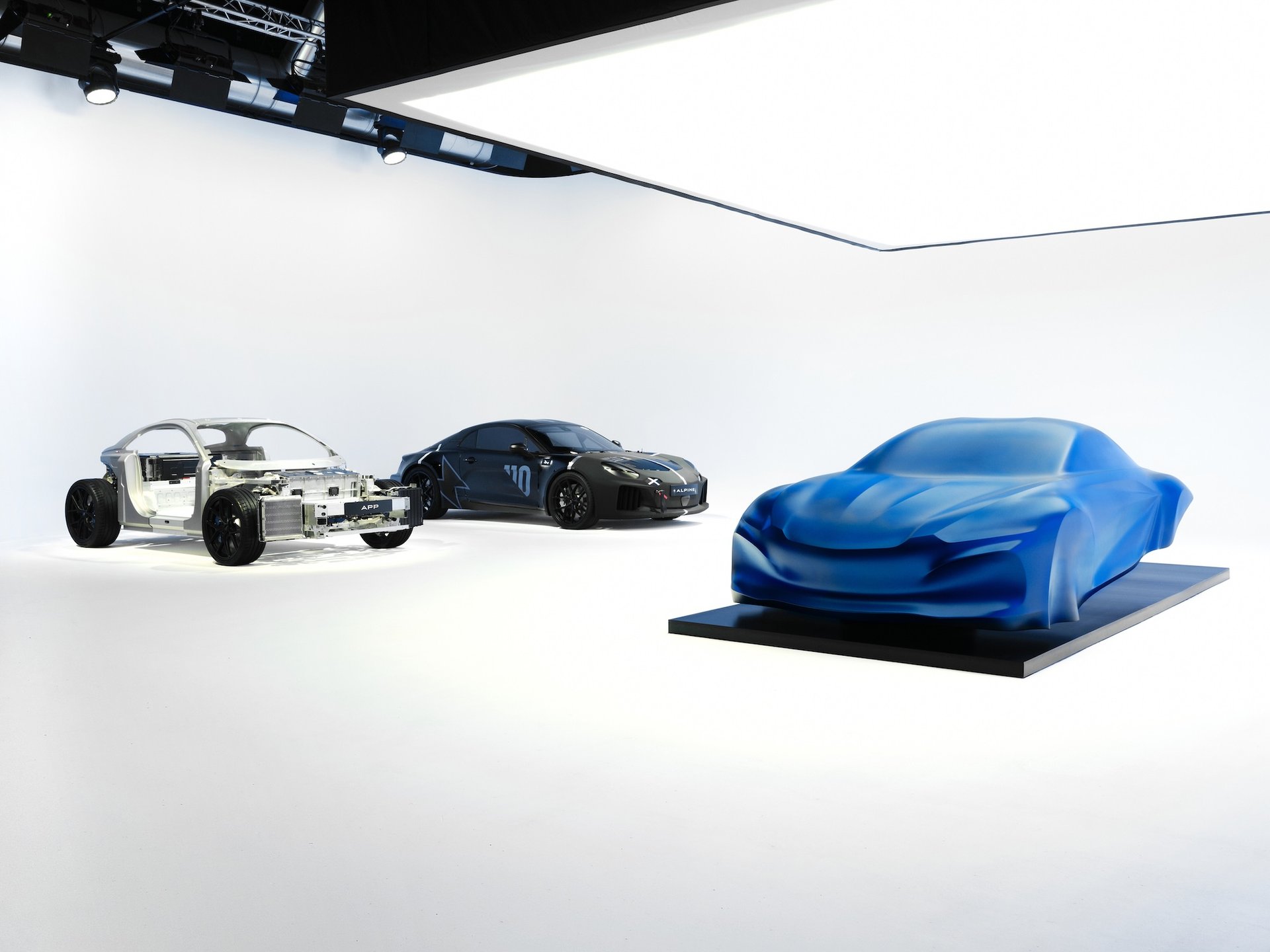
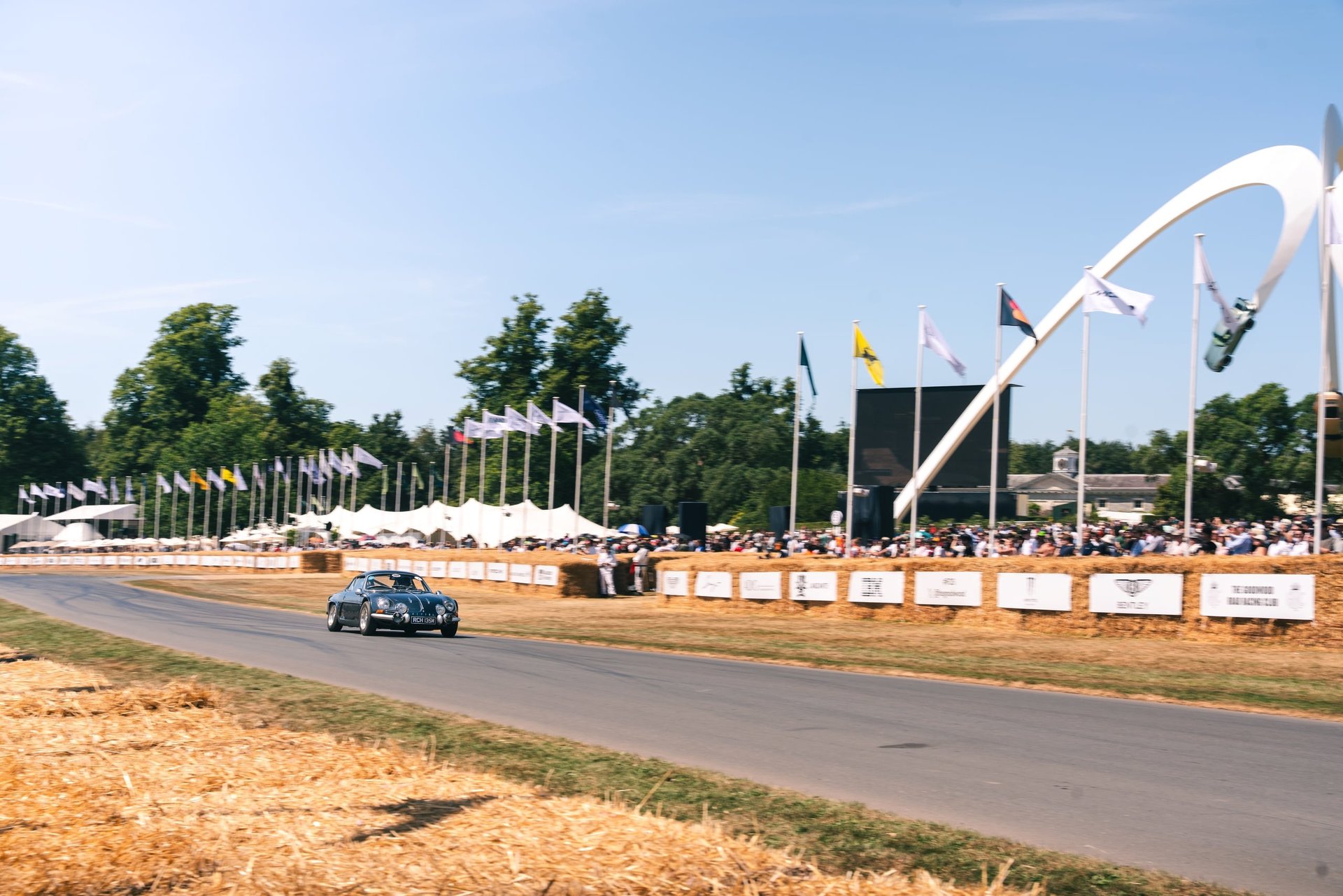
Another significant detail gleaned by Autocar: the mule seen on the hill pairs the new APP platform and its electric powertrain with a body borrowed from the petrol A110, whose production has only just ended in Dieppe. A pragmatic choice for a development mule, and one that gives nothing away about the final design of the production car.
An architecture designed to beat petrol at its own game
Krief laid out for Autocar a brief that should reassure the sceptics: beat the current A110 in every area that built its reputation, starting with lightness, aiming for a seamless integration of mechanical and electronic systems. One striking figure slipped in along the way: around 95% of the new car’s components are said to be all-new, with nothing carried over from the wider Renault Group parts bin. A direct answer to a recurring criticism of the current A110.
The Alpine boss also confirmed a very concrete dynamic endurance target for the development programme: the car must be able to lap a circuit at maximum speed and maximum lateral acceleration for at least twenty minutes without fading. An exercise that says a great deal about the thermal management expected of the battery and powertrain.
On dimensions, the new A110 is said to be slightly longer and wider than the current car, while keeping an identical length-to-height ratio. Translation: the Berlinette’s low, taut silhouette should not be sacrificed on the altar of the battery.
The cabin, the real challenge of this generation
Finally, a sensitive point Krief addressed head-on: the cabin. The current A110 has often been criticised for an interior seen as too generic, reliant on parts shared with the rest of the Renault Group range. The Alpine boss promises a major overhaul to deliver an extreme sports car feel, far from a cockpit saturated with screens, with the driver put back at the centre of the experience, a philosophy he himself describes as a “timeless cockpit”.
Personalisation should also gain ground with this new generation, a lever Alpine openly intends to use to improve margins while appealing to a more premium clientele.
A platform designed for two generations, with a wider range already in sight
The ambition goes beyond the A110 alone. Krief revealed that the APP architecture is designed to last at least two generations of the car, with an extreme mid-cycle version on the menu between the two. The two-seat coupé will remain the core version, but a 2+2 variant is also planned (in a separate article, Autocar mentions a timeframe around 2028 and a possible return of the historic A310 badge), along with convertible versions of both bodystyles.
On volumes, finally, Krief offered a telling comparison: Alpine would sit “more on the Ferrari side than the Porsche side”, suggesting a target of around 15,000 cars per year, while insisting it wants to remain more discreet than Porsche to protect the exclusivity and profitability of its models. An ambition to be read in the context of the brand’s momentum since the launch of the A290 and A390, which Alpine intends to sustain.
The Alpine Performance Platform reveals its technical architecture
The Alpine Performance Platform (APP) is the modular 800V architecture developed in-house by Alpine for its future electric sports cars, designed to cover several silhouettes and drivetrain configurations from a single common base. The A110 FUTURE mule shown at Goodwood previews its two-seat coupé configuration, and the official press release published by Alpine on 9 July 2026 has now fleshed out the technical choices, figures included.
The objective remains the one stated since the start of the programme: to offer a roofline height comparable to the current A110’s, a sporty driving position, and a cabin able to comfortably accommodate a wide range of driver and passenger sizes. A brief that directly dictated the battery architecture chosen, and one that dovetails precisely with Krief’s remarks on the preserved length-to-height ratio.
A dual battery pack, split 25/75 front to rear
The Alpine A110 FUTURE’s 800V battery is split into two packs: a front module holding 25% of the energy and a main rear pack holding 75%, positioned where the Berlinette’s mid-mounted engine traditionally sits. It is the single most distinctive technical choice in the whole architecture: a deliberate alternative to the conventional flat battery laid under the floor of the vast majority of electric cars. And Alpine has finally put exact figures on the split.
Worth noting is an interesting nuance compared with the information circulating before Goodwood, which pointed instead to a weight distribution close to 40/60 front to rear. The two figures do not measure quite the same thing (one concerns the split of electrical energy between the two packs, the other the car’s overall weight balance), but the comparison will be worth watching closely as further details emerge.
On the technology side, the system uses cell-to-pack construction spread over two levels, integrated into a high-pressure die-cast aluminium housing that contributes directly to the car’s structural rigidity, a way of using the battery itself as a chassis element rather than mere ballast. A centralised Battery Management System and an aluminium wiring harness complete the pack.
A 3-in-1 e-axle and Active Torque Vectoring 2.0
The Alpine A110 FUTURE’s powertrain pairs two rear permanent magnet synchronous electric motors, capable of spinning to 21,500rpm, with 3-in-1 electric drive units featuring 800V silicon carbide inverters, all governed by the new Alpine Active Torque Vectoring 2.0 system. A package designed for agility and sustained hard use on track while remaining compact and light, consistent with the flat-out endurance brief mentioned by Krief.
One detail bound to get people talking: Alpine says the soundtrack is generated directly by the electric motors themselves, with no mention of any artificial augmentation, a pre-emptive answer to a recurring criticism of electric sports cars in this department. The system also features torque pre-control and a 400V boost charging system.
This architecture is joined by a newcomer, Wheel Slip Torque Control, which works in tandem with Active Torque Vectoring 2.0 to reduce understeer on corner entry and mid-corner, managing load transfers and torque both under acceleration and off-throttle. The whole lot slots into a broader control suite (braking, steering, battery and thermal management) designed to adapt to both the rear-wheel-drive and all-wheel-drive configurations of the APP platform.
The DiM250 simulator, the hidden side of development
Development of the Alpine A110 FUTURE leans heavily on the DiM250 simulator, a driver-in-the-loop system built around an A110 cockpit, a nine-metre conical screen and hexapod motion technology reproducing the full breadth of chassis dynamics. Behind the Goodwood shop window, Alpine is keen to highlight this less spectacular but equally revealing side of its method: simulation rather than physical prototypes, with the stated aim of saving time, cutting costs and freezing supplier specifications before the first real-world joint tests even begin.
The DiM250 is used for chassis tuning, powertrain calibration, tyre development and the creation of new control functions such as those described above. Alpine puts a number on it: more than 45,000km covered on the simulator since it entered service, across all projects.
The A110 FUTURE spec sheet at a glance
| Characteristic | Confirmed data | Source |
|---|---|---|
| Status | Development mule, not for sale | Alpine |
| Platform | Alpine Performance Platform (APP), modular | Alpine |
| Electrical architecture | 800V | Alpine |
| Battery | Dual cell-to-pack layout over two levels, structural die-cast aluminium housing | Alpine |
| Energy split | 25% front / 75% rear | Alpine |
| Motors | 2 rear permanent magnet synchronous motors, 3-in-1 units, SiC inverters | Alpine |
| Maximum motor speed | 21,500rpm | Alpine |
| Charging | 400V boost system | Alpine |
| Drivetrain | Rear-wheel drive (all-wheel drive possible on APP) | Alpine |
| Torque vectoring | Alpine Active Torque Vectoring 2.0 + Wheel Slip Torque Control | Alpine |
| All-new components | Around 95% (no Renault Group parts bin) | P. Krief via Autocar |
| Dimensions | Slightly longer and wider than the current A110, identical length-to-height ratio | P. Krief via Autocar |
| Endurance target | At least 20 min on track at maximum speed and lateral acceleration | P. Krief via Autocar |
| Mule bodywork | Carried over from the current petrol A110 | Alpine / Autocar |
| Production car reveal | 2027 | P. Krief via Autocar |
Power, final weight, battery capacity, homologated range and price remain unconfirmed at this stage.
Key takeaways
The A110 FUTURE is still not the car customers will one day find in showrooms, and Alpine makes no secret of it: the recycled petrol A110 shell and its camouflage livery are a reminder at every corner of the hillclimb. The final design of the next generation remains under wraps and, contrary to what some elements suggested before Goodwood, its full reveal is no longer expected this autumn but in 2027, in Philippe Krief’s own words to Autocar.
What changed on 9 July 2026, though, is the level of precision: an 800V architecture now backed by figures, a dual battery pack whose energy split has just been confirmed, an e-axle honed for driving pleasure as much as for performance, and a development process validated extensively in simulation. And, as the icing on the cake, a brand boss willing to commit publicly to his electric car beating the petrol legend at its own game. All that remains is to turn the promise into confirmation on the road, and to find out what really lies beneath that camouflaged mule bodywork.
Sources: Alpine Cars, media.alpinecars.com and Autocar (Philippe Krief’s comments gathered by James Attwood).
In brief:
- The Alpine A110 FUTURE development mule made its first public dynamic run on Thursday 9 July 2026 at the Goodwood Festival of Speed, with Pierre Gasly at the wheel and the Duke of Richmond as passenger.
- Alpine CEO Philippe Krief told Autocar that the third-generation A110, fully electric, will be better to drive than the current petrol A110 in every area.
- The full reveal of the production car is now expected in 2027, no longer in autumn 2026.
- Alpine confirmed the architecture of its APP platform: an 800V system, a dual battery pack split 25% front and 75% rear, and two rear electric motors spinning to 21,500rpm.
- Around 95% of the future A110’s components are said to be all-new, with no parts carried over from the Renault Group.