🇫🇷 Cet article est également disponible en français : Lire en français
Engineering, purchasing, human resources: on Thursday 12 November, Renault Group presented its central Social and Economic Committee (CSE) with a plan that would bring several of Alpine Cars’ essential functions back under the group’s direct authority. Five years after the Alpine Business Unit was created, the shift is significant. It comes as the A390 struggles to reach the volumes once expected, the next A110 is now not due until the end of 2027, and François Provost is imposing a far tougher doctrine on costs and profitability across Renault. Alpine is not disappearing. But its autonomy is clearly being called into question.
Alpine: what the plan actually contains
This time, the reorganisation is no longer merely a rumour. On 12 November, management presented employee representatives with a plan to bring Alpine Cars under Renault Group engineering. In a leaflet issued the following day, CFDT Alpine Cars said implementation was scheduled for 1st December and described changes also affecting purchasing, human resources and several positions.
Management presents the move as an organisational change. The union, by contrast, sees it as a much deeper transformation. Between those two interpretations, one point remains: Alpine would no longer enjoy the same degree of autonomy it had when its Business Unit was created in January 2021.
The move is far from trivial. Engineering is the technical heart of Alpine, inherited in part from Renault Sport Technologies and the Les Ulis centre. Bringing it directly under Renault Group would therefore materially alter the organisation put in place since the brand’s revival.
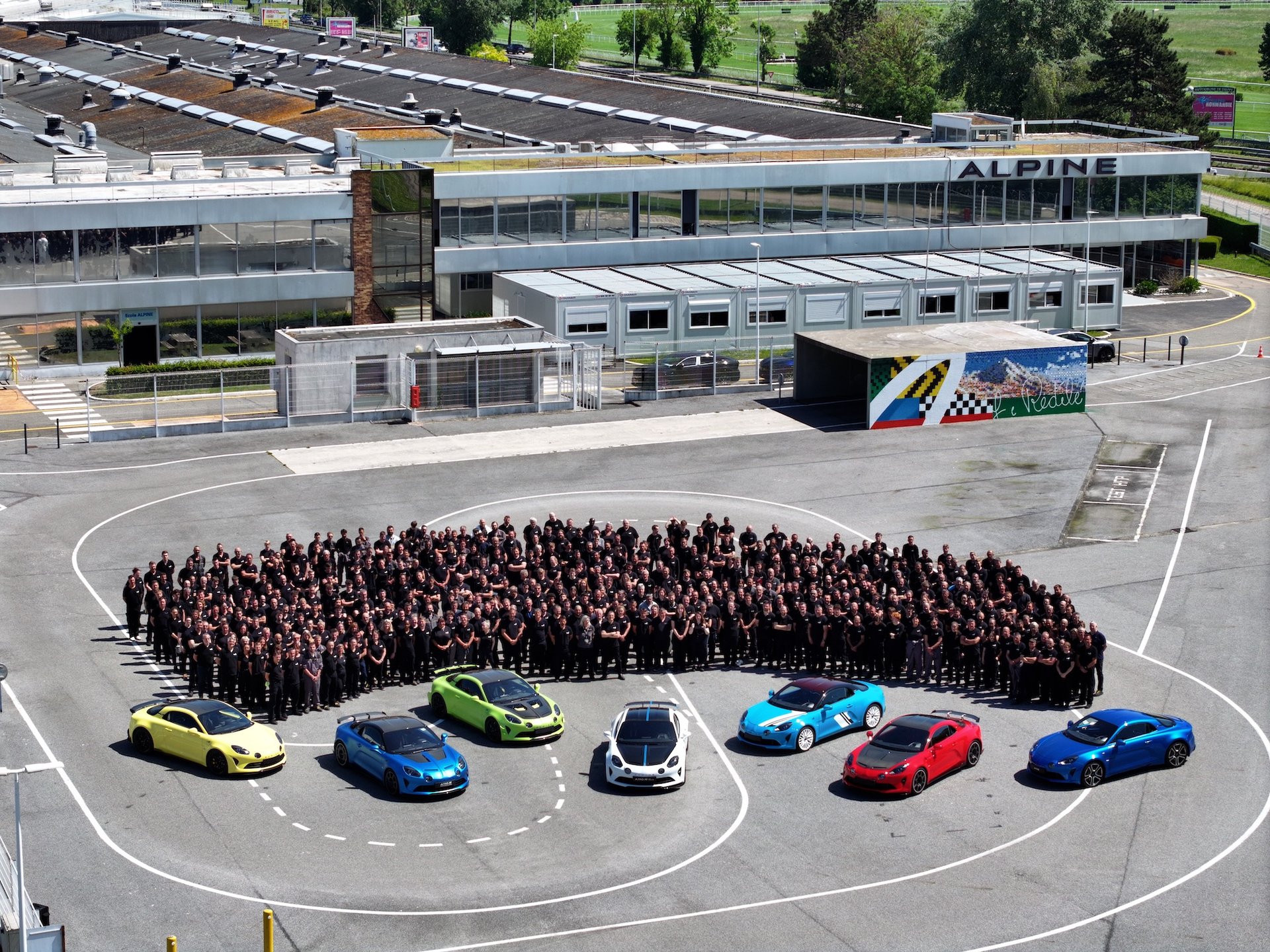
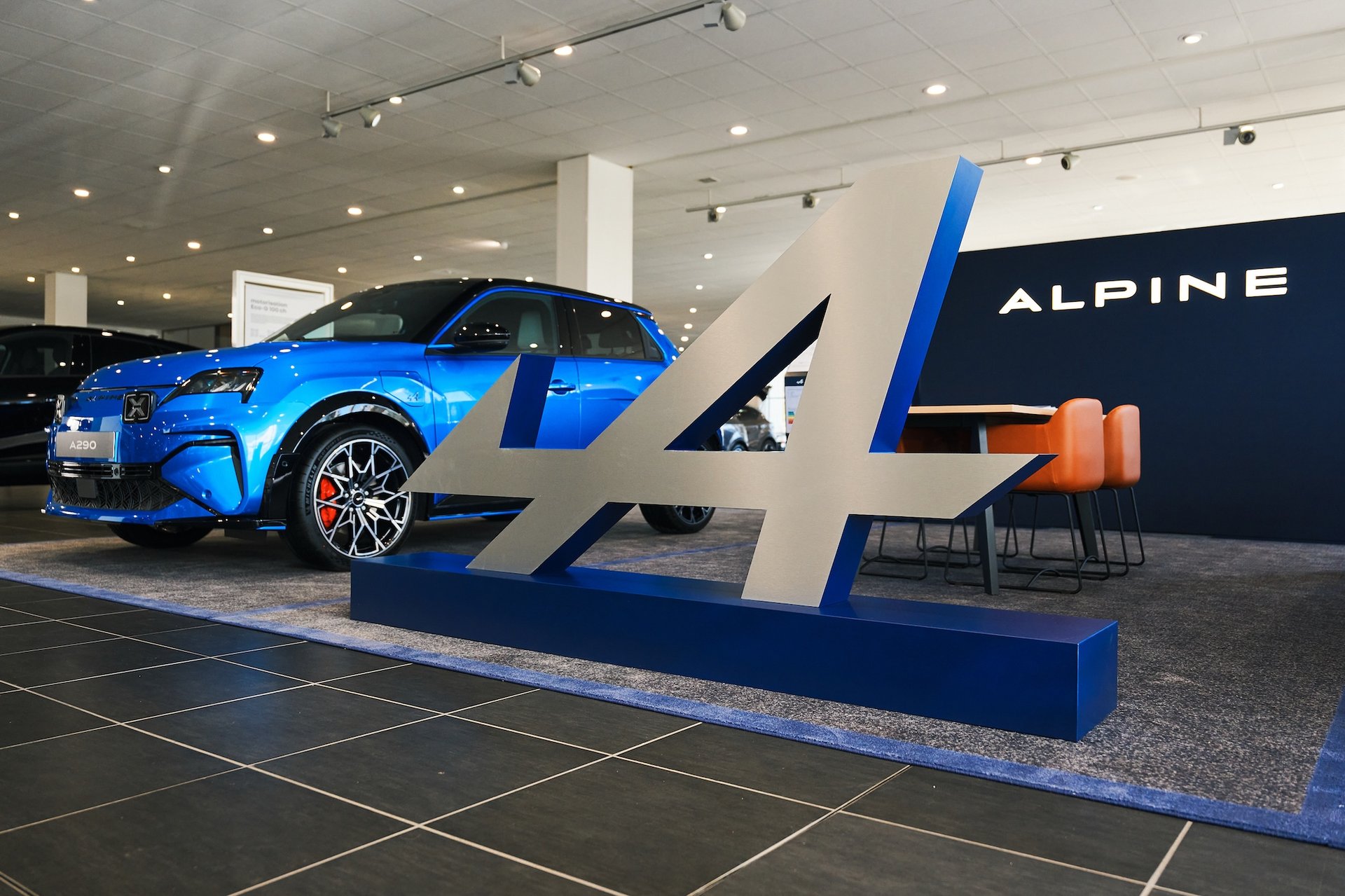
Alpine would, of course, continue to sell its cars, shape its image, define its positioning and run its retail network. In France, the brand announced 19 Alpine Centres when commercial operations restarted in 2017; by spring 2026 it had 42 sales points following another phase of expansion. We previously examined the remarkable expansion of Alpine’s French retail network. But Alpine would no longer operate as the almost self-contained company Luca de Meo had wanted to build within Renault Group.
That distinction matters. A brand can perfectly well share purchasing, technical building blocks and support functions with its parent company without losing its identity. Porsche, Lamborghini and Bentley all exist within much larger industrial groups. The real question, then, is not whether Alpine shares resources. It is how far that sharing will go, and above all who will have the final say when a financial imperative conflicts with a decision made in the interests of the car’s character.
Alpine is swept up in Renault’s wider reorganisation
The timing is no coincidence. Since the spring, François Provost has embarked on a sweeping reorganisation of Renault Group engineering. The objective is clear: reduce management layers, bring teams closer to the product and, above all, cut development cycles dramatically.
The manufacturer wants to move closer to the pace set by Chinese carmakers, which can develop a car in two years while European groups were, until recently, still working to much longer cycles. The new electric Twingo, developed in 21 months with support from Renault’s Chinese development centre, has become one of the symbols of that approach.
The restructuring also provides for a 15–20% reduction in global R&D headcount by the end of 2027. Renault has said the reduction could affect up to 2,400 jobs. In France, the plan covers around 800 positions out of roughly 5,500 engineering employees, mainly through voluntary departures and redeployment.
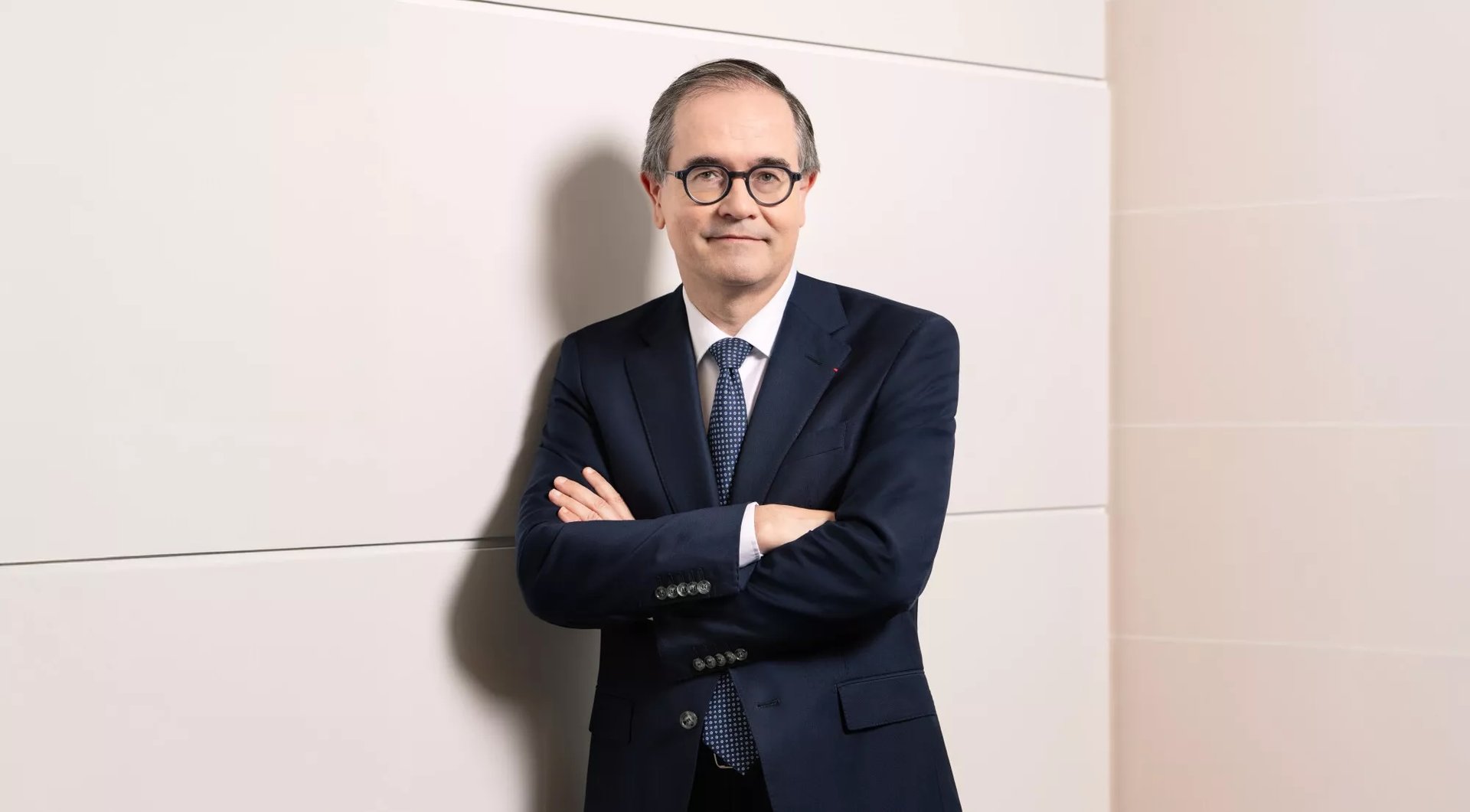
At the Paris Motor Show on 12 October, François Provost publicly welcomed the speed at which the technical organisation had been reshaped. One month later, Alpine is being drawn into the same movement.
On 16 November, four days after the Alpine CSE meeting, Renault also presented trade unions with its “France Industrie FutuREady” plan. The group intends to recruit 2,000 people at its French plants by 2028 — including 1,650 production workers, 250 indirect-function roles and 100 graduates — while considering around 1,000 voluntary departures from indirect and administrative functions. The terms still have to be negotiated; the philosophy, however, is now unmistakable. Fewer parallel structures, fewer overlaps, more shared resources.
Alpine had been built as an exception. François Provost appears to believe it no longer needs to remain one in every respect.
François Provost and Philippe Krief: more than a clash of personalities, a disagreement over pace
It would be tempting to turn this reorganisation into a duel between François Provost and Philippe Krief. That would probably be going too far. Nothing in the public domain establishes a personal breakdown between the two men. Their statements over recent months do, however, reveal two rather different views of how Alpine should develop.
Philippe Krief comes from the product side. An ENSTA graduate, he worked at Michelin, Fiat, Alfa Romeo, Maserati and then Ferrari, where he headed engineering, before joining Alpine as vice-president of engineering and product performance. Philippe Krief succeeded Laurent Rossi as CEO on 20 July 2023.

On 1st September 2024, Philippe Krief also took over as Renault Group Chief Technology Officer from Gilles Le Borgne. It was an exceptional dual role: head of Alpine and head of engineering for the entire carmaker.
That period ended a year later. François Provost, who became Renault Group CEO on 31 July 2025 following Luca de Meo’s departure, reshuffled his executive team. Philippe Brunet took over as the group’s Chief Technology Officer on 1st September 2025. Philippe Krief remained Alpine CEO, with Renault saying he could now devote himself “entirely” to developing the range and the brand.
It was not presented as a sanction. Even so, it amounted to a first narrowing of Philippe Krief’s remit. The November 2026 plan would constitute a second, this time much more directly tied to Alpine itself.
François Provost comes from a different world. A Renault veteran of more than twenty years, he previously headed purchasing, partnerships and public affairs for the group. The fact that Alpine’s purchasing function is now part of the proposed sharing arrangement is therefore hardly incidental: François Provost knows the cost of maintaining separate structures intimately.
From the “Dream Garage” to the proof of profitability
That is where the real point of divergence lies.
Under Luca de Meo, Alpine was given an extremely aggressive roadmap. In June 2023, the “Alpine Revolution” plan promised seven models, an all-electric range, international expansion from 2027 and, in particular, a move into the United States. The manufacturer officially targeted €2 billion in revenue and operating break-even in 2026, followed by more than €8 billion in revenue and an operating margin above 10% in 2030. Of that €8 billion-plus figure, €1 billion was still conditional on a potential launch in China.
The plan was built around one idea: take Alpine beyond its historic niche with a much broader range. The A290 was to open the door, the A390 to raise both volumes and transaction prices, and the APP — Alpine Performance Platform — to underpin a genuine family of sports cars, from the A110 through to the A310 and a roadster.
François Provost has not simply crossed that range out. He has, however, changed the rules. In March 2026, when presenting FutuREady, François Provost told Le Figaro he wanted to halt Alpine’s immediate international expansion: before spending more, the brand first had to prove it could make money.
The golfing metaphor was almost disarmingly simple: you work on your putting first. For Alpine, that means consolidating its strongest markets — France, Germany and the United Kingdom — before setting off to conquer the world. North America, once one of the pillars of Luca de Meo’s plan, has moved into the background.
Another line perhaps sums up François Provost’s doctrine even better: “Alpine’s DNA is not Formula 1, it is the A110.” The Berlinette once again becomes the centre of gravity. Everything else must now justify its place around it.
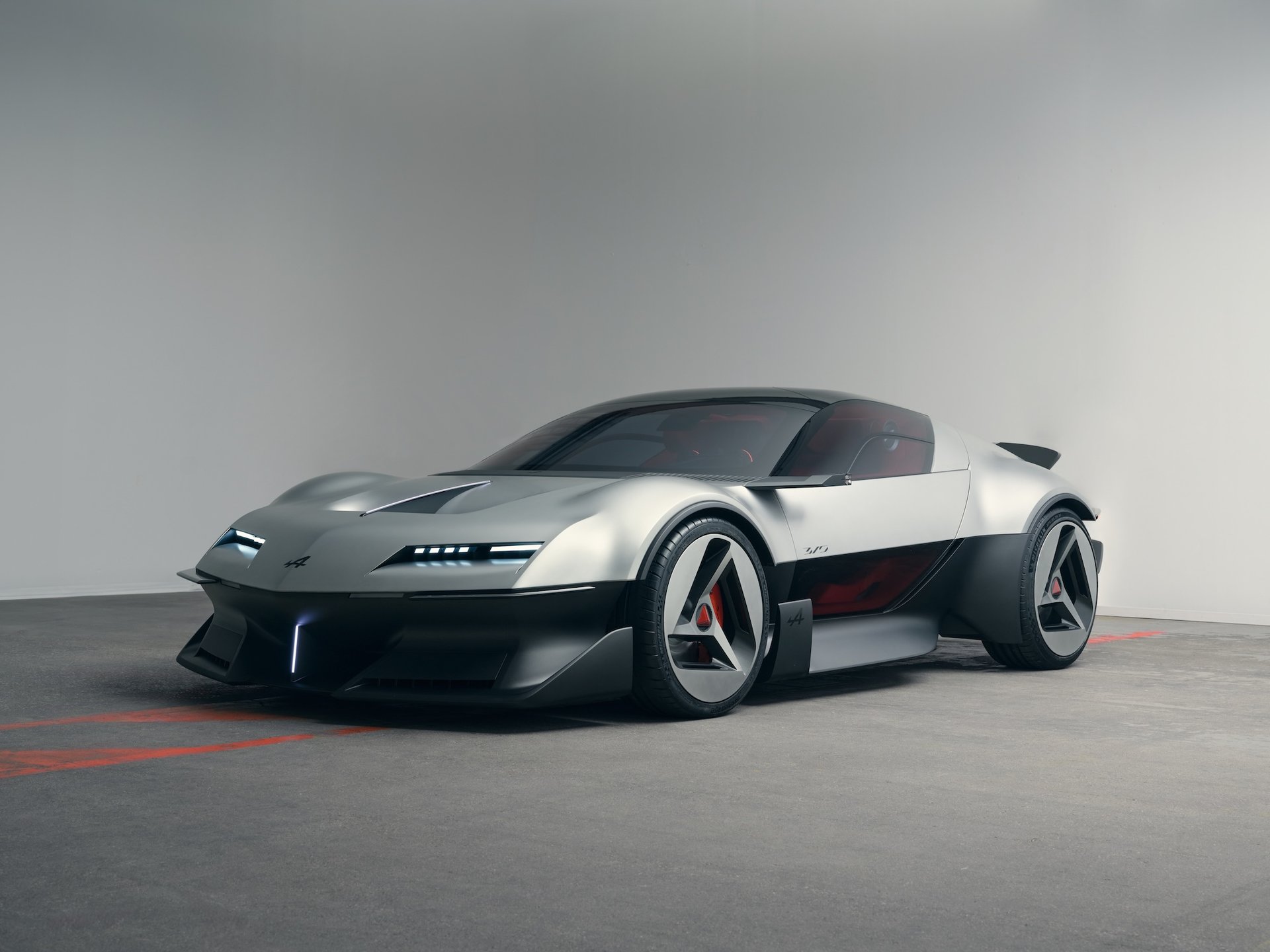
The contrast at the Paris Motor Show was almost theatrical. Alpine displayed the A310 VISION, a striking concept built around the APP and celebrating the history of the Dieppe coupé. But the brand made no promise of production. The car shows what Alpine can imagine; it does not yet show what Renault will agree to fund.
Alpine A390: the model that was meant to change the scale
If there is one car that helps explain the change in tone, it is the A390.
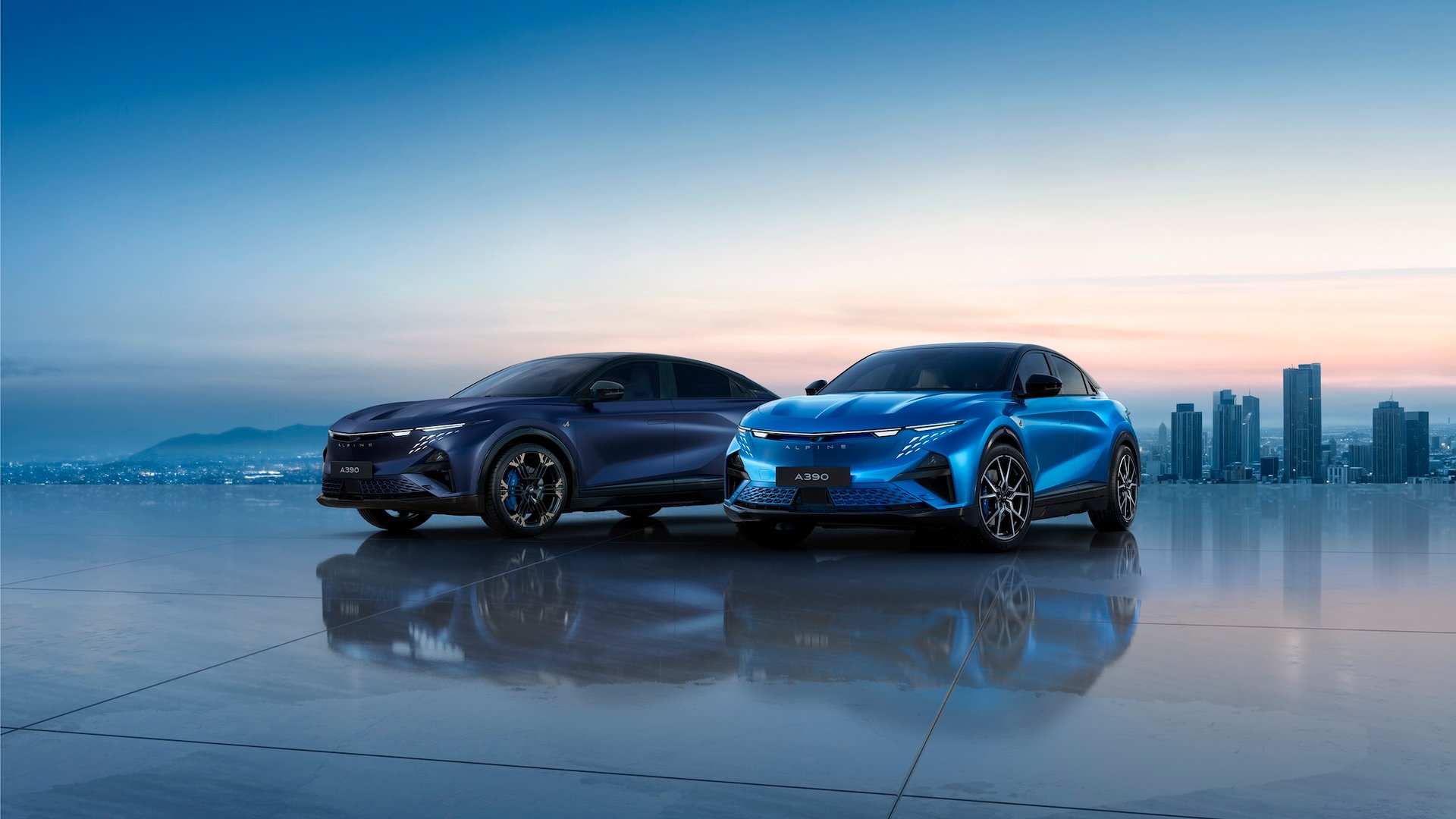
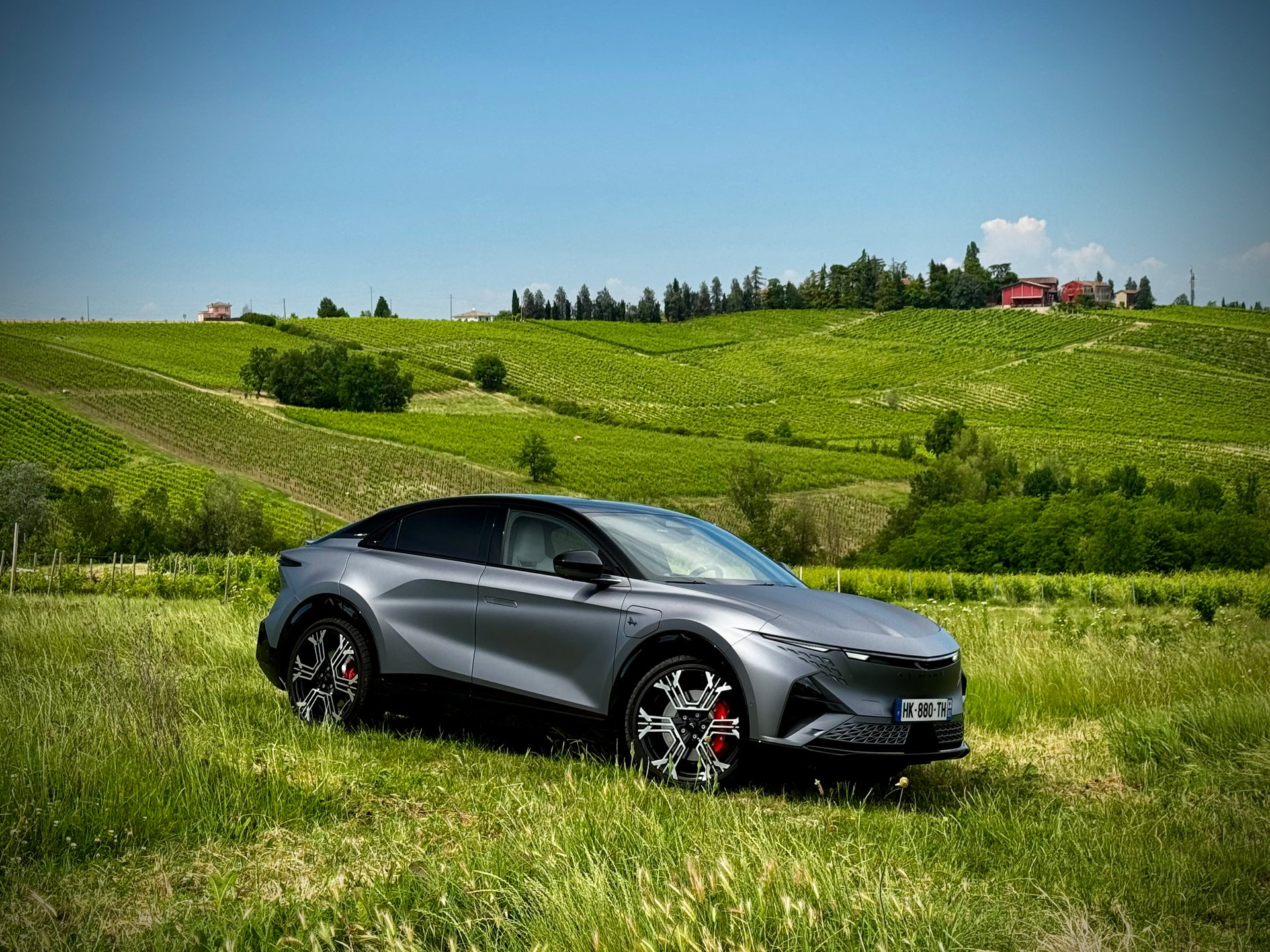
Unveiled in Dieppe on 27 May 2025 for Alpine’s 70th anniversary, this five-seat electric fastback was intended to take the brand beyond the small circle of weekend sports cars. Three motors, four-wheel drive, up to 470 hp and 824 Nm in GTS form: technically, there was no shortage of ambition.
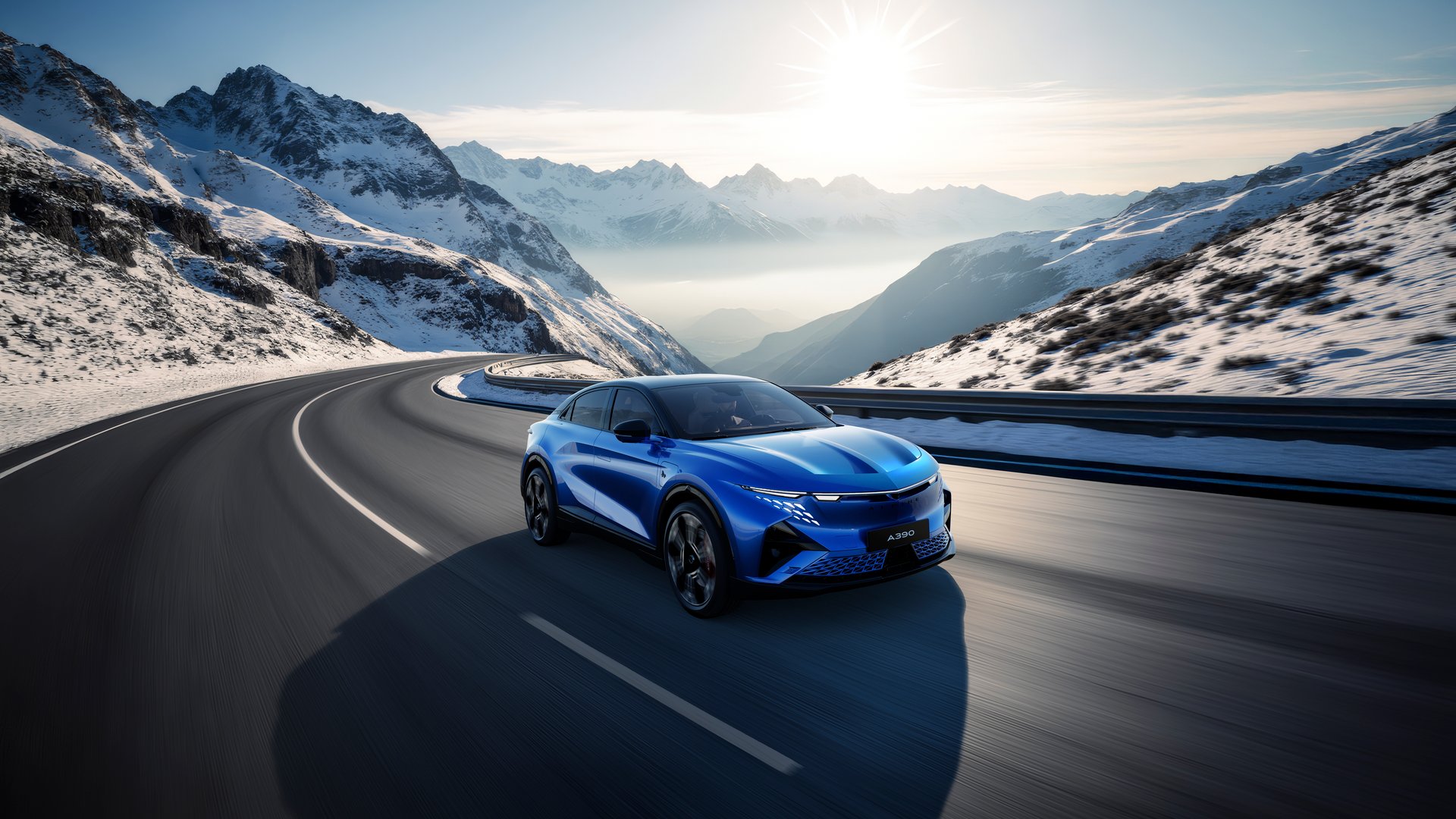
Nor on the road. Our Alpine A390 GTS test drive showed a car far subtler than its weight and architecture might suggest. Its twin-motor rear axle, Active Torque Vectoring and chassis tuning give it a genuine personality. It would therefore be far too simplistic to reduce the model’s difficulties to a bad product. The problem is commercial.
Renault Group recorded 1,041 first registrations of the A390 in the first half of 2026. By the end of September, the total was approaching 1,800 units since the start of the year. There is growth, but the volume remains modest for a vehicle designed specifically to change Alpine’s scale.
Production in Dieppe has followed demand. The rate first fell from 30 to 15 cars a day at the end of September. It was subsequently reported to have fallen again to seven units a day, alongside several planned production stoppages.
There is no single reason for that slowdown. The A390 starts at €67,500 in GT form and rises to €78,000 for the GTS. At those prices, Alpine is competing with manufacturers that have spent decades in the premium market, with established residual values, aggressive finance offers and extremely strong fleet networks.
Monthly payments are particularly important. In this segment, neither a company nor a private buyer compares list prices alone. What matters is what the car costs each month. A young brand with little history from which to judge the residual value of a large electric car inevitably starts at a disadvantage.
Charging does not provide a decisive technological advantage either. Alpine quotes up to 150 kW DC for the A390 GT, with 15–80% taking 29 minutes. The GTS accepts up to 190 kW and cuts the same charge below 25 minutes. Those are respectable figures. They are simply not enough, on their own, to make buyers forget the price or to create a clear advantage over the latest German rivals.
Alpine nevertheless highlights one interesting figure: around 80% of A390 buyers are said to be new customers for the brand. In some interviews, Philippe Krief has gone further, saying those customers are also new to Renault Group. Either way, the A390 is fulfilling part of its conquest role. For now, however, that conquest remains limited in absolute numbers.
François Provost has made no secret of the fact that he considered the original forecasts too optimistic. His message is not one of abandonment: François Provost believes Alpine is a fifteen- or twenty-year project. But that strategic patience is now coupled with financial impatience. That is the crucial difference.
The paradox: Alpine has never sold more cars
This point matters because it prevents an overly simple reading of the situation: Alpine is not a brand in commercial collapse.
Quite the opposite.
After roughly 4,600 registrations in 2024, Alpine sold 10,970 cars worldwide in 2025. Over the first nine months of 2026, it had already recorded 12,269, an increase of 65.6% year on year. Nine-month volume had therefore already surpassed the whole of the previous year.
The A290 is driving that growth. With 8,618 registrations worldwide by the end of September, it accounted for just over 70% of the brand’s sales. We had already seen that acceleration in the first quarter of 2026, when volumes jumped by 54.7%.
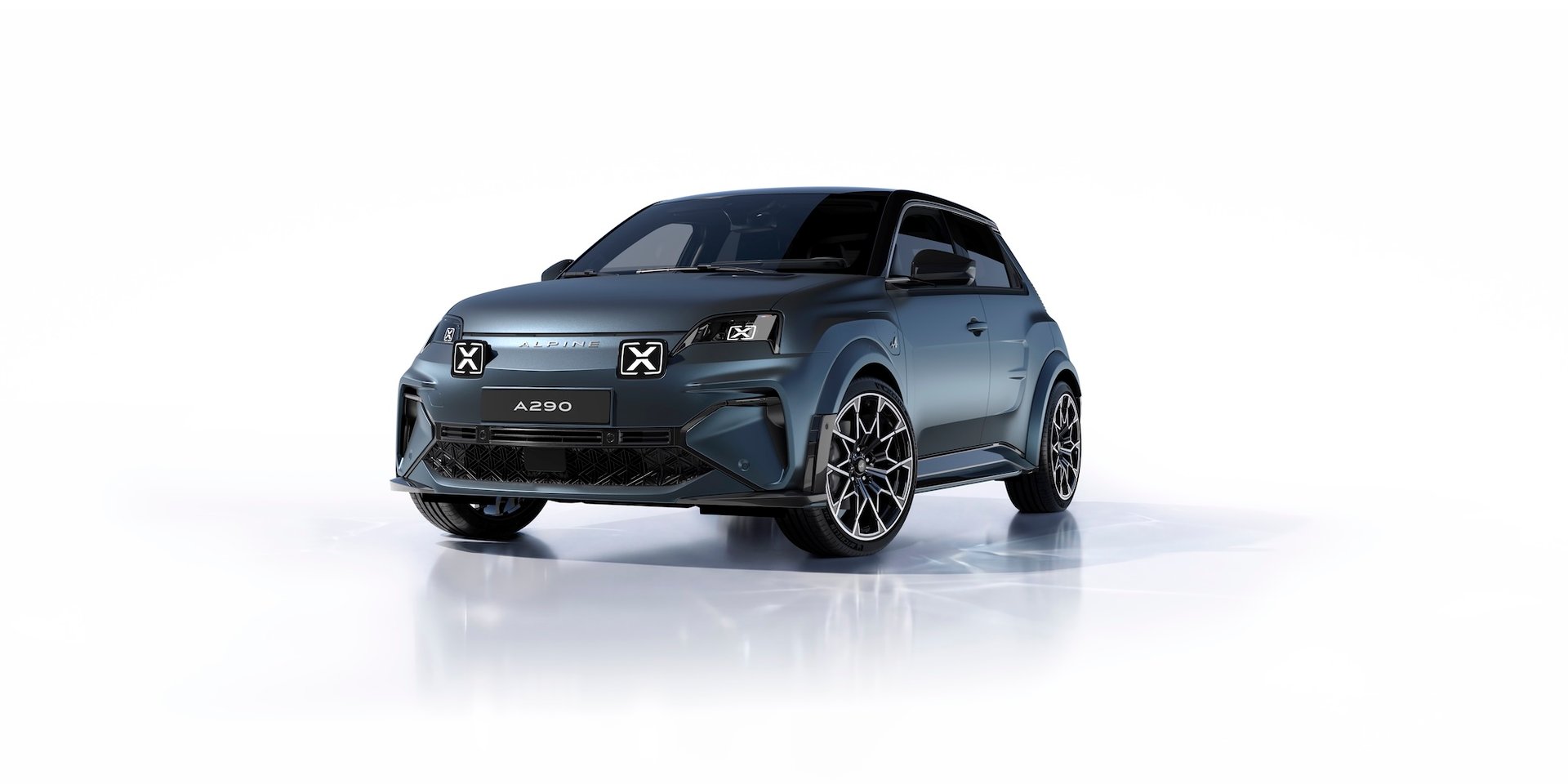
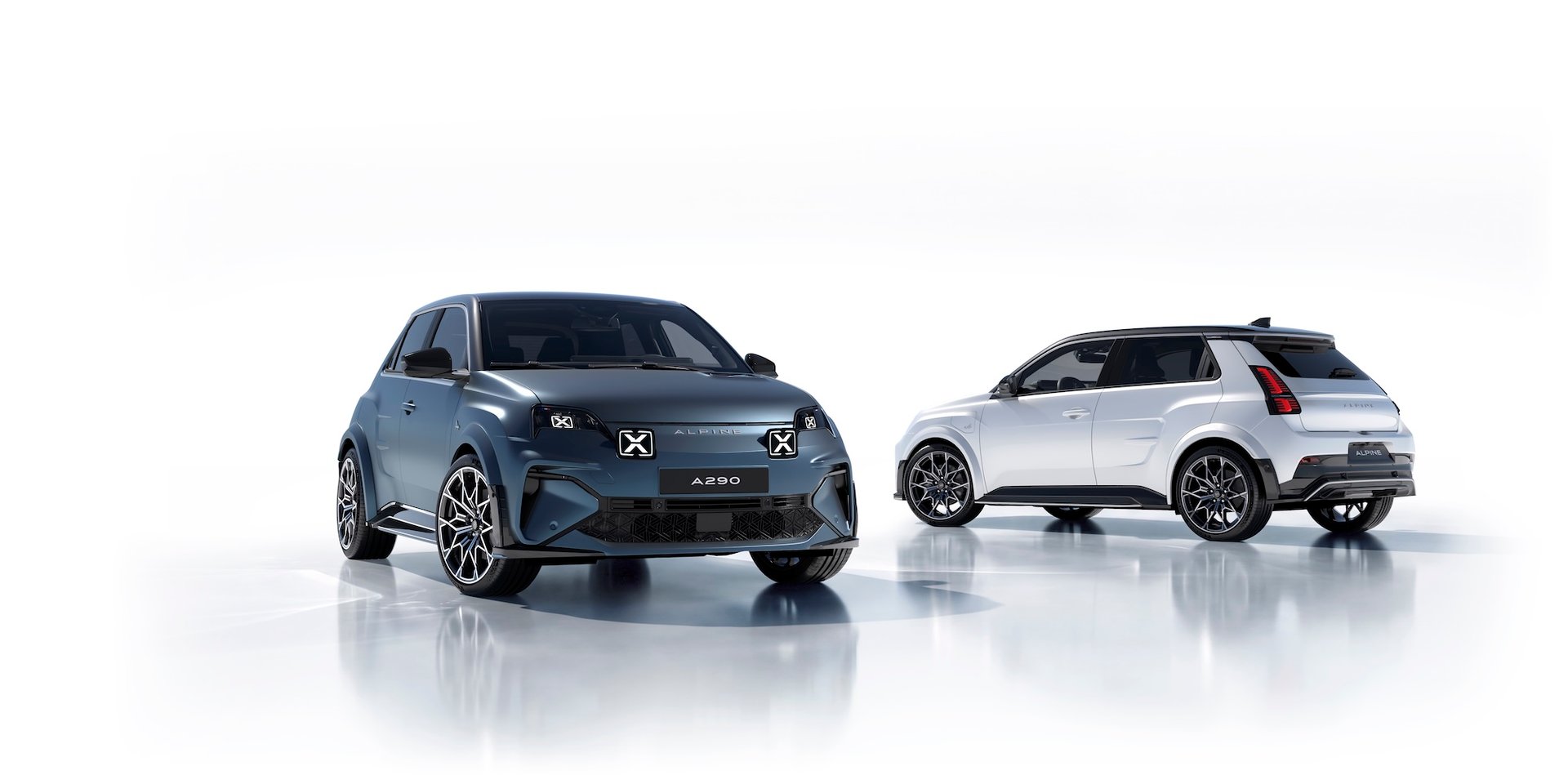
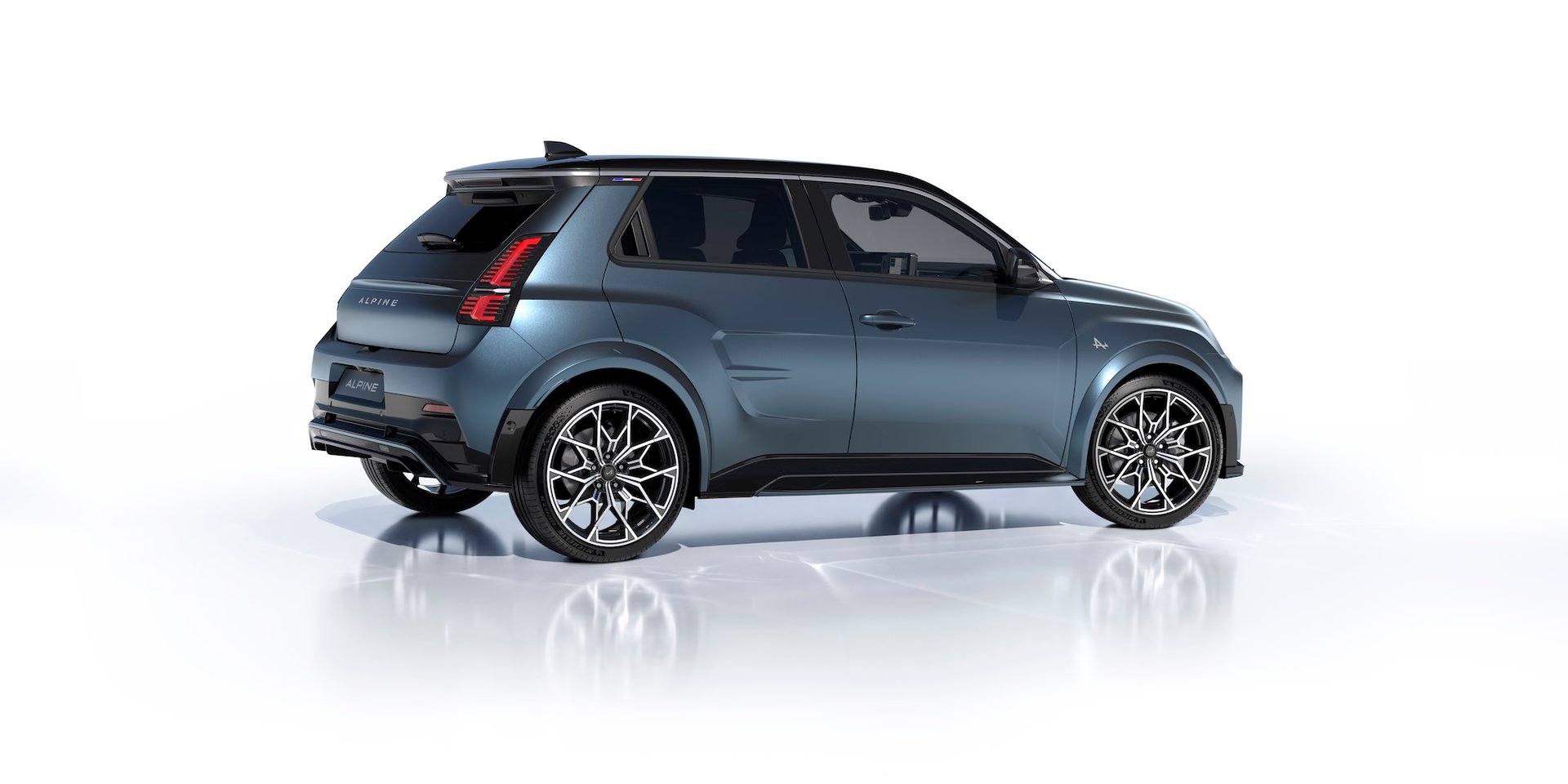
There is an interesting industrial lesson here. The A290 is based on an architecture extensively shared with Renault and has never pretended to be a wholly independent creation from end to end. Yet Alpine changed the product enough to give it a character of its own, and the market responded.
Paradoxically, the A290’s success therefore gives ammunition to those defending the current reorganisation: greater sharing with Renault does not necessarily condemn an Alpine to losing its character.
But the argument works both ways. An A290 can start life from a Renault 5 without betraying a long line of Alpine city cars, because no such line exists. The Alpine A110, by contrast, carries sixty years of mythology. The margin for error is not comparable.
The next Alpine A110: the ultimate test
This is where the reorganisation becomes much more sensitive.
The second-generation A110 left the Dieppe production line for the final time on 1st July 2026. Alpine built 28,701 examples of that generation from 2017, taking total A110 production at the site since 1969 to 35,450 cars.
Its successor faces a considerably harder task: going electric while preserving the sense of lightness, agility and intimacy behind the wheel that made the current A110 a benchmark.
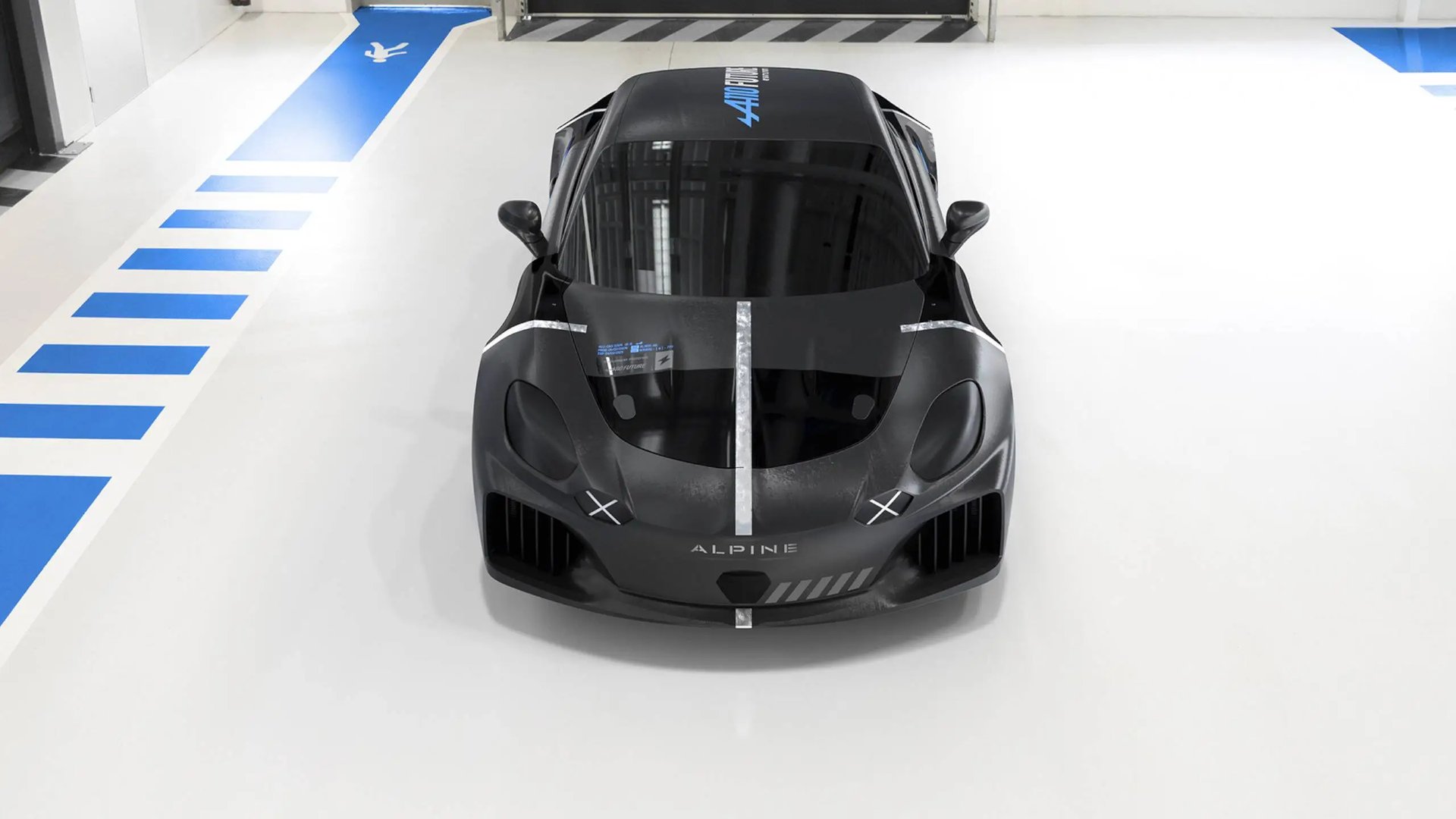
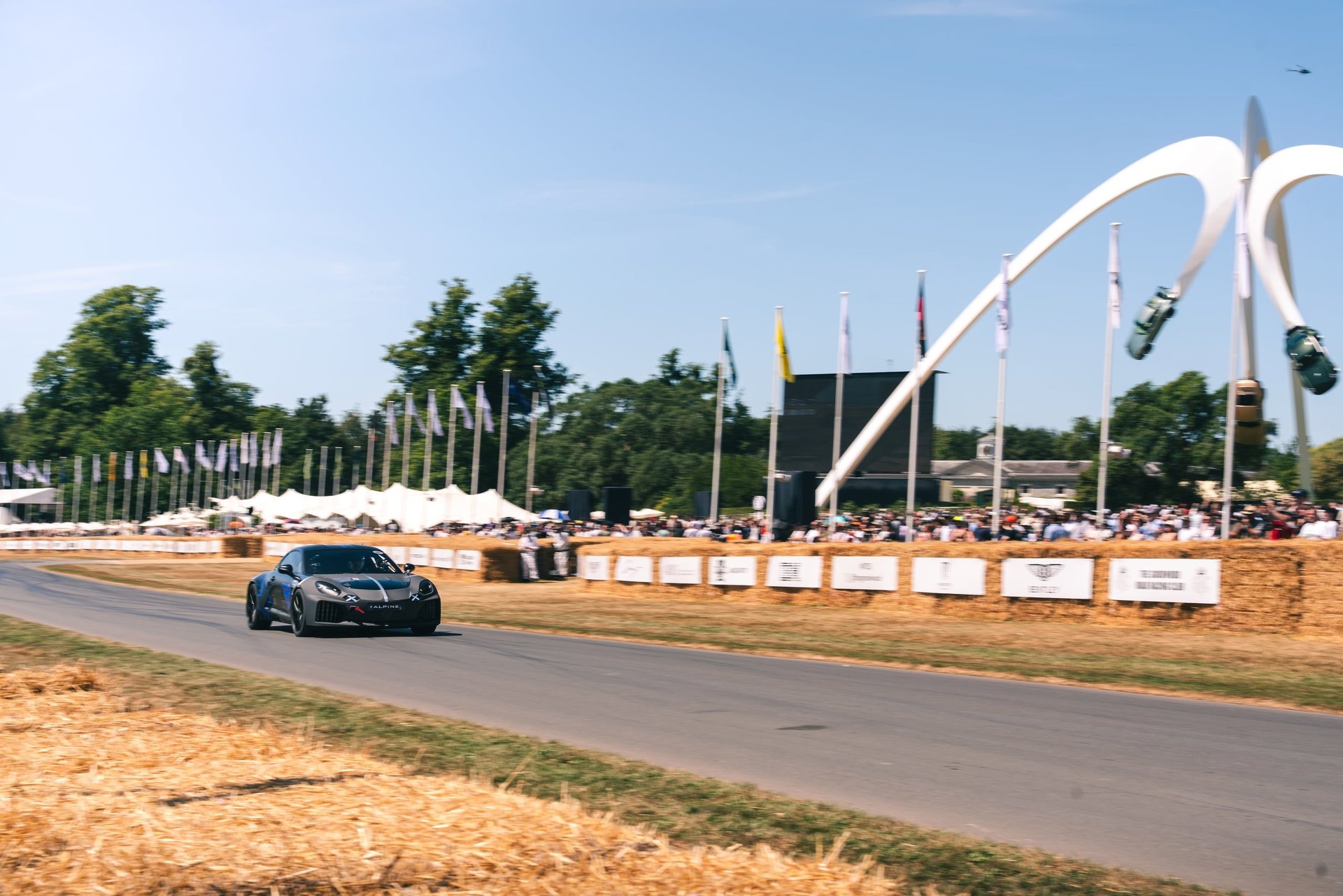
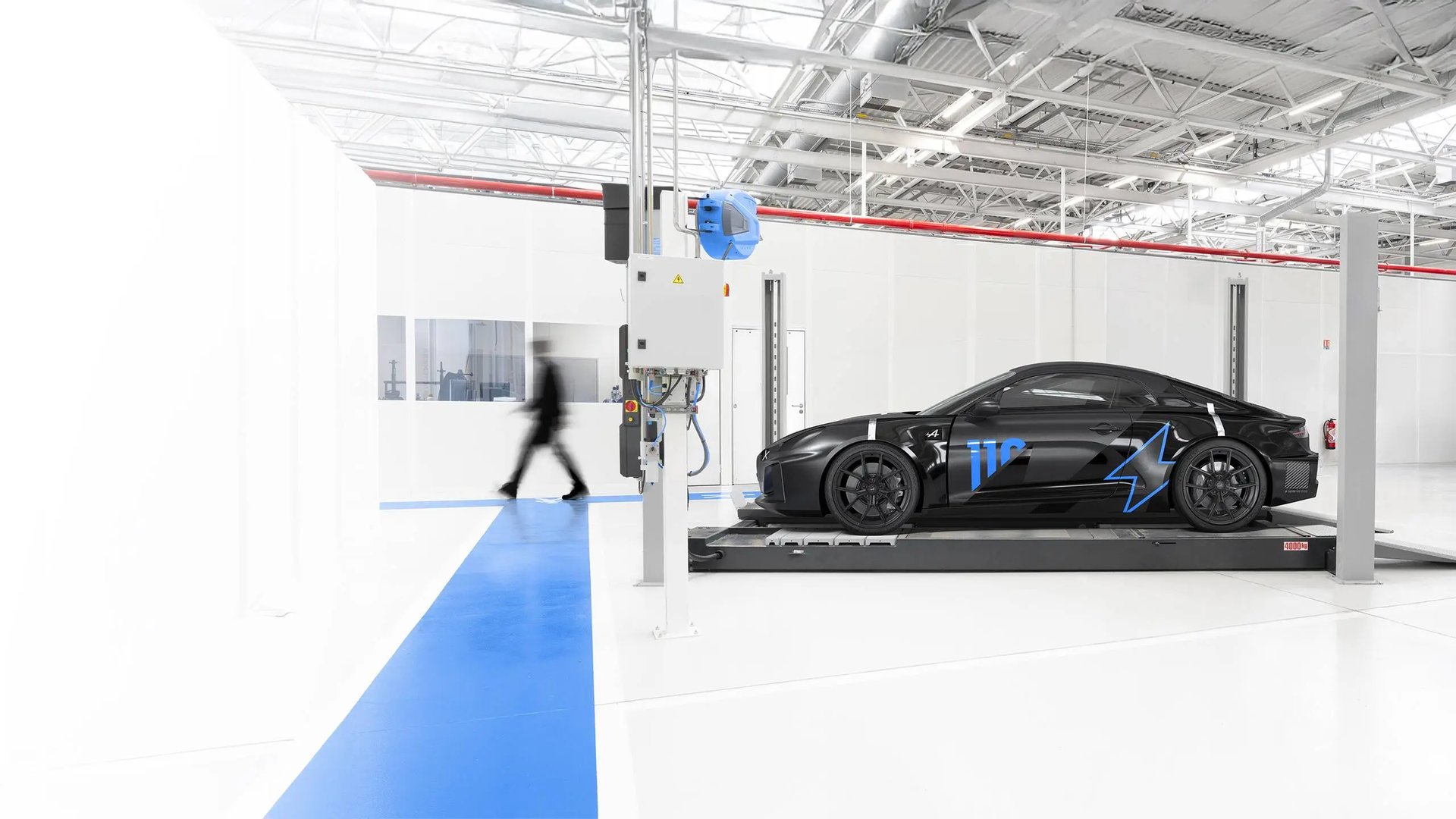
For that, Alpine chose to develop its own architecture, the Alpine Performance Platform. The A110 FUTURE development mule unveiled ahead of Goodwood, followed by the technical details released during the Festival of Speed, revealed the broad outlines of the package.
The APP uses an 800 V electrical architecture. Stored energy is split between the front and rear — around 25% at the front and 75% at the rear — rather than relying on the heavy, uniform underfloor battery layout common to many EVs. Two motors mounted on the rear axle can spin at up to 21,500 rpm and enable active torque vectoring.
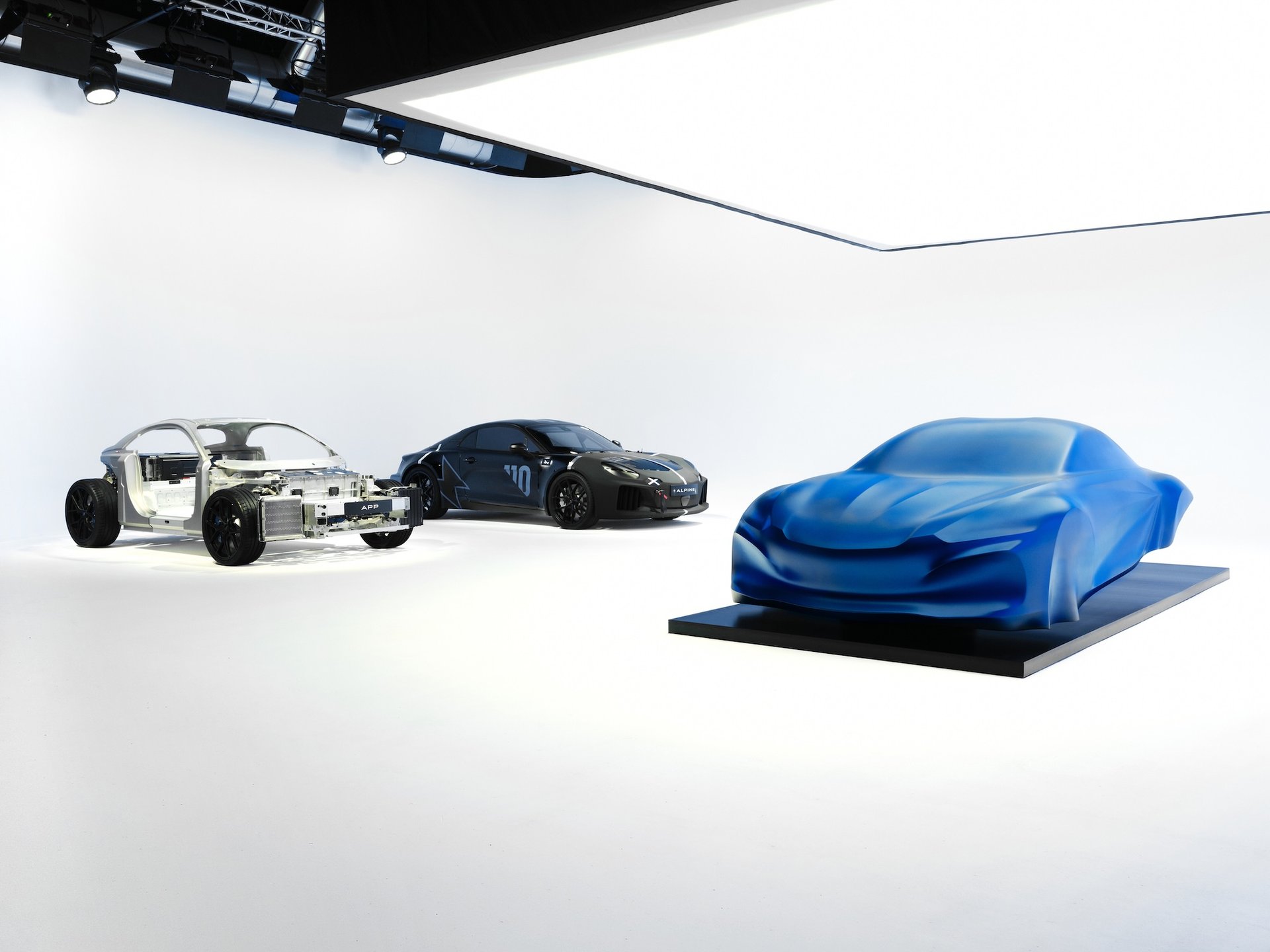
Alpine’s message is clear: the aim is not merely to build a fast electric sports car, but a car capable of beating the petrol A110 where it truly matters from behind the wheel. Philippe Krief has even promised the British press that the future A110 will be better than the current car. A formidable promise…
A timetable that has slipped substantially
Because the timetable has kept moving.
In June 2023, the Alpine Revolution plan still placed the electric renewal of the range around the end of 2026. In autumn 2025, Alpine was still talking about revealing the third-generation A110 in 2026. Goodwood then pushed the full unveiling into 2027.
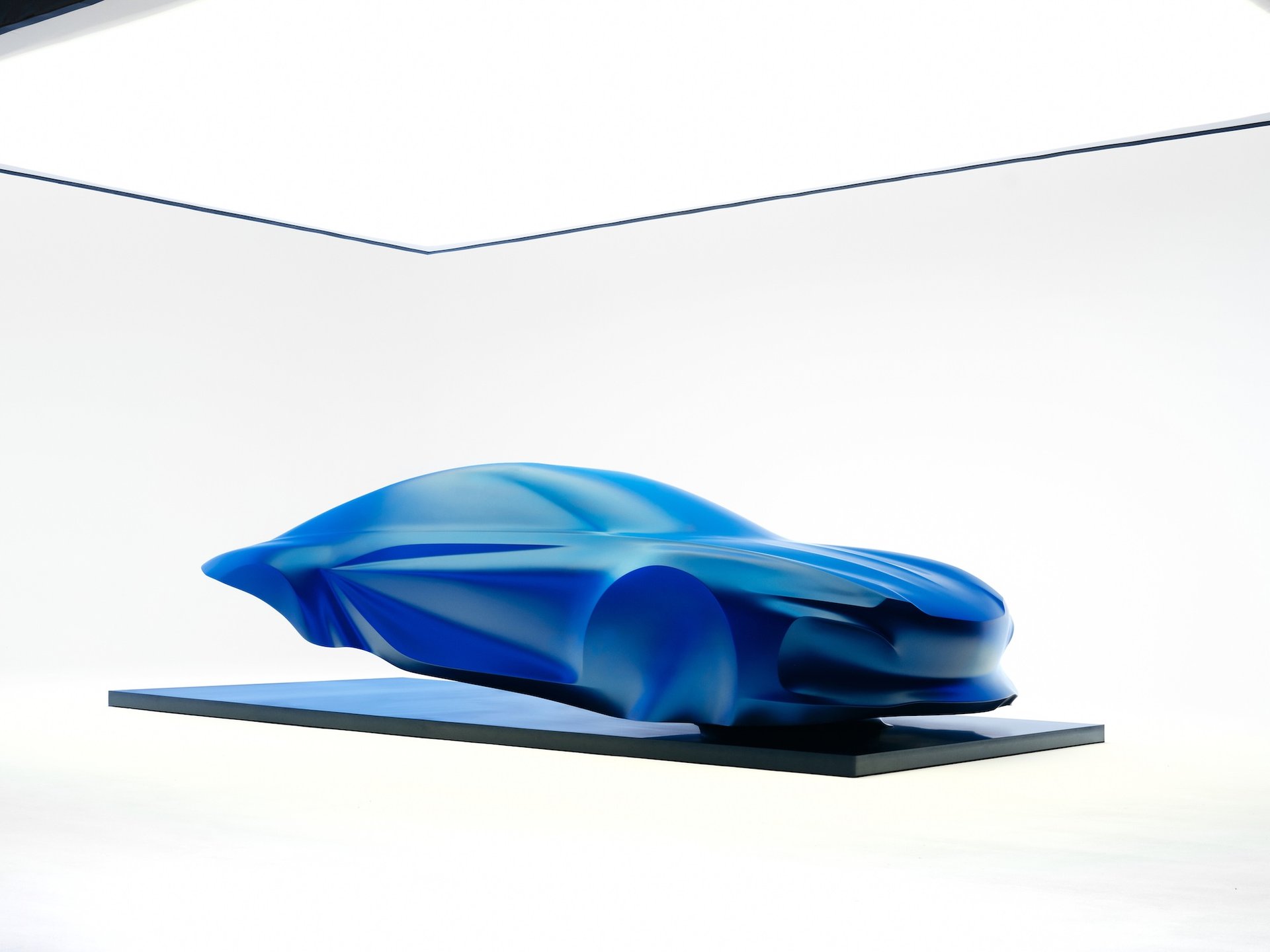
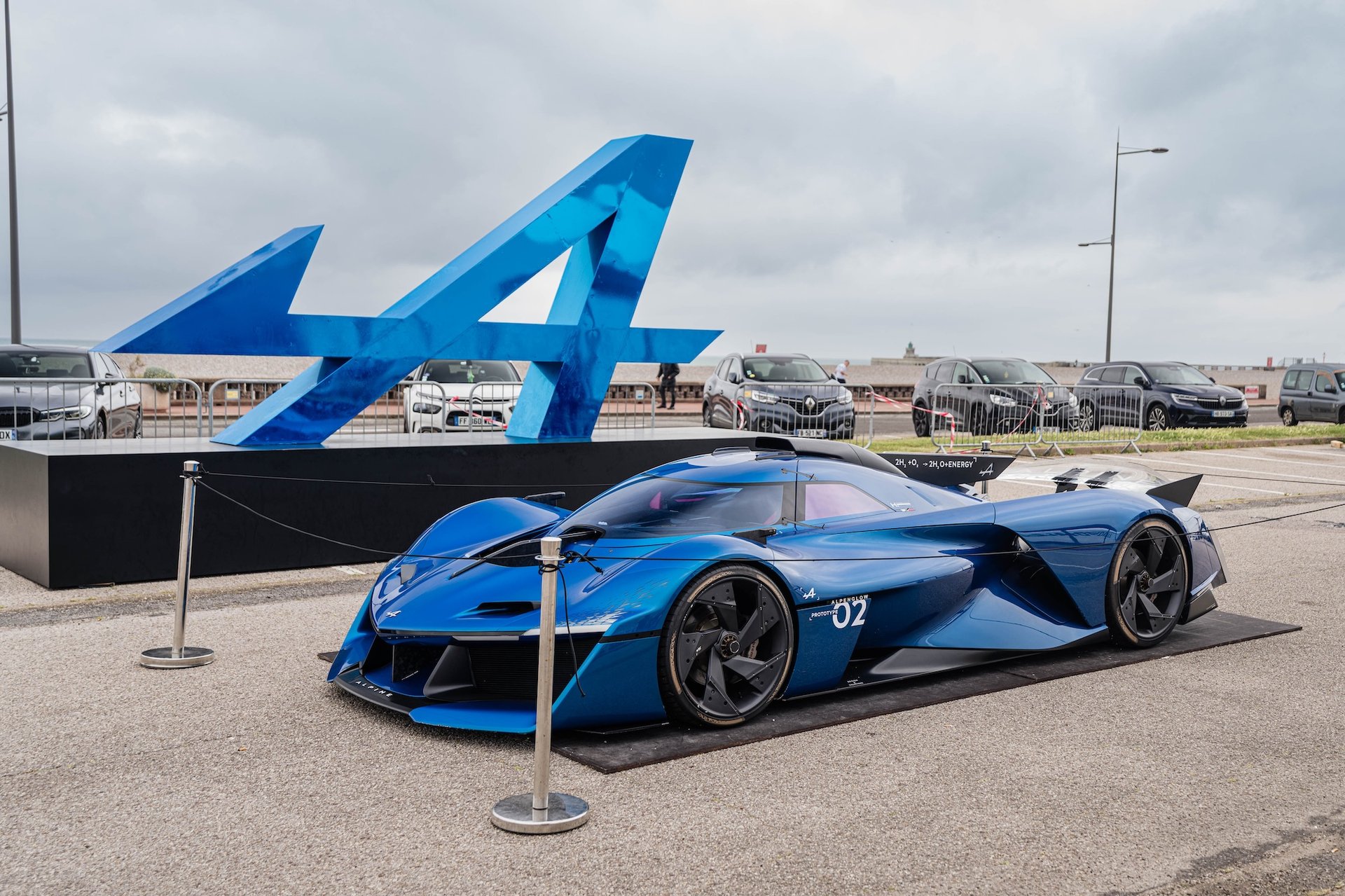
At the Paris Motor Show, the car ultimately appeared only as a full-size sculpture beneath a blue veil, which we had been able to see in a private preview. Alpine said the final design would continue to be revealed progressively.
Official communications now provide a much more precise deadline: the next A110 is expected at the end of 2027.
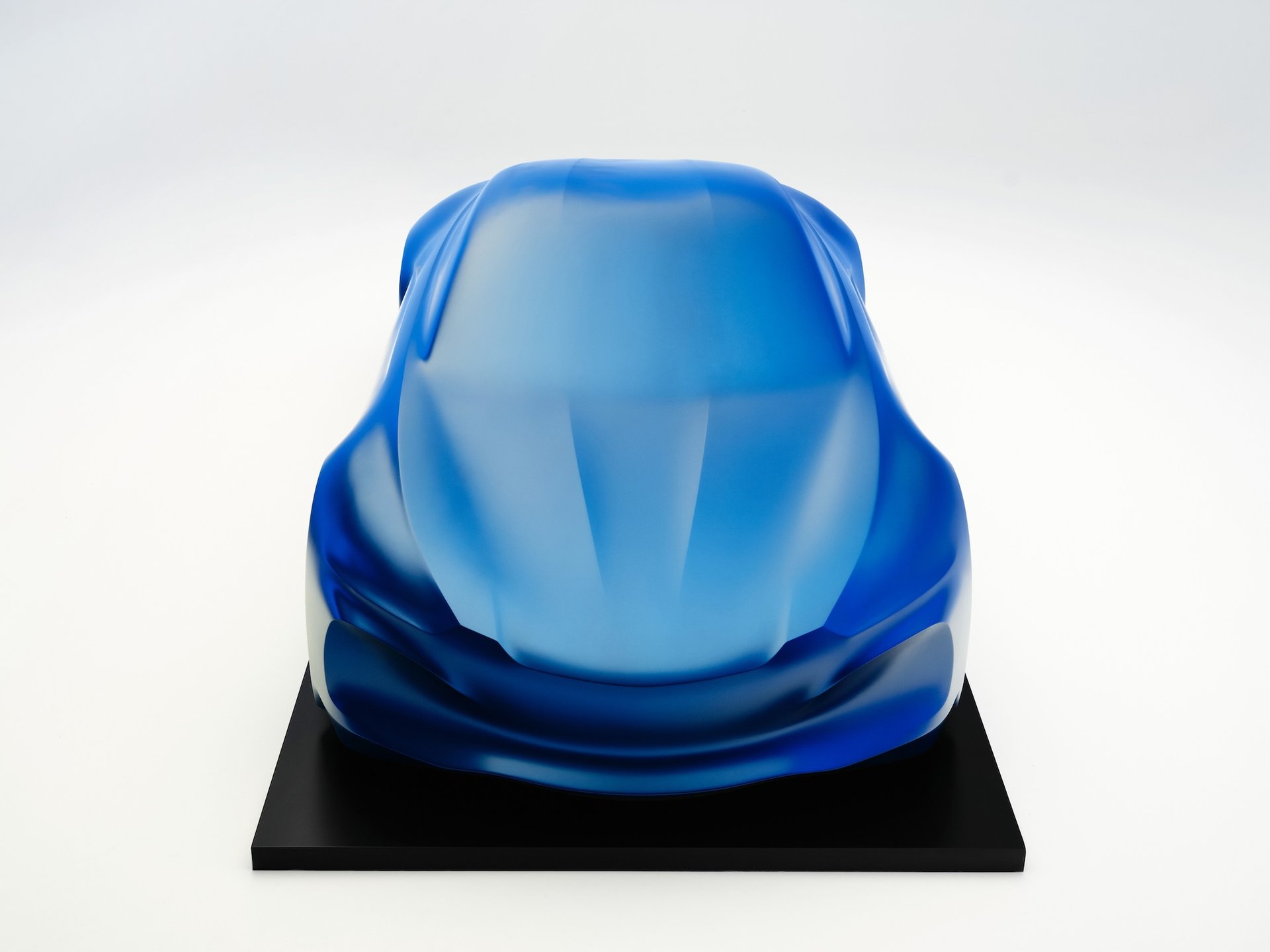
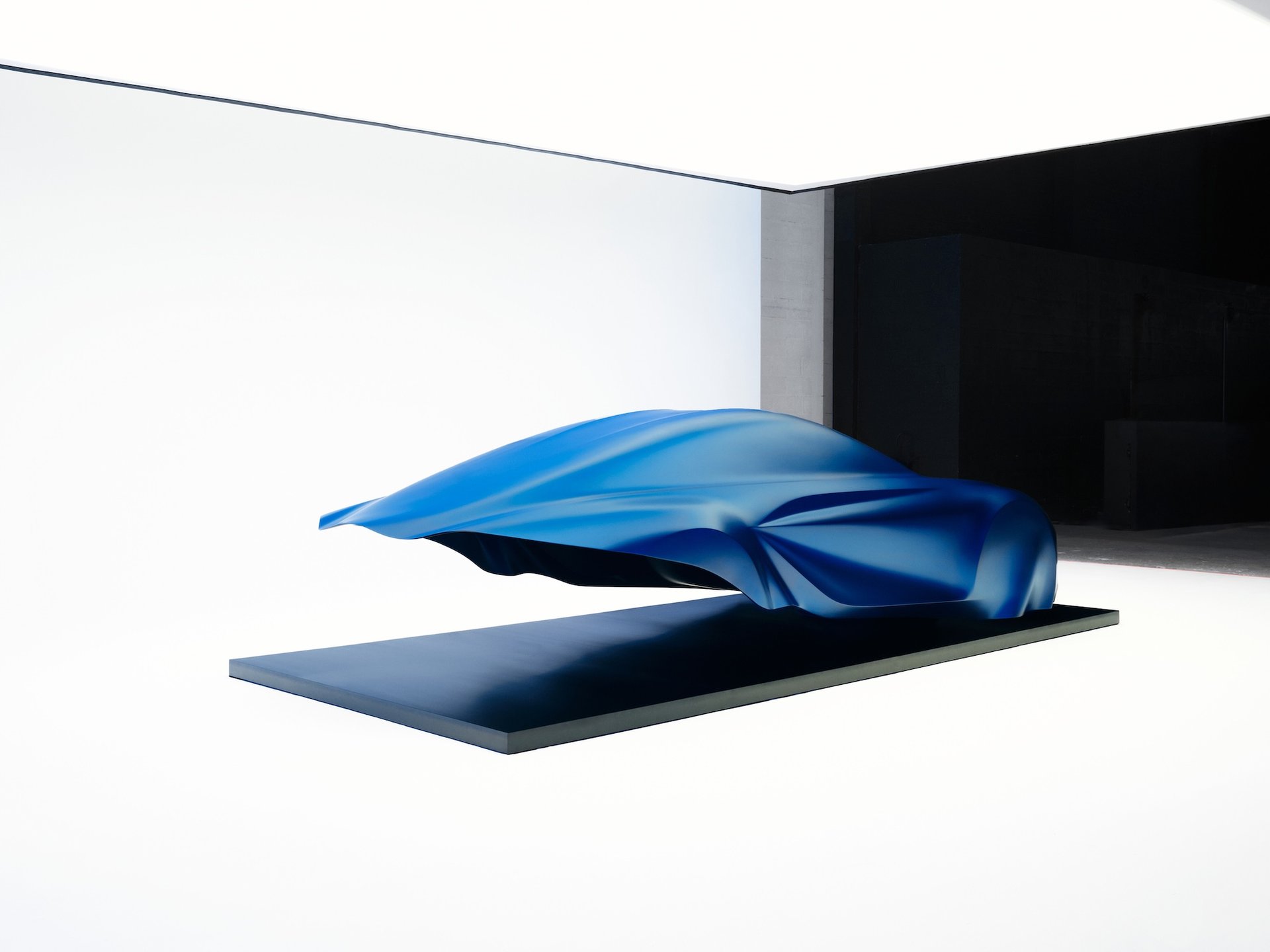
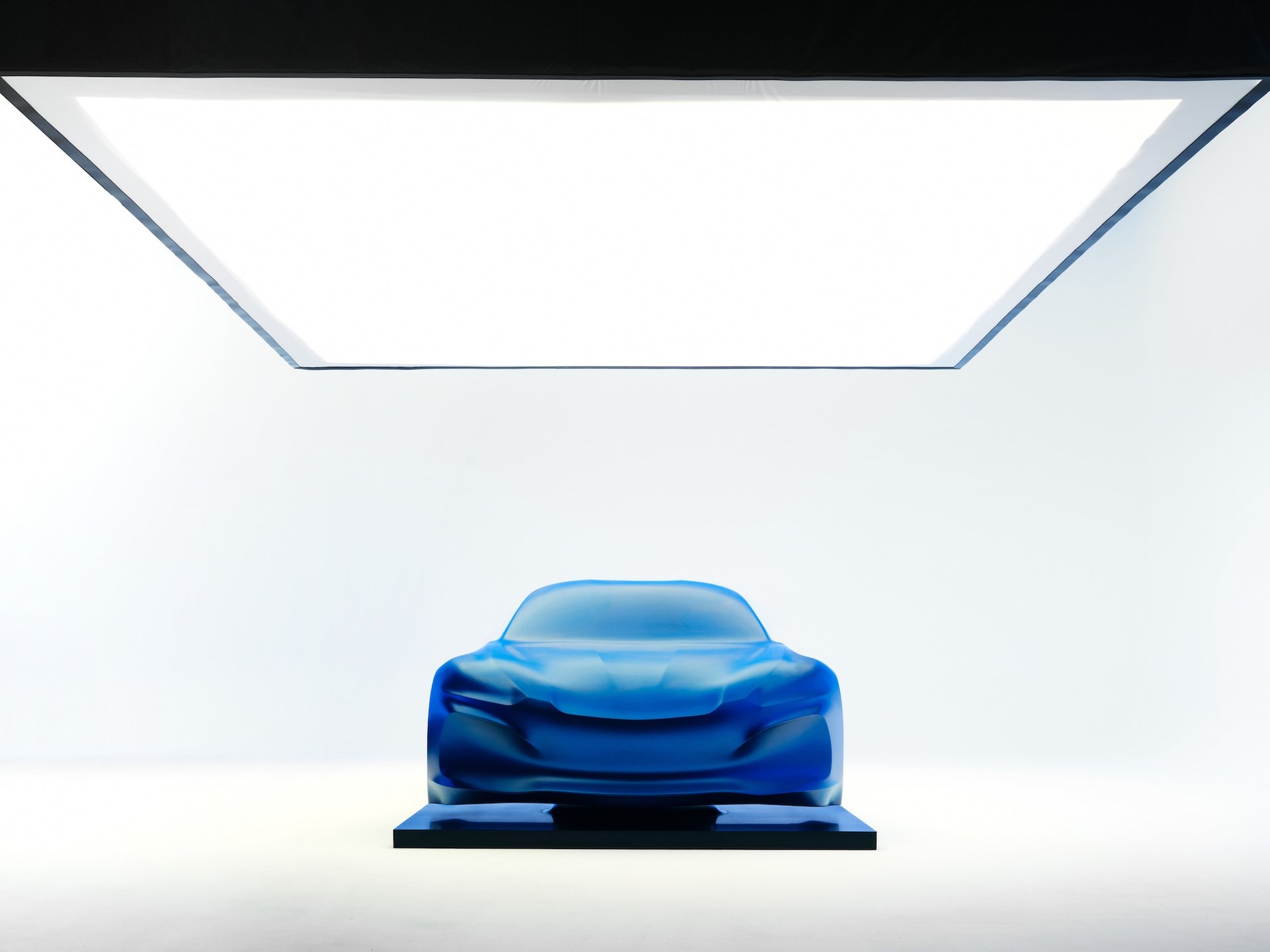
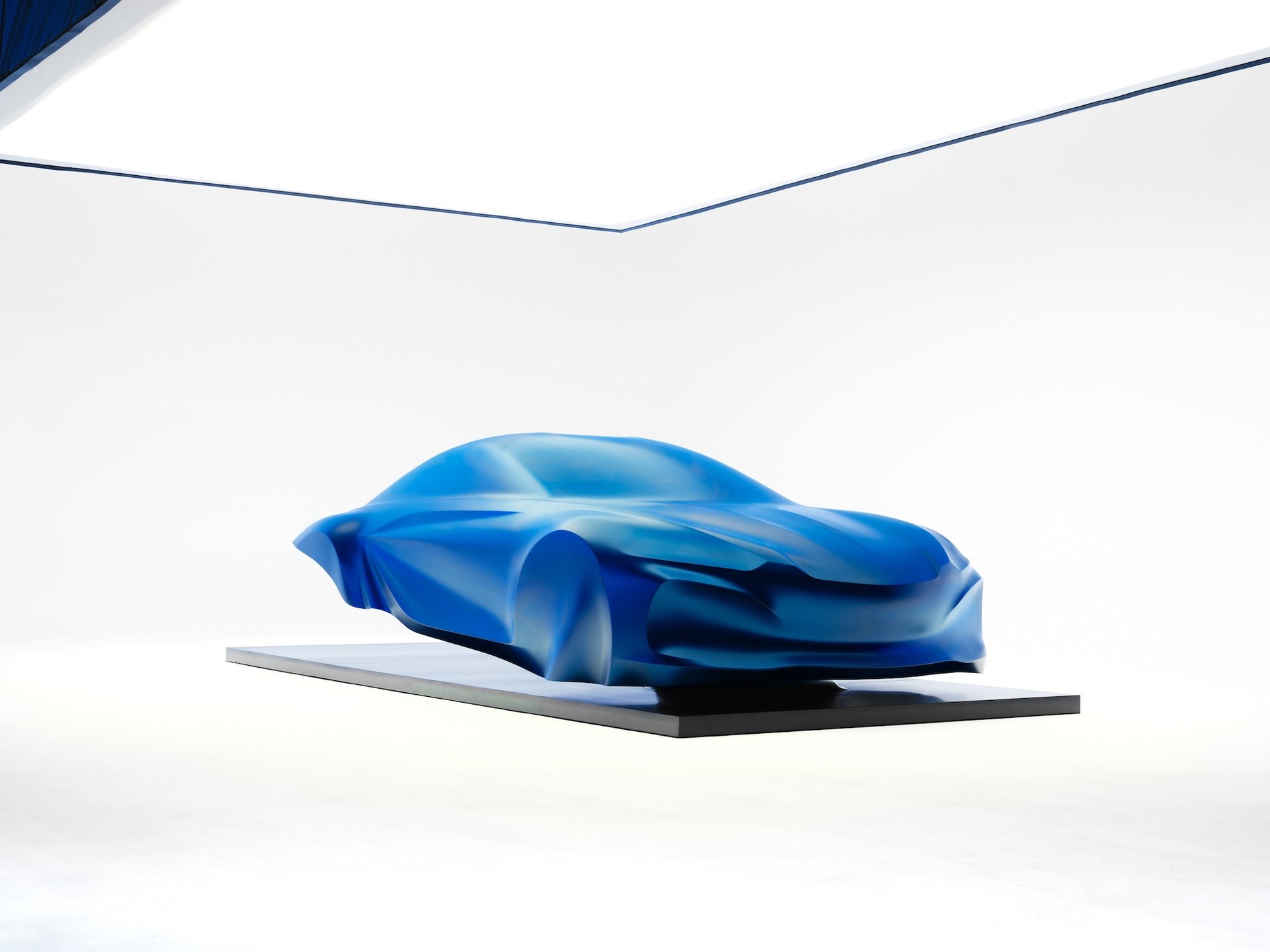
Between the roadmap announced in 2023 and the one in place in 2026, the programme has therefore slipped by roughly a year. Some reports have pointed in particular to the challenges of ramping up the battery supply chain and Verkor. Alpine has not, however, officially attributed the delay to any single cause. On a programme this complex, reducing the issue to one supplier would probably be too simplistic.
Another point makes the story even more interesting: the APP was designed so that, with modifications, it can accommodate a combustion powertrain. We confirmed that during our meeting around the sculpture previewing the future A110.
That does not mean a third-generation petrol A110 has been approved. It has not. The announced programme remains electric. But Alpine has deliberately retained a technical escape route.
The symbolism is striking. In 2023, the manufacturer was still promising an all-electric range by the end of 2026. Three years later, Alpine is publicly explaining that the platform of its defining sports car was designed so that a combustion engine could be installed if circumstances required it.
Dieppe between two generations
For the Dieppe factory, the situation is particularly uncomfortable. The petrol A110 has not been produced there since July. According to L’Argus, the A390 is running at a rate far below the level seen at the beginning of its production ramp-up. And the third-generation A110 is not due until the end of 2027.
The problem, then, is not simply the future car itself. It is the industrial workload between now and its arrival.
In its leaflet published after the 12 November CSE meeting, the CFDT specifically highlighted the lack of visibility over future projects and the workload facing Alpine Cars teams. This is a trade union interpretation and should be presented as such. It nevertheless points to the central risk: a brand can absorb a slow-starting model; a factory has far less room to do so.
Viry, WEC, Ampere: a full year of retrenchment
Taken in isolation, the Alpine Cars reorganisation could look like little more than an administrative exercise. Set against the past twelve months at Renault Group, it becomes far more significant.
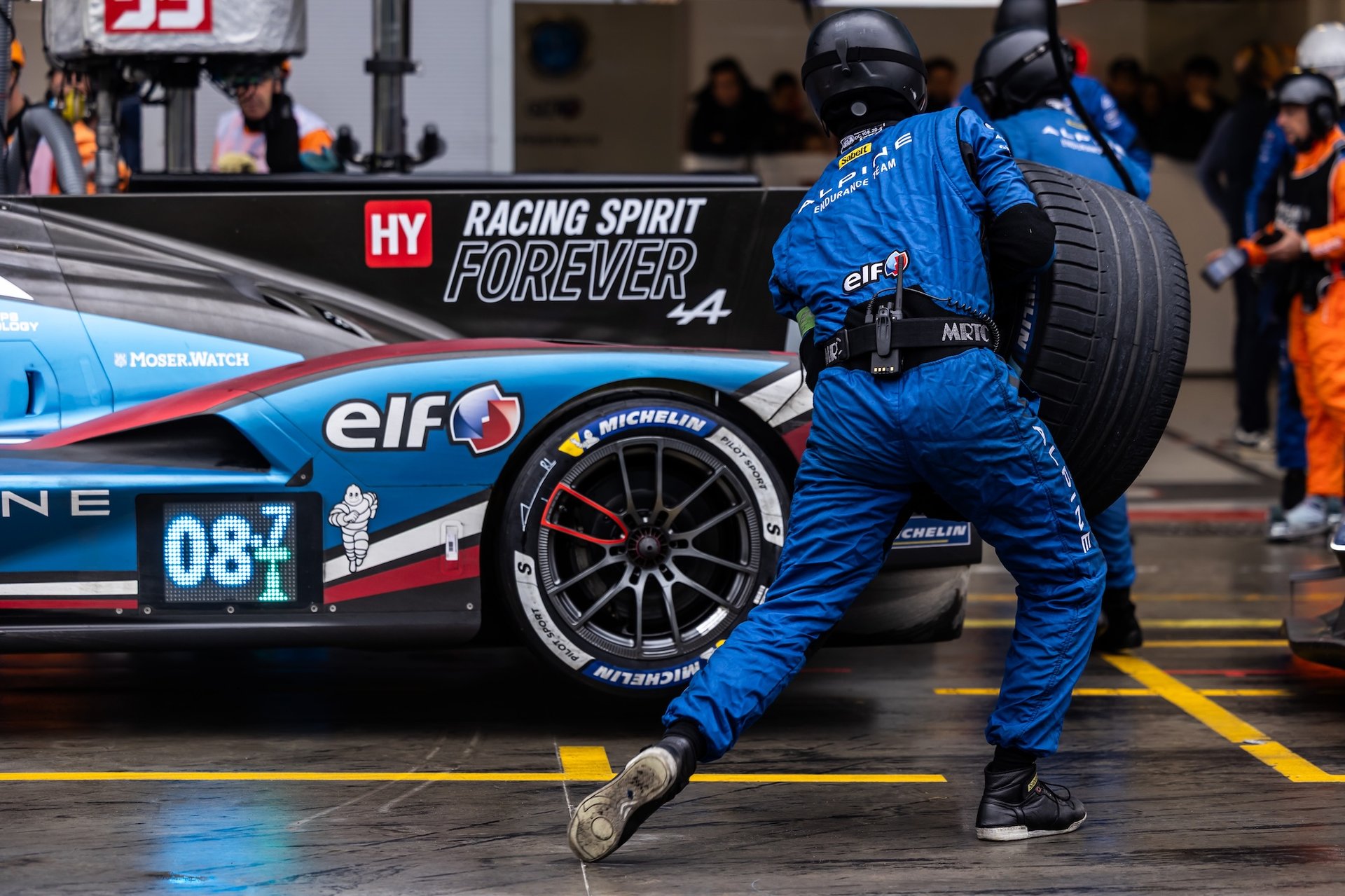
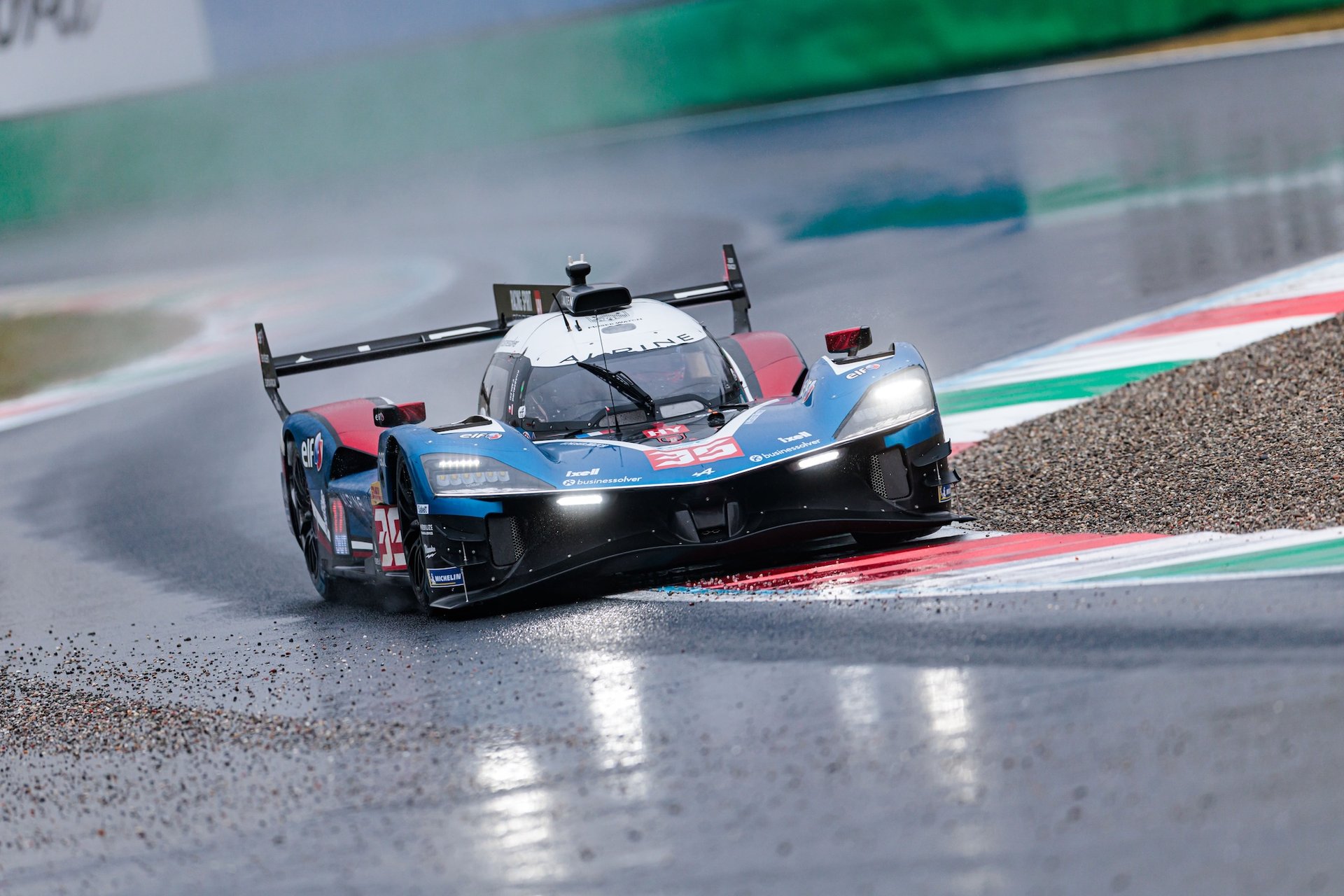
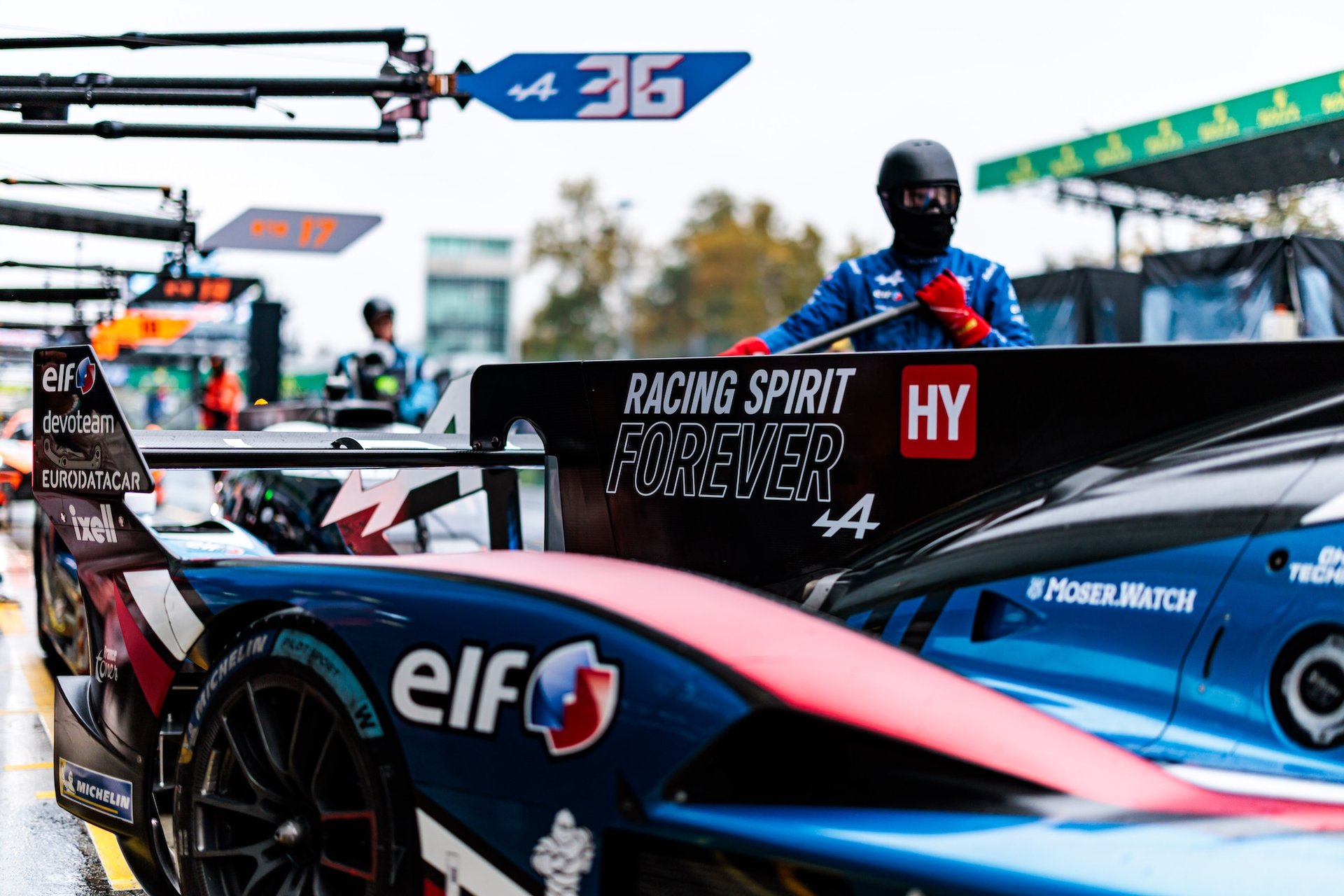
On 12 February 2026, Alpine announced that it would withdraw from the FIA World Endurance Championship at the end of the season. The A424 therefore disappears after only three campaigns, even though the prototype had finally become genuinely competitive.
At Fuji in 2025, Alpine scored the A424’s first victory, in the 100th race in FIA WEC history. And in its final season, the car continued to reach the podium. At Monza, in its final official race, the No.36 finished second, just 5.607 seconds behind the winning Cadillac.
That departure closes a story begun with Signatech in 2013 and brought to an end in 2026. Above all, it shows that sporting performance is no longer enough to guarantee a programme’s survival when it no longer fits the group’s economic priorities.
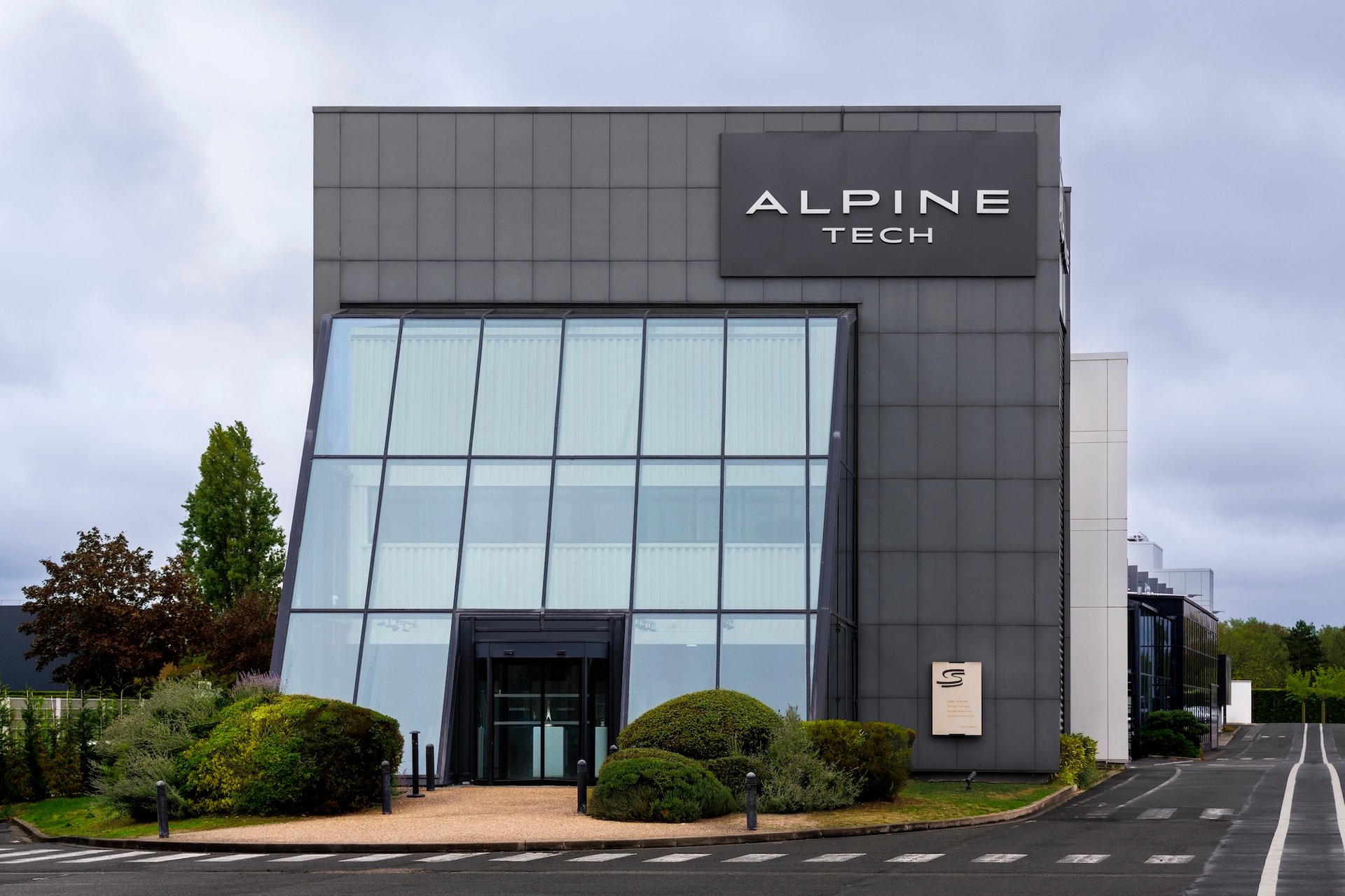
Viry-Châtillon offers an even more brutal example. Renault ended its role as a Formula 1 engine manufacturer at the end of 2025, with the Alpine team at Enstone becoming a Mercedes customer from 2026. The French site was then supposed to be transformed around “Hypertech Alpine”, with work on batteries, electric motors, the supercar and various advanced-technology projects.
Two years after that transformation was announced, Renault changed course. On 22 October 2026, the group signed an agreement paving the way for the sale of Alpine Racing SAS to Belgium’s Dumarey Group.
Precision matters here: the sale has not yet been legally completed. The transaction remains subject to employee consultation procedures and the necessary approvals. The proposal does, however, provide for Dumarey to take over the entity and its employees.
At the same time, Renault has begun reintegrating Ampere into the group after abandoning its flotation. Here too, the logic is to reduce the number of autonomous structures. As for Mobilize, saying it has disappeared would be misleading: some services, notably car-sharing operations, have been discontinued, but Mobilize Financial Services remains a pillar of the group.
François Provost’s method therefore appears fairly consistent. A separate entity must demonstrate that the value created by its autonomy outweighs the complexity it adds. If it cannot, it moves back towards the centre. Alpine is no longer exempt from that rule.
And Formula 1? The exception that remains
Formula 1 needs to be treated separately, because Alpine Cars and the Enstone racing team are still frequently confused.
Alpine Racing Limited is a separate company. It is not directly affected by the plan presented to the Alpine Cars CSE. Renault Group owns 76%, with the remaining 24% acquired in 2023 by an investor group led by Otro Capital for €200 million.
François Provost confirmed soon after taking office that Alpine would remain in Formula 1. Even here, however, the Renault Group CEO’s support is not unconditional. At the Paris Motor Show, François Provost explained that the investment made more sense if the Alpines regularly appeared among the first three or four cars shown on television.
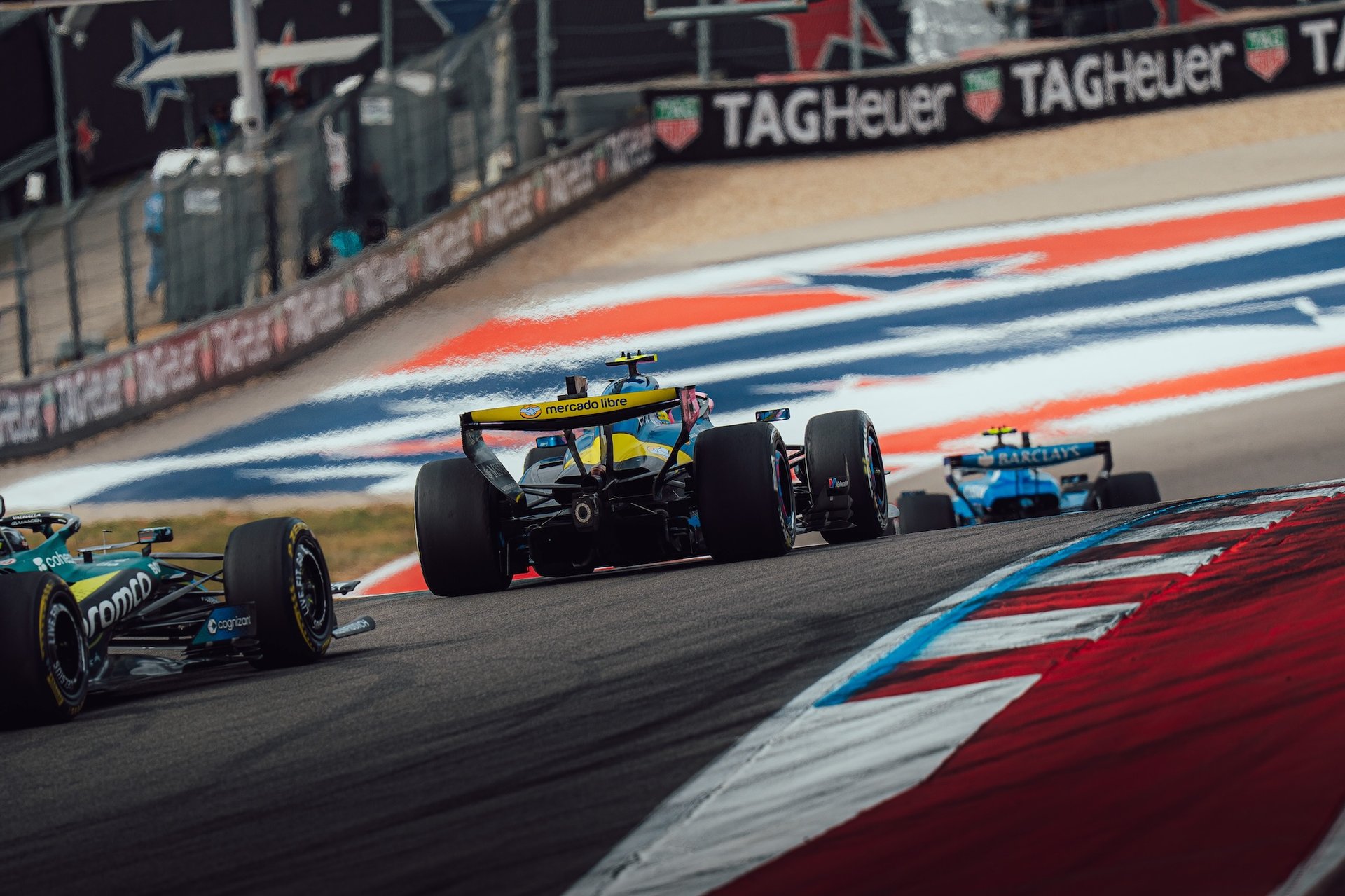
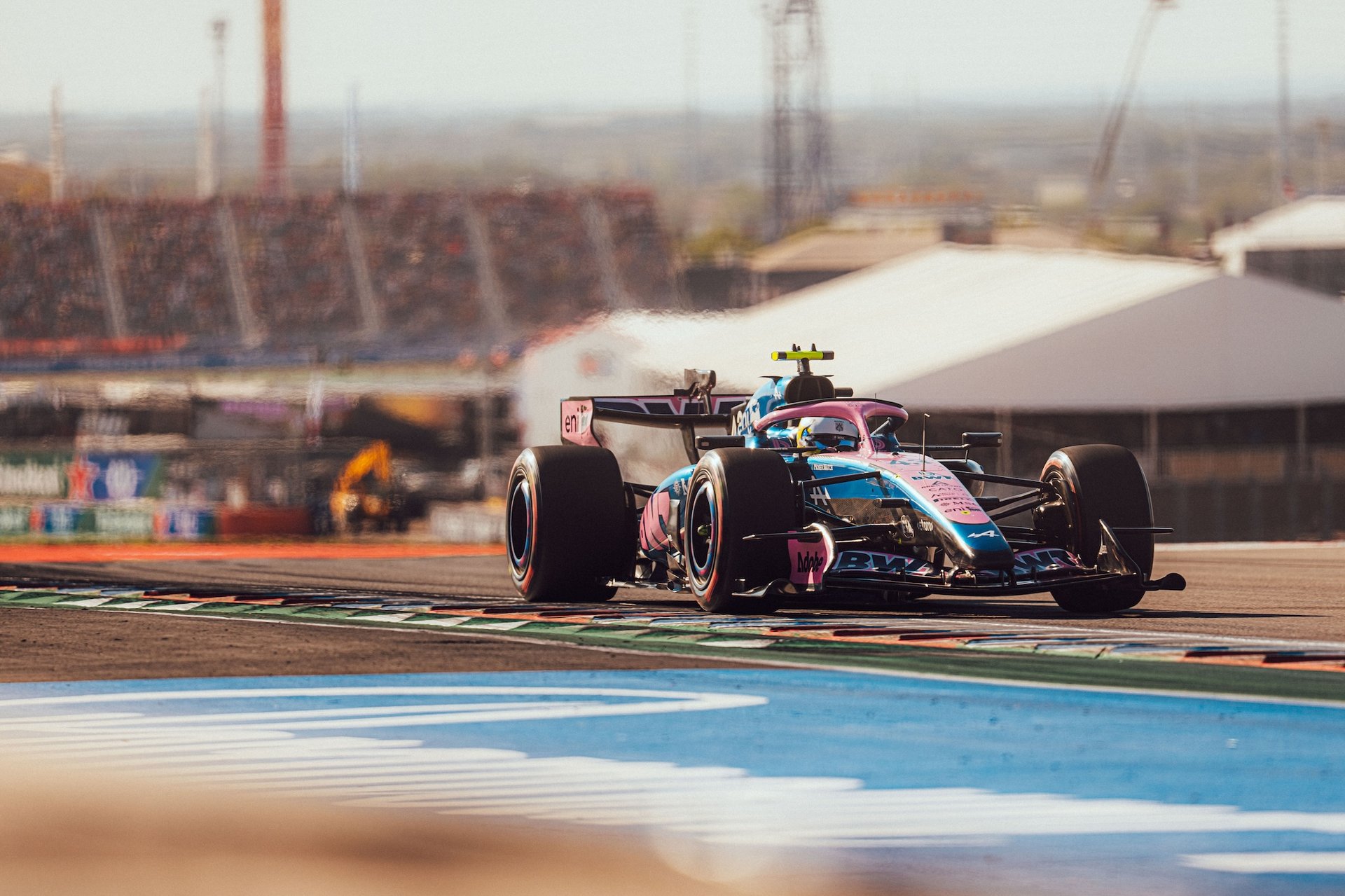
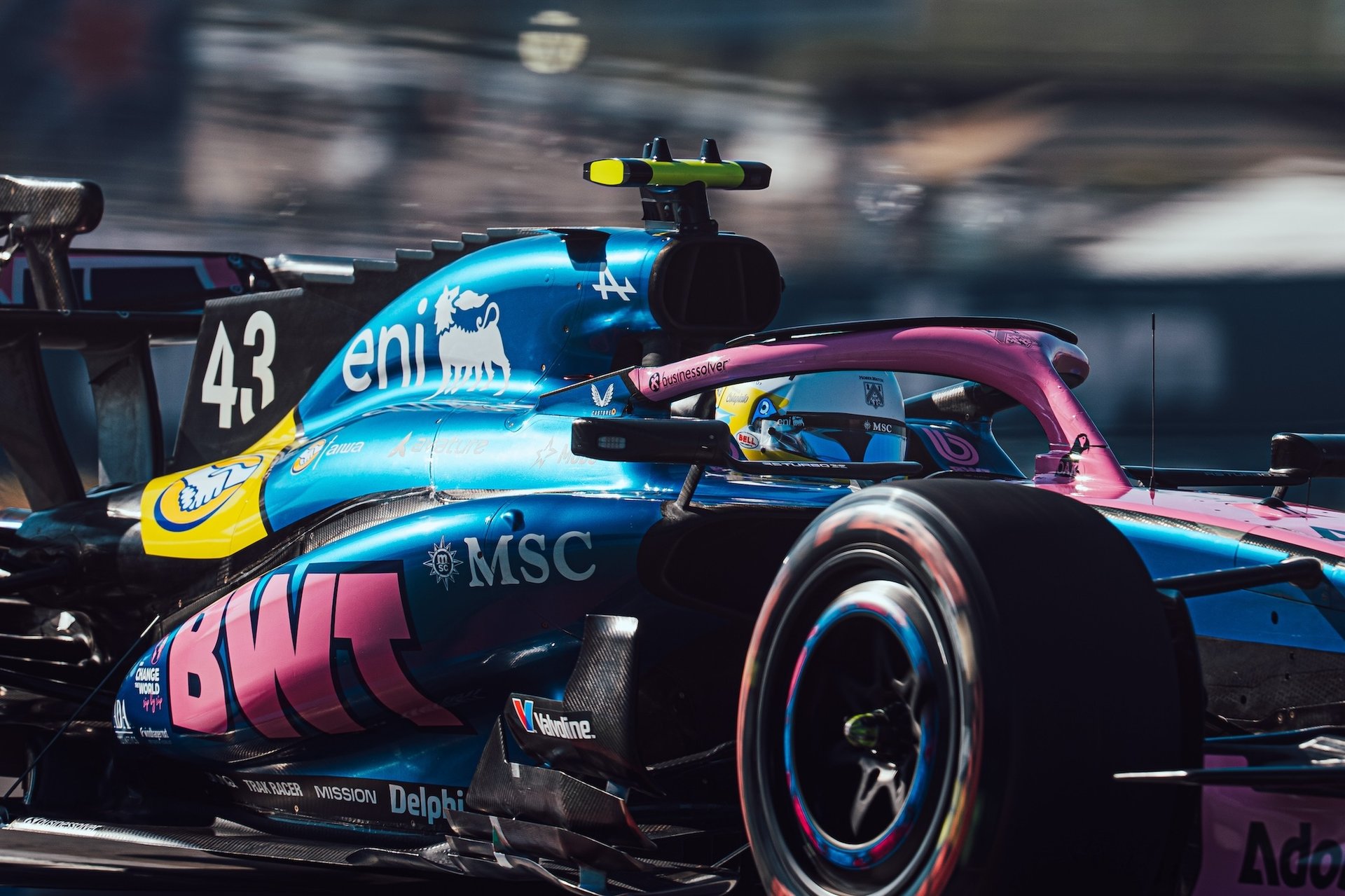
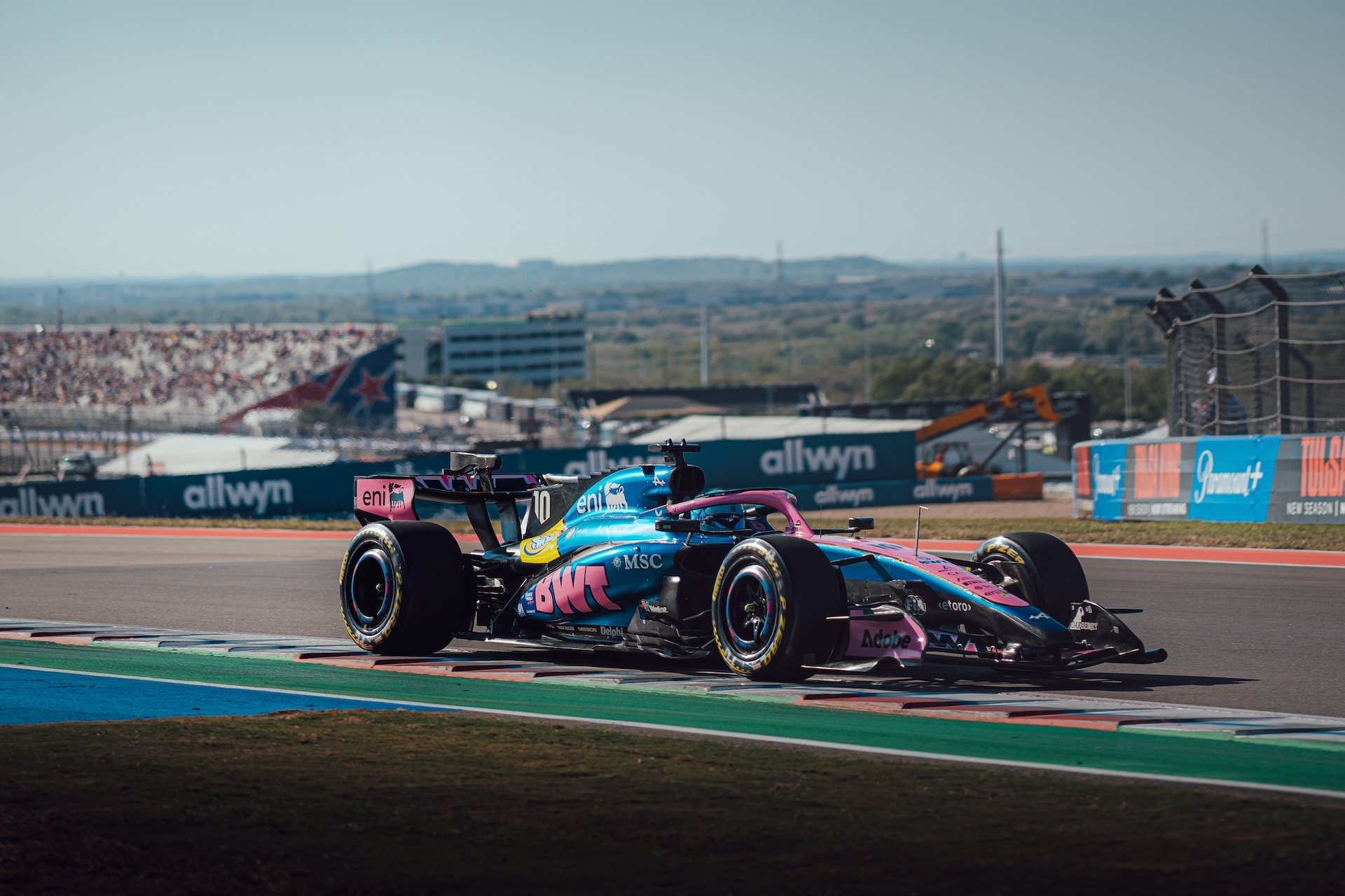
The switch to Mercedes power in 2026 fits the same logic. Renault abandoned development of its own power unit for the new regulations in order to concentrate Enstone’s resources on the car and race operations. The Mercedes agreement covers both power unit and gearbox from 2026, with the deal announced to run until at least 2030.
Formula 1 also retains something the Alpine A424 could not offer on the same scale: a global marketing platform. The partnership with Gucci is proof of that. From 2027, the team will compete as Gucci Racing Alpine Formula One Team.
The irony is hard to miss. Gucci belongs to Kering, now led by Luca de Meo, the man who turned Alpine into an autonomous Business Unit and made Formula 1 one of the pillars of its reach. The motor industry has a fondness for circular journeys.
Renault and Alpine: a long history of supervised freedom
There is something distinctly familiar about all this. Jean Rédélé founded Alpine in Dieppe on 22 June 1955 using Renault mechanicals. The 4CV, Dauphine and later the R8 supplied the hardware; Alpine brought lightness, its own bodywork and a radically different interpretation of the motor car.
That relationship eventually became institutional. Renault took control of Alpine in 1973, the year of the first World Rally Championship manufacturers’ title. Renault Sport was created in 1976 by bringing together the racing activities of Renault, Alpine and Gordini. The A310, GTA and then A610 carried the story through to 1995. That year, Alpine car production stopped in Dieppe and the name went dormant.
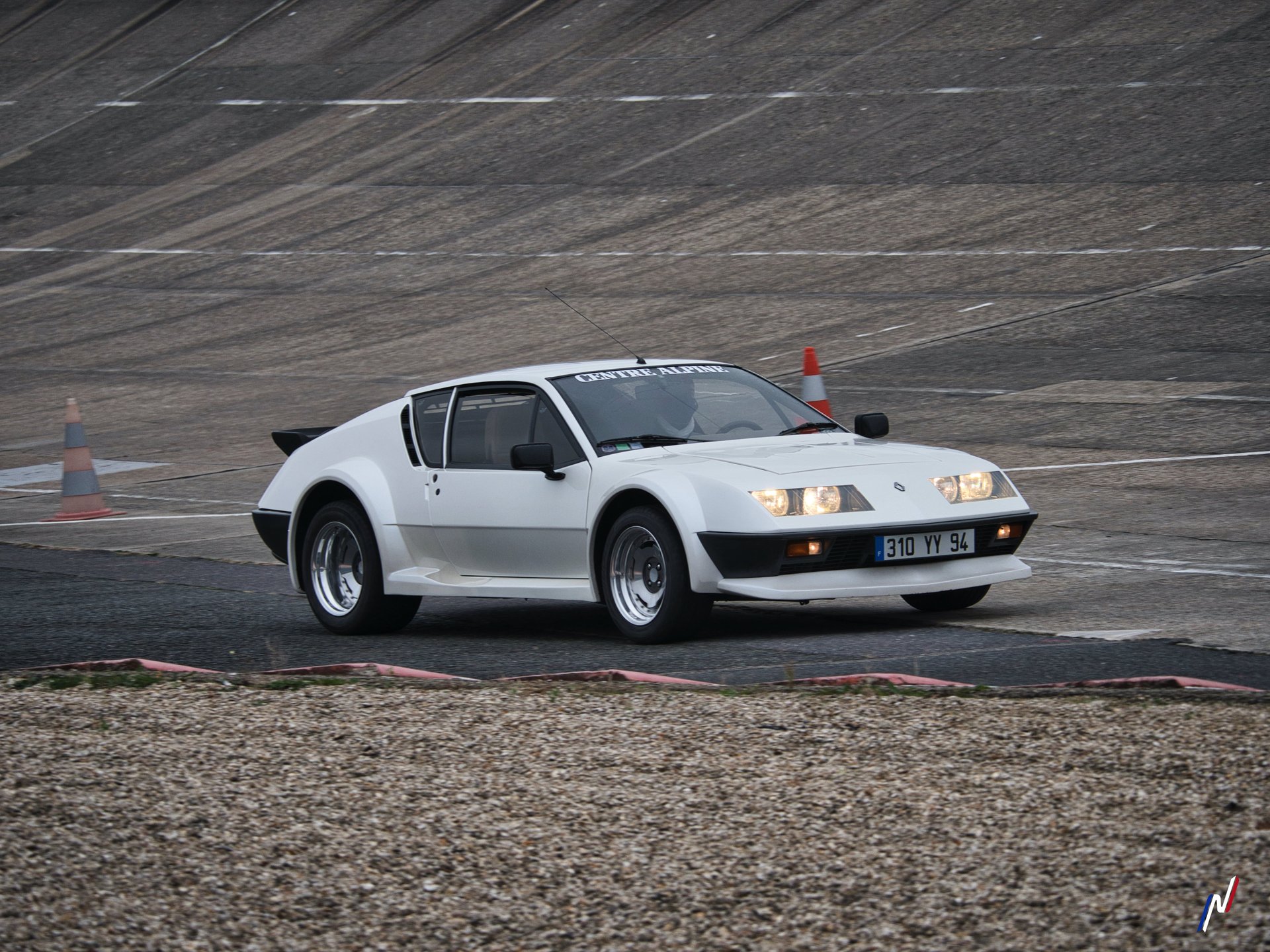
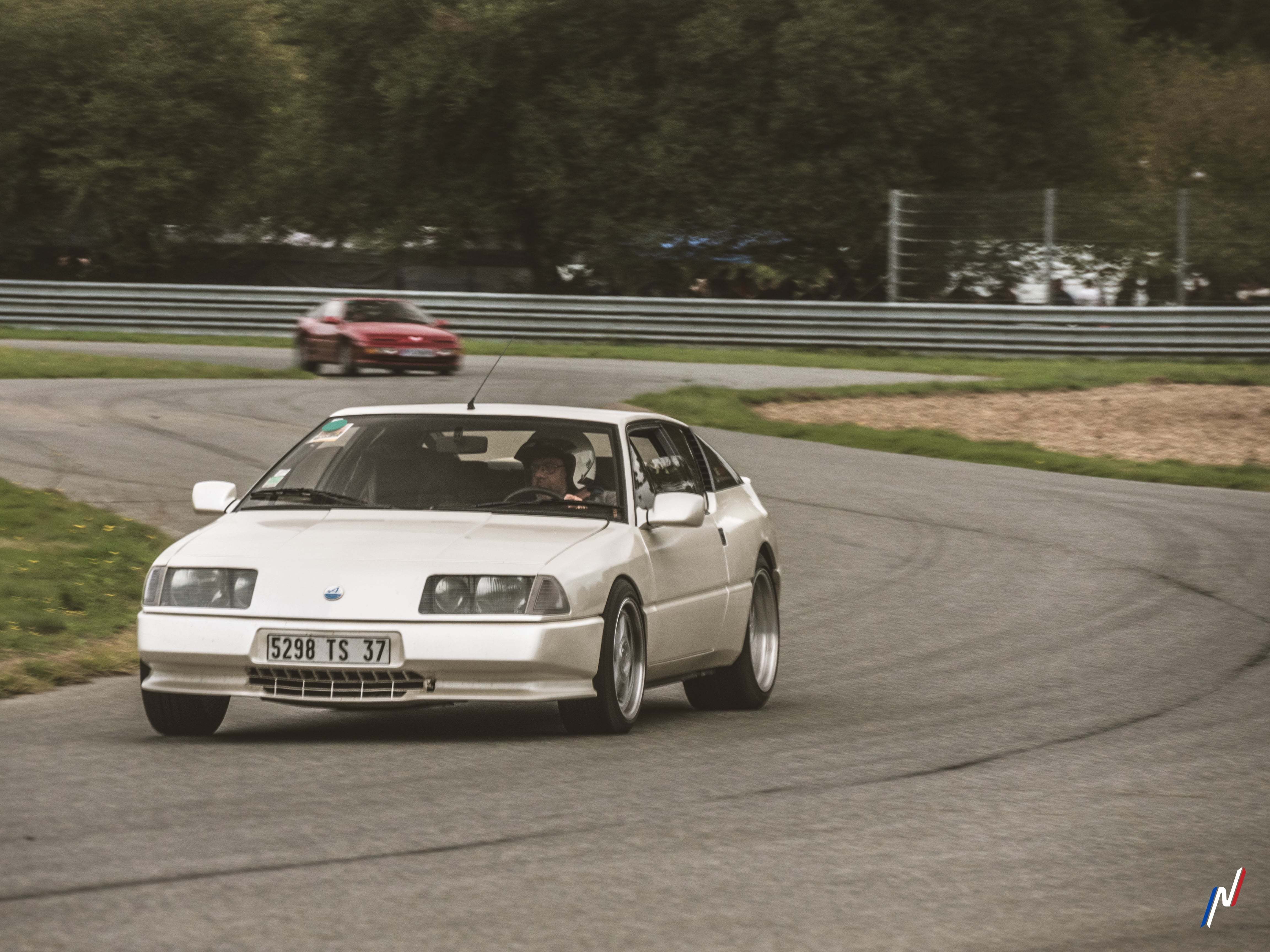
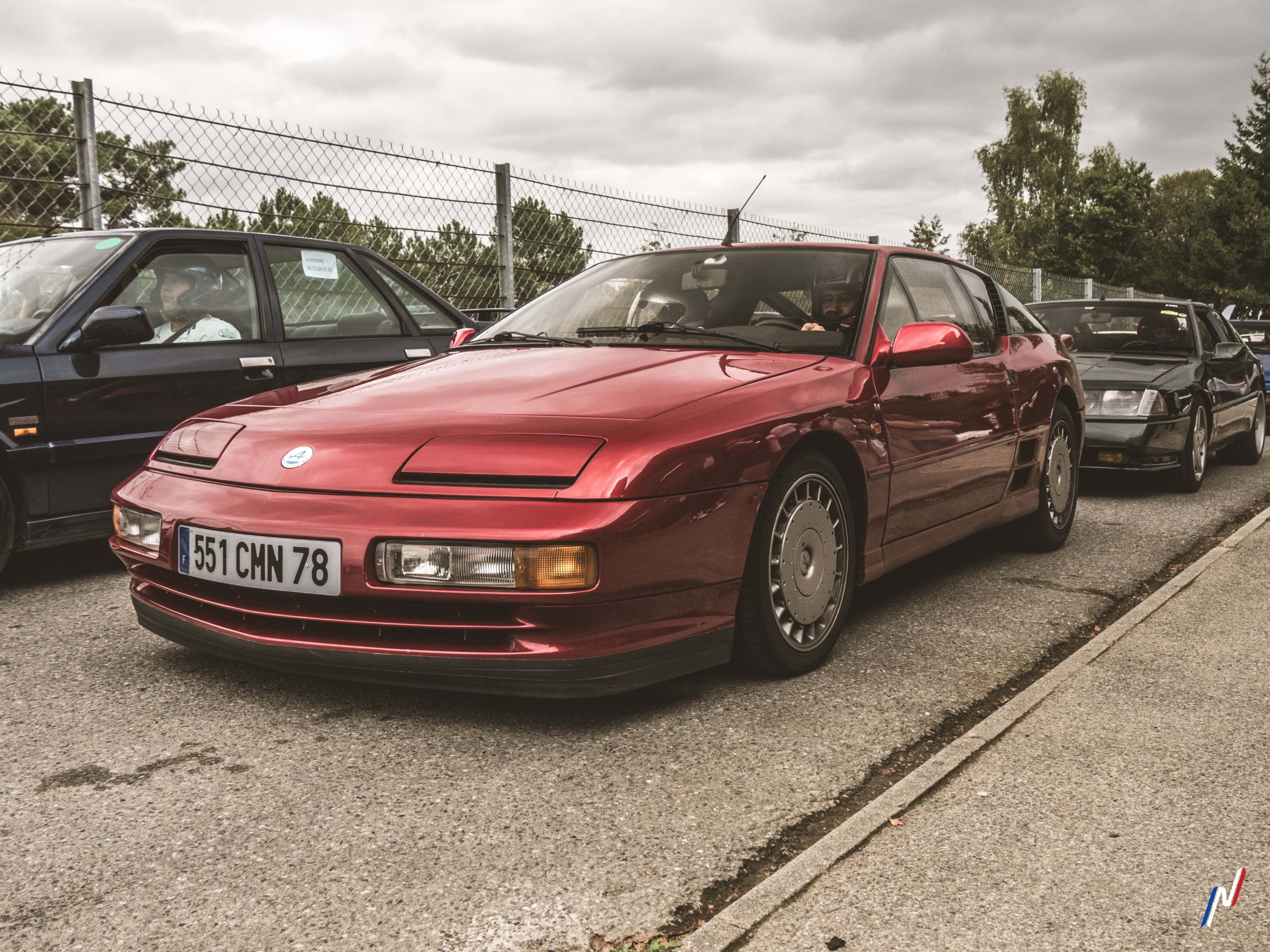
The rebirth of the A110 in 2017, followed by the creation of the Alpine Business Unit in 2021, was intended precisely to break that cycle. Alpine was to become a genuine brand again: its own boss, engineers, factory, racing programmes, model range, profit-and-loss account and, eventually, an international presence.
Five years later, the pendulum is swinging back towards Renault.
That is not necessarily bad news. The A290 already shows that extensive sharing can still produce a convincing Alpine. And a small brand has no interest in rebuilding, at great expense, capabilities its parent company already possesses. But there is a limit that is difficult to capture on an organisation chart. An Alpine is not simply the sum of its parts, software and supplier contracts. It also exists in decisions that can look irrational on a spreadsheet: a few kilograms saved here, a more expensive suspension component there, a driving position lowered by a few millimetres, months of development work to make the car feel more natural through the first bend.
Those are precisely the decisions most vulnerable when a small programme has to defend itself against the priorities of a group producing millions of cars.
What still has to be decided
The plan exists. The CSE has been consulted. But the final shape of the new organisation is not yet public.
Exactly how many positions will change reporting lines? Will Alpine engineers remain grouped in clearly identified teams, or be distributed across Renault’s functional engineering departments? How much authority will Philippe Krief retain over technical decisions? What will become, in the medium term, of the historic expertise at Les Ulis? And above all, what programmes will keep Dieppe busy after the A390 and the next A110? Going any further on those questions today would be speculation.
Another note of caution is needed: it would be wrong to conclude that Alpine’s overall strategy is failing. The brand is selling more cars than ever. The A290 is working. Its retail network is expanding. Its image remains strong. And despite its difficult start, the A390 is clearly attracting a high proportion of new customers.
What is wobbling is not Alpine as a brand. It is the model of Alpine as an almost autonomous carmaker within Renault. And everything now leads back to the next A110.
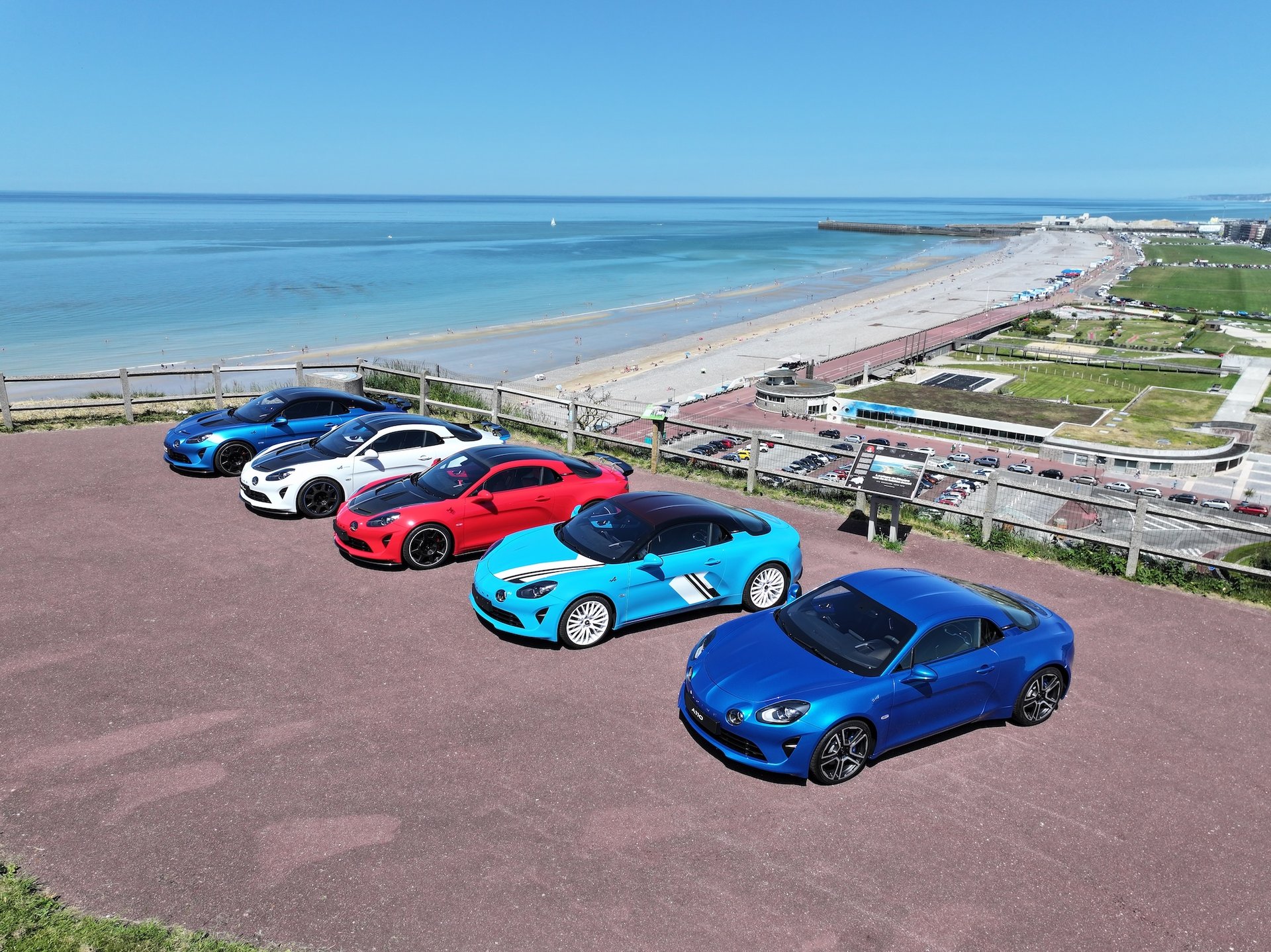
If the third generation arrives at the end of 2027 with the lightness, precision and sense of simplicity that made the second generation so distinctive, this reorganisation may one day look like intelligent rationalisation: Renault will have shared the resources without touching the soul of the product.
If it becomes an excellent electric sports car but an interchangeable Alpine — or if its timetable slips again — the question will become far more awkward.
Because Alpine will then have lost more than a line on an organisation chart: it will have to explain what, in an Alpine, still truly belongs to Alpine.